
Jarkko Sipilä (1964–2022)
Author of Helsinki Homicide: Against the Wall
About the Author
Image credit: Anneli Salo
Series
Works by Jarkko Sipilä
Shock Tactics 3 copies
Head on 1 copy
Head Tactics 1 copy
Survivors 1 copy
Kahdesti tapettu 1 copy
Valheen kasvot 1 copy
Tykki 3 Tuntematon mies 1 copy
Before The Storm 1 copy
Associated Works
Tagged
Common Knowledge
- Canonical name
- Sipilä, Jarkko
- Birthdate
- 1964-04-15
- Date of death
- 2022-03-07
- Gender
- male
- Education
- Sanoma Oy:n toimittajakoulu
- Occupations
- journalist
- Nationality
- Finland
- Places of residence
- Helsinki, Finland
- Associated Place (for map)
- Helsinki, Finland
Members
Reviews

Jarkko Sipila, Helsinki Homicide: Vengeance translated by Peter Ylitalo Leppa (Independence, MN: Ice Cold Crime, 2010).
The second novel in the “Helsinki Homicide” series to be translated into English (though not the second in the series – the author has published eleven books, some of them earlier entries in this series) is another no-frills, hardboiled and gritty crime story that pits a dedicated police unit against criminals.
A gang leader has just been released from prison. As the show more second in command of the Skulls, he begins to rebuild an organization that is crumbling, thanks to successful prosecutions and competition from other criminal organizations that are angling for a chance to get in on the action. Undercover officer Suhonen connects with another ex-con, a close childhood friend who took a different path in life. Eero Salmela wants to go straight but faces an uphill battle. When he gets in a bind, becoming an informant is either a chance to escape a long prison sentence–or a death sentence.
The story is a bit slow to start, but I found the second half more compelling. With the police on one side, doggedly gathering evidence, and the criminals on the other, taking a brutal approach to organizational dynamics, the sides play out their chess moves with the black and white pieces clearly demarcated. But it is Suhonen and Salmela who are the most valuable pieces in play, and they are not so clearly black and white.
Unlike much crime fiction, the personal lives of the detectives are lightly touched on; this story is all business. The criminals, too, are straightforward in their goals; they are not larger than life or exotically evil, they are just a business organization bonded by violence and heavily invested in illegal trade. If anything characterizes this series, it’s gritty realism. There are no heroes here, just hardworking police trying to keep the lid on crime. The characters keep their feelings close to their chests, but the relationship between Suhonen and Salmela makes for an interesting intersection of both worlds. In some ways Sipila’s work reminds me of the human comedy that John McFetridge is creating in his books about Toronto, but without the literary grace notes, the insights into character, or the complication of police corruption.
Neither Toronto nor Helsinki might strike the average American as flashpoints for violent organized crime, but both authors take us to the shady side of the street and create a teeming world where both cops and the criminals they pursue seem locked into a weary and unending game where a checkmate doesn’t end anything; the board is just set up again for the next round.
The translation is very well done; the lack of literary stylistics seems to be an authorial choice to present a stripped-down, story-driven tale sprinkled with a light dusting of irony. As with the first book, rather than being transported to a richly realized world, I felt as if I were watching a televised police series, one that valued story more than character development, and realism over dramatic plot twists. show less
The second novel in the “Helsinki Homicide” series to be translated into English (though not the second in the series – the author has published eleven books, some of them earlier entries in this series) is another no-frills, hardboiled and gritty crime story that pits a dedicated police unit against criminals.
A gang leader has just been released from prison. As the show more second in command of the Skulls, he begins to rebuild an organization that is crumbling, thanks to successful prosecutions and competition from other criminal organizations that are angling for a chance to get in on the action. Undercover officer Suhonen connects with another ex-con, a close childhood friend who took a different path in life. Eero Salmela wants to go straight but faces an uphill battle. When he gets in a bind, becoming an informant is either a chance to escape a long prison sentence–or a death sentence.
The story is a bit slow to start, but I found the second half more compelling. With the police on one side, doggedly gathering evidence, and the criminals on the other, taking a brutal approach to organizational dynamics, the sides play out their chess moves with the black and white pieces clearly demarcated. But it is Suhonen and Salmela who are the most valuable pieces in play, and they are not so clearly black and white.
Unlike much crime fiction, the personal lives of the detectives are lightly touched on; this story is all business. The criminals, too, are straightforward in their goals; they are not larger than life or exotically evil, they are just a business organization bonded by violence and heavily invested in illegal trade. If anything characterizes this series, it’s gritty realism. There are no heroes here, just hardworking police trying to keep the lid on crime. The characters keep their feelings close to their chests, but the relationship between Suhonen and Salmela makes for an interesting intersection of both worlds. In some ways Sipila’s work reminds me of the human comedy that John McFetridge is creating in his books about Toronto, but without the literary grace notes, the insights into character, or the complication of police corruption.
Neither Toronto nor Helsinki might strike the average American as flashpoints for violent organized crime, but both authors take us to the shady side of the street and create a teeming world where both cops and the criminals they pursue seem locked into a weary and unending game where a checkmate doesn’t end anything; the board is just set up again for the next round.
The translation is very well done; the lack of literary stylistics seems to be an authorial choice to present a stripped-down, story-driven tale sprinkled with a light dusting of irony. As with the first book, rather than being transported to a richly realized world, I felt as if I were watching a televised police series, one that valued story more than character development, and realism over dramatic plot twists. show less

Cold Trail, the latest volume in the award-winning Finnish police procedural series to be translated into English, continues the no-nonsense, realistic, essentially human style established in the previous books in the series. (This one has a new translator, however – Kristian London, whose English version is nearly as flawless as Peter Ylitalo Leppa’s translations of the previous books.)
In Cold Trail, a man who has been serving a prison sentence for murdering his wife in a drunken show more argument is escorted by prison guards to his father’s funeral, after which he takes advantage of the guard’s inattention to slip away. As the police pursue the escaped convict, they begin to question whether he may have actually been falsely convicted.
While a team of detectives work on the case, Kari Takamaki’s son is knocked off his bike in a hit-and-run incident. Though police in another jurisdiction are supposedly dealing with the crime, Takamaki investigates on his own, knowing they aren’t putting much effort into it.
The story proceeds, alternating perspectives of the police team on the hunt and the escaped convict, who insists on his innocence and is bent on evening the score. It builds to a dramatic conclusion, but also ends on an intriguing note of ambiguity that left me thinking about the book after I had finished reading it.
In an era in which thrillers tend to involve heroes saving the world from terrorist plots or tormented cops who up against deranged serial killers with a florid taste in gruesome murder scenes, Sipila’s series offers refreshingly down-to-earth but thoroughly involving stories in which the criminals are not monsters and the cops are not gods. I particularly liked the way our understanding of the escaped criminal got more and more complicated as his flight proceeded.
I’m very pleased that Ice Cold Crime is publishing them in well-translated and affordable editions, and grateful to the publisher for providing me with a review copy. It took me a while to read it, though, because my husband grabbed it first. He liked it, too. show less
In Cold Trail, a man who has been serving a prison sentence for murdering his wife in a drunken show more argument is escorted by prison guards to his father’s funeral, after which he takes advantage of the guard’s inattention to slip away. As the police pursue the escaped convict, they begin to question whether he may have actually been falsely convicted.
While a team of detectives work on the case, Kari Takamaki’s son is knocked off his bike in a hit-and-run incident. Though police in another jurisdiction are supposedly dealing with the crime, Takamaki investigates on his own, knowing they aren’t putting much effort into it.
The story proceeds, alternating perspectives of the police team on the hunt and the escaped convict, who insists on his innocence and is bent on evening the score. It builds to a dramatic conclusion, but also ends on an intriguing note of ambiguity that left me thinking about the book after I had finished reading it.
In an era in which thrillers tend to involve heroes saving the world from terrorist plots or tormented cops who up against deranged serial killers with a florid taste in gruesome murder scenes, Sipila’s series offers refreshingly down-to-earth but thoroughly involving stories in which the criminals are not monsters and the cops are not gods. I particularly liked the way our understanding of the escaped criminal got more and more complicated as his flight proceeded.
I’m very pleased that Ice Cold Crime is publishing them in well-translated and affordable editions, and grateful to the publisher for providing me with a review copy. It took me a while to read it, though, because my husband grabbed it first. He liked it, too. show less

Ice Cold Crime, a small publisher in Minnesota, has added another title to the their list of Finnish translations, a 2006 entry in Jarkko Sipila’s Helsinki Homicide series. (These do not need to be read in order, a good thing as they have followed the tradition of being translated out of order.)
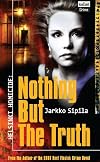
In Nothing but the Truth, Mari Lehtonen, a single mother, witnesses a gangland murder and decides, after some inner struggle, to heed the requests being broadcast by the police for witnesses to come show more forward. Though this seems to be the way people ought to behave, she soon realizes the gangsters whose dispute was settled with a bullet see it as a shocking breach of thug etiquette, the police are surprised (but pleased), and she has put her daughter’s life in danger. When the killers tries to shut her up, the police move the woman and her daughter to a safe house, but she is outraged by the fact that her act of good citizenship has made her a prisoner – while the criminals remain free.
There’s not much that Detective Lieutenant Kari Takamaki can do, other than counsel patience and offer protection until her testimony is given. There’s not even a guarantee of a conviction, given that the criminal organization can afford good lawyers. While Takamaki and his police team try to keep their witness under wraps, Suhonen, an undercover cop who seems equally at home in the squad room and among the subjects of his investigations, breaks the news to the victim’s father, a career criminal himself who has his own ideas about the course of justice.
This is a fascinating story about the various players involved in crime – the police and the criminals who understand the rules of engagement and an ordinary citizen who doesn’t care about those rules, but believes she shouldn’t be punished for doing the right thing. One of the criminal characters describes the ongoing battle between him and the police as a war, one that only accidentally catches up civilians as collateral damage; another criminal describes the situation as maintaining the “balance of terror, just like in Soviet times.” Only Mari Lehtonen seems to have a clear view of right and wrong, and this seemingly mousey woman turns out to have a firm spine and stubborn courage.
Sipila’s world is gritty, but not cynical, and he tells a lively, well-paced story without favoring outsized dramatic situations or moral dilemmas over human-sized conflicts. In other words, he doesn’t write the kind of emotion-laden morality plays that seem so popular in the US thriller market. That’s one reason why this story feels fresh.
In an effort to explain to undergraduates who haven’t read a lot of crime fiction how varied the genre is, I have this diagram I sketch out on the board, with an axis that represents the spectrum from light to dark and another one that runs from realistic to mythic. Some dark thrillers are no more realistic than the fluffiest of craft cozies; some light mysteries do a good job of representing the incursion of violence into an otherwise ordinary situation, which is more real to most of us than, oh, serial killers or ninja assassins or heroic cops on a mission from God. I’m not sure this is the best way to diagram variations on the mystery, but it’s what I’ve come up with.
Sipila’s police procedurals edge into the darker end of the spectrum, without being gruesome or stylishly nihilistic in the noir tradition. On the realism – mythic axis, however, they are firmly at the realistic end of the scale. The bad guys can be really bad, but they’re human. The cops are good, but human, too, and their limitations are disillusioning to Mari Lehtonen, whose refusal to be a casualty in the war between cops and crooks is quietly heroic.
A great deal of my pleasure in reading this story is owed to Peter Ylitalo Leppa, whose translation is once again superb. Translators are in the unenviable position of being most successful when we don’t notice them. Leppa has perfected invisibility and deserves high praise for it. show less
In Nothing but the Truth, Mari Lehtonen, a single mother, witnesses a gangland murder and decides, after some inner struggle, to heed the requests being broadcast by the police for witnesses to come show more forward. Though this seems to be the way people ought to behave, she soon realizes the gangsters whose dispute was settled with a bullet see it as a shocking breach of thug etiquette, the police are surprised (but pleased), and she has put her daughter’s life in danger. When the killers tries to shut her up, the police move the woman and her daughter to a safe house, but she is outraged by the fact that her act of good citizenship has made her a prisoner – while the criminals remain free.
There’s not much that Detective Lieutenant Kari Takamaki can do, other than counsel patience and offer protection until her testimony is given. There’s not even a guarantee of a conviction, given that the criminal organization can afford good lawyers. While Takamaki and his police team try to keep their witness under wraps, Suhonen, an undercover cop who seems equally at home in the squad room and among the subjects of his investigations, breaks the news to the victim’s father, a career criminal himself who has his own ideas about the course of justice.
This is a fascinating story about the various players involved in crime – the police and the criminals who understand the rules of engagement and an ordinary citizen who doesn’t care about those rules, but believes she shouldn’t be punished for doing the right thing. One of the criminal characters describes the ongoing battle between him and the police as a war, one that only accidentally catches up civilians as collateral damage; another criminal describes the situation as maintaining the “balance of terror, just like in Soviet times.” Only Mari Lehtonen seems to have a clear view of right and wrong, and this seemingly mousey woman turns out to have a firm spine and stubborn courage.
Sipila’s world is gritty, but not cynical, and he tells a lively, well-paced story without favoring outsized dramatic situations or moral dilemmas over human-sized conflicts. In other words, he doesn’t write the kind of emotion-laden morality plays that seem so popular in the US thriller market. That’s one reason why this story feels fresh.
In an effort to explain to undergraduates who haven’t read a lot of crime fiction how varied the genre is, I have this diagram I sketch out on the board, with an axis that represents the spectrum from light to dark and another one that runs from realistic to mythic. Some dark thrillers are no more realistic than the fluffiest of craft cozies; some light mysteries do a good job of representing the incursion of violence into an otherwise ordinary situation, which is more real to most of us than, oh, serial killers or ninja assassins or heroic cops on a mission from God. I’m not sure this is the best way to diagram variations on the mystery, but it’s what I’ve come up with.
Sipila’s police procedurals edge into the darker end of the spectrum, without being gruesome or stylishly nihilistic in the noir tradition. On the realism – mythic axis, however, they are firmly at the realistic end of the scale. The bad guys can be really bad, but they’re human. The cops are good, but human, too, and their limitations are disillusioning to Mari Lehtonen, whose refusal to be a casualty in the war between cops and crooks is quietly heroic.
A great deal of my pleasure in reading this story is owed to Peter Ylitalo Leppa, whose translation is once again superb. Translators are in the unenviable position of being most successful when we don’t notice them. Leppa has perfected invisibility and deserves high praise for it. show less
Gritty Finnish Noir that seems to run out of steam but then intelligently brings everything together.
Lists
Awards

You May Also Like


Associated Authors
Statistics
- Works
- 50
- Also by
- 3
- Members
- 467
- Popularity
- #52,671
- Rating
- 3.1
- Reviews
- 12
- ISBNs
- 82
- Languages
- 2