
William T. Rowe
Author of China's Last Empire : The Great Qing
About the Author
William T. Rowe is John and. Diane Cooke Professor of Chinese. History at Johns Hopkins University.
Series
Works by William T. Rowe
Saving the World: Chen Hongmou and Elite Consciousness in Eighteenth-Century China (2001) 9 copies, 1 review
Associated Works
Tagged
Common Knowledge
- Birthdate
- 1947-07-24
- Gender
- male
- Occupations
- sinologist
- Organizations
- Johns Hopkins University
- Nationality
- USA
- Birthplace
- Brooklyn, New York, USA
- Associated Place (for map)
- New York, USA
Members
Reviews
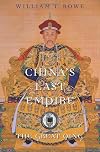
While I've already done a fair share of reading about the last imperial dynasty, there are a number of things that Rowe does very well, such as critiquing what is now considered old-school thinking about the nature of Chinese culture and showing how modern Chinese nationalism emerge out of the chrysalis of the Qing state. The Qing having started out with a vision of leading a universal empire, where the monarch ruled a series of self-contained nations in parallel, to being the sovereign of a show more unified national state, simply referred to as China, with the end coming largely due to Chinese society finding the Qing irrelevant. In between, Rowe also provides the reader with a lot of nuts-and-bolts about how the administrative systems created by the Qing worked in their prime, and how, over changes in circumstances, they failed to work; not helped by the great race for world empire kicking off in the second half of the 1800s. Rowe dryly considers malice aforethought to have a great deal to do with the Qing failure.
About the only thing that I'd mark this book down for is that, having come out in 2009, it's starting to be overtaken by circumstances. At the time Rowe was writing the rise of the PRC to dominant power status was still taken for granted, and this book reflects that sense. Now, with the regime of Xi Jinping apparently floundering, and it being unclear whether Beijing can overcome its demographic and economic challenges, the question is whether we're watching the modern equivalent of an old-fashioned Chinese dynastic crack-up. This could all be "interesting" in a bad way. show less
About the only thing that I'd mark this book down for is that, having come out in 2009, it's starting to be overtaken by circumstances. At the time Rowe was writing the rise of the PRC to dominant power status was still taken for granted, and this book reflects that sense. Now, with the regime of Xi Jinping apparently floundering, and it being unclear whether Beijing can overcome its demographic and economic challenges, the question is whether we're watching the modern equivalent of an old-fashioned Chinese dynastic crack-up. This could all be "interesting" in a bad way. show less
I learned a lot! But perhaps you can see from how long it took me to read a mere 287 pages (over a month), I found it dry and dense at times. This is as much a fault of mine as it is the author's, because I often find non-fiction tough to get into. I also expected more of a play-by-play of events, but this is more of a sophisticated study than just a telling of what happened, and I appreciate that.
A sound introduction to the much-maligned Qing dynasty.
A popular perception, at least from some mainlanders, is that the Qing were an inherently corrupt and decrepit set of foreign invaders, doomed to fail immediately.
Doctor Rowe instead notes that there may have been no such unified group of 'Manchus' in the 1600s, instead various groups in the northeast which were somewhat sinicized, and some more nomadic than others. Such is the amorphous nature of 'race'. Nevertheless, the idea of a show more unified 'Manchu' people may have been created as a means for the ruling dynasty to establish itself.
The chief difficulty in Chinese history, in Dr. Rowe's view, is governance. That is, how can a central dynasty rule hundreds of millions of people and have their decisions make genuine impact in the local level? In some aspects, they succeeded. This included land-based taxation, as well as reform of the examination system for the scholar-bureaucracy.
The Qing were also not the total victims of imperialism which they were in the 19th century. In the earlier stages of the dynasty, they were able to expand into Xinjiang and Tibet(the former at great expense) and expand (again with difficulty) into Taiwan.
There is also time spent of Qing dynasty culture, art, science, home life, economics, and so forth. Although the Tang, song, and Ming are especially renowned in art, the early Qing were no slouches. The Chinese economy was still the single largest in the world until the industrial revolution.
Why, then, did the Qing fall? Rowe heavily cites Pomeranz in stating that the Qing economy, as stable as it was earlier, was regionalist, small-handicraft based, and had several structures in place which made industrial-capitalist reform especially difficult. The economic system was at 'maximum efficiency', where the land had the most value squeezed out of it. (E.g. Agricultural terracing). Hence the difficulties of market reform.
Then there is Opium and imperialism which is a mess. But again, the fact that they fell in the 1900s rather than 1860 is a sign of their tenacity.
Near the end of the book, there is a telling anecdote from a working woman who only knew the dynasty fell because the money now said 'Republic' on it. The 'long Qing dynasty' may have ended later than 1911, and it is still too early to tell what effects it has had on history. This introduction is a fine demonstration of the complex situation and that the jury is out. show less
A popular perception, at least from some mainlanders, is that the Qing were an inherently corrupt and decrepit set of foreign invaders, doomed to fail immediately.
Doctor Rowe instead notes that there may have been no such unified group of 'Manchus' in the 1600s, instead various groups in the northeast which were somewhat sinicized, and some more nomadic than others. Such is the amorphous nature of 'race'. Nevertheless, the idea of a show more unified 'Manchu' people may have been created as a means for the ruling dynasty to establish itself.
The chief difficulty in Chinese history, in Dr. Rowe's view, is governance. That is, how can a central dynasty rule hundreds of millions of people and have their decisions make genuine impact in the local level? In some aspects, they succeeded. This included land-based taxation, as well as reform of the examination system for the scholar-bureaucracy.
The Qing were also not the total victims of imperialism which they were in the 19th century. In the earlier stages of the dynasty, they were able to expand into Xinjiang and Tibet(the former at great expense) and expand (again with difficulty) into Taiwan.
There is also time spent of Qing dynasty culture, art, science, home life, economics, and so forth. Although the Tang, song, and Ming are especially renowned in art, the early Qing were no slouches. The Chinese economy was still the single largest in the world until the industrial revolution.
Why, then, did the Qing fall? Rowe heavily cites Pomeranz in stating that the Qing economy, as stable as it was earlier, was regionalist, small-handicraft based, and had several structures in place which made industrial-capitalist reform especially difficult. The economic system was at 'maximum efficiency', where the land had the most value squeezed out of it. (E.g. Agricultural terracing). Hence the difficulties of market reform.
Then there is Opium and imperialism which is a mess. But again, the fact that they fell in the 1900s rather than 1860 is a sign of their tenacity.
Near the end of the book, there is a telling anecdote from a working woman who only knew the dynasty fell because the money now said 'Republic' on it. The 'long Qing dynasty' may have ended later than 1911, and it is still too early to tell what effects it has had on history. This introduction is a fine demonstration of the complex situation and that the jury is out. show less
Saving the World: Chen Hongmou and Elite Consciousness in Eighteenth-Century China by William T. Rowe
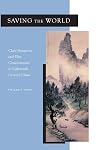
Kitching with appreciation for you, Rowe
Awards


You May Also Like
Associated Authors
Statistics
- Works
- 8
- Also by
- 1
- Members
- 192
- Popularity
- #113,796
- Rating
- 4.0
- Reviews
- 5
- ISBNs
- 19
- Languages
- 1