
Whitney Stewart
Author of Who Was Walt Disney?
About the Author
Image credit: via Penguin Random House
Works by Whitney Stewart
Aung San Suu Kyi: Fearless Voice of Burma (Newsmakers Biographies Series) (1997) 15 copies, 1 review
Tagged
Common Knowledge
- Birthdate
- 1959
- Gender
- female
- Education
- Brown University
- Nationality
- USA
- Places of residence
- New Orleans, Louisiana, USA
- Associated Place (for map)
- Louisiana, USA
Members
Reviews
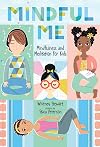
I think this is a cute, little, useful book for middle grade kids. I agree with the review that kids won't read this cover to cover, and it might be more suited to a parent or teacher to go over some activities with it's intended audience. Although, there are some mature middle grade readers out there who might pick this up on their own and try the activities. Goodness knows our kids are overscheduled, overworked and overwhelmed these days. A little mindfulness may help.
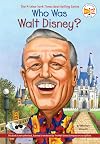
In my opinion this is a great book. I thoroughly enjoyed reading this book because I have always admired Walt Disney and it was great to learn new things about him. I really liked how the author started the book with Walt’s childhood and ended with his death. A lot of the books I have read on Walt Disney have all been about Mickey Mouse and Disney World. Another thing I liked about this book was the pictures. They were simple but they fit the book perfectly, for example, when the show more illustrator drew a picture of Walt and his family, the expressions on their faces represent their personality. Walt’s dad Elias was always mean and nasty and rarely took pleasure in anything, so in the family picture Elias’s face reflects his personality.
The big idea in the book is to never let anything keep you from following your dreams. Growing up Walt was always told he would never add up to much and he wouldn’t make a name of himself. However, Walt followed his dreams and is now one of the most famous people in the whole world. show less
The big idea in the book is to never let anything keep you from following your dreams. Growing up Walt was always told he would never add up to much and he wouldn’t make a name of himself. However, Walt followed his dreams and is now one of the most famous people in the whole world. show less
This is a book that teaches middle graders about mindfulness meditation. I've heard about mindfulness for a long time but never really understood exactly what it is. So I was trying to figure out what it is and whether there are any exercises useful in helping angry children calm down. Because the book is targeted at middle grades, the language is easy to read and the examples are easy to understand. There are illustrations here and there. The book provides many meditation activities that show more encourage imagination toward a magical, fantasy world, which really appealed to my daughter who loves to read fantasy stories. She also enjoyed the short, simple personality quizzes that occasionally popped up.
I think the language the book used to explain mindfulness is still a little confusing. It all sounds nice to hear, but when I actually put those explanation side by side with the activities they listed, they don't always match up. Based on the activities in the book, I understand mindfulness as a combination of three types of meditation: 1) Making your brain become super aware of how your behaves when you're breathing in and out. You need to be super focused and think of nothing but the breath. 2) Imagining and visualizing magical things like fire balls, colorful lights, or clouds, and linking these imageries to feelings you want to remove (e.g. imagine clouds that represent your different anxieties vanish in the sky) or increase (e.g. imagine you and everyone else in the world are engulfed by the light of kindness, or perseverance, or some other positive quality.) 3) Paying close attention to nature and how nature changes, and associating these changes with positive feelings, so as to help you not feel sad about changes in life.
I think the rationale behind 1) is to unplug your brain from whatever you're caught up with in the moment, because you're asked to totally stop thinking about anything else but your breath. It likely works very well. I have since asked both my kids, when they are stuck in a state of meltdown, or struggling over and over with the section of a piano piece, to take three mindfulness breaths. I think it will probably work just as well if you change the focus from "breath" to other things, as long as you are still really focused on that thing. For example, I understand Christians who meditate tend to focus on a short Scripture verse. I think 2) points to the fact, established by scientists and psychologists, that the human brain is more susceptible to what we choose to imagine than we think. In this case, I would want to imagine things that are close to God's truth in the spiritual realm. The value 3) is promoting resonate a lot with Buddhism. But I think the reason we get sad about things changing is because humans by nature seek eternity. It's what God has placed in our hearts. So I am leery of attempts to mold the brain to not feel bad about any type of change.
The book talks repeatedly about how when you unplug yourself from your thoughts and focus on your breath, you will gaze upon your "WISDOM MIND" (in all caps, LOL) and that WISDOM MIND will show you to think, feel, and behave wisely. I don't think unplugging has that much power, other than calming you down :P The Holy Spirit needs to move in the person, otherwise no one can help thinking, feeling or acting foolishly. show less
I think the language the book used to explain mindfulness is still a little confusing. It all sounds nice to hear, but when I actually put those explanation side by side with the activities they listed, they don't always match up. Based on the activities in the book, I understand mindfulness as a combination of three types of meditation: 1) Making your brain become super aware of how your behaves when you're breathing in and out. You need to be super focused and think of nothing but the breath. 2) Imagining and visualizing magical things like fire balls, colorful lights, or clouds, and linking these imageries to feelings you want to remove (e.g. imagine clouds that represent your different anxieties vanish in the sky) or increase (e.g. imagine you and everyone else in the world are engulfed by the light of kindness, or perseverance, or some other positive quality.) 3) Paying close attention to nature and how nature changes, and associating these changes with positive feelings, so as to help you not feel sad about changes in life.
I think the rationale behind 1) is to unplug your brain from whatever you're caught up with in the moment, because you're asked to totally stop thinking about anything else but your breath. It likely works very well. I have since asked both my kids, when they are stuck in a state of meltdown, or struggling over and over with the section of a piano piece, to take three mindfulness breaths. I think it will probably work just as well if you change the focus from "breath" to other things, as long as you are still really focused on that thing. For example, I understand Christians who meditate tend to focus on a short Scripture verse. I think 2) points to the fact, established by scientists and psychologists, that the human brain is more susceptible to what we choose to imagine than we think. In this case, I would want to imagine things that are close to God's truth in the spiritual realm. The value 3) is promoting resonate a lot with Buddhism. But I think the reason we get sad about things changing is because humans by nature seek eternity. It's what God has placed in our hearts. So I am leery of attempts to mold the brain to not feel bad about any type of change.
The book talks repeatedly about how when you unplug yourself from your thoughts and focus on your breath, you will gaze upon your "WISDOM MIND" (in all caps, LOL) and that WISDOM MIND will show you to think, feel, and behave wisely. I don't think unplugging has that much power, other than calming you down :P The Holy Spirit needs to move in the person, otherwise no one can help thinking, feeling or acting foolishly. show less
Who was Walt Disney? was a biography about the life and achievements of Walt Disney, the great cartoonist we all know and love. It’s provided insight on Walt Disney’s life and how he came to be one of the most well known people in the world. The purpose of the book being to inform older children about Walt Disney.
I liked this book and feel it achieved its purpose very well. My favorite thing about the book was the layout. The chapters were fairly short and in the beginning of every show more chapter there was a title that gave way to what part of Disney’s life this was going to be about. For example when Disney goes to Hollywood, the chapter was called Hollywood. I liked this because as a reader if I was reading this for a book report it might be easy when writing my report to go right to the chapter of Disney’s life I needed information on. I also loved that there were hand drawn pictures on the page something you normally don’t see in chapter books. I thought this really helped to move the story along and help the reader to understand Disney’s life better.
One of my favorite things about the layout of this book was the additional information provided in the book. Throughout the book when something that involved history or something the reader wouldn’t be able to understand was mentioned, the author provided a little blurb of additional information on the same or next page. For example when discussing Charlie Chaplin, the author provided information on the next page about whom Charlie Chaplin was and his significance during that time period. I really enjoyed this because it helped to develop a better understand of events in Disney’s life and make sense of what was being discussed.
Another thing I liked was that in the back of the book, the author provided a timeline of Disney’s life so the reader could have yet another visual way to understand the events in Walt Disney’s life. I liked this because it provided a way to inform the reader and it helped me to understand the order of the events in which things occurred.
A final thing I enjoyed about this book that didn’t involve layout was the language. The language was very detailed and provided a deeper understanding of Walt Disney. An example of this is when the author was discussing how Walt Disney’s mother died and he never forgave himself for that. The language made the reader really understand Disney’s pain. It also said it in a way an older child could understand. Overall helping the book to achieve its big idea, which was to inform the reader about Walt Disney. show less
I liked this book and feel it achieved its purpose very well. My favorite thing about the book was the layout. The chapters were fairly short and in the beginning of every show more chapter there was a title that gave way to what part of Disney’s life this was going to be about. For example when Disney goes to Hollywood, the chapter was called Hollywood. I liked this because as a reader if I was reading this for a book report it might be easy when writing my report to go right to the chapter of Disney’s life I needed information on. I also loved that there were hand drawn pictures on the page something you normally don’t see in chapter books. I thought this really helped to move the story along and help the reader to understand Disney’s life better.
One of my favorite things about the layout of this book was the additional information provided in the book. Throughout the book when something that involved history or something the reader wouldn’t be able to understand was mentioned, the author provided a little blurb of additional information on the same or next page. For example when discussing Charlie Chaplin, the author provided information on the next page about whom Charlie Chaplin was and his significance during that time period. I really enjoyed this because it helped to develop a better understand of events in Disney’s life and make sense of what was being discussed.
Another thing I liked was that in the back of the book, the author provided a timeline of Disney’s life so the reader could have yet another visual way to understand the events in Walt Disney’s life. I liked this because it provided a way to inform the reader and it helped me to understand the order of the events in which things occurred.
A final thing I enjoyed about this book that didn’t involve layout was the language. The language was very detailed and provided a deeper understanding of Walt Disney. An example of this is when the author was discussing how Walt Disney’s mother died and he never forgave himself for that. The language made the reader really understand Disney’s pain. It also said it in a way an older child could understand. Overall helping the book to achieve its big idea, which was to inform the reader about Walt Disney. show less
Lists
Awards


You May Also Like


Associated Authors
Statistics
- Works
- 37
- Members
- 3,100
- Popularity
- #8,238
- Rating
- 4.2
- Reviews
- 89
- ISBNs
- 121
- Languages
- 9
- Favorited
- 1