
Dennis B. Fradin
Author of Who Was Ben Franklin?
About the Author
Series
Works by Dennis B. Fradin
Let It Begin Here! Lexington & Concord (First Battles of the American Revolution) (2005) 405 copies, 3 reviews
Tornado!: The Story Behind These Twisting, Turning, Spinning, and Spiraling Storms (National Geographic Kids) (2011) 136 copies, 2 reviews
Louis Braille: The Blind Boy Who Wanted to Read (Remarkable Children Series) (1996) 21 copies, 2 reviews
Maria De Sautuola: Discoverer of the Bulls in the Cave (Remarkable Children Series, #2) (1996) 10 copies
Connecticut Family, The 1 copy
California 1 copy
Minnesota 1 copy
Moon fight 1 copy
Tagged
Common Knowledge
- Legal name
- Fradin, Dennis Brindell
- Birthdate
- 1945-12-20
- Gender
- male
- Relationships
- Fradin, Judith (wife)
- Nationality
- USA
- Associated Place (for map)
- USA
Members
Reviews
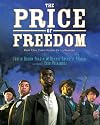
There aren’t many aspects about slavery worth celebrating, but every once in a while there is a story that can redeem your faith in humanity. … well, a part of humanity, at any rate.
This book tells the true story of three slaves from Kentucky - John Price, his cousin Dinah, and his friend Frank - who crossed the Ohio River to freedom in Ohio, where slavery was outlawed. But they couldn’t rest easy: part of the compromise legislation of 1850 was a toughening of the Fugitive Slave Act, show more which allowed slave owners to capture and return runaways from anywhere in the U.S. Aiding slaves was made a federal crime. Aiding slave owners, on the other hand, was now a lucrative operation. The main hope slaves had was to make it to Canada, where slavery had been outlawed since 1834.
The trio of slaves split up, since slave hunters would be looking for three slaves traveling together, and John and Frank ended up in Oberlin, Ohio, where they decided to remain. Slave hunters soon followed; they had been promised $500 per slave, equivalent to $13,000 each in today’s money.
John was captured, but the citizens of Oberlin didn’t just turn their backs. Hundreds of Oberlinians worked together to rescue John. While they did reclaim him from the slave hunters, he vanished after a few days. No one knows what became of John, Dinah, and Frank.
The rescuers were considered heroes by some and criminals by others, including most Southerners. The U.S. Government under President James Buchanan sided with the slaveholders, and thirty-seven men in Oberlin were sent to jail for three months.
After their sentences were up, the town of Oberlin had a big celebration and pledged:
No fugitive slave shall ever be taken from Oberlin either with or without a warrant, if we have power to prevent it.”
Eric Velasquez employs lush, full-color oil paintings as well as mixed media to show the range of emotions and the drama of this episode in history. He also provides accurate representations of this time period.
The final image is a large reproduction of an 1859 photo of the actual rescuers taken in the courtyard of the jail.
Back matter includes an Author’s Note, bibliography, suggestions for further reading, and a list of relevant websites.
Evaluation: This inspiring story can introduce a number of issues to kids, such as divisions in the country prior to the Civil War, and the difference between rule of law and moral imperatives. show less
This book tells the true story of three slaves from Kentucky - John Price, his cousin Dinah, and his friend Frank - who crossed the Ohio River to freedom in Ohio, where slavery was outlawed. But they couldn’t rest easy: part of the compromise legislation of 1850 was a toughening of the Fugitive Slave Act, show more which allowed slave owners to capture and return runaways from anywhere in the U.S. Aiding slaves was made a federal crime. Aiding slave owners, on the other hand, was now a lucrative operation. The main hope slaves had was to make it to Canada, where slavery had been outlawed since 1834.
The trio of slaves split up, since slave hunters would be looking for three slaves traveling together, and John and Frank ended up in Oberlin, Ohio, where they decided to remain. Slave hunters soon followed; they had been promised $500 per slave, equivalent to $13,000 each in today’s money.
John was captured, but the citizens of Oberlin didn’t just turn their backs. Hundreds of Oberlinians worked together to rescue John. While they did reclaim him from the slave hunters, he vanished after a few days. No one knows what became of John, Dinah, and Frank.
The rescuers were considered heroes by some and criminals by others, including most Southerners. The U.S. Government under President James Buchanan sided with the slaveholders, and thirty-seven men in Oberlin were sent to jail for three months.
After their sentences were up, the town of Oberlin had a big celebration and pledged:
No fugitive slave shall ever be taken from Oberlin either with or without a warrant, if we have power to prevent it.”
Eric Velasquez employs lush, full-color oil paintings as well as mixed media to show the range of emotions and the drama of this episode in history. He also provides accurate representations of this time period.
The final image is a large reproduction of an 1859 photo of the actual rescuers taken in the courtyard of the jail.
Back matter includes an Author’s Note, bibliography, suggestions for further reading, and a list of relevant websites.
Evaluation: This inspiring story can introduce a number of issues to kids, such as divisions in the country prior to the Civil War, and the difference between rule of law and moral imperatives. show less
Published in 1999, this is an unusual good book on the question of life on Mars. It's larger format, and physically well constructed, with excellent glossy sewn pages, and numerous black and white illustrations, as well as a number of color plates.
I've read many books on Mars by now, and it is remarkable how the same illustrations are repeated in book after book. Presumably some NASA artist painted them expressly for redistribution.
The book itself is well written by someone who is genuinely show more interested in Mars and has been viewing Mars and speculating about Mars since his early teens. It sticks to the significant pop-culture references, and shows how books, radio, and movies of the time, reflected what was believed about Mars by scientists of the day (at least some of them).
It covers much astronomical observation, Mariner flybys, the Viking landing, and the Pathfinder mission, as well as many planned missions that never made it. It predates the MSL mission, Spirit and Opportunity, by several years.
It discusses the significance of life on Mars to our conclusions about life on other planets. It gets wildly speculative in its discussion of the future of Mars colonization, and a little silly. show less
I've read many books on Mars by now, and it is remarkable how the same illustrations are repeated in book after book. Presumably some NASA artist painted them expressly for redistribution.
The book itself is well written by someone who is genuinely show more interested in Mars and has been viewing Mars and speculating about Mars since his early teens. It sticks to the significant pop-culture references, and shows how books, radio, and movies of the time, reflected what was believed about Mars by scientists of the day (at least some of them).
It covers much astronomical observation, Mariner flybys, the Viking landing, and the Pathfinder mission, as well as many planned missions that never made it. It predates the MSL mission, Spirit and Opportunity, by several years.
It discusses the significance of life on Mars to our conclusions about life on other planets. It gets wildly speculative in its discussion of the future of Mars colonization, and a little silly. show less
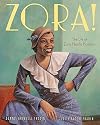
Zora! is one of the best young adult history books I have ever had the pleasure to read. It is coauthored by Dennis Brindell Fradin, award winning author of more than 220 young adult books, and his frequent collaborator and wife, Judith Bloom Fradin.
This book is well-researched, and includes excellent citations as well as a timeline, and information to help readers find further resources. It is divided into chapters. The authors even touch upon inaccuracies in previous biographical works on show more Hurston, while providing explanations for the many mistakes other researchers have made along the way in unpacking Hurston's complex web of fudged truths - a web perhaps created out of economic necessity.
Extensive excerpts from Huston's own works really bring the subject matter to life, and underscore for more advanced readers the sophistication and genius of her writing, both creative and academic. The biography covers the span of her life, from birth to death, as well as the Hurston revival that came in the 1970s, decades after her passing.
The authors do not shy away from the fact Hurston was a controversial figure in African American society and politics, though they do present the material perhaps less bluntly that one would expect in a book written for adults. Overall, the writing is clear, and even difficult points are easy to understand. Additionally, the text is written with no-holds-barred in a way that honors Hurston's work and spirit. It incorporates photographs and primary documents, further enriching the book.
Zora! provides an excellent jumping-off point for teachers hoping to collaborate outside their specialties within the realm of the humanities, as it incorporates history, creative writing, folklore, anthropology, economics, and even playwriting. Alice Walker's famous essay on Hurston could be incorporated as an additional nonfiction resource. Also, for more intrepid teachers, Zora! provides an opportunity to discuss the complex history of racial politics in America, which is an inextricable part of any examination of Hurston's life. show less
This book is well-researched, and includes excellent citations as well as a timeline, and information to help readers find further resources. It is divided into chapters. The authors even touch upon inaccuracies in previous biographical works on show more Hurston, while providing explanations for the many mistakes other researchers have made along the way in unpacking Hurston's complex web of fudged truths - a web perhaps created out of economic necessity.
Extensive excerpts from Huston's own works really bring the subject matter to life, and underscore for more advanced readers the sophistication and genius of her writing, both creative and academic. The biography covers the span of her life, from birth to death, as well as the Hurston revival that came in the 1970s, decades after her passing.
The authors do not shy away from the fact Hurston was a controversial figure in African American society and politics, though they do present the material perhaps less bluntly that one would expect in a book written for adults. Overall, the writing is clear, and even difficult points are easy to understand. Additionally, the text is written with no-holds-barred in a way that honors Hurston's work and spirit. It incorporates photographs and primary documents, further enriching the book.
Zora! provides an excellent jumping-off point for teachers hoping to collaborate outside their specialties within the realm of the humanities, as it incorporates history, creative writing, folklore, anthropology, economics, and even playwriting. Alice Walker's famous essay on Hurston could be incorporated as an additional nonfiction resource. Also, for more intrepid teachers, Zora! provides an opportunity to discuss the complex history of racial politics in America, which is an inextricable part of any examination of Hurston's life. show less
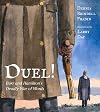
Should a child ever complain that history is boring, do not hesitate to present them with Dennis Brindell Fradin’s Duel! Burr and Hamilton’s Deadly War of Words. The tale alone is exciting, somewhat humorous and very, very true, and is certainly well-matched with Larry Day’s illustrations, drawn with all the movement and urgency of a graphic novel but without the panels.
As many may already know, Alexander Hamilton was one of the politicians that signed the U.S. Constitution, while show more Aaron Burr was Vice President to Thomas Jefferson. Both gentlemen had difficult childhoods, came of age in New Jersey and served as aides to General George Washington during the Revolutionary War. It was here that their quarrels began, when Washington embraced the confrontational Hamilton but thought Burr was a troublemaker and dismissed him. From then on their hatred of each other only increased, both seeking to undermine the other over years of political climbing. After Hamilton sabotaged Burr’s campaign to become New York’s governor, Burr proclaimed that Hamilton must apologize to him or fight in a duel. Readers can assume Hamilton’s choice based on the book’s title, but will enjoy experiencing the events unfold regardless.
Duel! is perfect for any classroom social studies curriculum covering America’s first years as a fledgling nation. Students will get a kick out of re-imagining the once-stoic and wise figures of the portraits in their textbooks as perpetrators of a scandalous and childish rivalry that lasted for years. show less
As many may already know, Alexander Hamilton was one of the politicians that signed the U.S. Constitution, while show more Aaron Burr was Vice President to Thomas Jefferson. Both gentlemen had difficult childhoods, came of age in New Jersey and served as aides to General George Washington during the Revolutionary War. It was here that their quarrels began, when Washington embraced the confrontational Hamilton but thought Burr was a troublemaker and dismissed him. From then on their hatred of each other only increased, both seeking to undermine the other over years of political climbing. After Hamilton sabotaged Burr’s campaign to become New York’s governor, Burr proclaimed that Hamilton must apologize to him or fight in a duel. Readers can assume Hamilton’s choice based on the book’s title, but will enjoy experiencing the events unfold regardless.
Duel! is perfect for any classroom social studies curriculum covering America’s first years as a fledgling nation. Students will get a kick out of re-imagining the once-stoic and wise figures of the portraits in their textbooks as perpetrators of a scandalous and childish rivalry that lasted for years. show less
Lists
Awards


You May Also Like


Associated Authors
Statistics
- Works
- 256
- Members
- 11,809
- Popularity
- #1,987
- Rating
- 4.0
- Reviews
- 116
- ISBNs
- 554
- Languages
- 1
- Favorited
- 1