
Ever Dundas
Author of Goblin
Works by Ever Dundas
Associated Works
Tagged
Common Knowledge
Members
Reviews
Originally posted on Just Geeking by.
Content warnings:
This book contains scenes of death, execution, violence, torture, and medical trauma. There is a toxic relationship which includes a sexual abuse scene, emotional abuse, gaslighting, fatphobia, and controlling and manipulative behaviour. There is an ongoing theme of abuse, hate and prejudice towards a people who are chronically ill and there are scenes of physical, medical and verbal abuse (including slurs) throughout. This group is show more forced to live in slums as soon as they present symptoms. Other scenes include terrorism, police brutality, self-harm and experiments on animals.
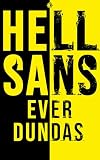
HellSans by Ever Dundas is unlike any book about disability I’ve ever read, and make no mistake, this is a book about disability. Dundas dedicates HellSans to “all queer crips and people with M.E. who have endured decades of cruelty and neglect with love and rage” which made me feel so seen before I had even started the actual book. HellSans offers the reader the choice of starting either narrative first. One narrative is from the perspective of Dr Ichoriel ‘Icho’ Smith, a doctor working on a cure for the allergy to HellSans and the other is from Jane Ward, the CEO of The Company. Jane is the creator of several cyborg robots that became a staple for society. Everyone now uses an Inex, a cyborg that connects to them and monitors them emotionally and physically, tracking and maintaining every single part of their life. They also use one called an Ino which takes care of all chores, and housekeeping duties including making food. Both can administer some first aid and some basic medical care.
The other way the HellSans universe differs from ours is that a form of typography has been utilised by the Government as a drug. It’s referred to by its narrators as ‘HellSans’, for reasons that become obvious throughout the book. This drug creates a sensation that is known as “bliss” in most of the population – but not all. Some people have a natural resistance to it and are “unblissed”, they get no high from the font. Others have an allergic reaction to it, and they are immediately outcast from society, forced to live in slums outside the city.
At first, it seemed strange to think of a font as being able to give people a high, and then I realised how clever such an idea would be. Fonts are everywhere. I’m using one right now as I write this review, just as you’re reading one. By creating a font that is a drug, a group of people can mass control everyone and that is exactly what has happened in HellSans. The HSAs, the HellSans allergic, are unblissed. They see the world the way it really is, the control and oppression, and that terrifies those in control. They react with the only tool they know; more oppression and create the narrative that HSAs are deviants.
I read the narratives in the order that they are presented because I can’t read things out of order, and find it difficult to switch back and forth. Icho and Jane’s narratives are very different from each other. Icho is trying to help HSAs, although her motives for doing so does not become clear until later in the book. As a result of her work directly with HSAs she is more aware of how they are treated, the abuse that they suffer in the city and in the slums. In comparison, Jane is one of society’s elite who looks down on HSA’s with complete disgust as is expected of her as one of the “blissed”. When a traumatic event triggers HSA in her Jane is in complete denial. Denial that she has HSA and that she, the CEO of the most powerful company, is being stripped of her power and position. She is Jane Ward, this shouldn’t be happening to her!
On the run with a working cure, Icho recognises the symptoms of HSA in Jane and realises that Jane is her best chance of surviving. Jane has the resources and she needs Icho. Each of their narratives tell their stories up to the point where they find each other, and after that it becomes a combined narrative. The way Dundas has experimented with narrative in HellSans is brilliantly innovative and is something to explore all on its own. My focus, however, is on how she has captured the way that society and especially the medical profession has treated people with ME/CFS for decades. People with other chronic health conditions will be able to draw comparisons with this too, I mention ME/CFS especially because of the dedication at the start of the book.
Jane’s denial in particular was familiar, especially in a post-COVID world because there are so many people who were “healthy” that fell in with Long Covid and ME/CFS who previously would have looked down on disabled people for being “unhealthy”. We were ill due to our own actions. It was all because we didn’t look after ourselves, or we were overweight. There are many reasons we’ve all heard. Then COVID came along and didn’t discriminate. Likewise, HSA in HellSans can affect anyone at any time in their life if the circumstances are right. ME/CFS is the same; if the body undergoes enough physical trauma it can trigger ME/CFS. I know because that is exactly what happened to me.
Dundas doesn’t skim on detail when it comes to how messy having a chronic illness is, and looking at reviews I can see how much that went way over non-disabled readers heads. There is a lot of “body horror” in HellSans because guess what? Being disabled, especially being chronically ill, involves a lot of bodily fluids and not the fun ones. There is no difference between showing revulsion for fictional ill characters and real disabled people. You’re still showing revulsion about the same thing happening. Even by referring to symptoms as “body horror” there is a suggestion that what we go through is something from a horror story, that in some way it’s not real or that being disabled is so bad that it is “horrific”. Dundas could have written a neat story where Jane’s symptoms are perfectly timed, and aren’t as severe. But HellSans isn’t that type of story.
I also appreciated that Dundas showed the ugly side of her characters. Being disabled is rough, and Jane and Icho were in a very difficult situation. Suddenly becoming ill doesn’t suddenly make someone a saint. Jane was a nasty person before she developed HSA, and she’s still a bitch afterwards. Likewise, being a medical professional or scientist doesn’t mean you’re a good person. Both characters are very complicated and that is as it should be. If you’re heading into this book expecting to find likeable characters just because it’s about disability then this isn’t the book for you, and you need to check your ableism.
HellSans is a dark book that feels like Dundas was watching over my shoulder while I struggled every step of the way to get a diagnosis for ME/CFS, and has listened to every scream of frustration I’ve ever made as a chronically ill person. HellSans is unlike anything I have ever read. When I say this is a must-read for disabled readers I mean it. I was going to say it is a must-read for everyone, but having seen reviews from non-disabled readers I honestly don’t feel that many are able to understand what HellSans is saying. This is very much a love letter to the disabled community and written in our language for us. If non-disabled readers gain some understanding of our every day fight then that’s great, but if they don’t then that is their loss.
BLOG | REVIEWS | REVIEW SCHEDULE | TWITTER | INSTAGRAM | PINTEREST |
show less
Content warnings:
HellSans by Ever Dundas is unlike any book about disability I’ve ever read, and make no mistake, this is a book about disability. Dundas dedicates HellSans to “all queer crips and people with M.E. who have endured decades of cruelty and neglect with love and rage” which made me feel so seen before I had even started the actual book. HellSans offers the reader the choice of starting either narrative first. One narrative is from the perspective of Dr Ichoriel ‘Icho’ Smith, a doctor working on a cure for the allergy to HellSans and the other is from Jane Ward, the CEO of The Company. Jane is the creator of several cyborg robots that became a staple for society. Everyone now uses an Inex, a cyborg that connects to them and monitors them emotionally and physically, tracking and maintaining every single part of their life. They also use one called an Ino which takes care of all chores, and housekeeping duties including making food. Both can administer some first aid and some basic medical care.
The other way the HellSans universe differs from ours is that a form of typography has been utilised by the Government as a drug. It’s referred to by its narrators as ‘HellSans’, for reasons that become obvious throughout the book. This drug creates a sensation that is known as “bliss” in most of the population – but not all. Some people have a natural resistance to it and are “unblissed”, they get no high from the font. Others have an allergic reaction to it, and they are immediately outcast from society, forced to live in slums outside the city.
At first, it seemed strange to think of a font as being able to give people a high, and then I realised how clever such an idea would be. Fonts are everywhere. I’m using one right now as I write this review, just as you’re reading one. By creating a font that is a drug, a group of people can mass control everyone and that is exactly what has happened in HellSans. The HSAs, the HellSans allergic, are unblissed. They see the world the way it really is, the control and oppression, and that terrifies those in control. They react with the only tool they know; more oppression and create the narrative that HSAs are deviants.
I read the narratives in the order that they are presented because I can’t read things out of order, and find it difficult to switch back and forth. Icho and Jane’s narratives are very different from each other. Icho is trying to help HSAs, although her motives for doing so does not become clear until later in the book. As a result of her work directly with HSAs she is more aware of how they are treated, the abuse that they suffer in the city and in the slums. In comparison, Jane is one of society’s elite who looks down on HSA’s with complete disgust as is expected of her as one of the “blissed”. When a traumatic event triggers HSA in her Jane is in complete denial. Denial that she has HSA and that she, the CEO of the most powerful company, is being stripped of her power and position. She is Jane Ward, this shouldn’t be happening to her!
On the run with a working cure, Icho recognises the symptoms of HSA in Jane and realises that Jane is her best chance of surviving. Jane has the resources and she needs Icho. Each of their narratives tell their stories up to the point where they find each other, and after that it becomes a combined narrative. The way Dundas has experimented with narrative in HellSans is brilliantly innovative and is something to explore all on its own. My focus, however, is on how she has captured the way that society and especially the medical profession has treated people with ME/CFS for decades. People with other chronic health conditions will be able to draw comparisons with this too, I mention ME/CFS especially because of the dedication at the start of the book.
Jane’s denial in particular was familiar, especially in a post-COVID world because there are so many people who were “healthy” that fell in with Long Covid and ME/CFS who previously would have looked down on disabled people for being “unhealthy”. We were ill due to our own actions. It was all because we didn’t look after ourselves, or we were overweight. There are many reasons we’ve all heard. Then COVID came along and didn’t discriminate. Likewise, HSA in HellSans can affect anyone at any time in their life if the circumstances are right. ME/CFS is the same; if the body undergoes enough physical trauma it can trigger ME/CFS. I know because that is exactly what happened to me.
Dundas doesn’t skim on detail when it comes to how messy having a chronic illness is, and looking at reviews I can see how much that went way over non-disabled readers heads. There is a lot of “body horror” in HellSans because guess what? Being disabled, especially being chronically ill, involves a lot of bodily fluids and not the fun ones. There is no difference between showing revulsion for fictional ill characters and real disabled people. You’re still showing revulsion about the same thing happening. Even by referring to symptoms as “body horror” there is a suggestion that what we go through is something from a horror story, that in some way it’s not real or that being disabled is so bad that it is “horrific”. Dundas could have written a neat story where Jane’s symptoms are perfectly timed, and aren’t as severe. But HellSans isn’t that type of story.
I also appreciated that Dundas showed the ugly side of her characters. Being disabled is rough, and Jane and Icho were in a very difficult situation. Suddenly becoming ill doesn’t suddenly make someone a saint. Jane was a nasty person before she developed HSA, and she’s still a bitch afterwards. Likewise, being a medical professional or scientist doesn’t mean you’re a good person. Both characters are very complicated and that is as it should be. If you’re heading into this book expecting to find likeable characters just because it’s about disability then this isn’t the book for you, and you need to check your ableism.
HellSans is a dark book that feels like Dundas was watching over my shoulder while I struggled every step of the way to get a diagnosis for ME/CFS, and has listened to every scream of frustration I’ve ever made as a chronically ill person. HellSans is unlike anything I have ever read. When I say this is a must-read for disabled readers I mean it. I was going to say it is a must-read for everyone, but having seen reviews from non-disabled readers I honestly don’t feel that many are able to understand what HellSans is saying. This is very much a love letter to the disabled community and written in our language for us. If non-disabled readers gain some understanding of our every day fight then that’s great, but if they don’t then that is their loss.
BLOG | REVIEWS | REVIEW SCHEDULE | TWITTER | INSTAGRAM | PINTEREST |
show less
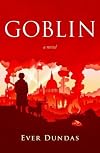
Goblin is the only name by which we know narrator, a reader-in-residence at Edinburgh Central Library whose best friend is a homeless Scot whose life goal is to eat (yes, eat) literature. In alphabetical order, of course. But news of a grisly discovery in London which dates back to the early days of the Second World War and Goblin's own difficult East End childhood. The news hits Goblin hard and she falls ill, with only Ben and his dog Sam to care for her. When her strength returns it is show more only to discover that the contents of the makeshift grave; animal bones, broken toys and a camera among them, have placed her at the site and identified her a the photographer. Eventually she must return to London to face her past, even while the riots of 2011 bring the city into chaos. Her journey in memory takes us even further, from the bombed-out streets of the Blitz, to a less-than-idyllic evacuation in Cornwall, a travelling circus, the canals of Venice and the tenements of Edinburgh.
The blurb is somewhat deceptive. While much of the novel hinges on that liminal area between dream and reality, imagination and the real world, Goblin is not magical realism in the way that that term is usually understood. Instead, Dundas teases us with unsettling penetrations of the impossible (and often nightmarish) into the light of day. Goblin's companion Monsta is unexplained for a long time, described only by a few confusing and and unpleasant features but its constant presence on the periphery adds suitable unease. The final reveal is both touching and troubling, a winning combination that Dundas manages with impressive flair.
This is not an easy read. It is dark and sometimes distressing (the aftermath of the pet massacre of 1939 sets the tone) with themes of war, delusion, abuse, neglect and violence. But it is also bold and baroque. Dundas has a real feel for imagery which is sometimes grotesque but always affecting and really put me in mind of Baudelaire's ability to disgust and invite at the same time. Some of the events are quite far-fetched but they are grounded in wonderful, warm characters and a vivid evocation of place in the wider context of Dundas's peculiar gothic atmosphere they do not feel out of place. Underpinning all of this is a deep understanding of the period of Goblin's childhood. Britain has a tendency to romanticise its wartime experience and expunge some of the darker tendencies of the Home Front experience. Evacuees did not always receive the warm welcome and kind shelter that CS Lewis's Professor gave to the Pevencies, the civilian population were not immune to excessive and violent reactions in time of panic and the need to pull together certainly did not erase all crime or overcome all divisions. Dundas acknowledges all of this without denying that there was also plenty of courage, kindness and sacrifice. It's a clever touch to contrast all of this with the London Riots of 2011. The comparison was made at the time (we always fall back on the rose-tinted idea of the "Blitz spirit) but in Goblin it is far more subtle and credible.
I loved Goblin. Despite all the potential pitfalls of a fantastical plot and monstrous (in every sense) characters it demonstrates Ever Dundas's confidence and a sure knowledge of herself-as-writer that is remarkable for a debut novel. show less
The blurb is somewhat deceptive. While much of the novel hinges on that liminal area between dream and reality, imagination and the real world, Goblin is not magical realism in the way that that term is usually understood. Instead, Dundas teases us with unsettling penetrations of the impossible (and often nightmarish) into the light of day. Goblin's companion Monsta is unexplained for a long time, described only by a few confusing and and unpleasant features but its constant presence on the periphery adds suitable unease. The final reveal is both touching and troubling, a winning combination that Dundas manages with impressive flair.
This is not an easy read. It is dark and sometimes distressing (the aftermath of the pet massacre of 1939 sets the tone) with themes of war, delusion, abuse, neglect and violence. But it is also bold and baroque. Dundas has a real feel for imagery which is sometimes grotesque but always affecting and really put me in mind of Baudelaire's ability to disgust and invite at the same time. Some of the events are quite far-fetched but they are grounded in wonderful, warm characters and a vivid evocation of place in the wider context of Dundas's peculiar gothic atmosphere they do not feel out of place. Underpinning all of this is a deep understanding of the period of Goblin's childhood. Britain has a tendency to romanticise its wartime experience and expunge some of the darker tendencies of the Home Front experience. Evacuees did not always receive the warm welcome and kind shelter that CS Lewis's Professor gave to the Pevencies, the civilian population were not immune to excessive and violent reactions in time of panic and the need to pull together certainly did not erase all crime or overcome all divisions. Dundas acknowledges all of this without denying that there was also plenty of courage, kindness and sacrifice. It's a clever touch to contrast all of this with the London Riots of 2011. The comparison was made at the time (we always fall back on the rose-tinted idea of the "Blitz spirit) but in Goblin it is far more subtle and credible.
I loved Goblin. Despite all the potential pitfalls of a fantastical plot and monstrous (in every sense) characters it demonstrates Ever Dundas's confidence and a sure knowledge of herself-as-writer that is remarkable for a debut novel. show less
I wonder sometimes if we’ll ever tire of stories set in World War II. From Ian McEwan’s Atonement to Julie Summer’s Jambusters! and everything in between and beyond, the period makes for rich pickings. Ever Dundas’ Goblin is different. The story opens during the Blitz and is centred on a little known pet massacre, when Londoners, anxious over food shortages and concerned about bombing—pets were not allowed in shelters—voluntarily had their pets put down. An estimated 750,000 pets show more were destroyed in just one week.
Goblin begins in a library, with an elderly woman, a Reader in Residence, in conversation with a vagrant, Ben, occupying himself with eating the pages of books. Goblin is troubled; she’s a bit of an alcoholic, rough around the edges, self-neglecting. Old photographs, flashbacks, an enquiring Ben and a fainting fit, all bring her back to her childhood; and she decides to write down her life story in the form of a memoir.
She hadn’t washed it for days. You can tell from the photo, if you look carefully, you can tell it has lost its sparkle. I remember it sparkling red in the sun. There’s a curl matted against her forehead. The rest is messy, framing her face. You can see the wrinkles forming around her lips, beautiful perfect lines. She’s wearing lipstick, some of it straying into one of the lines. I can smell her. The warm smell of jasmine and earth, the smell of sweat and the grease that dulled her hair.
From such quirky and poignant beginnings, the narrative jump cuts to 1939, to the London Blitz, to the story of nine-year old Goblin-runt, or so her mother calls her, and her collection of real and imaginary friends. Goblin exists in a hostile environment, typical of the era and area. She plays in amongst the debris of bombed out buildings and wasteland. Her favourite haunt is Kensal Green cemetery, where she hangs out in a mausoleum. At home, her father is silent, their relationship founded on a shared interest in fixing radios; her mother hateful, cruel and dismissive, telling Goblin over and again she should never have been born. Goblin’s only ally in her family is her older brother, David, a sensitive young man and conscientious objector, a conchie, something their parents, and the community, despise.
Goblin is an urchin. She takes life’s punches and gets on with it. She’s practical, big-hearted and caring towards pets. Ultimately, she’s a survivor, escaping into her imagination for solace. She slips into a fairy tale world, her fantasies mirroring the barbaric insanities of a war torn reality. Meet Goblin’s imaginary friends, Queen Isabella, Amelia and Scholler, the lizard people inspired by HG Wells’ The Time Machine. Meet her homemade doll, Monsta, alive in so many ways.
Monsta sees me stop and sway, uncertain. Monsta’s head shakes gently, the worm arm floating to me. I’ve not to sink. There are no Devils, but there are Monstas, and the lizard people await. Gently gently Monsta climbs, encircling my neck with worm tentacles, gently gently, casting a spell of forgetfulness, forgetting the loss above, revelling in London below.
Goblin’s other world is her fortitude, her resilience, providing the reassurance, guidance and comfort all so lacking in her childhood. Real life brushes up against the imaginary through characters such as crazy old Pigeon woman, who keeps birds in her hair, and whose friendship early in the story is a harbinger of the colourful characters, and the tragedy, to follow.
Along with her dog, Devil, and her friends, Stevie and Matt, tomboy Goblin gets into endless scrapes. When the trio confront a pyre of dead pet bodies, the narrative, already bleak, turns macabre. About the same time, David is ruthlessly beaten up by a local gang of conchie haters. Devil is shot dead. Goblin is traumatised. Shortly after, she joins a child evacuation to Cornwall. Deciding boys have better lives than girls, she pretends she’s male and is taken in by a farmer and his wife.
Life in Cornwall with her second set of parents isn’t much better. Goblin eventually escapes and heads back to London to find her brother has disappeared. After a period spent busking with her pet chickens, Goblin joins the circus, garnering a third set of parents, a couple who collect ‘freaks’ and misfits and insert them into one big family. What ensues is an intriguing portrait of a young woman wracked with longing for her disappeared brother, taking the form of obsession and denial by turns.
Goblin’s quest to find her brother drives the narrative, the suspense held in place right to the last page by elderly Goblin’s refusal to talk about her past to a detective investigating an old crime. What did the old lady witness back in 1939? Old-age reticence and childhood innocence are juxtaposed, the parallels teased out, for the child in Goblin is never gone, despite or because of all she has been through.
There is much to love about this book. Written as a frame narrative, the prose is taut, rhythmic, elegant, unpretentious; the pace fast. The occasional short passages of stream of consciousness work well, I thought, as do the jump cuts from present to past, the author never failing to take the reader with her. Dundas explores her themes with exquisite sensitivity and poise; themes of trauma and grieving, survival and belonging, queer theory and love. Elements of magic realism are interwoven seamlessly into the story, and Goblin’s enduring love of animals shines through every page. The narrative never labours, never misses a beat, quickening or lingering when it needs to. There’s a twist round every corner, building to a powerful and satisfying finale.
Written from the point of view of the ‘disadvantaged,’ society’s rejects, the homeless, the elderly, the rough and ready East End poor, Goblin is a story of the fringes; it dwells in the cracks in the pavement, in underground places, in netherworlds existing in the ordinary world, in wounds, open or scarred. Normality is a side show.
Historical fiction in a literary sense, Goblin journeys inside a cultural vein, a place we would rather forget but can’t help returning to. There is no glamour, no warm fuzzy WI ladies making tea, yet the narrative is infused with warmth that comes from the author’s heart in ‘lived it, living it’ style. I am reminded of Edna O’Brien’s Country Girls and Gunter Grass’ The Tin Drum, with a touch of Iain Banks’ The Wasp Factory for seasoning. Dundas paints a portrait that is vivid, grotesque, and captivating all at once. The result, Goblin, is a book to sink into in complete trust, a story to savour like grandma’s bread pudding, crusty around the edges, spicy and soft inside, a masterpiece. show less
Goblin begins in a library, with an elderly woman, a Reader in Residence, in conversation with a vagrant, Ben, occupying himself with eating the pages of books. Goblin is troubled; she’s a bit of an alcoholic, rough around the edges, self-neglecting. Old photographs, flashbacks, an enquiring Ben and a fainting fit, all bring her back to her childhood; and she decides to write down her life story in the form of a memoir.
She hadn’t washed it for days. You can tell from the photo, if you look carefully, you can tell it has lost its sparkle. I remember it sparkling red in the sun. There’s a curl matted against her forehead. The rest is messy, framing her face. You can see the wrinkles forming around her lips, beautiful perfect lines. She’s wearing lipstick, some of it straying into one of the lines. I can smell her. The warm smell of jasmine and earth, the smell of sweat and the grease that dulled her hair.
From such quirky and poignant beginnings, the narrative jump cuts to 1939, to the London Blitz, to the story of nine-year old Goblin-runt, or so her mother calls her, and her collection of real and imaginary friends. Goblin exists in a hostile environment, typical of the era and area. She plays in amongst the debris of bombed out buildings and wasteland. Her favourite haunt is Kensal Green cemetery, where she hangs out in a mausoleum. At home, her father is silent, their relationship founded on a shared interest in fixing radios; her mother hateful, cruel and dismissive, telling Goblin over and again she should never have been born. Goblin’s only ally in her family is her older brother, David, a sensitive young man and conscientious objector, a conchie, something their parents, and the community, despise.
Goblin is an urchin. She takes life’s punches and gets on with it. She’s practical, big-hearted and caring towards pets. Ultimately, she’s a survivor, escaping into her imagination for solace. She slips into a fairy tale world, her fantasies mirroring the barbaric insanities of a war torn reality. Meet Goblin’s imaginary friends, Queen Isabella, Amelia and Scholler, the lizard people inspired by HG Wells’ The Time Machine. Meet her homemade doll, Monsta, alive in so many ways.
Monsta sees me stop and sway, uncertain. Monsta’s head shakes gently, the worm arm floating to me. I’ve not to sink. There are no Devils, but there are Monstas, and the lizard people await. Gently gently Monsta climbs, encircling my neck with worm tentacles, gently gently, casting a spell of forgetfulness, forgetting the loss above, revelling in London below.
Goblin’s other world is her fortitude, her resilience, providing the reassurance, guidance and comfort all so lacking in her childhood. Real life brushes up against the imaginary through characters such as crazy old Pigeon woman, who keeps birds in her hair, and whose friendship early in the story is a harbinger of the colourful characters, and the tragedy, to follow.
Along with her dog, Devil, and her friends, Stevie and Matt, tomboy Goblin gets into endless scrapes. When the trio confront a pyre of dead pet bodies, the narrative, already bleak, turns macabre. About the same time, David is ruthlessly beaten up by a local gang of conchie haters. Devil is shot dead. Goblin is traumatised. Shortly after, she joins a child evacuation to Cornwall. Deciding boys have better lives than girls, she pretends she’s male and is taken in by a farmer and his wife.
Life in Cornwall with her second set of parents isn’t much better. Goblin eventually escapes and heads back to London to find her brother has disappeared. After a period spent busking with her pet chickens, Goblin joins the circus, garnering a third set of parents, a couple who collect ‘freaks’ and misfits and insert them into one big family. What ensues is an intriguing portrait of a young woman wracked with longing for her disappeared brother, taking the form of obsession and denial by turns.
Goblin’s quest to find her brother drives the narrative, the suspense held in place right to the last page by elderly Goblin’s refusal to talk about her past to a detective investigating an old crime. What did the old lady witness back in 1939? Old-age reticence and childhood innocence are juxtaposed, the parallels teased out, for the child in Goblin is never gone, despite or because of all she has been through.
There is much to love about this book. Written as a frame narrative, the prose is taut, rhythmic, elegant, unpretentious; the pace fast. The occasional short passages of stream of consciousness work well, I thought, as do the jump cuts from present to past, the author never failing to take the reader with her. Dundas explores her themes with exquisite sensitivity and poise; themes of trauma and grieving, survival and belonging, queer theory and love. Elements of magic realism are interwoven seamlessly into the story, and Goblin’s enduring love of animals shines through every page. The narrative never labours, never misses a beat, quickening or lingering when it needs to. There’s a twist round every corner, building to a powerful and satisfying finale.
Written from the point of view of the ‘disadvantaged,’ society’s rejects, the homeless, the elderly, the rough and ready East End poor, Goblin is a story of the fringes; it dwells in the cracks in the pavement, in underground places, in netherworlds existing in the ordinary world, in wounds, open or scarred. Normality is a side show.
Historical fiction in a literary sense, Goblin journeys inside a cultural vein, a place we would rather forget but can’t help returning to. There is no glamour, no warm fuzzy WI ladies making tea, yet the narrative is infused with warmth that comes from the author’s heart in ‘lived it, living it’ style. I am reminded of Edna O’Brien’s Country Girls and Gunter Grass’ The Tin Drum, with a touch of Iain Banks’ The Wasp Factory for seasoning. Dundas paints a portrait that is vivid, grotesque, and captivating all at once. The result, Goblin, is a book to sink into in complete trust, a story to savour like grandma’s bread pudding, crusty around the edges, spicy and soft inside, a masterpiece. show less
I think calling this novel a blend between fantasy and reality might be a bit of a stretch. And the reason that I say this is because it misled me a great deal. From the premise, I thought that I would be reading about a girl who flits back and forth between different realms and it is up to the reader to discover which is the truth. The novel is better depicted as flitting between past and present, and there is always this feeling that something is being hidden from the reader and from the show more protagonist herself. Yes, she makes up things and creates her own reality, but I wouldn't go so far as to portray it as a fantasy because technically, not much of what she says is fake. Most of it is real. Aside from this contradiction, I really did enjoy this story. It is deep and complex, and you get lost in Goblin's world. She is a unique character, one that I have never really encountered and seeing things from her perspective is just such a bizarre and amazing experience. Her life is absolutely ridiculous in its trajectory but that's what keeps the story moving, and keeps the interest of the reader. As the story continued to build, and the digging for the truth begins, the author ramps up the tension - and this is done beautifully, by the way. I was holding my breath, turning the pages as fast as I could until I finally reached the end. And the ending was abrupt, I won't lie, but it worked because this is just one of those books that doesn't really follow the rules. In short, I think this was a very interesting novel that takes place during World War 2 and features a very unique female protagonist; however, if you are expecting some major fantasy elements, then you may find yourself disappointed.
I received this novel as an advanced copy from NetGalley in exchange for an honest review.
For more reviews, visit: www.veereading.wordpress.com show less
I received this novel as an advanced copy from NetGalley in exchange for an honest review.
For more reviews, visit: www.veereading.wordpress.com show less
Lists
Awards


You May Also Like
Associated Authors
Statistics
- Works
- 2
- Also by
- 1
- Members
- 67
- Popularity
- #256,178
- Rating
- 3.5
- Reviews
- 5
- ISBNs
- 7