
Fabien Nury
Author of The Death of Stalin
About the Author
Image credit: Fabien Nury (2011)
Series
Works by Fabien Nury
Charlotte impératrice - Tome 1 - La Princesse et l'Archiduc (French Edition) (2018) 28 copies, 1 review
Olipa kerran Ranskassa 5-6 Suuri gangesterisota: Osa 5: Pikkukaupungin tuomari : Osa 6: Luvattu maa (2015) 6 copies
Katanga 1. Diamonds 1 copy
Śmierć Stalina 1 copy
Jam jest legion 1 copy
Legion : kroniki 1 copy
En Russisk Historie 1 copy
Katanga - Intégrale 1 copy
Associated Works
Tagged
Common Knowledge
- Birthdate
- 1976-05-31
- Gender
- male
- Nationality
- France
- Associated Place (for map)
- France
Members
Reviews
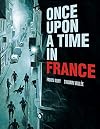
A massive and wholly engrossing epic of French criminals, collaborators, and resistance members during and after World War II. I thought at first the events of the book and its antihero Joseph Joanovici were entirely fiction, but they are based on reality, even if Nury does take a great deal of dramatic license.
Joanovici, a Romanian Jew, flees Russian pogroms and builds himself up from nothing in the scrap-metal business to a millionaire who plays both sides -- Nazi and Resistance -- in show more occupied France. The violence and the dark machinations clashing with personal lives reminded me a lot of The Sopranos. Like that show, I simultaneously despised the protagonist while finding myself on the edge of my seat wondering how he was going to get out of this next life-threatening moment.
Pretty damned amazing. show less
Joanovici, a Romanian Jew, flees Russian pogroms and builds himself up from nothing in the scrap-metal business to a millionaire who plays both sides -- Nazi and Resistance -- in show more occupied France. The violence and the dark machinations clashing with personal lives reminded me a lot of The Sopranos. Like that show, I simultaneously despised the protagonist while finding myself on the edge of my seat wondering how he was going to get out of this next life-threatening moment.
Pretty damned amazing. show less
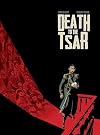
Though called "Death to the Tsar," this book is actually about an assassination plot against Tsar Nicholas II's uncle, Grand Duke Sergei Alexandrovich, Governor General of Moscow. The first half of the book focuses on Alexandrovich as he sets off a slaughter of his own subjects and learns he is targeted for retaliation. I found myself almost sympathizing with the little weasel as he cycled through the stages of grief, coming to terms with his looming death as the assassins close in with show more multiple attempts.
Unfortunately, halfway through the book the story backtracks in time and then follows the cell of assassins on Alexandrovich's trail, and they are far from idealistic, righteous or even sympathetic. And I guess that's sort of the theme of the book. Life is a muddle. The villains aren't all bad, and the revolutionaries trying to overthrow them aren't all good. It's pretty downbeat, but still well done overall. show less
Unfortunately, halfway through the book the story backtracks in time and then follows the cell of assassins on Alexandrovich's trail, and they are far from idealistic, righteous or even sympathetic. And I guess that's sort of the theme of the book. Life is a muddle. The villains aren't all bad, and the revolutionaries trying to overthrow them aren't all good. It's pretty downbeat, but still well done overall. show less
Revenge is a dish best served cold. Like, glacially so.
(Full disclosure: I received a free e-ARC for review through NetGalley. Trigger warning for racist violence, including rape.)
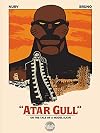
Based on a novel of the same name, penned by the French writer Eugène Sue and published in 1831, Atar Gull is a story of revenge - of the "dish best served cold" variety. Taken prisoner by Taroo, chief of the Great Namaquas, Atar Gull finds himself on a slave ship bound for the West Indies. During the voyage, the show more Catherine is attacked and ultimately boarded by a band of ruthless pirates, led by Captain Brulart. A ruse, a sacrifice, and a ship chase later, Atar Gull is one of the few surviving captives when the vessel finally docks in Jamaica. Here, he's sold to plantation owner Tom Will; part of a lot of "Negroes and Negresses" to serve as a dowry for his daughter Jenny.
While all these horrors are certainly just cause for what comes later (or some of it, anyway), the breaking point comes when Atar Gull learns the fate of his father, the chief of the Little Namaquas before him. If the previous pages didn't completely dispel with the myth of the "benevolent slaveowner" (an oxymoron if ever there was one), then certainly this calculating and heartless scheme will do the trick.
Gazing upon his father's lifeless face, Atar Gull hatches a plan of revenge that's slow to unravel, yet destroys everything in its path.
Usually I love revenge stories that center members of oppressed groups as anti-/heroes, but my feelings were a little more conflicted here. It's hard to root for Atar Gull without restraint, since so many innocents suffer under his wrath: Will's human captives and nonhuman chattel chief among them. Consequently, Atar Gull's revenge felt a little empty and ... unsatisfying. The final panels, though? Chilling AF.
http://www.easyvegan.info/2018/05/29/atar-gull-by-fabien-nury-and-bruno/ show less
(Full disclosure: I received a free e-ARC for review through NetGalley. Trigger warning for racist violence, including rape.)
Based on a novel of the same name, penned by the French writer Eugène Sue and published in 1831, Atar Gull is a story of revenge - of the "dish best served cold" variety. Taken prisoner by Taroo, chief of the Great Namaquas, Atar Gull finds himself on a slave ship bound for the West Indies. During the voyage, the show more Catherine is attacked and ultimately boarded by a band of ruthless pirates, led by Captain Brulart. A ruse, a sacrifice, and a ship chase later, Atar Gull is one of the few surviving captives when the vessel finally docks in Jamaica. Here, he's sold to plantation owner Tom Will; part of a lot of "Negroes and Negresses" to serve as a dowry for his daughter Jenny.
While all these horrors are certainly just cause for what comes later (or some of it, anyway), the breaking point comes when Atar Gull learns the fate of his father, the chief of the Little Namaquas before him. If the previous pages didn't completely dispel with the myth of the "benevolent slaveowner" (an oxymoron if ever there was one), then certainly this calculating and heartless scheme will do the trick.
Gazing upon his father's lifeless face, Atar Gull hatches a plan of revenge that's slow to unravel, yet destroys everything in its path.
Usually I love revenge stories that center members of oppressed groups as anti-/heroes, but my feelings were a little more conflicted here. It's hard to root for Atar Gull without restraint, since so many innocents suffer under his wrath: Will's human captives and nonhuman chattel chief among them. Consequently, Atar Gull's revenge felt a little empty and ... unsatisfying. The final panels, though? Chilling AF.
http://www.easyvegan.info/2018/05/29/atar-gull-by-fabien-nury-and-bruno/ show less
https://fromtheheartofeurope.eu/charlotte-imperatrice-tome-1-la-princesse-et-lar...
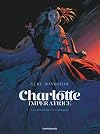
the first of five volumes about the life of Princess Charlotte of Belgium, later Empress of Mexico. This volume takes us from the death of Charlotte’s mother in 1850 to her installation in Mexico in 1864, from the age of 10 to the age of 24, including the first years of her marriage at the age of 17 to the Archduke Maximilian, younger brother of the Austrian emperor Franz Joseph I.
Monarchy has many flaws, show more and not least is its impact on the actual royals, who are shown here as trapped in a gilded cage of privilege. Maximilian is a womaniser who is sterile because of venereal disease. Napoleon III is a sleazebag. Charlotte is rather obviously a Princess Di figure in this story, though history suggests that she was more assertive. The characterisation is a little stiff but you always know who is who.
Speaking of history, the story here has some serious omissions. It is implied that Maximilian’s term as viceroy of northern Italy was ended by the Battle of Solferino in 1859, which kicked the Hapsburgs out of Lombardy and Venice, but in fact he had been sacked by his brother two months earlier for being too liberal. Also historically Maximilian spent an awful lot of time pursuing his personal interests in Brazil, leaving Charlotte stranded on Madeira, and that simply isn’t mentioned here.
I don’t think I’ll bother with the rest; Charlotte is a tragic historical figure, but in the end her story is marginal to the real sweep of history, and while it’s OK not to let the facts get in the way of a good story, it’s important not to get too far away from them if you’re telling a historical tale. show less
the first of five volumes about the life of Princess Charlotte of Belgium, later Empress of Mexico. This volume takes us from the death of Charlotte’s mother in 1850 to her installation in Mexico in 1864, from the age of 10 to the age of 24, including the first years of her marriage at the age of 17 to the Archduke Maximilian, younger brother of the Austrian emperor Franz Joseph I.
Monarchy has many flaws, show more and not least is its impact on the actual royals, who are shown here as trapped in a gilded cage of privilege. Maximilian is a womaniser who is sterile because of venereal disease. Napoleon III is a sleazebag. Charlotte is rather obviously a Princess Di figure in this story, though history suggests that she was more assertive. The characterisation is a little stiff but you always know who is who.
Speaking of history, the story here has some serious omissions. It is implied that Maximilian’s term as viceroy of northern Italy was ended by the Battle of Solferino in 1859, which kicked the Hapsburgs out of Lombardy and Venice, but in fact he had been sacked by his brother two months earlier for being too liberal. Also historically Maximilian spent an awful lot of time pursuing his personal interests in Brazil, leaving Charlotte stranded on Madeira, and that simply isn’t mentioned here.
I don’t think I’ll bother with the rest; Charlotte is a tragic historical figure, but in the end her story is marginal to the real sweep of history, and while it’s OK not to let the facts get in the way of a good story, it’s important not to get too far away from them if you’re telling a historical tale. show less
Lists
Awards


You May Also Like


Associated Authors
Statistics
- Works
- 93
- Also by
- 1
- Members
- 1,729
- Popularity
- #14,866
- Rating
- 3.7
- Reviews
- 41
- ISBNs
- 269
- Languages
- 13