
Stacey Patton
Author of That Mean Old Yesterday: A Memoir
About the Author
Dr. Stacey Patton is an award-winning journalist, author, and child advocate. Her writing on issues surrounding higher education, child welfare, and race has appeared in the Washington Post, At Jazeera, the BBC News, and the Root. She is also the author of That Mean Old Yesterday and the creator of show more the anti-corporal punishment organization Spare the Kids. show less
Works by Stacey Patton
Associated Works
Trust Kids!: Stories on Youth Autonomy and Confronting Adult Supremacy (2022) — Contributor — 75 copies
Tagged
Common Knowledge
Members
Reviews
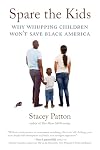
Stacey Patton’s book Spare the Kids: Why Whupping Children Won’t Save Black America was an engrossing read. She offers compelling statistics that show that the use of paddling does not improve behavior but instead increases the likelihood that students will fall behind in school, have future behavior problems, drop out of school, and become involved with the criminal or juvenile justice system. She says that black parents feel they need to whup their children to keep them safe or out of show more jail.
I have worked as a social worker with families who are involved with Child Protective Services, and I have seen first hand the concerns black parents have about the future of their children as black Americans if they don’t teach them respect for authority. However, I was not aware that the roots of the harsh discipline techniques used by some black parents are related to how their ancestors were treated as slaves. I did question, like other reviewers did, the assertion made by Patton that families in Africa did not and do not use corporal punishment and that therefore there was no tradition of harsh discipline until the experience of slavery. She does not adequately support that assertion and during a recent trip to Tanzania, I asked our three guides how children are disciplined and was told that some parents are lenient and some whup their children – as one might expect – but that there was no one cultural norm.
In chapter 8, Patton lays out a convincing argument that hitting kids regularly causes the children’s bodies to release cortisol as a fight or flight response, which can lead to cancer, heart disease, and other stress related ailments. Similarly, she claims whupping brings on early puberty in girls. She talks about the eroticism of black women and children by white men from the time of early explorers. For an example of this in more recent times, she points to the pornographic post cards of the 1920s and 1930s featuring young girls that emphasized large lips, bare bottoms, and curvy bodies. She argues that this inculturation of viewing black women as sexually promiscuous leads parents to hit their girls to “keep them innocent and from harm”. There is a lot to think about in this book and it should be considered carefully. show less
I have worked as a social worker with families who are involved with Child Protective Services, and I have seen first hand the concerns black parents have about the future of their children as black Americans if they don’t teach them respect for authority. However, I was not aware that the roots of the harsh discipline techniques used by some black parents are related to how their ancestors were treated as slaves. I did question, like other reviewers did, the assertion made by Patton that families in Africa did not and do not use corporal punishment and that therefore there was no tradition of harsh discipline until the experience of slavery. She does not adequately support that assertion and during a recent trip to Tanzania, I asked our three guides how children are disciplined and was told that some parents are lenient and some whup their children – as one might expect – but that there was no one cultural norm.
In chapter 8, Patton lays out a convincing argument that hitting kids regularly causes the children’s bodies to release cortisol as a fight or flight response, which can lead to cancer, heart disease, and other stress related ailments. Similarly, she claims whupping brings on early puberty in girls. She talks about the eroticism of black women and children by white men from the time of early explorers. For an example of this in more recent times, she points to the pornographic post cards of the 1920s and 1930s featuring young girls that emphasized large lips, bare bottoms, and curvy bodies. She argues that this inculturation of viewing black women as sexually promiscuous leads parents to hit their girls to “keep them innocent and from harm”. There is a lot to think about in this book and it should be considered carefully. show less
 This review was written for LibraryThing Early Reviewers.
Wow -- quite the book. It's a bit odd to review this, since I'm a White woman who has never considered hitting her kids. But I certainly understand that "whupping" can be a cultural parenting norm --one which is rooted in racism and highly damaging-- and one that, as Patton argues, needs to be rooted out. Patton brings appropriate evidence and analysis of how the experience of racism has brought "whupping" into Black American culture, but her solution doesn't really seem to go beyond "make show more parents aware of it and hopefully they'll stop." On the assumption that no one is about to wave a magic wand and eliminate American racism, I wonder what she would propose as a way to help parents deal with stressors and anxieties about child behavior (and how it will be seen by those in power). It seems that the best way in would be the churches, but it also is clear from Patton's chapters that the churches are frequently complicit in whupping as a form of discipline. And perhaps in propping up the victims of racist structures in the broader world. Likewise, the chapter describing a restorative-justice alternative to jailing child abusers is intriguing, but becomes an after-the-fact bandaid, and only applies to those relatively few parents who get caught at crossing the line into abuse. Her description of how hard it is to get a program like that accepted politically is depressing enough.
All in all, an eye-opening book, and one that is well-researched and written well. My only criticism is that Patton allows a little too much of her own bitterness at the way foster parents and the foster system treated her, to show through. show less
All in all, an eye-opening book, and one that is well-researched and written well. My only criticism is that Patton allows a little too much of her own bitterness at the way foster parents and the foster system treated her, to show through. show less
This review was written for LibraryThing Early Reviewers.Author Stacey Patton made me aware of an issue that I had no idea about--the prevalence of child discipline that crosses over into abuse in African-American families, and of which she herself is a survivor. Patton links this to the institutional racism in our society that goes back to how slave owners treated their slaves. In some memorable chapters, Patton writes about how "whupping" keeps children under stress which in turn releases hormones that stimulate sexual maturation at a young age show more and increases the likelihood of violent reactions, low I.Q.'s and a host of other problems that increases the odds that these children will interact with the criminal justice system. I found this book shocking, but I can't comment on its veracity. It also made me sad about the limited options that some families in our society have today. show less
This review was written for LibraryThing Early Reviewers.To give background, I am half-White and half-Asian and grew up in middle class in Midwest America. I do remember my parents spanking my siblings and I semi-regularly when I was younger, but from about age 10 and upwards, that stopped. I received this book for free as a part of LibraryThing's Early Reviewer program. I was initially apprehensive about starting the book because I didn't have a particular interest in the material; however, I'm glad I picked it up. Here are some of my show more thoughts:
Praises: I thought the book was quite informative and had a lot of material backing it up. The author would cite studies, quotes, and anecdotes that would support her opinions. I also thought Patton has a great voice in her writing. Some nonfiction books can seem like you're reading a scientific journal. That is, it can feel like numbers are simply being listed and can be difficult to read through. But Patton incorporated both facts and writing style in to this book, which made it both informative and enjoyable to read. The book's chapters were also organized in an order that made sense. I liked the order, flow, and connections from chapter to chapter. Content-wise, Patton made some profound statements that have a way of resonating with the reader. Additionally, I learned a few things that I was completely unaware of. Despite living in the United States my whole life, I genuinely did not know that corporal punishment is still legal in many states.
Criticisms: I am in by no means a writing critic, but I tried finding some things that the book could improve on. In the above paragraph, I mentioned that Patton has a great writing style. With some of the chapters (in particular, the final Chapter 10), I would have liked a longer conclusion. It would be nice to have a more final note that brought all of the material in the chapter together. Additionally, some of her writing came off biased. Of course, hitting children should not be condoned. But, in my personal opinion, some parts of her book would be more credible if her personal opinion was not as prominent. To be specific, when mentioning the DA in Wisconsin and his critics, some of her personal opinion was present when responding to the DA's critics. I feel like her arguments would be stronger if she had focused less on her personal opinion and more on the concrete reasons why the DA's critics were incorrect.
Overall, I enjoyed reading the book. I thought Patton covered many bases of the issue at hand. I feel like I have a more complete view of this issue, and Patton has a wonderful writing style. I would recommend this book to anyone interested in learning more about the topic of corporal punishment in (Black) America. My rating: 9/10 stars. show less
Praises: I thought the book was quite informative and had a lot of material backing it up. The author would cite studies, quotes, and anecdotes that would support her opinions. I also thought Patton has a great voice in her writing. Some nonfiction books can seem like you're reading a scientific journal. That is, it can feel like numbers are simply being listed and can be difficult to read through. But Patton incorporated both facts and writing style in to this book, which made it both informative and enjoyable to read. The book's chapters were also organized in an order that made sense. I liked the order, flow, and connections from chapter to chapter. Content-wise, Patton made some profound statements that have a way of resonating with the reader. Additionally, I learned a few things that I was completely unaware of. Despite living in the United States my whole life, I genuinely did not know that corporal punishment is still legal in many states.
Criticisms: I am in by no means a writing critic, but I tried finding some things that the book could improve on. In the above paragraph, I mentioned that Patton has a great writing style. With some of the chapters (in particular, the final Chapter 10), I would have liked a longer conclusion. It would be nice to have a more final note that brought all of the material in the chapter together. Additionally, some of her writing came off biased. Of course, hitting children should not be condoned. But, in my personal opinion, some parts of her book would be more credible if her personal opinion was not as prominent. To be specific, when mentioning the DA in Wisconsin and his critics, some of her personal opinion was present when responding to the DA's critics. I feel like her arguments would be stronger if she had focused less on her personal opinion and more on the concrete reasons why the DA's critics were incorrect.
Overall, I enjoyed reading the book. I thought Patton covered many bases of the issue at hand. I feel like I have a more complete view of this issue, and Patton has a wonderful writing style. I would recommend this book to anyone interested in learning more about the topic of corporal punishment in (Black) America. My rating: 9/10 stars. show less
This review was written for LibraryThing Early Reviewers.You May Also Like
Associated Authors
Statistics
- Works
- 6
- Also by
- 1
- Members
- 121
- Popularity
- #164,306
- Rating
- 4.1
- Reviews
- 6
- ISBNs
- 13
