
Will Lavender
Author of Obedience
Works by Will Lavender
Tagged
Common Knowledge
Members
Reviews
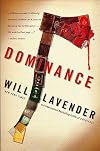
Wil Lavender's "Dominance" is smart, dark, intense and deeply moody. This thrilling murder mystery is part "Silence of the Lambs", and part Agatha Christie and is driven by Lavender's slow and purposeful development of characters and clues and revelations around key plot points.
Lavender bounces the reader between past and present building up the mysteries and tensions surrounding a 20-year old pair of murders and a recent murder that brings former college classmates together for a macabre show more reunion.
Both past and present mysteries revolve around former professor and convict Richard Aldiss. This very Hannibal Lecter-like character continually dances along the fine line of being good and evil as he helps guide his students to first finding the truth behind the murders he was accused of over 20 years ago, and then the more recent murder of their classmate. 20 years ago, the top 9 students in the Literature program at a small Vermont college take a course that promises to unravel the mystery of who novelist Paul Fallows really is. It's taught by Aldiss via closed circuit TV under heavy guard from his prison cell.
Lavender does a masterful job at building and connecting multiple mysteries while teasing the details and leaving the reader salivating for more. The interactions between Aldiss and his students, particularly Alex Shipley, will evoke memories of Lecter and his "student" Clarice Starling. Aldiss is extremely smart, deep and bizarre and has a way of pulling all of those around him into his own cult of personality.
Some of Lavender's clues are a bit clunky. Some of the dialogue feels too forced. The conclusions left me a bit disappointed, but any book that keeps me up late riveted and excited for more while keeping me more focused on every shadow and creak in my house than on getting a good night's sleep, will get a high recommendation from me. show less
Lavender bounces the reader between past and present building up the mysteries and tensions surrounding a 20-year old pair of murders and a recent murder that brings former college classmates together for a macabre show more reunion.
Both past and present mysteries revolve around former professor and convict Richard Aldiss. This very Hannibal Lecter-like character continually dances along the fine line of being good and evil as he helps guide his students to first finding the truth behind the murders he was accused of over 20 years ago, and then the more recent murder of their classmate. 20 years ago, the top 9 students in the Literature program at a small Vermont college take a course that promises to unravel the mystery of who novelist Paul Fallows really is. It's taught by Aldiss via closed circuit TV under heavy guard from his prison cell.
Lavender does a masterful job at building and connecting multiple mysteries while teasing the details and leaving the reader salivating for more. The interactions between Aldiss and his students, particularly Alex Shipley, will evoke memories of Lecter and his "student" Clarice Starling. Aldiss is extremely smart, deep and bizarre and has a way of pulling all of those around him into his own cult of personality.
Some of Lavender's clues are a bit clunky. Some of the dialogue feels too forced. The conclusions left me a bit disappointed, but any book that keeps me up late riveted and excited for more while keeping me more focused on every shadow and creak in my house than on getting a good night's sleep, will get a high recommendation from me. show less
This makes the third thriller this summer that I’ve had problems putting down.
In 1994, nine university students participated in a unique class called “Unraveling a Literary Mystery,” taught by Dr. Richard Aldiss via his jail cell where he was serving a sentence for two gruesome murders. He introduced them to a game called the Procedure, a process of the study and understanding of the works of reclusive literary master, Paul Fallows.
During that class, one student, Alex Shipley, figured show more out the identity of the reclusive “literary mystery” Paul Fallows and found information that helped release Aldiss from his prison cell.
Now, years later, she’s going back to Jasper College and getting the “old crew” together because someone has recreated one of the murders from the past with a former classmate. The fear is: every one of them could be next—or the killer.
This was a fascinating premise for a story.
It’s not a strong character-based novel—I didn’t get that strong of a connection with the characters but, for some novels, that’s okay. Will Lavender has developed a plot that I was completely absorbed in. And I’m good with that. Lavender kept me on my toes trying to figure out what was going on and stringing me along for the ride. He kept me guessing along with Alex, the main character, and, for that, I was pretty happy
The book flipped from the past (1994) to the present, essentially telling two intertwined stories at the same time. I think Lavender did an extremely nice job of helping the author keep track of what had happened in the previous section of that timeline. Oftentimes, books that switch back and forth can get confusing for a reader because they don’t remember what happened in the previous section—any time a reader takes a break from a story (or any part of a story), forgetting is a possibility, meaning, of course, you have to go back and read the last page of the previous section—and it disrupts the flow of the narrative–and pulls the reader out of the story. Lavender makes it easy to remember without making too much of an author intrusion—and, besides, I didn’t want to put the book down anyway
A good quick read. Now I want his first book, Obedience, and I’ll definitely be in for the next book he writes as well.
(Disclaimer: Received ARC from Simon & Schuster through Publisher’s Weekly.) show less
In 1994, nine university students participated in a unique class called “Unraveling a Literary Mystery,” taught by Dr. Richard Aldiss via his jail cell where he was serving a sentence for two gruesome murders. He introduced them to a game called the Procedure, a process of the study and understanding of the works of reclusive literary master, Paul Fallows.
During that class, one student, Alex Shipley, figured show more out the identity of the reclusive “literary mystery” Paul Fallows and found information that helped release Aldiss from his prison cell.
Now, years later, she’s going back to Jasper College and getting the “old crew” together because someone has recreated one of the murders from the past with a former classmate. The fear is: every one of them could be next—or the killer.
This was a fascinating premise for a story.
It’s not a strong character-based novel—I didn’t get that strong of a connection with the characters but, for some novels, that’s okay. Will Lavender has developed a plot that I was completely absorbed in. And I’m good with that. Lavender kept me on my toes trying to figure out what was going on and stringing me along for the ride. He kept me guessing along with Alex, the main character, and, for that, I was pretty happy
The book flipped from the past (1994) to the present, essentially telling two intertwined stories at the same time. I think Lavender did an extremely nice job of helping the author keep track of what had happened in the previous section of that timeline. Oftentimes, books that switch back and forth can get confusing for a reader because they don’t remember what happened in the previous section—any time a reader takes a break from a story (or any part of a story), forgetting is a possibility, meaning, of course, you have to go back and read the last page of the previous section—and it disrupts the flow of the narrative–and pulls the reader out of the story. Lavender makes it easy to remember without making too much of an author intrusion—and, besides, I didn’t want to put the book down anyway
A good quick read. Now I want his first book, Obedience, and I’ll definitely be in for the next book he writes as well.
(Disclaimer: Received ARC from Simon & Schuster through Publisher’s Weekly.) show less
Dominance is not what I expected it to be. I was afraid I’d be reading a gruesome tale of an ax-murdering serial killer, but that’s not really what this book is about. It’s about a game, specifically literature as a game. It’s a game based on the works of a writer whose identity is unknown. When a literature class is brought together to study the works of this unknown author, their assignment is to use clues from the books to discover the writer’s identity. Their professor is a show more convicted killer whose guilt is also called into question during the course of the class. The game continues long after the class is over, and just as some mysteries appear to be solved, others begin. What are intriguing about this book are its intricacies and puzzles. It reminded me somewhat of the Da Vinci code because of the embedding of codes, clues and maps throughout. Even when I figured out the whodunit part of the story, I learned I didn’t really know what I thought I did. The book’s ending leaves the reader questioning everything they thought they knew about the characters. How many of them were still playing the game and will the game ever really end? Although it starts a little slow, Dominance is a fascinating novel that the reader will still be pondering long after reading the last page. show less
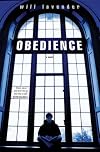
First off, I have a bone to pick with the author, Will Lavender. I had set some goals for this weekend which did not get met once I opened the cover of this book. Yes, it was that diverting.
Secondly, after finishing, I looked for some reviews other than Salon's. Amazon has forty-five reviews. What is astonishing is the almost perfect divide between those who loved the book and those who hated it. Obviously I belong to the former group. I will get to those reviews later.
Thirdly, Obedience show more ostensibly pays homage to the famous experiments by Stanley Milgram. Unfortunately I cannot say more about this without giving away a major clue.
Obedience begins on the first day of a college course in Logic. Professor Williams produces no syllabus, reading list or plan for the six week course. All he will tell the students is that a young girl, Polly, will die at the end of that period unless they can solve the mystery and find her. Clues are e-mailed to the students each week. The class does meet twice a week and tries to use logic to solve the mystery using the clues and their own common sense.
The story concentrates on three of the students and their different reactions as the plot becomes more convoluted and the lines between reality and fantasy seem to dissolve. Prof. Williams sends clues and photos which increasingly cause the students to think the whole class is a ruse to involve them in the search for a young girl who has been missing for twenty years. The two cases gradually become one and, unless you are paying close attention, you won't realize what is going on until the final chapter. (Unfortunately for me, I figured it out about halfway through.) Here is where the book's detracters have a problem. Apparently they cannot suspend disbelief. Since the author is a college professor I am quite certain he knows the ethics and limits of a college setting. He has chosen to work outside those limits. A suspension of disbelief is necessary for the novel to work. Sort of like having to suspend disbelief while watching Harrison Ford at 62 doing things that are very hard to believe in the latest Indiana Jones film. Most films nowadays ask you to suspend your disbelief. I see no problem with novels that do so as well. Without that you cannot possibly enjoy this book. That is too bad. It is a good romp. It is not great literature nor is it intended to be. It is beach reaching, and damned good as such.
Obedience reminded me strongly of Mulholland Drive which I watched again just a couple of weeks ago. It would make a fantastic film but I hope David Lynch doesn't do it. I would like to see what another director would do with it. If you are headed to the beach or wherever you go to relax, you might love this book. I did. show less
Secondly, after finishing, I looked for some reviews other than Salon's. Amazon has forty-five reviews. What is astonishing is the almost perfect divide between those who loved the book and those who hated it. Obviously I belong to the former group. I will get to those reviews later.
Thirdly, Obedience show more ostensibly pays homage to the famous experiments by Stanley Milgram. Unfortunately I cannot say more about this without giving away a major clue.
Obedience begins on the first day of a college course in Logic. Professor Williams produces no syllabus, reading list or plan for the six week course. All he will tell the students is that a young girl, Polly, will die at the end of that period unless they can solve the mystery and find her. Clues are e-mailed to the students each week. The class does meet twice a week and tries to use logic to solve the mystery using the clues and their own common sense.
The story concentrates on three of the students and their different reactions as the plot becomes more convoluted and the lines between reality and fantasy seem to dissolve. Prof. Williams sends clues and photos which increasingly cause the students to think the whole class is a ruse to involve them in the search for a young girl who has been missing for twenty years. The two cases gradually become one and, unless you are paying close attention, you won't realize what is going on until the final chapter. (Unfortunately for me, I figured it out about halfway through.) Here is where the book's detracters have a problem. Apparently they cannot suspend disbelief. Since the author is a college professor I am quite certain he knows the ethics and limits of a college setting. He has chosen to work outside those limits. A suspension of disbelief is necessary for the novel to work. Sort of like having to suspend disbelief while watching Harrison Ford at 62 doing things that are very hard to believe in the latest Indiana Jones film. Most films nowadays ask you to suspend your disbelief. I see no problem with novels that do so as well. Without that you cannot possibly enjoy this book. That is too bad. It is a good romp. It is not great literature nor is it intended to be. It is beach reaching, and damned good as such.
Obedience reminded me strongly of Mulholland Drive which I watched again just a couple of weeks ago. It would make a fantastic film but I hope David Lynch doesn't do it. I would like to see what another director would do with it. If you are headed to the beach or wherever you go to relax, you might love this book. I did. show less
Lists
You May Also Like


Associated Authors
Statistics
- Works
- 4
- Members
- 698
- Popularity
- #36,253
- Rating
- 3.1
- Reviews
- 65
- ISBNs
- 34
- Languages
- 7
- Favorited
- 1