
Jenny Sue Kostecki-Shaw
Author of Same, Same But Different
About the Author
Works by Jenny Sue Kostecki-Shaw
Luna & Me: The True Story of a Girl Who Lived in a Tree to Save a Forest (2015) 117 copies, 4 reviews
Same, Same but Different 1 copy
Tagged
Common Knowledge
- Gender
- female
Members
Reviews

"When I was born, I came out looking both ways," begins this autobiographical picture-book from author/artist Jenny Sue Kostecki-Shaw, which explores the experience of living with strabismic amblyopia, or a "lazy eye," a condition in which the eyes are misaligned. Describing her right eye as the navigator and counter, and her left eye as the artist and color appreciator, young Jenny Sue is at first reluctant to see the ophthalmologist. When he prescribes glasses and an eye patch, in order to show more strengthen her weak right eye, she is even more resistant, especially when her unusual appearance leads to teasing at school. Then her mother, who always seems to know what to do, steps in, and the eye patch becomes a cool (and ever-changing) art project.
My Travelin' Eye is a book I might not have picked up, had it not been recommended by a friend who is acquainted with its creator. I'm so glad that it was - thanks, Jude! - as I enjoyed both story and artwork a great deal. The author clearly understands the experience of living with this condition, and she communicates the realities of that experience to her young readers in a story that is both entertaining and emotionally engaging. Her mixed-media artwork, created with acrylics, crayon, pencil, collage and tissue paper, is lots of fun, with plenty of little details that add to the story. Recommended to young children who have amblyopia, to children who know someone with visions problems, and more generally, to anyone who appreciates beautiful and creative picture-book art. show less
My Travelin' Eye is a book I might not have picked up, had it not been recommended by a friend who is acquainted with its creator. I'm so glad that it was - thanks, Jude! - as I enjoyed both story and artwork a great deal. The author clearly understands the experience of living with this condition, and she communicates the realities of that experience to her young readers in a story that is both entertaining and emotionally engaging. Her mixed-media artwork, created with acrylics, crayon, pencil, collage and tissue paper, is lots of fun, with plenty of little details that add to the story. Recommended to young children who have amblyopia, to children who know someone with visions problems, and more generally, to anyone who appreciates beautiful and creative picture-book art. show less
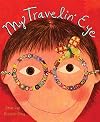
I loved this book! I developed a "lazy eye" when I was 2, and had to have corrective surgery due to the severity of the issue. Many people don't know that if you don't correct a lazy eye, you can go blind in that eye. It is a serious issue, and I am so happy to see a book for children about it. I wish this book had been around when I was little. Just like Jenny Sue, I had to wear a patch with thick glasses, and it was hard to see. I remember the patches and I remember being in the hospital show more after the surgery. This story was great for so many reasons, but mainly because it shows how cruel kids can be- they called her names, made her feel sad and ugly. I loved that her mom made her the special patch and then they decorated her glasses too!! My mother tried to make a game out of the patch, and my aunt gave me a doctor bag(for kids) so I wouldn't be scared in the hospital. Jenny Sue is very brave, and I love that this book explains in very simple terms, what "strabismus amblyopia" is- it's just a Travelin' Eye!! show less
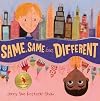
Although today’s kids usually communicate through texting or email, Elliot from the United States and Kailash from India use pictures and a few simple sentences to exchange information about their lives.
Their teachers facilitate the snail mailing of pictorial letters, just as the author-illustrator did when she visited Nepal, which provided the inspiration for this book. The title, also used as a refrain throughout the book, is a popular saying in India and Nepal, heard by Kostecki-Shaw show more when she traveled there. Elliot and Kailash explore their similarities and differences, concluding that their lives are “Different, different but the SAME!” The engaging childlike acrylic paintings with crayon, pencil, tissue paper and other collage elements show the busy crowded American streets of Elliot’s city, the traditional buildings of Kailash’s riverside village, the taxis and buses in the States and the taxis and camel-pulled carts in India. The English alphabet is reproduced on wide-ruled notebook paper and the Hindi alphabet (unfortunately unidentified) on a small slate, and both typical American pets (dog and fish) and a whole farmyard of Indian animals appear. Both kids live unusually low-tech lives (no computers or cell phones in sight), but they each enjoy learning about their pen pal’s world.
Purposeful, but saved from didacticism by the sheer exuberance of the illustrations; the accessible text introduces the idea of traditional two-way communication and demonstrates just how small our world can be. (Picture book. 5-7)
-Kirkus Review show less
Their teachers facilitate the snail mailing of pictorial letters, just as the author-illustrator did when she visited Nepal, which provided the inspiration for this book. The title, also used as a refrain throughout the book, is a popular saying in India and Nepal, heard by Kostecki-Shaw show more when she traveled there. Elliot and Kailash explore their similarities and differences, concluding that their lives are “Different, different but the SAME!” The engaging childlike acrylic paintings with crayon, pencil, tissue paper and other collage elements show the busy crowded American streets of Elliot’s city, the traditional buildings of Kailash’s riverside village, the taxis and buses in the States and the taxis and camel-pulled carts in India. The English alphabet is reproduced on wide-ruled notebook paper and the Hindi alphabet (unfortunately unidentified) on a small slate, and both typical American pets (dog and fish) and a whole farmyard of Indian animals appear. Both kids live unusually low-tech lives (no computers or cell phones in sight), but they each enjoy learning about their pen pal’s world.
Purposeful, but saved from didacticism by the sheer exuberance of the illustrations; the accessible text introduces the idea of traditional two-way communication and demonstrates just how small our world can be. (Picture book. 5-7)
-Kirkus Review show less
Jenny Sue has a travelin' eye and she is not ashamed of this. She in fact thinks it is what sets her apart and makes her different from the others, One day, she is taken to the ophthalmologist and he tells her that she has a lazy eye and it needs to be woken up! This story follows Jenny Sue as she goes on an adventure to help her sight. She has to now wear a patch over her good eye and glasses to strengthen her left eye and to be able to see. Students start to make fun of Jenny Sue and she show more discovers a new way to spice up her style. After a while of this new look, she goes back to the doctor and her eye is no longer lazy! Although her treatment is done, she still has to wear the glasses.
This book is a great way to show students how to embrace what makes you different. As long as you like what you see in the mirror that is all that matters. I think this was a great, quirky outlook on something that is actually so very common! show less
This book is a great way to show students how to embrace what makes you different. As long as you like what you see in the mirror that is all that matters. I think this was a great, quirky outlook on something that is actually so very common! show less
Lists
Awards


You May Also Like


Associated Authors
Statistics
- Works
- 6
- Members
- 1,300
- Popularity
- #19,756
- Rating
- 4.5
- Reviews
- 165
- ISBNs
- 26
- Languages
- 2