
Gabriel Thompson
Author of Working in the Shadows: A Year of Doing the Jobs (Most) Americans Won't Do
About the Author
Gabriel Thompson is the author of There's No Jos Here and Calling All Radicals, and has written for New York, The Nation, the New York Times, and others. The recipient of the Richard J. Margolis Award, the Studs Terkel Media Award, and a collective Sidney Hillman Award, Thompson lives in Brooklyn, show more New York. show less
Works by Gabriel Thompson
Working in the Shadows: A Year of Doing the Jobs (Most) Americans Won't Do (2010) 150 copies, 6 reviews
Tagged
Common Knowledge
- Canonical name
- Thompson, Gabriel
- Legal name
- Thompson, Gabriel Hietala
- Birthdate
- c. 1979
- Gender
- male
- Education
- Johnston Center for Integrative Studies (2001)
- Occupations
- community organizer
writer
fund-raising consultant - Nationality
- USA
- Birthplace
- Eugene, Oregon, USA
- Places of residence
- Brooklyn, New York, USA
- Associated Place (for map)
- USA
Members
Reviews
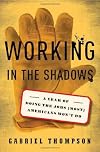
After reading Gabriel Thompson, you will never eat a salad again without an acute consciousness of what it took for you to enjoy the luxury. This opened a whole new door for me, connecting me with the unseen hands that pick my fruits and vegetables, plunge their hands into ice-water all day long to retrieve the raw pieces of chicken that come to me in restaurants, breaded and crisp. A disturbing and crucial piece of literature.
It's a good book. I've never read Nickled and Dimed, but this isn't really the same book as that anyway. In Nickled and Dimed the author wanted to try and live on minimum wage. This is more about the jobs than the money, although as with all life these days, money is always present in the book as well.
He gets four jobs, three of them for approximately two months. Lettuce cutter (I didn't know that you didn't pick it, but cut it, although now it does make sense that you have to cut it). show more Chicken plant worker, florist lackey for a couple of days and a restaurant bike delivery boy.
I picked up the book to read because of the chicken plant section. But, it wasn't the chicken planet in Alabama that was the most disturbing of the workplaces in the book. (Although none of them were great by any means of the imagination) The worst was the florist shop in New York. I've never been well acquainted with the cut flower business. The flowers I know most about are the ones in pots and in the ground. But, the fact that in such a city as New York there could be such horrendous working conditions is depressing. Everyone is a human, no matter if they're breaking the law (i.e. illegal immigrants) or not, and should be treated like humans and not animals.
It was an interesting book and a thought provoking one too. show less
He gets four jobs, three of them for approximately two months. Lettuce cutter (I didn't know that you didn't pick it, but cut it, although now it does make sense that you have to cut it). show more Chicken plant worker, florist lackey for a couple of days and a restaurant bike delivery boy.
I picked up the book to read because of the chicken plant section. But, it wasn't the chicken planet in Alabama that was the most disturbing of the workplaces in the book. (Although none of them were great by any means of the imagination) The worst was the florist shop in New York. I've never been well acquainted with the cut flower business. The flowers I know most about are the ones in pots and in the ground. But, the fact that in such a city as New York there could be such horrendous working conditions is depressing. Everyone is a human, no matter if they're breaking the law (i.e. illegal immigrants) or not, and should be treated like humans and not animals.
It was an interesting book and a thought provoking one too. show less
What does it mean to work in fields predominantly staffed by either illegal or recent immigrants? In some cases, exploitation, in others, discrimination, in others, abuse, and in some, respect and dignity. None of the jobs investigated by Thompson were lucrative, and some were illegally low paying -- but considered in terms of purchasing power in Mexico or Guatamala, where many of these workers had family, these jobs represented opportunity for a better life. A well-written and interesting show more first person story of working beside immigrants , if only for a brief time. show less
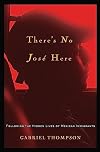
Minireview: An engaging narrative of some of Thompson's interactions with Mexican immigrants in Brooklyn, particularly the gregarious cabbie Enrique. After getting to know these immigrants and their families as a community organizer, Thompson explores their histories and visits their home towns in southern Mexico. Although somewhat narrowly focused, the book does a good job of putting a "human face" on Mexican immigrants and immigration.
You May Also Like


Statistics
- Works
- 5
- Members
- 241
- Popularity
- #94,247
- Rating
- 4.0
- Reviews
- 8
- ISBNs
- 14