
Salli Rasberry (1940–2019)
Author of The Seven Laws of Money
Works by Salli Rasberry
Tagged
Common Knowledge
- Birthdate
- 1940
- Date of death
- 2019
- Gender
- female
- Birthplace
- Cincinnati, Ohio, USA
- Places of residence
- Sebastopol, California, USA
Tampa, Florida, USA
Cincinnati, Ohio, USA - Place of death
- Sebastopol, California, USA
- Associated Place (for map)
- USA
Members
Reviews
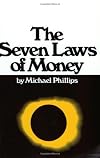
I don't think this book a very accurate or realistic book for the world I live in. It's not a book of the laws of money; it's a book about the perspectives of a financier. Our author has a narrow context from which he views money; he doesn't consider the questions of what money is, what it does, where it comes from, or what's its history. He doesn't look at cultures that use variant models surrounding money.
Laws five and six are supposedly about gift. But all he's saying is that he doesn't show more like giving money, and that when he does, it's surrounded by a lot of expectation. This is not a gift. A gift is free of expectation. This has more to do with his internal state than it does with money.
I've found that a lot of the writings on money and gift from the past century [like the work of Marcel Mauss] make the mistake of equating gift with exchange. An exchange has nothing to do with gifts [although I don't think you could call them opposites because they don't have a relationship].
I do think he's right that if you're a person of privilege, you should do what you want and the means will present themselves. But it isn't this way for most Americans.
I think it's also illustrative that almost everything he has to say about his friends whom he gives as examples in the book are negative. It seems as though he has a pretty pessimistic outlook on the world.
The Seven Laws of Money could be a useful book for someone trying to make it as a banker, or in some other upper-class pursuit. It presents "business as usual."
I think that this is enough analysis for now. I don't think it's a bad book; I just think it doesn't have anything to do with the kind of money I'm interested in.
If you are interested in learning more about the big picture surrounding money, I highly recommend David Gaeber's book "Debt: The First 5,000 Years." show less
Laws five and six are supposedly about gift. But all he's saying is that he doesn't show more like giving money, and that when he does, it's surrounded by a lot of expectation. This is not a gift. A gift is free of expectation. This has more to do with his internal state than it does with money.
I've found that a lot of the writings on money and gift from the past century [like the work of Marcel Mauss] make the mistake of equating gift with exchange. An exchange has nothing to do with gifts [although I don't think you could call them opposites because they don't have a relationship].
I do think he's right that if you're a person of privilege, you should do what you want and the means will present themselves. But it isn't this way for most Americans.
I think it's also illustrative that almost everything he has to say about his friends whom he gives as examples in the book are negative. It seems as though he has a pretty pessimistic outlook on the world.
The Seven Laws of Money could be a useful book for someone trying to make it as a banker, or in some other upper-class pursuit. It presents "business as usual."
I think that this is enough analysis for now. I don't think it's a bad book; I just think it doesn't have anything to do with the kind of money I'm interested in.
If you are interested in learning more about the big picture surrounding money, I highly recommend David Gaeber's book "Debt: The First 5,000 Years." show less
This is a fascinating book about universal laws that control the way people think about money. When Michael Phillips was asked to oversee the distribution of 1 million dollars, at his descretion, he learned a few things about what motivated people.
Lists
You May Also Like
Associated Authors
Statistics
- Works
- 4
- Members
- 136
- Popularity
- #149,925
- Rating
- 3.2
- Reviews
- 3
- ISBNs
- 11
- Languages
- 1