
Natalia Theodoridou
Author of Sour Cherry
About the Author
Image credit: via Tin House
Works by Natalia Theodoridou
Associated Works
The Apex Book of World SF: Volume 4 (Apex World of Speculative Fiction) (2015) — Contributor — 84 copies, 25 reviews
Up and Coming: Stories by the 2016 Campbell-Eligible Authors (2016) — Contributor, some editions — 24 copies, 1 review
Sunspot Jungle: Volume Two: The Ever Expanding Universe of Fantasy and Science Fiction (2018) — Contributor — 22 copies
Professor Charlatan Bardot's Travel Anthology to the Most (Fictional) Haunted Buildings in the Weird, Wild World (2021) — Contributor — 22 copies, 3 reviews
Stories of Hope and Wonder: In Support of the UK's Healthcare Workers (2020) — Contributor — 11 copies, 1 review
Strange Horizons, December 2017 — Contributor — 2 copies
Kenyon Review Online, Winter 2015 — Contributor — 1 copy
Tagged
Common Knowledge
- Birthdate
- ca. 1985
- Gender
- male
- Short biography
- Natalia Theodoridou is a UK-based media & cultural studies scholar, and a writer of strange stories. Winner of the 2018 World Fantasy Award for Short Fiction. 2018 Nebula Award Finalist (Game Writing). Fiction editor at sub-Q interactive fiction magazine. Dramaturge of Adrift Performance Makers. Clarion West Graduate (Class of 2018). Word Factory Apprentice 2018. From her homepage 2021
He/him, they/them. From Twitter Oct 2021 - Nationality
- Greece
- Associated Place (for map)
- Greece
Members
Reviews
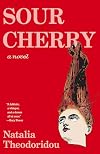
Real Rating: 3.75* of five
The Publisher Says: A stunning reimagining of Bluebeard—one of the most mythologized serial killers—twisted into a modern tale of toxic masculinity, a feminist sermon, and a folktale for the twenty-first century.
The tale begins with Agnes. After losing her baby, Agnes is called to the great manor house to nurse the local lord’s baby boy. But something is wrong with the child: his nails grow too fast, his skin smells of soil, and his eyes remind her of the dark show more forest. As he grows into a boy, then into man, a plague seems to follow him everywhere. Trees wither at the roots, fruits rot on their branches, and the town turns against him. The man takes a wife, who bears him a son. But tragedy strikes in cycles and his family is forced to consider their own malignancy—until wife after wife, death after death, plague after plague, every woman he touches becomes a ghost. The ghosts become a chorus, and they call urgently to our narrator as she tries to explain, in our very real world, exactly what has happened to her. The ghosts can all agree on one thing, an inescapable truth about this man, this powerful lord who has loved them and led them each to ruin: If you leave, you die. But if you die, you stay.
Natalia Theodoridou’s haunting and unforgettable debut novel, Sour Cherry, confronts age-old systems of gender and power, long-held excuses made for bad men, and the complicated reasons we stay captive to the monsters we love.
I RECEIVED A DRC FROM THE PUBLISHER VIA NETGALLEY. THANK YOU.
My Review: Retelling "Bluebeard," one of the most unsettling folk tales I've ever encountered, was a shoo-in to get my admiring attention for this novelist's debut effort. At about the 45% mark, the scene under the cherry tree, I found the time jumping wearing me down...no particular effect was, in my observation, intended for these shifts. They do not seem coupled to changes in emotional register, or attached to revelations of characters' understandings of themselves or each other. Instead they felt to me like ways to avoid exploring an important shift in something because after the time shift the event shifted from is dealt with in short and sharp explanation..."after that Tristan looked at his hand a lot"...without much depth. As this story explores the fear and the disappointment that must inevitably accompany truly loving another person, that matters. The ending was, as a result of this ongoing issue, a bit anticlimactic.
The plus side is that this is a retelling of a quite brutal tale that tries hard to be in the main character's corner. Something that gives kids like me nightmares is brought into the realm of reason. It's very empathetic, it's very willing to engage the readers' empathy. This makes the awfulness all the more poignant and impactful, and is the source of all my positive feelings for the book. It grapples with the deep, oceanic sadness of loving someone who is haunted by an awful past, whose emotional tides do not stop at the shores between himself and the world. It brings a lovingkindness to the seemingly cursed eternal outsider, yet doesn't play the victim card for the monster or the lover.
Craft quibbles aside, I found this story quite engrossing or I'd've simply Pearl-Ruled it. I haven't raised the thematic elements of horror to content-warning status because, frankly, if you need CWs on ancient folktales you won't consider the read for more than a split second anyway.
A debut novel that portends a career of fascinating work. I already want to read Author Theodoridou's next book. show less
The Publisher Says: A stunning reimagining of Bluebeard—one of the most mythologized serial killers—twisted into a modern tale of toxic masculinity, a feminist sermon, and a folktale for the twenty-first century.
The tale begins with Agnes. After losing her baby, Agnes is called to the great manor house to nurse the local lord’s baby boy. But something is wrong with the child: his nails grow too fast, his skin smells of soil, and his eyes remind her of the dark show more forest. As he grows into a boy, then into man, a plague seems to follow him everywhere. Trees wither at the roots, fruits rot on their branches, and the town turns against him. The man takes a wife, who bears him a son. But tragedy strikes in cycles and his family is forced to consider their own malignancy—until wife after wife, death after death, plague after plague, every woman he touches becomes a ghost. The ghosts become a chorus, and they call urgently to our narrator as she tries to explain, in our very real world, exactly what has happened to her. The ghosts can all agree on one thing, an inescapable truth about this man, this powerful lord who has loved them and led them each to ruin: If you leave, you die. But if you die, you stay.
Natalia Theodoridou’s haunting and unforgettable debut novel, Sour Cherry, confronts age-old systems of gender and power, long-held excuses made for bad men, and the complicated reasons we stay captive to the monsters we love.
I RECEIVED A DRC FROM THE PUBLISHER VIA NETGALLEY. THANK YOU.
My Review: Retelling "Bluebeard," one of the most unsettling folk tales I've ever encountered, was a shoo-in to get my admiring attention for this novelist's debut effort. At about the 45% mark, the scene under the cherry tree, I found the time jumping wearing me down...no particular effect was, in my observation, intended for these shifts. They do not seem coupled to changes in emotional register, or attached to revelations of characters' understandings of themselves or each other. Instead they felt to me like ways to avoid exploring an important shift in something because after the time shift the event shifted from is dealt with in short and sharp explanation..."after that Tristan looked at his hand a lot"...without much depth. As this story explores the fear and the disappointment that must inevitably accompany truly loving another person, that matters. The ending was, as a result of this ongoing issue, a bit anticlimactic.
The plus side is that this is a retelling of a quite brutal tale that tries hard to be in the main character's corner. Something that gives kids like me nightmares is brought into the realm of reason. It's very empathetic, it's very willing to engage the readers' empathy. This makes the awfulness all the more poignant and impactful, and is the source of all my positive feelings for the book. It grapples with the deep, oceanic sadness of loving someone who is haunted by an awful past, whose emotional tides do not stop at the shores between himself and the world. It brings a lovingkindness to the seemingly cursed eternal outsider, yet doesn't play the victim card for the monster or the lover.
Craft quibbles aside, I found this story quite engrossing or I'd've simply Pearl-Ruled it. I haven't raised the thematic elements of horror to content-warning status because, frankly, if you need CWs on ancient folktales you won't consider the read for more than a split second anyway.
A debut novel that portends a career of fascinating work. I already want to read Author Theodoridou's next book. show less

A critic said, “Gothic tales rely on distant pasts and faraway lands full of people unlike us,” except he was wrong, because the land of this story is everywhere. The people are us, the time is always.
I buddy read this over on a horror Discord.
Quick thoughts and comments:
I'm a big fan of folklore, Gothic, horror, and Bluebeard reimaginings/retellings, so I was pretty much the ideal audience for this. I don't know how, but this felt like a fast read and one that dragged all at the same show more time. The synopsis/marketing copy talked about it being a feminist take but it takes until the second half for the focus to really be on the wives of the tale. That and the different pov and tense changes feeling needlessly challenging and confusing to try and create a mysterious creepy vibe, was mostly why I had a problem with this. Also, some aspects of the story were focused on (Tristan) that felt counterintuitive and interruptive to the story's messaging of how abusive men get societal protection and how women get placed in and manipulated into caretaker and shield roles in abusive relationships.
The first half felt super wonky with how it was structured but the second half read better to me, even though I was annoyed at how it sped through the wives, except for Eunice where I thought the story really settled into what it wanted to be. The focus on the last “special” wife Cherry was back to annoying to me because I think the story lost it's focus again and seemed to want to end the story with stating that Cherry was just as bad as the abusive man, which ok, but then what is this story really about, not what I showed up for based on the synopsis.
I liked this and was annoyed with it, the atmospheric wonky structured folklore parts mostly didn't work for me but since I'm a fan of that type of storytelling, I still found parts I liked, I think a good chunk of readers will struggle with it, though. The first half felt like it focused on everything and nothing and when I finally found the story working for me in the second half, it sped through it to get to the final wife, a character that did nothing for me. I liked how it showed the systems that protect abusers but not sure this retelling did anything new or attention catching. show less
I buddy read this over on a horror Discord.
Quick thoughts and comments:
I'm a big fan of folklore, Gothic, horror, and Bluebeard reimaginings/retellings, so I was pretty much the ideal audience for this. I don't know how, but this felt like a fast read and one that dragged all at the same show more time. The synopsis/marketing copy talked about it being a feminist take but it takes until the second half for the focus to really be on the wives of the tale. That and the different pov and tense changes feeling needlessly challenging and confusing to try and create a mysterious creepy vibe, was mostly why I had a problem with this. Also, some aspects of the story were focused on (Tristan) that felt counterintuitive and interruptive to the story's messaging of how abusive men get societal protection and how women get placed in and manipulated into caretaker and shield roles in abusive relationships.
The first half felt super wonky with how it was structured but the second half read better to me, even though I was annoyed at how it sped through the wives, except for Eunice where I thought the story really settled into what it wanted to be. The focus on the last “special” wife Cherry was back to annoying to me because I think the story lost it's focus again and seemed to want to end the story with stating that Cherry was just as bad as the abusive man, which ok, but then what is this story really about, not what I showed up for based on the synopsis.
I liked this and was annoyed with it, the atmospheric wonky structured folklore parts mostly didn't work for me but since I'm a fan of that type of storytelling, I still found parts I liked, I think a good chunk of readers will struggle with it, though. The first half felt like it focused on everything and nothing and when I finally found the story working for me in the second half, it sped through it to get to the final wife, a character that did nothing for me. I liked how it showed the systems that protect abusers but not sure this retelling did anything new or attention catching. show less
Sour Cherry: A fiercely haunting gothic horror novel examining gender and power, reimagining the fairytale Bluebeard by Natalia Theodoridou
The story begins with Agnes, an unmarried villager who has lost her baby, so takes a job as the wet nurse in the Lord's manor. Agnes loves the boy and raises him as her own even while seeing that he is strange and can be dangerous. The child's own mother warns Agnes to leave while she can, but she stays and sees the boy into adulthood, despite what she suspects about him.
Eunice becomes his wife, as his father died suddenly and the boy is now the wealthy Lord. They have a son, one that Eunice show more watches, always fearful that Tristan will turn out like his father, leaving dead crops and animals in his wake, being chased away with pitchforks and torches.
Richly evocative, this really is beautifully written. Even if you don't normally have an interest in horror, and this one involves a mysterious, deadly creature and the ghosts who fill the manor, the writing is closer to Proust than Stephen King. show less
Eunice becomes his wife, as his father died suddenly and the boy is now the wealthy Lord. They have a son, one that Eunice show more watches, always fearful that Tristan will turn out like his father, leaving dead crops and animals in his wake, being chased away with pitchforks and torches.
Richly evocative, this really is beautifully written. Even if you don't normally have an interest in horror, and this one involves a mysterious, deadly creature and the ghosts who fill the manor, the writing is closer to Proust than Stephen King. show less
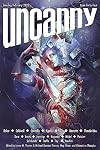
This was a better-than-usual mix of stories to me, where I liked more of them than I had expected to. You can read most (if not all?) of the Uncanny Magazine content online, if you want to check it out; I'm glad to be a subscriber. Favorites from this issue include “The Night Dance” by Leah Cypess, “Ribbons” by Natalia Theodoridou, “How to Safely Store Your Magical Artifacts After Saving the World” by Tina Connolly, “The Haunting of Dr. Claudius Winterson” by Sarah Monette, show more and “The Clockwork Penguin Dreamed of Stars” by Caroline M. Yoachim. show less
Lists
Awards


You May Also Like
Associated Authors
Statistics
- Works
- 20
- Also by
- 39
- Members
- 187
- Popularity
- #116,276
- Rating
- 3.6
- Reviews
- 19
- ISBNs
- 8
- Languages
- 1