
Dale Ralph Davis
Author of Joshua: No Falling Words (Focus on the Bible)
About the Author
Dale Ralph Davis is a respected Bible expositor and author. He was Minister in Residence, First Presbyterian Church, Columbia, South Carolina and Professor of Old Testament at Reformed Theological Seminary, Jackson, Mississippi.
Image credit: Dale Ralph Davis
Works by Dale Ralph Davis
Focus on the Bible - 1 Samuel: Looking on the Heart (Focus on the Bible Commentaries) (2010) 760 copies
The Word Became Fresh: How to Preach from Old Testament Narrative Texts (2006) 482 copies, 4 reviews
Looking on the Heart: Expositions of Samuel 1-14 (Expositor's Guide to the Historical Books) (1994) 74 copies
Joshua 1 copy
Tagged
Common Knowledge
- Other names
- Davis, D. Ralph
- Birthdate
- 1944
- Gender
- male
- Occupations
- pastor
professor - Organizations
- Woodlands Presbyterian Church, Hattiesburg, Mississippi
- Nationality
- USA
- Places of residence
- Hattiesburg, Mississippi, USA
Jackson, Mississippi, USA - Associated Place (for map)
- Mississippi, USA
Members
Reviews
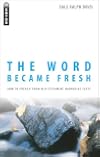
This is a wonderful book, putatively about the task of preaching from Old Testament narrative texts, but written with such clarity, insight and freshness that I find it has much to offer anyone who is called to preach God's word to God's people.
Davis believes that there is a prejudice, occasionally spoken but primarily inferred, against preaching from the Old Testament. The biases include the way God can be so easily be perceived as a God of vengeance, the admitted difficulty of wrestling show more with stories that seem to have little relevance to our day, and the fact that the Bible's hero, Jesus, is at best a hidden actor in the Old Testament. And after acknowledging the validity of these objections, Davis calls preachers to jump feet-first into the waters of the Old Testament, for there are indeed riches to be found there if we would but take the time and make the effort to learn how to handle the narratives well.
Davis deals with the basics of Old Testament narrative interpretation in nine easy-to read chapters. He is not esoteric in any way but is always firmly anchored in the text and practical in method. Rather than stretching for an interpretation, one which may or may not be accurate and relevant, he teaches how to dig a bit more deeply and how to ask penetrating questions of the text, to find the riches God has provided for his people. His book is filled with generous examples and his prose is wonderful to read, using a style that is informal and yet highly informative. I highly commend this book for all preachers of God's word. show less
Davis believes that there is a prejudice, occasionally spoken but primarily inferred, against preaching from the Old Testament. The biases include the way God can be so easily be perceived as a God of vengeance, the admitted difficulty of wrestling show more with stories that seem to have little relevance to our day, and the fact that the Bible's hero, Jesus, is at best a hidden actor in the Old Testament. And after acknowledging the validity of these objections, Davis calls preachers to jump feet-first into the waters of the Old Testament, for there are indeed riches to be found there if we would but take the time and make the effort to learn how to handle the narratives well.
Davis deals with the basics of Old Testament narrative interpretation in nine easy-to read chapters. He is not esoteric in any way but is always firmly anchored in the text and practical in method. Rather than stretching for an interpretation, one which may or may not be accurate and relevant, he teaches how to dig a bit more deeply and how to ask penetrating questions of the text, to find the riches God has provided for his people. His book is filled with generous examples and his prose is wonderful to read, using a style that is informal and yet highly informative. I highly commend this book for all preachers of God's word. show less

If you've read any Dale Ralph Davis (he has six little commentaries on Joshua-2 Kings) you'll need no persuading about his latest little book (2006) The Word Became Fresh. Living up to its bold title in every way, Davis here steps back and speaks mainly to fellow preachers on how to preach OT - something we all need help and encouragement with.
The result is an experience that really makes you want to preach as he moves deftly from one OT narrative to another. It's the combination of (lightly show more worn) scholarship, clear writing (slick but never too slick), a stunning gift for illustration and a wise and warm pastoral heart that makes this such a tour de force. One is left intellectually stimulated and challenged and emotionally stirred and warmed at the same time. Few books do that.
The nine chapters cover how we approach things, looking for quirks in the text, applying theology, how a passage is packaged, dealing with nasties, using the macroscope for the big picture, appropriation or application (but not like anything else you've read on the subject), centring in the right place and finally how to bring this altogether.
To whet you appetite here is the stand out opening of Chapter 3 (Theology) "Despair may have begun creeping over you as you saw the word ‘theology.’ Here’s the thick, heavy stuff, you say. But I don’t know what’s wrong with theology. It’s what we live for, isn’t it? In any case, I’m using the term here to refer to the theology of a biblical text, that is, what the text means to say about God, his ways and his works. Or, to put it a bit differently, I use the term to refer to the intended message of a biblical text. I do not want to discuss how one detects the intention of a text here — I touched on that via a few inadequate hints in chapter 1. Rather, I want to focus on a section of material (the ‘patriarchal’ narratives in Genesis) in which an initial, premier passage (Gen. 12:1-9) determines the meaning of so many of its individual passages. There are reasons for taking this approach: (1) it will allow us to stay within one block of textual material, while mining for the theology of texts; (2) it will illustrate how preceding biblical theology helps to interpret subsequent passages; and (3) I’m writing the book and should be allowed to do what I want." show less
The result is an experience that really makes you want to preach as he moves deftly from one OT narrative to another. It's the combination of (lightly show more worn) scholarship, clear writing (slick but never too slick), a stunning gift for illustration and a wise and warm pastoral heart that makes this such a tour de force. One is left intellectually stimulated and challenged and emotionally stirred and warmed at the same time. Few books do that.
The nine chapters cover how we approach things, looking for quirks in the text, applying theology, how a passage is packaged, dealing with nasties, using the macroscope for the big picture, appropriation or application (but not like anything else you've read on the subject), centring in the right place and finally how to bring this altogether.
To whet you appetite here is the stand out opening of Chapter 3 (Theology) "Despair may have begun creeping over you as you saw the word ‘theology.’ Here’s the thick, heavy stuff, you say. But I don’t know what’s wrong with theology. It’s what we live for, isn’t it? In any case, I’m using the term here to refer to the theology of a biblical text, that is, what the text means to say about God, his ways and his works. Or, to put it a bit differently, I use the term to refer to the intended message of a biblical text. I do not want to discuss how one detects the intention of a text here — I touched on that via a few inadequate hints in chapter 1. Rather, I want to focus on a section of material (the ‘patriarchal’ narratives in Genesis) in which an initial, premier passage (Gen. 12:1-9) determines the meaning of so many of its individual passages. There are reasons for taking this approach: (1) it will allow us to stay within one block of textual material, while mining for the theology of texts; (2) it will illustrate how preceding biblical theology helps to interpret subsequent passages; and (3) I’m writing the book and should be allowed to do what I want." show less
I am constantly on the hunt for solid commentaries - especially from the Old Testament. Like a lot of preachers, I can be guilty of focusing on the New Testament, a "sin" that my Hebrew professor called building a "canon within the canon."
I recently taught through 1 Samuel. In preparation, I read through 1 Samuel by Richard D. Phillips. I found that commentary, from the Reformed Expository series, to be extremely helpful. One of the more helpful authors he frequently quotes was Dale Ralph show more Davis. So I naturally ordered Davis' commentary on 2 Samuel.
I was not disappointed. Davis does an amazing job of giving historical context to the book, providing enough technical insight to equip the teacher without bogging down in superfluous details, and applying the text to contemporary life. I know little about Dale Ralph Davis. But I can vouch for this commentary. It is one that I will use frequently in the future and recommend heartily to those, like me, who are searching for solid OT resources. show less
I recently taught through 1 Samuel. In preparation, I read through 1 Samuel by Richard D. Phillips. I found that commentary, from the Reformed Expository series, to be extremely helpful. One of the more helpful authors he frequently quotes was Dale Ralph show more Davis. So I naturally ordered Davis' commentary on 2 Samuel.
I was not disappointed. Davis does an amazing job of giving historical context to the book, providing enough technical insight to equip the teacher without bogging down in superfluous details, and applying the text to contemporary life. I know little about Dale Ralph Davis. But I can vouch for this commentary. It is one that I will use frequently in the future and recommend heartily to those, like me, who are searching for solid OT resources. show less
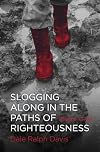
Slogging along in the paths of righteousness by Dale Ralph Davis is Davis's apparently unplanned follow up to The Way of the Righteous in the Muck of Life. The first book covers Psalms 1-12 and this second Psalms 13-24. Both books give around 10-12 pages to each Psalm, beginning with Davis's own careful translation and characterised by his usual mix of gentle scholarship, playful language, brilliant illustrations, judicious quotations and helpful applications. I am far from being alone in show more recognising what a great gift Dr Davis is to God's people. Another 10 books like this would be most welcome. The only problem I can see is with titles and special effects for the covers (for the first we had slightly raised mud splashes which I did try to rub off and this second has colour in a black and white photo). How about Trudging the Lord's ways through the sludge of reality and using a black and white colour split effect? show less
You May Also Like


Statistics
- Works
- 32
- Members
- 6,599
- Popularity
- #3,712
- Rating
- 4.3
- Reviews
- 18
- ISBNs
- 46
- Favorited
- 2