
Paul Dowswell
Author of The Usborne First Encyclopedia of Animals
About the Author
Image credit: From author page at amazon.co.uk
Series
Works by Paul Dowswell
Wild Weather 49 copies
The ausländer 1 copy
A második világháború 1 copy
War Stories 1 copy
Pratham Vishvakosh Antariksh 1 copy
O ÓRFÃO de HITLER 1 copy
Tagged
Common Knowledge
- Canonical name
- Dowswell, Paul
- Legal name
- Dowswell, David Paul
- Birthdate
- 1957-09-03
- Gender
- male
- Education
- Goldsmiths College, University of London
- Occupations
- children's book author
- Nationality
- UK
- Places of residence
- Chester, Cheshire, England, UK
Wolverhampton, Staffordshire, England, UK - Associated Place (for map)
- England, UK
Members
Reviews
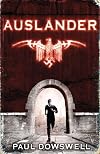
I’m a sucker for historical fiction of any kind, but I especially love the stuff concerning the 20th century.
I bought this book eons ago, in my first year of Sixth Form, and have only just now read it. I remember a classmate had bought the same one and seemed to be enjoying it, so I had decided to do the same.
Dowswell’s novel, aimed at young adults, is about a young boy named Piotr (Peter later) whose family is killed during the occupation of Warsaw in World War Two. Left alone, he is show more sent to an orphange, and eventually chosen to be adopted by a good German family, Nazi sympathizers who look at him and think he is the poster boy for the Hitler Youth. Peter looks exactly like the boy on the poster, in fact – he has incredibly Nordic features, with blonde hair, strong jaw, and toned build. For all intents and purposes, he should be the perfect fit for a Hitler Youth. His new family actually enroll him in one of the Hitler Youth groups, as they do to all their other children, and at first he’s excited. His lifelong dream has been to become a Luftwaffe pilot, and this could very well be his ticket into all this. His adopted father is a professor at a university in Germany, studying genetics – more specifically, he’s studying ways in which genetics can tell apart Jews from non-Jews. And Peter, in the beginning, is 100% OK with this.
But Peter, thank God, suddenly realizes that maybe all this isn’t too good an idea.
You see, Peter isn’t German. He may look German (or like the Aryan ideal that Germany loved to talk about back then), but everybody knows that he isn’t. He’s an outsider in the new community, no matter how hard he tries to fit in. And he develops strong friendships with young teenagers who aren’t exactly sympathizers with the Nazi ideal. He listens to swing music and BBC radio, broadcast from England. He feels sorry for the Jews being forced to do manual labour around the city, and tries to help them. He fights back with his thoughts when people talk about how great Hitler is. He isn’t convinced. And that is important enough to save him from Germany in the end.
Peter’s story feels like it could be real – the story of a boy who wants to leave a country that he realizes is not as great as it seems. He becomes part of an underground network – a very illegal one – that helps Jews, and he eventually tries to skip town. The whole thing is a very real and very raw telling of what could possibly have happened during World War Two. If you think about it, really, it can’t have been that all Germans were as ecstatic about Hitler rising to power as we think they were. While there were fanatics, it can’t have been the same for everyone. And this novel’s last section – its Act Four, if you will – brings it all to a head when a family and Peter try to run away from the hellhole they’ve been living in to a safer place, a neutral place.
(Switzerland, d’uh.)
This book is well researched (and even credited!), and Dowswell put a lot of thought into the writing of it. While it is written for children, it’s incredibly good as a light summer read, and puts World War Two into a different perspective. For a long time, we’ve heard stories about what it was like to be on the Allies’s side, or the Jews’ side. But sometimes we never stop to think what it could have been like for the people living in Germany who just didn’t want it to happen in the first place.
(Please don’t take this as me invalidating the experience of the actual victims of World War Two. It’s just a nice change of pace to have a different perspective to the whole thing, is all.)
Overall, my final rating is a 4/5. Props, Dowswell! show less
I bought this book eons ago, in my first year of Sixth Form, and have only just now read it. I remember a classmate had bought the same one and seemed to be enjoying it, so I had decided to do the same.
Dowswell’s novel, aimed at young adults, is about a young boy named Piotr (Peter later) whose family is killed during the occupation of Warsaw in World War Two. Left alone, he is show more sent to an orphange, and eventually chosen to be adopted by a good German family, Nazi sympathizers who look at him and think he is the poster boy for the Hitler Youth. Peter looks exactly like the boy on the poster, in fact – he has incredibly Nordic features, with blonde hair, strong jaw, and toned build. For all intents and purposes, he should be the perfect fit for a Hitler Youth. His new family actually enroll him in one of the Hitler Youth groups, as they do to all their other children, and at first he’s excited. His lifelong dream has been to become a Luftwaffe pilot, and this could very well be his ticket into all this. His adopted father is a professor at a university in Germany, studying genetics – more specifically, he’s studying ways in which genetics can tell apart Jews from non-Jews. And Peter, in the beginning, is 100% OK with this.
But Peter, thank God, suddenly realizes that maybe all this isn’t too good an idea.
You see, Peter isn’t German. He may look German (or like the Aryan ideal that Germany loved to talk about back then), but everybody knows that he isn’t. He’s an outsider in the new community, no matter how hard he tries to fit in. And he develops strong friendships with young teenagers who aren’t exactly sympathizers with the Nazi ideal. He listens to swing music and BBC radio, broadcast from England. He feels sorry for the Jews being forced to do manual labour around the city, and tries to help them. He fights back with his thoughts when people talk about how great Hitler is. He isn’t convinced. And that is important enough to save him from Germany in the end.
Peter’s story feels like it could be real – the story of a boy who wants to leave a country that he realizes is not as great as it seems. He becomes part of an underground network – a very illegal one – that helps Jews, and he eventually tries to skip town. The whole thing is a very real and very raw telling of what could possibly have happened during World War Two. If you think about it, really, it can’t have been that all Germans were as ecstatic about Hitler rising to power as we think they were. While there were fanatics, it can’t have been the same for everyone. And this novel’s last section – its Act Four, if you will – brings it all to a head when a family and Peter try to run away from the hellhole they’ve been living in to a safer place, a neutral place.
(Switzerland, d’uh.)
This book is well researched (and even credited!), and Dowswell put a lot of thought into the writing of it. While it is written for children, it’s incredibly good as a light summer read, and puts World War Two into a different perspective. For a long time, we’ve heard stories about what it was like to be on the Allies’s side, or the Jews’ side. But sometimes we never stop to think what it could have been like for the people living in Germany who just didn’t want it to happen in the first place.
(Please don’t take this as me invalidating the experience of the actual victims of World War Two. It’s just a nice change of pace to have a different perspective to the whole thing, is all.)
Overall, my final rating is a 4/5. Props, Dowswell! show less

13-year-old Sam Witchall has always felt the call of a life at sea, but he's not so desperate as to join the Royal Navy. Instead he finds himself a berth as a ship's boy aboard a small merchant vessel - relatively safe and with chances to return home to see his family and his sweetheart. But Sam's comfortable life aboard is turned upside down when he is pressed into service as a powder monkey (a boy who carries powder to the guns during battle) on the HMS Miranda. Far from a romantic show more adventure, Sam now lives in a world of harsh discipline, bullies, and constant threat of danger.
I'll admit it right up front - I adore ship books. Preferably elegant age-of-sail ships with tall masts any young, spirited protagonists, though any ship will do. Luckily this fit all of my favorite criteria. So it's no surprise that I couldn't keep myself from purchasing this when I saw it. Nor is it surprising that I loved it.
The book's greatest strength is its emphasis on realism. Sam doesn't want to be on board, he's frightened and chafes under the sudden restrictions to his former freedom. He's not extraordinarily clever, extraordinarily brave or kind. He's just a boy trying to make his way out of a nasty situation. And being onboard a fighting ship during the Napoleonic Wars was certainly nasty - about that the book leaves no doubt. It details the poor food, the threat of flogging for any infraction (real or imagined), officer tyrants and the fear of enemy fire. But it also shows the cameraderie, the friendships, the fun had by sailors skylarking in the rigging or singing at night.
This is a great read for those already interested in this sort of book, but there is no quest or great adventure like in Treasure Island or many other young adult ship books; this is more a book about the daily hardships (large and small) aboard a Navy ship of the time - which is fascinating, but not perhaps the best place to start for the uninitiated or those not already bitten by the sea bug.
Also posted at my blog. show less
I'll admit it right up front - I adore ship books. Preferably elegant age-of-sail ships with tall masts any young, spirited protagonists, though any ship will do. Luckily this fit all of my favorite criteria. So it's no surprise that I couldn't keep myself from purchasing this when I saw it. Nor is it surprising that I loved it.
The book's greatest strength is its emphasis on realism. Sam doesn't want to be on board, he's frightened and chafes under the sudden restrictions to his former freedom. He's not extraordinarily clever, extraordinarily brave or kind. He's just a boy trying to make his way out of a nasty situation. And being onboard a fighting ship during the Napoleonic Wars was certainly nasty - about that the book leaves no doubt. It details the poor food, the threat of flogging for any infraction (real or imagined), officer tyrants and the fear of enemy fire. But it also shows the cameraderie, the friendships, the fun had by sailors skylarking in the rigging or singing at night.
This is a great read for those already interested in this sort of book, but there is no quest or great adventure like in Treasure Island or many other young adult ship books; this is more a book about the daily hardships (large and small) aboard a Navy ship of the time - which is fascinating, but not perhaps the best place to start for the uninitiated or those not already bitten by the sea bug.
Also posted at my blog. show less
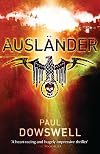
When Peter's parents are killed, he is sent to an orphanage in Warsaw. Then German soldiers take him away to be measured and assessed. They decide that Peter is racially valuable. He is Volksdeutscher: of German blood. With his blond hair, blue eyes, and acceptably proportioned head, he looks just like the boy on the Hitler-Jugend poster. Someone important will want to adopt Peter. They do. Professor Kaltenbach is very pleased to welcome such a fine Aryan specimen to his household. People show more will be envious. But Peter is not quite the specimen they think. He is forming his own ideas about what he is seeing, what he is told. Peter doesn't want to be a Nazi, and so he is going to take a very dangerous risk. The most dangerous risk he could possibly choose to take in Berlin in 1942. show less
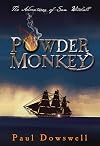
Young Sam Witchall convinces his schoolmaster father that he is serious in his longing to go to sea and is allowed to ship aboard a merchant brig. After a near-disastrous brush with a French privateer, he is pressed at sea and finds himself a ship’s boy on the frigate HMS Miranda. Sam serves as a powder monkey when the ship goes to quarters, hence the title of the first of Paul Dowswell’s young adult series of Historic Naval Fiction. (Dowswell’s title is not original; there are at show more least a dozen novels and a household cleanser of the same name.)
In this first-person narrative, we share Sam’s fear and desperation as he comes to realize that there is no escape from Miranda. Sam struggles to come to terms with his terror of battle and harsh naval discipline as well as the bullies and predators who loom out of the below-deck darkness. With the help of the older hands in his mess, he learns his duties and becomes more comfortable with shipboard routine. He realizes that his officers, while draconian, are even-handed and disinterested and can even show humanity on occasion. He steps lightly around lower deck bullies – not always successfully. Sam’s fear of the great guns that he and his mates serve slowly abates through repeated drills. Sam survives his first battle and the gunnery practice pays off as Miranda destroys a Spanish frigate, only to be captured by another before she can affect repairs. Thanks in large part to Sam’s intrepid actions, Miranda is recaptured from the prize crew and sails for home, only to be wrecked on the coast of Cornwall. His future rests on the decision he must make in the tiny Cornish village where he is cast ashore.
Powder Monkey is fast-paced and has enough action to engage grown-ups as well as young adults. Relationships are hugely important to early adolescents and Dowswell is true to this concern as Sam (sometimes to his surprise) works out who his real friends are. Sam’s progress aboard Miranda is a high-stakes version of the classic tale of the new boy in school who prevails in the face of demanding teachers and older bullies. Considering his young audience and the fact that the story is told from Sam’s point of view, Dowswell may be justified in finessing many details of ship handling, navigation, tactics and so on. Still, he has done his homework and, with only the odd gaffe, he describes Sam’s duties accurately. The gunnery passages are particularly well done. He stubs his toe on English grammar and usage a couple of times as well, most amusingly when he states that “…men who are hung lose control of their bladders…” Most encouragingly, Dowswell seems to find his rhythm and voice in the second half of the book. Both the writer and his character develop a good deal through this novel, and I look forward to meeting them again in the next book. show less
In this first-person narrative, we share Sam’s fear and desperation as he comes to realize that there is no escape from Miranda. Sam struggles to come to terms with his terror of battle and harsh naval discipline as well as the bullies and predators who loom out of the below-deck darkness. With the help of the older hands in his mess, he learns his duties and becomes more comfortable with shipboard routine. He realizes that his officers, while draconian, are even-handed and disinterested and can even show humanity on occasion. He steps lightly around lower deck bullies – not always successfully. Sam’s fear of the great guns that he and his mates serve slowly abates through repeated drills. Sam survives his first battle and the gunnery practice pays off as Miranda destroys a Spanish frigate, only to be captured by another before she can affect repairs. Thanks in large part to Sam’s intrepid actions, Miranda is recaptured from the prize crew and sails for home, only to be wrecked on the coast of Cornwall. His future rests on the decision he must make in the tiny Cornish village where he is cast ashore.
Powder Monkey is fast-paced and has enough action to engage grown-ups as well as young adults. Relationships are hugely important to early adolescents and Dowswell is true to this concern as Sam (sometimes to his surprise) works out who his real friends are. Sam’s progress aboard Miranda is a high-stakes version of the classic tale of the new boy in school who prevails in the face of demanding teachers and older bullies. Considering his young audience and the fact that the story is told from Sam’s point of view, Dowswell may be justified in finessing many details of ship handling, navigation, tactics and so on. Still, he has done his homework and, with only the odd gaffe, he describes Sam’s duties accurately. The gunnery passages are particularly well done. He stubs his toe on English grammar and usage a couple of times as well, most amusingly when he states that “…men who are hung lose control of their bladders…” Most encouragingly, Dowswell seems to find his rhythm and voice in the second half of the book. Both the writer and his character develop a good deal through this novel, and I look forward to meeting them again in the next book. show less
Lists
Awards


You May Also Like


Associated Authors
Statistics
- Works
- 100
- Members
- 8,816
- Popularity
- #2,715
- Rating
- 3.9
- Reviews
- 54
- ISBNs
- 454
- Languages
- 14