
Tony Platt
Author of Beyond These Walls: Rethinking Crime and Punishment in the United States
Works by Tony Platt
Beyond These Walls: Rethinking Crime and Punishment in the United States (2019) 36 copies, 3 reviews
Tagged
Common Knowledge
There is no Common Knowledge data for this author yet. You can help.
Members
Reviews
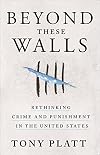
When the media talks about a rise in crime, prison overcrowding, and repeat offenders, most people automatically think of murderers, rapists, and other violent offenders. In fact, violent crime has been in a sharp decline for years. Rarely does mainstream media clarify that these crimes are relatively minor in the scheme of things, that they are largely social crimes like drug use, and the prisons have a revolving door because we've designed prisons - and society - to function that way.
With show more 'Beyond These Walls', Tony Platt takes us deep into the criminal justice system, showing us the complexities and many facets of a system gone horribly wrong. Platt doesn't just talk about what's broken, he shows us exactly how it got that way. This is a vital aspect because before we can begin to correct the mistakes, we first have to identify them.
The content encompasses a broad range of information, yet it's not weighed down with statistics and textbook-style lingo. The writing style is more conversational than scholarly.
This book should be required reading in every social science and criminal justice program. Ideally, I'd like everyone to read it. Until we start making loud enough demands for change, the system is only destined to get worse.
*I received an advance ebook copy from the publisher, via NetGalley.* show less
With show more 'Beyond These Walls', Tony Platt takes us deep into the criminal justice system, showing us the complexities and many facets of a system gone horribly wrong. Platt doesn't just talk about what's broken, he shows us exactly how it got that way. This is a vital aspect because before we can begin to correct the mistakes, we first have to identify them.
The content encompasses a broad range of information, yet it's not weighed down with statistics and textbook-style lingo. The writing style is more conversational than scholarly.
This book should be required reading in every social science and criminal justice program. Ideally, I'd like everyone to read it. Until we start making loud enough demands for change, the system is only destined to get worse.
*I received an advance ebook copy from the publisher, via NetGalley.* show less
Summary Dr Platt, a well-established criminologist, outlines the history and current state of incarceration in the US. He covers topics such as how women and minorities as overly-impacted by the harsh sentences, the overpopulated prisons, and the enforced deportations of documented and undocumented immigrants. He warns us that past efforts at reforming the system have actually resulted in changes for the worse. He urges that change needs to happen from the top down, rather than from the show more bottom up – in other words, we need to change how the people at the top think about incarceration, and not focus only on punishing the people at the bottom (i.e. cops and prison guards) for the failures of the system. He suggests that if we punished white collar crimes (especially those that affect thousands of people) with the same ferocity as crimes of the poor, then reform would happen faster – since the people who have power to do something about the problem will witness the problem first hand.
My Thoughts I admit, at first I didn’t think I was going to like this book. It started out slow – detail-heavy, with too many statistics listed in sentence after sentence. However, I started getting more into the narrative by the second or third chapter, when Platt started including more information on each event spoken about, instead of just listing events. By the end of the book, I was quite enjoying the educational aspects of the book. This is a topic that I have read a bit on, but not extensively, so I can say that it is a good book for a lay-person trying to educate herself on the history of incarceration in the US. Platt’s views on how we got where we are today, and some of his suggestions of how to look at reform differently (i.e. from the top down and by putting more white-collar people in prison) are definitely food for thought. This is a well-researched book, with lots of important information. It’s not fast reading, but it is worthwhile. show less
My Thoughts I admit, at first I didn’t think I was going to like this book. It started out slow – detail-heavy, with too many statistics listed in sentence after sentence. However, I started getting more into the narrative by the second or third chapter, when Platt started including more information on each event spoken about, instead of just listing events. By the end of the book, I was quite enjoying the educational aspects of the book. This is a topic that I have read a bit on, but not extensively, so I can say that it is a good book for a lay-person trying to educate herself on the history of incarceration in the US. Platt’s views on how we got where we are today, and some of his suggestions of how to look at reform differently (i.e. from the top down and by putting more white-collar people in prison) are definitely food for thought. This is a well-researched book, with lots of important information. It’s not fast reading, but it is worthwhile. show less
There is a tremendous breadth of coverage in this book, which is both a benefit and a detriment - Platt does a good job of showing how the various facets of the carcerial state interact and feed one another, but he sometimes misses important details of systems that are clearly outside his direct realm of expertise. And despite the breadth, this isn't a good introduction for someone not already familiar with the basics of the relevant social justice and reform movements. What this book is show more excellent for, though, is tying together a wide variety of details and offering a concise, coherent history of the various systems of control that reinforce inequality in America. Terrific background reading for activists, Beyond These Walls offers some good suggestions, too, for how various groups can work together to advance all our interests. show less

The role of police forces in the United States. In the late 1960's, American communities rapidly became dependent upon police forces. In 1955, criminal justice cost all levels of government less than 1/2 of 1% of the GNP. By 1971, it was 1%, increasing at a rate of 5 times the previous decade.
What happened to cause this sudden growth in the size and cost of police? Crime has become a central preoccupation and fear. The seven "serious" crimes rose by 158% between 1960 and 1971.[9]
What happened to cause this sudden growth in the size and cost of police? Crime has become a central preoccupation and fear. The seven "serious" crimes rose by 158% between 1960 and 1971.[9]
Statistics
- Works
- 9
- Members
- 103
- Popularity
- #185,854
- Rating
- 4.5
- Reviews
- 5
- ISBNs
- 15
- Languages
- 1