
Rebecca Lim
Author of Mercy
About the Author
Rebecca Lim is the author of The Astrologer's Daughter which made the Davitt Awards 2015 shortlists in the category of Young Adult Novel. (Bowker Author Biography)
Series
Works by Rebecca Lim
Tagged
Common Knowledge
Members
Reviews
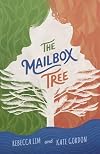
The Mailbox Tree was a heartwarming and hopeful story even as it didn’t shy away from the devastation and horror of a climate disaster. It discussed environmentalism and what we owe the people who will inherit the planet in later generations through the friendship between two girls: Bea, who lives in the present, and Nyx, who lives in a future made bleak and dangerous by the compounding effects of climate change.
Their friendship was quite sweet. They're both isolated and lonely and find a show more kindred soul in the other, somebody they can be open with. It did well to support the message that we need to have empathy and provide support for the people who will come after us and that even small acts to better our communities' futures are worth doing.
The time travel element, while it fit the themes of the book, was a bit convoluted as a plot element at times. Odd to me was how the first major change to the timeline seemed unconnected to either girl. For the most part, it seems Nyx and Bea are inextricably linked so something Bea does because of their link can skip the in-between years to suddenly change the ‘now’ of Nyx’s timeline. Except that first big change that starts to show how this link really works was from some random stranger with no indication why it was a change from how the ‘past’ from Nyx’s perspective should have been. show less
Their friendship was quite sweet. They're both isolated and lonely and find a show more kindred soul in the other, somebody they can be open with. It did well to support the message that we need to have empathy and provide support for the people who will come after us and that even small acts to better our communities' futures are worth doing.
The time travel element, while it fit the themes of the book, was a bit convoluted as a plot element at times. Odd to me was how the first major change to the timeline seemed unconnected to either girl. For the most part, it seems Nyx and Bea are inextricably linked so something Bea does because of their link can skip the in-between years to suddenly change the ‘now’ of Nyx’s timeline. Except that first big change that starts to show how this link really works was from some random stranger with no indication why it was a change from how the ‘past’ from Nyx’s perspective should have been. show less
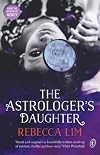
The Astrologer's Daughter by Rebecca Lim was not the book I expected it to be. This is partly because I intentionally try to forget blurbs for ARCs after I decide to read them and partly because I didn't really have a clear idea of what to expect anyway, and also that purple cover.
Avicenna Crowe’s mother, Joanne, is an astrologer with uncanny predictive powers and a history of being stalked. Now she is missing.The police are called, but they’re not asking the right questions. Like why show more Joanne lied about her past, and what she saw in her stars that made her so afraid.
But Avicenna has inherited her mother’s gift. Finding an unlikely ally in the brooding Simon Thorn, she begins to piece together the mystery. And when she uncovers a link between Joanne’s disappearance and a cold-case murder, Avicenna is led deep into the city’s dark and seedy underbelly, unaware how far she is placing her own life in danger.
I probably would have been less surprised by the book if I'd read the blurb, but on the other hand, the blurb is not entirely accurate either. Avicenna's mother disappears and the story opens with her calling the police. Most of the book is about her dealing — emotionally and practically — with her mother's disappearance. A few other things happen along the way, albeit mostly as a consequence of being left motherless.
The police in this book were helpful and did all the right things. I liked that they weren't just another set of antagonists and that Avicenna set up a rapport with her main liaison and came to think of him as a bit of a father figure. While Avicenna makes a few poor decisions, they're mostly of the not wanting to answer her phone variety, which was understandable and much less frustrating to read about than some YA protagonists.
Interestingly this book did not exclusively contain YA issues. Avicenna does have to deal with losing her mum at a young age but she also gets caught up in her mother's unfinished business, including a twenty-year-old unsolved rape and murder. Her sort-of friend, Simon, also has to deal with some pretty heavy issues, which I won't elaborate on because spoilers. It was a book that sucked me in straight away and one that I didn't want to put down, but it wasn't a fun book. That's not to say I didn't enjoy reading it, but it's not a book I'd recommend for some light escapist reading. Just saying.
Also, it's set in Melbourne with Avicenna and friends in year 12 at a thinly-disguised well-known high school. She lives in Chinatown and the descriptions of the CBD were excellent. As someone who's spent most of their life living in Melbourne (albeit not in the CBD), I found it really easy to visualise exactly where she went, even when the precise place (like her home) was fictional. On a related note, it also brought up some racial issues in passing, which lent authenticity to the book from my perspective although I suspect some nuances might be lost on international readers not familiar with Australia's migrant history.
I really enjoyed The Astrologer's Daughter. It grabbed me even though I didn't realise I was in the mood for that sort of book. It's a nice mix of crime and contemporary fantasy and pretty light on the fantasy front (only the astrology, really). In many ways, I found myself thinking of it as a stealth crime novel. Avicenna doesn't set out to solve any crimes, only to deal with her own life problems, but the solutions find her anyway.
I highly recommend The Astrologer's Daughter to fans of YA of the contemporary, speculative and/or crime genres. It was a gripping book and certainly my favourite of Lim's that I've read.
4.5 / 5 stars
Read more reviews on my blog. show less
Avicenna Crowe’s mother, Joanne, is an astrologer with uncanny predictive powers and a history of being stalked. Now she is missing.The police are called, but they’re not asking the right questions. Like why show more Joanne lied about her past, and what she saw in her stars that made her so afraid.
But Avicenna has inherited her mother’s gift. Finding an unlikely ally in the brooding Simon Thorn, she begins to piece together the mystery. And when she uncovers a link between Joanne’s disappearance and a cold-case murder, Avicenna is led deep into the city’s dark and seedy underbelly, unaware how far she is placing her own life in danger.
I probably would have been less surprised by the book if I'd read the blurb, but on the other hand, the blurb is not entirely accurate either. Avicenna's mother disappears and the story opens with her calling the police. Most of the book is about her dealing — emotionally and practically — with her mother's disappearance. A few other things happen along the way, albeit mostly as a consequence of being left motherless.
The police in this book were helpful and did all the right things. I liked that they weren't just another set of antagonists and that Avicenna set up a rapport with her main liaison and came to think of him as a bit of a father figure. While Avicenna makes a few poor decisions, they're mostly of the not wanting to answer her phone variety, which was understandable and much less frustrating to read about than some YA protagonists.
Interestingly this book did not exclusively contain YA issues. Avicenna does have to deal with losing her mum at a young age but she also gets caught up in her mother's unfinished business, including a twenty-year-old unsolved rape and murder. Her sort-of friend, Simon, also has to deal with some pretty heavy issues, which I won't elaborate on because spoilers. It was a book that sucked me in straight away and one that I didn't want to put down, but it wasn't a fun book. That's not to say I didn't enjoy reading it, but it's not a book I'd recommend for some light escapist reading. Just saying.
Also, it's set in Melbourne with Avicenna and friends in year 12 at a thinly-disguised well-known high school. She lives in Chinatown and the descriptions of the CBD were excellent. As someone who's spent most of their life living in Melbourne (albeit not in the CBD), I found it really easy to visualise exactly where she went, even when the precise place (like her home) was fictional. On a related note, it also brought up some racial issues in passing, which lent authenticity to the book from my perspective although I suspect some nuances might be lost on international readers not familiar with Australia's migrant history.
I really enjoyed The Astrologer's Daughter. It grabbed me even though I didn't realise I was in the mood for that sort of book. It's a nice mix of crime and contemporary fantasy and pretty light on the fantasy front (only the astrology, really). In many ways, I found myself thinking of it as a stealth crime novel. Avicenna doesn't set out to solve any crimes, only to deal with her own life problems, but the solutions find her anyway.
I highly recommend The Astrologer's Daughter to fans of YA of the contemporary, speculative and/or crime genres. It was a gripping book and certainly my favourite of Lim's that I've read.
4.5 / 5 stars
Read more reviews on my blog. show less
Mercy by Rebecca Lim

Review originally posted here: http://tsanasreads.tumblr.com/post/20550704120/mercy-by-rebecca-lim
Mercy by Rebecca Lim, is a YA book about Mercy, an angel (or something like that, it’s not entirely articulated, despite what the blurb says). She is forcibly thrust into random girls bodies and forced to take over their lives. She never knows where she’ll wake up, who she’ll have to be or why. This time, she wakes up as Carmen, a star soprano singer in a high school choir. The choir is show more visiting the town of Paradise for a concert and preparations and Mercy/Carmen finds herself billeted with the family of a girl who disappeared two years previously.
Although everyone else assumes the missing girl is dead, her twin brother believes she is alive and hasn’t given up searching for her. Mercy realised that he’s probably right and joins him in his search and attempts to work out who the culprit is.
Although this is a YA book, it reminded me a bit of serial killer books I’ve read in the past (Michael Marshal [Smith] springs to mind), but that’s possibly more a reflection of the dearth of crime novels I’ve read. Nevertheless, I found something appealing about Mercy’s attempts to work out who did it and try to get inside the criminal’s mind. That aspect of the novel was dark in a different way to, for example, YA dystopias. It was about the darkness inside one person than the darkness of an oppressive society or a war.
Lim has a more poetic writing style than most other YA books I can think of. Also, written in first person, Mercy spends more time philosophising than other YA characters that spring to mind (possibly because she’s not really a teenage girl). She also spends time wondering who and why she really is, who the mysterious probably-angels that she dreams about are and so forth. I didn’t find those parts as exciting as the who kidnapped the girl parts and at times they got a bit tedious.
On the other hand, I enjoyed the parts where she didn’t care what the bitchy girls thought of her/Carmen and didn’t respond as insecurely as Carmen would have. There was pleasure to be derived from watching the bitchy popular girl squirm. Oh, and Mercy isn’t a terribly kind person, which, if anything, added to her character, in my opinion.
Overall, Mercy is a well-written book. I’ll be picking up the sequel although my impression is that almost all the supporting characters will have changed. Hopefully Mercy’s character will be enough to carry off the dramatic change (according to the blurb).
4 / 5 stars show less
Mercy by Rebecca Lim, is a YA book about Mercy, an angel (or something like that, it’s not entirely articulated, despite what the blurb says). She is forcibly thrust into random girls bodies and forced to take over their lives. She never knows where she’ll wake up, who she’ll have to be or why. This time, she wakes up as Carmen, a star soprano singer in a high school choir. The choir is show more visiting the town of Paradise for a concert and preparations and Mercy/Carmen finds herself billeted with the family of a girl who disappeared two years previously.
Although everyone else assumes the missing girl is dead, her twin brother believes she is alive and hasn’t given up searching for her. Mercy realised that he’s probably right and joins him in his search and attempts to work out who the culprit is.
Although this is a YA book, it reminded me a bit of serial killer books I’ve read in the past (Michael Marshal [Smith] springs to mind), but that’s possibly more a reflection of the dearth of crime novels I’ve read. Nevertheless, I found something appealing about Mercy’s attempts to work out who did it and try to get inside the criminal’s mind. That aspect of the novel was dark in a different way to, for example, YA dystopias. It was about the darkness inside one person than the darkness of an oppressive society or a war.
Lim has a more poetic writing style than most other YA books I can think of. Also, written in first person, Mercy spends more time philosophising than other YA characters that spring to mind (possibly because she’s not really a teenage girl). She also spends time wondering who and why she really is, who the mysterious probably-angels that she dreams about are and so forth. I didn’t find those parts as exciting as the who kidnapped the girl parts and at times they got a bit tedious.
On the other hand, I enjoyed the parts where she didn’t care what the bitchy girls thought of her/Carmen and didn’t respond as insecurely as Carmen would have. There was pleasure to be derived from watching the bitchy popular girl squirm. Oh, and Mercy isn’t a terribly kind person, which, if anything, added to her character, in my opinion.
Overall, Mercy is a well-written book. I’ll be picking up the sequel although my impression is that almost all the supporting characters will have changed. Hopefully Mercy’s character will be enough to carry off the dramatic change (according to the blurb).
4 / 5 stars show less
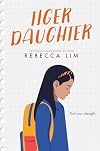
First sentence: As we take our places in the classroom, Mr Cornish writes with a flourish on the whiteboard, What is the essence of being 'Australian'?
Brief Note: Tiger Daughter, I'm assuming, was originally published in Australia in 2021. It was first published in the United States in 2023. What this says about Cybils eligibility I'm not quite sure...
Premise/plot: Tiger Daughter is a heavy/weighty "problem novel." Not all problem novels are equally heavy/weighty. It was almost as if the show more author wanted to pack in as many problems as humanly possible to make the reader bear them one and all. (Perhaps as an endurance or strength exercise in empathy?) If one was to list all the possible trigger warnings--as is so often done these days--the list would go on for pages. Expect the worst on every page and you've got an idea of what this one is like.
Wen Zhou, our heroine, is the daughter of Chinese immigrants. Her father is a piece of work. Controlling, demanding, cruel, bitter, etc. (Tip of the iceberg). Her mother takes it all--not with a smile, but because she has to it seems. Wen is also supposed to just take life as it is--on her father's terms. No hopes. No dreams. Just be a mindless yet always respectful servant to her father.
Henry Xiao, our heroine's closest friend, is the son of Chinese immigrants. His home life is DIFFERENT than Wen's homelife but equally problematic and woeful. Henry has a wee bit more hope than Wen--which inspires Wen. But things seem BLEAK and bleaker still.
Is this friendship approved by Wen's father? by Wen's mother? Not really. Wen isn't encouraged to be friends with anyone. It seems the father's mission to make sure that NO ONE wants to be friends with Wen.
Both families face a million problems--each heavier than the last. Things continue bleakly on until the ending when things go from oppressingly bleak to mostly bleak.
My thoughts: No doubt there will be readers who enjoy carrying the weight of the world on their shoulders as they read this one. The bleakness is immersive. And some adult readers--especially the ones that hand out stars--seem to LOVE wading through bleak novels with IMPORTANT topics and themes. Teachers, librarians, other adults that read children's novels--they may love this one exceedingly for being so obviously IMPORTANT and WEIGHTY and authentically bleak.
Did I enjoy this one? No. Is there beauty that could have been found in this one--perhaps through the characterization or narration? Perhaps. I didn't find it personally. But reading is so subjective. And IMPORTANT "problem novels" aren't usually my thing. show less
Brief Note: Tiger Daughter, I'm assuming, was originally published in Australia in 2021. It was first published in the United States in 2023. What this says about Cybils eligibility I'm not quite sure...
Premise/plot: Tiger Daughter is a heavy/weighty "problem novel." Not all problem novels are equally heavy/weighty. It was almost as if the show more author wanted to pack in as many problems as humanly possible to make the reader bear them one and all. (Perhaps as an endurance or strength exercise in empathy?) If one was to list all the possible trigger warnings--as is so often done these days--the list would go on for pages. Expect the worst on every page and you've got an idea of what this one is like.
Wen Zhou, our heroine, is the daughter of Chinese immigrants. Her father is a piece of work. Controlling, demanding, cruel, bitter, etc. (Tip of the iceberg). Her mother takes it all--not with a smile, but because she has to it seems. Wen is also supposed to just take life as it is--on her father's terms. No hopes. No dreams. Just be a mindless yet always respectful servant to her father.
Henry Xiao, our heroine's closest friend, is the son of Chinese immigrants. His home life is DIFFERENT than Wen's homelife but equally problematic and woeful. Henry has a wee bit more hope than Wen--which inspires Wen. But things seem BLEAK and bleaker still.
Is this friendship approved by Wen's father? by Wen's mother? Not really. Wen isn't encouraged to be friends with anyone. It seems the father's mission to make sure that NO ONE wants to be friends with Wen.
Both families face a million problems--each heavier than the last. Things continue bleakly on until the ending when things go from oppressingly bleak to mostly bleak.
My thoughts: No doubt there will be readers who enjoy carrying the weight of the world on their shoulders as they read this one. The bleakness is immersive. And some adult readers--especially the ones that hand out stars--seem to LOVE wading through bleak novels with IMPORTANT topics and themes. Teachers, librarians, other adults that read children's novels--they may love this one exceedingly for being so obviously IMPORTANT and WEIGHTY and authentically bleak.
Did I enjoy this one? No. Is there beauty that could have been found in this one--perhaps through the characterization or narration? Perhaps. I didn't find it personally. But reading is so subjective. And IMPORTANT "problem novels" aren't usually my thing. show less
Lists
Awards


You May Also Like


Associated Authors
Statistics
- Works
- 29
- Members
- 1,090
- Popularity
- #23,566
- Rating
- 3.7
- Reviews
- 69
- ISBNs
- 122
- Languages
- 3