
Martial (040–104)
Author of Epigrams
About the Author
Image credit: From Wikipedia
Works by Martial
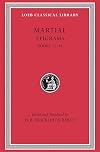
Martial: Epigrams, Volume III, Books 11-14. (Loeb Classical Library No. 480) (1993) 104 copies, 1 review
Martial and Pliny : Selections from Martial and Pliny the Younger : Edited with introduction, notes and vocabulary (1998) — Writer — 30 copies
Society in Imperial Rome: Selections from Juvenal, Martial, Petronius, Seneca, Tacitus and Pliny (Translations from Greek and Roman Authors) (1982) 15 copies
Libellus: Selections from Horace, Martial, Ovid, and Catullus. Handbook (Cambridge Latin Texts) (1978) 15 copies
Epigramy : wybór 9 copies
Selections from Martial's Epigrams 6 copies
M. V. Martialis Epigrammata selecta. Select epigrams from Martial, with English notes by F. A. Paley and W. H. Stone (1983) 6 copies
Epigrammen 4 copies
The dead slave and other poems of Martial : some versions from Book XV of Marcus Valerius Martialis (1977) 3 copies
Gli epigrammi proibiti 3 copies
Martial, the epigrams 2 copies
Epigrammi di Marziale 2 copies
Römischer Witz ausgewählte Epigramme 2 copies
Martial Selected Epigrams 2 copies
Epigramas de Marco Valerio Marcial 2 copies
Gli epigrammi 2 copies
Marci Valerii Martialis Epigrammata 2 copies
Martialis epigrammaton libri 2 copies
Marziale. Epigrammi d'amore 2 copies
Эпиграммы 2 copies
Epigrams of Martial 2 copies
Epigrames 80-102 1 copy
Los higos de Quios 1 copy
Epigrammi 1 copy
seçme şiirler 1 copy
Mottoes 1 copy
Epigramas 1 copy
Epigrammen. Boek 1 en 2 1 copy
Epigrammata, Volumen Primum 1 copy
Apophorètes 1 copy
Marziale Marco Valerio 1 copy
L'uccello non è un dito 1 copy
L'uccello non è un dito. Non est mendula quod digitus. Oscenità, vizi e malizie di Roma antica. Testo latino a fronte (2018) 1 copy
Epigrams. Book two 1 copy
Epigramme: Parcere personis. Dicere de vitiis. Lateinische Texte zur Erschließung europäischer Kultur (2002) 1 copy
Epigramas: Tomo III 1 copy
Loci selecti 1 copy
Epigrammes 1-2 1 copy
Epigrammaton libro 14 (1-16) 1 copy
EPIGRAMMI - 4 VOLUMI 1000 1 copy
M. Val Martialis - Epigrammata, Recognovit Brevique Adnotatione Critica Instruxit W. M. Lindsay, Editio Altera (1969) 1 copy
Les Epigrammes 1 copy
Epigrams II 1 copy
Epigrammaton. 1 copy
Epigrams vol 1 1 copy
Epigrams, Vol. 1 1 copy
Epigrams 1 copy
Epigrams Books 11-14 1 copy
Les épigrammes. Spectacles et Livres I à VII (Livres VIII à XIV et pièces douteuses) — Author — 1 copy
Poems after Martial 1 copy
Da mar' estos neniam sat! 1 copy
The Epigrams {audio} 1 copy
EPIGRAMES IV 1 copy
{Epigrammi} 2 1 copy
{Epigrammi} 1 1 copy
Martial Epigramme 1 copy
Epigrammaton libri 1.- 4. 1 copy
Epigrammaton libri 5.-10. 1 copy
Epigram i urval 1 copy
Martials Epigrammer 1 copy
Épigrammes — Author — 1 copy
M. Valerii Martialis Epigrammaton Libri, Vol. 1: Mit Erklärenden Anmerkungen (Classic Reprint) (German Edition) (2017) 1 copy
Epigramme Auswahl 1 copy
Epigrammi 1 copy
Associated Works
Literature: An Introduction to Fiction, Poetry, and Drama (1995) — Contributor, some editions — 1,017 copies, 7 reviews
World Poetry: An Anthology of Verse from Antiquity to Our Time (1998) — Contributor — 499 copies, 2 reviews
Choice Cuts: A Savory Selection of Food Writing from Around the World and Throughout History (2002) — Contributor — 369 copies, 2 reviews
The Dedalus Book of Roman Decadence: Emperors of Debauchery (Decadence from Dedalus) (1994) — Contributor — 53 copies
The Ribald Reader: 2000 Years of Lusty Love and Laughter (1906) — Contributor — 19 copies, 2 reviews
Van Homerus tot Van Lennep : Griekse en Latijnse literatuur in Nederlandse vertaling (1992) — Author — 7 copies
Latijnse varia : bloemlezing uit de werken van een tiental Latijnse dichters en prozaschrijvers (1954) — Contributor — 4 copies
Tagged
Common Knowledge
- Canonical name
- Martial
- Legal name
- Martialis, Marcus Valerius
- Birthdate
- 040-03-01
- Date of death
- 104
- Gender
- male
- Occupations
- poet
epigrapher - Nationality
- Roman Empire
- Birthplace
- Bilbilis, Hispania Tarraconensis, imperium Romanum
- Place of death
- Bilbilis, Hispania Tarraconensis, imperium Romanum
- Map Location
- Spain
Members
Reviews
Recall that Don Juan's mother referred to them as "the nauseous epigrams of Martial," in Byron. She's probably thinking in particular of Book XI. They are a delight, a crude, base, insulting, very funny satire on different sexual crimes and misdemeanors. The only English verse that comes close is JV Cunningham, such as: "Lip is a man who used his head, / He used it when he went to bed / With his friend's wife..." and it gets better, "With either sex at either end."
M. Valerius Martialis, born show more in Bilbilis, Hispania (near Zaragoza) published his first book of epigrams the same year the Colisseum was completed, 80 A.D (at age 40). He advises readers who hold the book can pick one up at Secunda's stall in the Forum of Pallas, back of the Gate of Peace. He considers the losing soldier's fame cheap, just falling on his sword: "I'd prefer to be famous still alive." And he's ascerbic on the man who proposes to a rich woman: Why does he propose? She has a bad cough...(so she'll die and leave him her dowry).
One Lupercus asks to borrow his epigrams; Martial directs him to his bookseller, because he's closer. He parodies Catullus, who calls his girl Lesbea a "pet, a sparrow"--Martial calls his Stella a dove (maybe renowned for screwing). Martial also has many epigrams about his book, "Go--if you must, you'd be safer at home."
But some epigrams are longer than our idea of the form. I believe late 16C writers debated whether the sonnet was a lyric or an epigram.
But some epigrams are longer than our idea of the form. I believe late 16C writers debated whether the sonnet was a lyric or an epigram. The one great poet in English who writes epigrams is Emily Dickinson, but her epigrams are entirely uninfluenced by Martial. ED, "What soft, cherubic creatures / These gentlewomen are--/ One would as soon assault a Plush, / Or violate--a Star./ Such Dimity convictions, / A horror so refined / Of Freckled human Nature--/ Of Deity--Ashamed." show less
M. Valerius Martialis, born show more in Bilbilis, Hispania (near Zaragoza) published his first book of epigrams the same year the Colisseum was completed, 80 A.D (at age 40). He advises readers who hold the book can pick one up at Secunda's stall in the Forum of Pallas, back of the Gate of Peace. He considers the losing soldier's fame cheap, just falling on his sword: "I'd prefer to be famous still alive." And he's ascerbic on the man who proposes to a rich woman: Why does he propose? She has a bad cough...(so she'll die and leave him her dowry).
One Lupercus asks to borrow his epigrams; Martial directs him to his bookseller, because he's closer. He parodies Catullus, who calls his girl Lesbea a "pet, a sparrow"--Martial calls his Stella a dove (maybe renowned for screwing). Martial also has many epigrams about his book, "Go--if you must, you'd be safer at home."
But some epigrams are longer than our idea of the form. I believe late 16C writers debated whether the sonnet was a lyric or an epigram.
But some epigrams are longer than our idea of the form. I believe late 16C writers debated whether the sonnet was a lyric or an epigram. The one great poet in English who writes epigrams is Emily Dickinson, but her epigrams are entirely uninfluenced by Martial. ED, "What soft, cherubic creatures / These gentlewomen are--/ One would as soon assault a Plush, / Or violate--a Star./ Such Dimity convictions, / A horror so refined / Of Freckled human Nature--/ Of Deity--Ashamed." show less

Fantastically bawdy, witty and sharp, I read this in a day. This is a bit misleading, because the Penguin edition is a bit of a best of, rather than every epigram Martial wrote. Still, these give a fascinating insight into the Roman world. I much prefer the underbelly-type works, like this and Juvenal, to the epics of poets like Virgil.
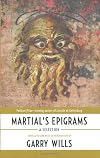
Through his Epigrams, Martial has come down to us as a Roman rap star, an Empire gangsta who tweaked the noses of all around him — unless you were pretty and had sexy naughty bits, in which case the odds were even as to whether he’d sing your praises or declare you a whore.
Born in Spain in the year 40 A.D., Martial was a poet who lived much of his life in Rome, dying just after the turn of the first century. His mastery of raunchy innuendo (not to mention outright declaration of show more skankiness) may well be unsurpassed in the history of literature. He’s certainly in the ninetieth percentile.
Fortunately, Wills doesn’t attempt anything so anachronistic as presenting Martial as a rapper, but his translation of these selected epigrams is lucid and juicy, tender and lyrical – they pop as the occasion requires. For Martial wasn’t all raunch and roll. He once, for instance, wrote a poem about a dead slave girl,
six days shy
Of six years…
Earth, sadly mounted on this gravesite now,
Press lightly on her, as she did on you.
In the next paragraph, though, Wills must inform us that “the only tender love poems are pederastic, like this”: “Your hint of beard just barely is… a fizz …. / And when you give me kisses free, / Your shadow beard dusts off on me.”
In our time, I expect Martial would, under the best of circumstances, be a poet chained to a post, with a ten-foot-radius of freedom, a registered sex offender in some Midwestern village bazaar. We could bring him bread and wine, feel good about our kindness to a monster. Martial is shockingly useful—I mean to say, he’s useful precisely because he can shock us after two millennia. We think we’ve got problems with popular culture? These neglected Roman writers can be helpful reminders of the boom box of history.
Martial brings into public discourse what for us are mostly private matters, and that so even with “reality TV” and Google’s impending artificial intelligence conspiracy. Of a female acquaintance he asks, “Your face entices, and your thighs – / Why are you shunned by all the guys?” This is grudge rap, bitch slapping, the trading of street-corner dozens (“yo mamma fatter than…”) and just generally upping the animosity ante: l’art pour l’art, and the art of insult has always been pretty cool. It’s not tender and loving, but it may be nonetheless healthy.
Along with standup comics, skanky bitches from across the gender and political spectrum will admire Martial (and Wills’ translations) for his audacity and originality. Only the sick and twisted, however, will admire (much less study and emulate) the skill with which Martial cuts throats with mere words. For that would be bad.
Originally published on Curled Up With A Good Book. show less
Born in Spain in the year 40 A.D., Martial was a poet who lived much of his life in Rome, dying just after the turn of the first century. His mastery of raunchy innuendo (not to mention outright declaration of show more skankiness) may well be unsurpassed in the history of literature. He’s certainly in the ninetieth percentile.
Fortunately, Wills doesn’t attempt anything so anachronistic as presenting Martial as a rapper, but his translation of these selected epigrams is lucid and juicy, tender and lyrical – they pop as the occasion requires. For Martial wasn’t all raunch and roll. He once, for instance, wrote a poem about a dead slave girl,
six days shy
Of six years…
Earth, sadly mounted on this gravesite now,
Press lightly on her, as she did on you.
In the next paragraph, though, Wills must inform us that “the only tender love poems are pederastic, like this”: “Your hint of beard just barely is… a fizz …. / And when you give me kisses free, / Your shadow beard dusts off on me.”
In our time, I expect Martial would, under the best of circumstances, be a poet chained to a post, with a ten-foot-radius of freedom, a registered sex offender in some Midwestern village bazaar. We could bring him bread and wine, feel good about our kindness to a monster. Martial is shockingly useful—I mean to say, he’s useful precisely because he can shock us after two millennia. We think we’ve got problems with popular culture? These neglected Roman writers can be helpful reminders of the boom box of history.
Martial brings into public discourse what for us are mostly private matters, and that so even with “reality TV” and Google’s impending artificial intelligence conspiracy. Of a female acquaintance he asks, “Your face entices, and your thighs – / Why are you shunned by all the guys?” This is grudge rap, bitch slapping, the trading of street-corner dozens (“yo mamma fatter than…”) and just generally upping the animosity ante: l’art pour l’art, and the art of insult has always been pretty cool. It’s not tender and loving, but it may be nonetheless healthy.
Along with standup comics, skanky bitches from across the gender and political spectrum will admire Martial (and Wills’ translations) for his audacity and originality. Only the sick and twisted, however, will admire (much less study and emulate) the skill with which Martial cuts throats with mere words. For that would be bad.
Originally published on Curled Up With A Good Book. show less
In which I realize that my boredom with and occasional distaste for the classics is due to my own silly post-romantic desire for The Great Work rather than for the good one. Martial is hilarious, the translation adds in rhyme to give us some flavor and make the sting in the tail a little more obvious. Even better, it's dual-language. The later books are a little dull, and almost ruined by genuine, heartfelt sentiment and mourning, as well as, I feel, a general weakening of Martial's sneer. show more Is this Great Literature? No, thank god. Is it better than trawling through endless pages of bowel-churning love poetry? Substantially. Avoid, however, if you're distressed by performed bigotry. show less
Lists
Awards

You May Also Like


Associated Authors
Statistics
- Works
- 215
- Also by
- 16
- Members
- 1,992
- Popularity
- #12,914
- Rating
- 3.9
- Reviews
- 29
- ISBNs
- 163
- Languages
- 15
- Favorited
- 12