
Ellen Cannon Reed (–2003)
Author of The Witches Qabala: The Pagan Path and the Tree of Life
About the Author
Ellen Cannon Reed (1943-2003) was the most widely known priestess of the Isian Tradition of witchcraft. She is the author of The Witches Qabala and cocreator of The Witches Tarot, which combines Wiccan elements with traditional Qabalistic symbols and imagery.
Series
Works by Ellen Cannon Reed
Tagged
Common Knowledge
- Date of death
- 2003-10-07
- Gender
- female
Members
Reviews
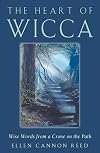
Fantastic book, sure to be controversial and piss some people off. Criticizes "Instant Wicca" and speaks in favor of dedication, initiation and training, as Wicca is a mystery religion, and to make it "one size fits all" is to do it a disservice and undermine its uniqueness among the world religions. The essence of Wicca is the experience of Initiation and the Mysteries, which cannot be taught by humans, or books, but a teacher can be a guide who makes the path easier. Reed uses the analogy show more of climbing straight up the mountain, as opposed to taking the slow, winding path. She doesn't put down the slow, winding path, but insists on giving the teachers and your coven sisters and brothers respect, and she admires patience and fortitude on what is a difficult and challenging path.
I highly recommend this book. It serves as a "back to basics" wake up call. show less
I highly recommend this book. It serves as a "back to basics" wake up call. show less
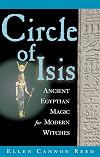
A good resource on modern Wiccan interpretations of Ancient Egypt with very little referenced source material. However, in the chapter on the deity Ra, the author says that after an apprentice was abused in her community, the community hushed it up, as it would "Put the craft on trial" to report the incident to the police. This is a deplorable attitude for any magician, much less one who quotes the Wiccan Rede and claims to be a light worker. This makes me automatically consider all her show more ethics suspect. Magic should back up real world actions, not attempt to replace them. Feel free to read this book, however, read with a grain of salt. If the author covered up this incident, I wonder how honest she is in the rest of her magical and writing work? show less
The Goddess and the Tree (Llewellyn's Modern Witchcraft Series, Witches Qabala, Book 1 Formerly the Witches' Qabala) by Ellen Cannon Reed

This is one of the first books of its kind that I have read. I picked it up because of The Witches Tarot by Ellen Cannon Reed. There's a beautiful version of the Charge of the Goddess and the presentation of the information shed a lot of light and provoked a lot of thinking.
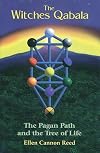
I am a witch interested in the roots of my religion which lie in the Qabalah. I have studied the Qabalah before, using the more traditional approaches of e.g. Dion Fortune, and I was expecting this book to be a kind of missing link between the highly esoteric approach and the more down-to-earth pagan viewpoints. I also bought the book to learn how to apply Qabalistic concepts into my own spirituality.
Both my expectations were never fulfilled. "The Witches Qabalah" is a very easy read, but show more that is exactly why it can never be a good treatise on anything as profound as the Qabalah. And it isn't; the Tree of Life is presented in a matter-of-fact way with a great many number of correspondences, some of them of interest to paganists but certainly not all of them. The various diagrams are useful, but all-in-all it left me a little dissatisfied. Still: it is a good introduction to the systematic approach of the Qabalah to spirituality, but for those already acquainted with it it will leave a sense of superficiality.
But what I found worse than that is that the title does not keep its promise. The Qabalah is discussed (or, rather, presented) in the traditional judaeo-occult framework. Witchcraft and wicca concepts sporadically enter the discussion, but this happens far to infrequently to justify the title "Witches' Qabalah".
To me the book appears to be simplifying the Qabalah - sometimes to the point of dogmatism- and embellishing it with some remarks and elements that will cater and appeal to the pagan community.
The author also seems quite preoccupied with the traditional Angels, Archangels, Names of Power and other typically Qabalistic ideas. This is all OK for ceremonial magic users, but of less immediate interest to the average witch or pagan who hopes to gain a deeper understanding of his or her own path, rather than learning about the assets of a different path.
My final assessment of this book: a nice and quick read and a nice and readable introduction to elements of the Qabalah. The treatment of the relationship between Qabalah and Witchcraft or other pagan paths I found highly unsatisfactory, however. show less
Both my expectations were never fulfilled. "The Witches Qabalah" is a very easy read, but show more that is exactly why it can never be a good treatise on anything as profound as the Qabalah. And it isn't; the Tree of Life is presented in a matter-of-fact way with a great many number of correspondences, some of them of interest to paganists but certainly not all of them. The various diagrams are useful, but all-in-all it left me a little dissatisfied. Still: it is a good introduction to the systematic approach of the Qabalah to spirituality, but for those already acquainted with it it will leave a sense of superficiality.
But what I found worse than that is that the title does not keep its promise. The Qabalah is discussed (or, rather, presented) in the traditional judaeo-occult framework. Witchcraft and wicca concepts sporadically enter the discussion, but this happens far to infrequently to justify the title "Witches' Qabalah".
To me the book appears to be simplifying the Qabalah - sometimes to the point of dogmatism- and embellishing it with some remarks and elements that will cater and appeal to the pagan community.
The author also seems quite preoccupied with the traditional Angels, Archangels, Names of Power and other typically Qabalistic ideas. This is all OK for ceremonial magic users, but of less immediate interest to the average witch or pagan who hopes to gain a deeper understanding of his or her own path, rather than learning about the assets of a different path.
My final assessment of this book: a nice and quick read and a nice and readable introduction to elements of the Qabalah. The treatment of the relationship between Qabalah and Witchcraft or other pagan paths I found highly unsatisfactory, however. show less
You May Also Like


Statistics
- Works
- 12
- Members
- 790
- Popularity
- #32,236
- Rating
- 3.8
- Reviews
- 8
- ISBNs
- 15
- Favorited
- 2