
Donald C. Johanson
Author of Lucy: The Beginnings of Humankind
About the Author
Image credit: Dr. Donald Johanson, founding director of the Institute of Human Origins at Arizona State University, poses with his discovery, the 3.2 million-year-old Lucy skeleton, part of the "Lucy's Legacy: The Hidden Treasures of Ethiopia" exhibit at the Discovery Times Square Exposition in New York, Wednesday June 24, 2009.
Works by Donald C. Johanson
Lucy: The Beginning of Hum 1 copy
Associated Works
Tagged
Common Knowledge
- Legal name
- Johanson, Donald Carl
- Birthdate
- 1943-06-28
- Gender
- male
- Education
- University of Illinois, Urbana-Champaign
University of Chicago (PhD) - Occupations
- paleoanthropologist
- Nationality
- USA
- Birthplace
- Chicago, Illinois, USA
- Associated Place (for map)
- Illinois, USA
Members
Reviews
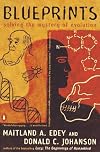
This is the best refutation of the creationist nonsense I have run across.Maitland Edey and Donald Johanson are also co-authors of [b:Lucy: The Beginnings of Humankind|189311|Lucy The Beginnings of Humankind|Donald Johanson|http://photo.goodreads.com/books/1172549027s/189311.jpg|183010]. Edey and Johanson have painstakingly, but most engagingly, delineated the evidence for evolutionary theory from Darwin through the molecular evidence of Vincent Sarich. Along the way we learn of Mendel's show more peas, Crick's DNA studies, and of T.H. Morgan, the discoverer of genes and their link to heredity. Morgan unwittingly provided the mechanism for Darwin's natural selection speculations. He was a natural skeptic who refused to believe Mendel's hypotheses. He painstakingly anesthetized hundreds of thousands of fruit flies and viewed them through a microscope to track changes in eye color which revealed mutant variations.
The chapters on Darwin are fascinating. Darwin made important inferences from five major observations: (1) species have great potential fertility; 12) populations tend to be stable; (3) food resources are limited and remain constant; (4) no two individuals are identical; and, (5) variation is heritable, i.e. offspring tend to resemble their parents. These observations led to his major brilliant inferences: (1) there is a struggle among individuals for resources; (2) those with ''good" or "best" characteristics tend to survive (natural selection); and (3) natural selection results in marked changes to a population. The two biggest challenges to Darwin's theories at the time were "blending" (any change introduced into a population would be blended into extinction very soon,) a theory effectively refuted by Mendel; and Lord Kelvin's assertion that the earth would have been too hot for too long for evolution to have occurred. Nuclear physics has, of course, proven him to be wrong.
The final chapter speculates on the future successful adaptability of humans. Generally, the most successful species are those that adapt easily, inhabit a fairly wide niche, and those that are the most generalized. Man's brain provides an ability to adapt to almost any environment; indeed, to some species, "obligate parasites," are organisms which can survive only in concert with their hosts; e.g., the louse that lived on the heath hen died when the last heath hen died in the 1930s. Are humans the parasites of the earth? If the earth dies so shall we, so it would seem logical that we not "abuse the host." If our intelligence enables us to so change the environment for our short-term comfort, or through nuclear holocaust destroy our surroundings, have we perhaps overspecialized on the brain and over-manipulated ourselves right out of existence? show less
The chapters on Darwin are fascinating. Darwin made important inferences from five major observations: (1) species have great potential fertility; 12) populations tend to be stable; (3) food resources are limited and remain constant; (4) no two individuals are identical; and, (5) variation is heritable, i.e. offspring tend to resemble their parents. These observations led to his major brilliant inferences: (1) there is a struggle among individuals for resources; (2) those with ''good" or "best" characteristics tend to survive (natural selection); and (3) natural selection results in marked changes to a population. The two biggest challenges to Darwin's theories at the time were "blending" (any change introduced into a population would be blended into extinction very soon,) a theory effectively refuted by Mendel; and Lord Kelvin's assertion that the earth would have been too hot for too long for evolution to have occurred. Nuclear physics has, of course, proven him to be wrong.
The final chapter speculates on the future successful adaptability of humans. Generally, the most successful species are those that adapt easily, inhabit a fairly wide niche, and those that are the most generalized. Man's brain provides an ability to adapt to almost any environment; indeed, to some species, "obligate parasites," are organisms which can survive only in concert with their hosts; e.g., the louse that lived on the heath hen died when the last heath hen died in the 1930s. Are humans the parasites of the earth? If the earth dies so shall we, so it would seem logical that we not "abuse the host." If our intelligence enables us to so change the environment for our short-term comfort, or through nuclear holocaust destroy our surroundings, have we perhaps overspecialized on the brain and over-manipulated ourselves right out of existence? show less
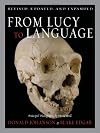
I really adored this. A coffeetable book on paleoanthropology? It's like a dream come true. And it is gorgeous. David Brill's photographs of the skulls and other fossils have an almost 3-D feel, showing the diverse textures, colors, and patina of each specimen. Some books on early hominids have beautifully constructed artist's renditions of what these individuals might have looked like, this one leaves it to the reader's imagination.
The text is by Donald Johanson, the paleoanthropologist who show more discovered the famous "Lucy" skeleton. He gets pretty darn technical in his descriptions of the fossils, delving into the minutiae of teeth, mandibles, fragments of thigh bone and so on... but it's an effective reminder that the science of paleoanthropology requires a great deal of time-consuming, meticulous sleuth-work. I found it fascinating, but I understand that others might find it a bit of a trudge.
Final verdict: Beautiful to look at, extremely detailed. If you're looking for a more accessible or quick-reading summary of early humans and their kin, try The Smithsonian Intimate Guide to Human Origins show less
The text is by Donald Johanson, the paleoanthropologist who show more discovered the famous "Lucy" skeleton. He gets pretty darn technical in his descriptions of the fossils, delving into the minutiae of teeth, mandibles, fragments of thigh bone and so on... but it's an effective reminder that the science of paleoanthropology requires a great deal of time-consuming, meticulous sleuth-work. I found it fascinating, but I understand that others might find it a bit of a trudge.
Final verdict: Beautiful to look at, extremely detailed. If you're looking for a more accessible or quick-reading summary of early humans and their kin, try The Smithsonian Intimate Guide to Human Origins show less

“A glorious success…The science manages to be as exciting and spellbinding as the juiciest gossip” (San Franscisco Chronicle) in the story of the discovery of “Lucy”—the oldest, best-preserved skeleton of any erect-walking human ancestor ever found.
When Donald Johanson found a partical skeleton, approximately 3.5 million years old, in a remote region of Ethiopia in 1974, a headline-making controversy was launched that continues on today. Bursting with all the suspense and show more intrigue of a fast paced adventure novel, here is Johanson’s lively account of the extraordinary discovery of “Lucy.” By expounding the controversial change Lucy makes in our view of human origins, Johanson provides a vivid, behind-the-scenes account of the history of pealeoanthropology and the colorful, eccentric characters who were and are a part of it. Never before have the mystery and intricacy of our origins been so clearly and compellingly explained as in this astonighing and dramatic book. show less
When Donald Johanson found a partical skeleton, approximately 3.5 million years old, in a remote region of Ethiopia in 1974, a headline-making controversy was launched that continues on today. Bursting with all the suspense and show more intrigue of a fast paced adventure novel, here is Johanson’s lively account of the extraordinary discovery of “Lucy.” By expounding the controversial change Lucy makes in our view of human origins, Johanson provides a vivid, behind-the-scenes account of the history of pealeoanthropology and the colorful, eccentric characters who were and are a part of it. Never before have the mystery and intricacy of our origins been so clearly and compellingly explained as in this astonighing and dramatic book. show less

The discovery in this book is not in the same league as the original, but it's still a well told story, and a good explanation of the growing interdisciplinary nature of the study of human origins.
Lists
Five star books (1)
Favourite Books (1)
Awards


You May Also Like


Associated Authors
Statistics
- Works
- 13
- Also by
- 2
- Members
- 2,402
- Popularity
- #10,679
- Rating
- 4.0
- Reviews
- 25
- ISBNs
- 53
- Languages
- 7
- Favorited
- 2

