
Wan-suh Park (1931–2011)
Author of The Naked Tree [graphic novel]
About the Author
Wan-suh Park was born in 1931 in Gaepoong-kun, North Korea. She attended Seoul National University until the outbreak of the Korean War.
Works by Wan-suh Park
도시의 흉년 (상) 2 copies
Associated Works
Tagged
Common Knowledge
- Canonical name
- Park, Wan-suh
- Legal name
- 박완서
Park Wan-suh - Birthdate
- 1931-10-20
- Date of death
- 2011-01-22
- Gender
- female
- Education
- Seoul National University
- Occupations
- novelist
essayist
short story writer - Nationality
- Korea
- Associated Place (for map)
- Korea
Members
Reviews

I had never heard of the novel which was the base for this graphic novel. So the introduction by the original author's daughter was useful in providing some context for the story - and so was the afterword by the author of this book. Not that the story does not work on its own - but adding the details allow some cultural and historical details to be fleshed out.
The graphic novel starts with the death of a painter and ends with a posthumous exhibit of the painter's works. The only color in show more the graphic novel is in that final exhibit - showing the actual art of Park Su-geun. In between the two events, a woman tells a story of the war-time Korea - when she fell in love with the painter. The original novel was that middle part only - the fictionalized story which Pak Wan-So published in 1970 - the framing story belongs only to this adaptation. And it helps frame the otherwise bleak story.
There may be a love story somewhere in there but the whole of it is not really a love story. Instead it is a story of the horror of the Korean war - using both the story of the young girl who falls for the older painter and the different characters' memories. It is as bleak of a story as possible - with deaths not always ending up the biggest tragedy. It paints a world that does not exist anymore - where the traditions and the norms are changing while people still try to hold onto what they know. And somewhere in the North, the war keeps raging.
Korean graphic novels have a very specific style which rarely works for me. It works here to a point but I almost wish it was drawn in a more realistic style (mind you, it is realistic enough in places). But the story itself and the grimness of their circumstances (even when they find a reason to laugh) carries the book.
I am still debating if I want to read the original novel which this one adapted. On one hand, now I know the story but I am also curious to see just how different they may be and how some of the imagery was shown through words.
If you are interested in different cultures and you do not mind the graphic novel format, you may want to give this one a chance. But do not expect happy endings or a lot of hope. show less
The graphic novel starts with the death of a painter and ends with a posthumous exhibit of the painter's works. The only color in show more the graphic novel is in that final exhibit - showing the actual art of Park Su-geun. In between the two events, a woman tells a story of the war-time Korea - when she fell in love with the painter. The original novel was that middle part only - the fictionalized story which Pak Wan-So published in 1970 - the framing story belongs only to this adaptation. And it helps frame the otherwise bleak story.
There may be a love story somewhere in there but the whole of it is not really a love story. Instead it is a story of the horror of the Korean war - using both the story of the young girl who falls for the older painter and the different characters' memories. It is as bleak of a story as possible - with deaths not always ending up the biggest tragedy. It paints a world that does not exist anymore - where the traditions and the norms are changing while people still try to hold onto what they know. And somewhere in the North, the war keeps raging.
Korean graphic novels have a very specific style which rarely works for me. It works here to a point but I almost wish it was drawn in a more realistic style (mind you, it is realistic enough in places). But the story itself and the grimness of their circumstances (even when they find a reason to laugh) carries the book.
I am still debating if I want to read the original novel which this one adapted. On one hand, now I know the story but I am also curious to see just how different they may be and how some of the imagery was shown through words.
If you are interested in different cultures and you do not mind the graphic novel format, you may want to give this one a chance. But do not expect happy endings or a lot of hope. show less
Park, a highly acclaimed author in South Korea, describes her experiences growing up in Korea, during the Japanese occupation, World War II and the Korean War. Her family lived in a village outside of Seoul, and was dominated by her domineering but loving Grandfather and her unscrupulous Uncle. Her father died when she was very young; her headstrong Mother decides to move her children to Seoul, to the consternation of her in-laws, as education and opportunities for them are better there. The show more family suffers hardship and social isolation for their country ways, but Wan-Suh is able to make her own way, as she is just as independent and defiant as her mother. Due to her beloved brother's Communist sympathies, the family is caught between his leftist beliefs and friends, and the changes that are taking place in American-occupied Seoul and the nearby Soviet-run northern portion of the country. Their lives and health are threatened when the Korean People's Army invades Seoul, as her brother meets old friends that are amongst the invaders, and especially when the Republic of Korea Army defeats the People's Army and seeks to root out Communist sympathizers in the aftermath of the invasion.
I thoroughly enjoyed this "autobiographical novel", although the author gives us no indication that it is anything but a work of nonfiction. This was an excellent description of life in mid-20th century Korea, and the story is quite compelling and well-written. Highly recommended! show less
I thoroughly enjoyed this "autobiographical novel", although the author gives us no indication that it is anything but a work of nonfiction. This was an excellent description of life in mid-20th century Korea, and the story is quite compelling and well-written. Highly recommended! show less
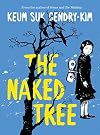
A graphic novel that's a loose adaptation/reinterpretation of a classic South Korean novel, set during the Korean War of the 1950s. This was a fairly bleak tale of unrequited love and familial trauma, and not one that I felt built to much of anything. That, combined with what I found to be a fairly off-putting artistic style, meant that The Naked Tree was not for me, though it may work better for those who are familiar with the original work.
Keum Suk Gendry-Kim adapts a 1970 novel by Park Wan-suh into a graphic novel, injecting elements of the author's real life into an original framing sequence to emphasize the roman à clef nature of the work.
In the midst of the Korean War, a Korean woman in her early twenties works in a safe zone of Seoul at a booth at an American PX shilling souvenir portraits on scarves painted by some artisans who work on-site from snapshots provided by the clientele. She quickly develops a crush on one of show more the painters – who is a tortured soul destined to become become an acclaimed artist, not just a piecework craftsman – and pins on him all her dreams of escaping the dreary life of grief she shares with her widowed mother and compares to the lives of the other women around her.
It's a mild but engaging bit of coming-of-age drama playing out with some inevitable predictability but offering a rare and precious perspective of one America's several forgotten wars.
(Best Graphic Novels of 2023 Project: I'm trying to read all the books on the Washington Post 10 Best Graphic Novels of 2023 list. Four down, six to go! How many have you read?)
FOR REFERENCE:
Contents:
• The Naked Tree Lives Again / Ho Won-sook [daughter of Park Wan-suh]
• Prologue
• 1951
• Ok Huido
• Demands
• Chimpanzee
• Family
• Crossed Paths
• Women You Can Buy and Women You Can't Buy
• Crimson Gingko Leaves
• The Naked Tree
• Epilogue
• Artists I Have Loved / Keum Suk Gendry-Kim show less
In the midst of the Korean War, a Korean woman in her early twenties works in a safe zone of Seoul at a booth at an American PX shilling souvenir portraits on scarves painted by some artisans who work on-site from snapshots provided by the clientele. She quickly develops a crush on one of show more the painters – who is a tortured soul destined to become become an acclaimed artist, not just a piecework craftsman – and pins on him all her dreams of escaping the dreary life of grief she shares with her widowed mother and compares to the lives of the other women around her.
It's a mild but engaging bit of coming-of-age drama playing out with some inevitable predictability but offering a rare and precious perspective of one America's several forgotten wars.
(Best Graphic Novels of 2023 Project: I'm trying to read all the books on the Washington Post 10 Best Graphic Novels of 2023 list. Four down, six to go! How many have you read?)
FOR REFERENCE:
Contents:
• The Naked Tree Lives Again / Ho Won-sook [daughter of Park Wan-suh]
• Prologue
• 1951
• Ok Huido
• Demands
• Chimpanzee
• Family
• Crossed Paths
• Women You Can Buy and Women You Can't Buy
• Crimson Gingko Leaves
• The Naked Tree
• Epilogue
• Artists I Have Loved / Keum Suk Gendry-Kim show less
Lists
Awards


You May Also Like
Associated Authors
Statistics
- Works
- 33
- Also by
- 4
- Members
- 229
- Popularity
- #98,339
- Rating
- 3.9
- Reviews
- 6
- ISBNs
- 41
- Languages
- 7
- Favorited
- 1