
Stuart Walton
Author of The Ultimate Book of Cocktails
About the Author
Works by Stuart Walton
The Wine and Cheese Box Set: A Guide to the Great Wines and Cheeses of the World in Two Distinctive Volumes (2000) 15 copies
Classic Cocktails: The home bartender's guide to mixing spirits and liqueurs: 150 sensational drink recipes shown in 250 fabulous photographs (2010) 7 copies
750 Cocktails and Mixed Drinks: A Fabulous One-stop Collection of the World's Greatest Drink Recipes, Shown in 1600 Phot (2007) 6 copies
Whisky Cocktails: Over 50 classic mixes for every occasion, shown in 100 stunning photographs (2008) 3 copies
Tagged
Common Knowledge
- Birthdate
- 20th Century
- Gender
- male
- Nationality
- UK
- Associated Place (for map)
- UK
Members
Reviews
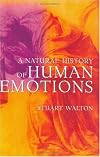
I've twice tried to read this work, and twice given up in disgust. The jacket blurb would have warned me, had I noticed it: "Stuart Walton is the author of Out of It: A Cultural History of Intoxication. He is also a cultural historian, a journalist, and a distinguished writer on food and drink."
And not, we note, a psychologist, psychiatrist, biologist, neuroscientist, or scientist of any sort. And this book is not psychology, psychiatry, biology, neuroscience, or science of any sort.
Walton show more does have some contact with science. He starts with Charles Darwin (a great place to start!) and Darwin's speculations on emotions. Which were just that -- speculations. Darwin was a transcendent genius, but he knew nothing of genetics, neurochemistry, functional brain anatomy; the fields didn't exist yet. But Walton starts with Darwin and heads off into philosophical speculation, not fact.
Take the first chapter, on fear. Walton speculates that religion arose out of fear. This was singularly unconvincing to me, because we have a very good idea of what religion is really for: Binding an in-group, both by helping identify the group members and by controlling relations in the group. Sure, it could have other incidental functions, but religion is pretty clearly a very recently evolved feature -- chimpanzees don't have churches! There was no time to develop such knock-on effects. It's a too-complex speculation.
And fear is a very basic emotion, found in many other animals. Compare that to, say, schadenfreude. Do you think any other animal has that? I've heard no evidence of it. Shouldn't we be looking at the way we went from simple emotions to specialized ones?
I could go on, but the basic point is, this book is not a science book. It's guesswork -- by someone who does not have the background to guess appropriately. As a scientist, it drove me bonkers. That might not bother others as much. But be aware that it's not science. show less
And not, we note, a psychologist, psychiatrist, biologist, neuroscientist, or scientist of any sort. And this book is not psychology, psychiatry, biology, neuroscience, or science of any sort.
Walton show more does have some contact with science. He starts with Charles Darwin (a great place to start!) and Darwin's speculations on emotions. Which were just that -- speculations. Darwin was a transcendent genius, but he knew nothing of genetics, neurochemistry, functional brain anatomy; the fields didn't exist yet. But Walton starts with Darwin and heads off into philosophical speculation, not fact.
Take the first chapter, on fear. Walton speculates that religion arose out of fear. This was singularly unconvincing to me, because we have a very good idea of what religion is really for: Binding an in-group, both by helping identify the group members and by controlling relations in the group. Sure, it could have other incidental functions, but religion is pretty clearly a very recently evolved feature -- chimpanzees don't have churches! There was no time to develop such knock-on effects. It's a too-complex speculation.
And fear is a very basic emotion, found in many other animals. Compare that to, say, schadenfreude. Do you think any other animal has that? I've heard no evidence of it. Shouldn't we be looking at the way we went from simple emotions to specialized ones?
I could go on, but the basic point is, this book is not a science book. It's guesswork -- by someone who does not have the background to guess appropriately. As a scientist, it drove me bonkers. That might not bother others as much. But be aware that it's not science. show less
I consider this book to be something of a misrepresentation. The jacket and the first few pages imply a scientific tour of the emotions, but what we actually get is a literary and historical tour. This is occasionally interesting, but also remarkably frustrating.
The work feels like a constant re-reading of Freud --- ideas thrown out based on no scientific evidence, but with the fact that they were propounded by Homer or
Shakespeare or Goethe considered good enough to make them true.
For show more example the brief discussion of obsessive-compulsive behavior has plenty of amateur psychology to say on the subject, but gives no mention of the fact that drugs substantially dampen the behavior, an inconvenient fact that pretty much demolishes the Freudian type theory offered up for this malady.
Occasionally interesting, but basically not worth the hassle. show less
The work feels like a constant re-reading of Freud --- ideas thrown out based on no scientific evidence, but with the fact that they were propounded by Homer or
Shakespeare or Goethe considered good enough to make them true.
For show more example the brief discussion of obsessive-compulsive behavior has plenty of amateur psychology to say on the subject, but gives no mention of the fact that drugs substantially dampen the behavior, an inconvenient fact that pretty much demolishes the Freudian type theory offered up for this malady.
Occasionally interesting, but basically not worth the hassle. show less

there was this one party.... it's a pretty good book because whatever random bottles of booze you have kicking about you can probably find something in here.
It definitely gave me a lot to think about though pretty self-righteous at moments.
You May Also Like


Associated Authors
Statistics
- Works
- 56
- Members
- 1,219
- Popularity
- #21,067
- Rating
- 3.5
- Reviews
- 6
- ISBNs
- 119
- Languages
- 8
