
Eric Stephenson
Author of Nowhere Men Volume 1: Fates Worse Than Death
About the Author
Series
Works by Eric Stephenson
They're Not Like Us #2 3 copies
Youngblood Yearbook #1 2 copies
Junk (in Four Letter Worlds) 1 copy
Team Youngblood #12 1 copy
Liefeld/Murray/Stephenson/Carlson/Hathaway/Others on Supreme (plus Supreme: Glory Days and The Legend of Supreme) (1992) 1 copy
Youngblood: Strikefile #5 1 copy
Battlestone 1 copy
Nowhere Men #2 1 copy
Youngblood no. 10 1 copy
Nowhere Men #3 1 copy
Nowhere Men #4 1 copy
Nowhere Men #5 1 copy
Nowhere Men #6 1 copy
X Force Youngblood Crossover 1 copy
Associated Works
Chapel (1995) #2 — Writer, some editions — 2 copies
Tagged
Common Knowledge
- Birthdate
- 1968-01-08
- Gender
- male
- Nationality
- USA
- Birthplace
- Louisville, Kentucky, USA
- Associated Place (for map)
- Kentucky, USA
Members
Reviews
Full disclosure: I received a free review copy of this book from Net Galley.
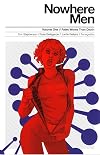
Nowhere Men, Volume 1 tells the story of a world that treats scientists like rock stars and celebrities. Not only do they get flashy photo opportunities and magazine cover stories, but their influence spreads so far throughout society that it causes huge leaps forward in scientific developments while also inspiring an anarchist “punk” subculture. In this world, cloning is commonplace and a robot went on a mission show more to space decades ago.
In the first volume, Stephenson weaves together two story lines. First, we meet the founders of World Corps, a foursome of scientists who enjoy rock star levels of fame and success until their partnership begins unraveling in the public eye. The timeline jumps back and forth from as early as the 1960s to the “present day”, which is where we meet a group of World Corps scientists dealing with a strange virus that is changing their bodies in unexpected ways (for better and worse). Interspersed with these scenes are news articles, magazine interviews, excerpts from books and advertisements that paint a fuller picture of the men behind World Corps, all done in pitch-perfect period style (with “yellowing” pages to boot).
So, on one hand this book turns scientists into the Beatles and watches how that changes the world, and on the other it deconstructs the Fantastic Four origin story and includes a much higher mortality rate. Tie this all together with an epistolary conceit, and you have an ambitious book that plays at the edges of comic book tropes without straying too far from the center. I really think it’s a fair comparison to say that Stephenson is playing with the form in much the same way that Alan Moore did with Watchmen. However, the scope of this story feels larger, if only because this first volume serves mostly as setup.
Stephenson definitely has a flair for characterization, at least when it comes to the founders of World Corps. I felt like I really had a clear sense of their personalities within the first few pages, and that sense only deepened with every interview and flashback. The group of scientists affected by the virus fared a little worse, if only because there are so many of them, and they spend most of the story in reactive mode, freaking out because they’re sick and don’t know why. I have a feeling Stephenson will correct this as the story goes on, however, simply because this first volume sets them up as potential heroes in opposition to the various misdeeds of World Corps (not that I think the story will be that clear-cut).
My only other criticism of this first volume is that it feels like Stephenson only provides the barest hint of an overall story arc; instead, the first volume mostly consists of back story and setup. However, there’s so much detail crammed in here that it seems clear that the first volume is only the first few chapters of a larger story, and not a discrete story arc in and of itself.
Overall, I really enjoyed this book, and I’ll definitely be picking up future volumes. The only downside is that it looks like Image is releasing new issues at a glacial pace, and #7 is nowhere on their calendar. Even still, highly recommended. show less
Nowhere Men, Volume 1 tells the story of a world that treats scientists like rock stars and celebrities. Not only do they get flashy photo opportunities and magazine cover stories, but their influence spreads so far throughout society that it causes huge leaps forward in scientific developments while also inspiring an anarchist “punk” subculture. In this world, cloning is commonplace and a robot went on a mission show more to space decades ago.
In the first volume, Stephenson weaves together two story lines. First, we meet the founders of World Corps, a foursome of scientists who enjoy rock star levels of fame and success until their partnership begins unraveling in the public eye. The timeline jumps back and forth from as early as the 1960s to the “present day”, which is where we meet a group of World Corps scientists dealing with a strange virus that is changing their bodies in unexpected ways (for better and worse). Interspersed with these scenes are news articles, magazine interviews, excerpts from books and advertisements that paint a fuller picture of the men behind World Corps, all done in pitch-perfect period style (with “yellowing” pages to boot).
So, on one hand this book turns scientists into the Beatles and watches how that changes the world, and on the other it deconstructs the Fantastic Four origin story and includes a much higher mortality rate. Tie this all together with an epistolary conceit, and you have an ambitious book that plays at the edges of comic book tropes without straying too far from the center. I really think it’s a fair comparison to say that Stephenson is playing with the form in much the same way that Alan Moore did with Watchmen. However, the scope of this story feels larger, if only because this first volume serves mostly as setup.
Stephenson definitely has a flair for characterization, at least when it comes to the founders of World Corps. I felt like I really had a clear sense of their personalities within the first few pages, and that sense only deepened with every interview and flashback. The group of scientists affected by the virus fared a little worse, if only because there are so many of them, and they spend most of the story in reactive mode, freaking out because they’re sick and don’t know why. I have a feeling Stephenson will correct this as the story goes on, however, simply because this first volume sets them up as potential heroes in opposition to the various misdeeds of World Corps (not that I think the story will be that clear-cut).
My only other criticism of this first volume is that it feels like Stephenson only provides the barest hint of an overall story arc; instead, the first volume mostly consists of back story and setup. However, there’s so much detail crammed in here that it seems clear that the first volume is only the first few chapters of a larger story, and not a discrete story arc in and of itself.
Overall, I really enjoyed this book, and I’ll definitely be picking up future volumes. The only downside is that it looks like Image is releasing new issues at a glacial pace, and #7 is nowhere on their calendar. Even still, highly recommended. show less
(ARC was provided to read and review.)
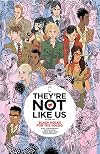
Right at the start of the story, a young woman, Tabitha, is on the brink of committing suicide. She is standing on top of a tall building, but still hesitant to jump. Then mysteriously a rather sinister looking male appears and tries to talk her out of it, and at first I assumed, he's a police officer, but I couldn't have been more wrong.
The dark and brooding character turns out to be the Voice and he's the leader of a group of kids, teenagers and young show more adults, who all have special abilities. He tells Tabitha, "You are one of us." and wants her to be part of his group.
He's able to make her understand, that she isn't crazy, as she was let to believe her whole life so far. She is telepathic and that's why she hears all the different voices in her head. The group offers her for the first time in her life help to control and to use her ability.
There are group members who can see into the future, move so fast that all you can see is a blur, are very strong, etc. They all live together in two adjacent houses, where the interior offers actually quite a bit of luxury. There are paintings on every wall and they owe a most exquisite record collection.
Generally they keep themselves to themselves, there are no visitors and no connection to their past lives. In fact, they all get a new name, when they start living with the group. Tabitha will be Syd, a name chosen by the Voice and his psychic abilities are obivously strong enough to achieve that the group members are unable to remember their old name once they got the new one. And what's more, to make sure, there are really no connections left to the past, he "forces"/persuades his newbie members to kill their parents.
Something which didn't go down well for most of them in the long run and gives quite a few of them serious nightmares. Worse still, what looks on the outside like some heaven for young "superheroes", who have all suffered from abuse and misunderstanding during their childhood, as they were rather seen as crazy and disabled, than as gifted, well, it isn't the paradise it seems to be.
Their abilities are used to commit crimes and that's also how they amassed the wealth in which they live, by robbing and stealing from others. Their whole life is very controlled, restricted and isolated. To me it sounded very much like the life of a member of a cult.
From the moment Tabitha/Syd enters the group, things start to go wrong, underlying cracks of the group start to show, which will inevitably lead to severe consequences for all of them. But I must admit, towards the end I found some parts of the story weren't perfectly logical. Considering there is a group member, who can see into the future or others with telepathic abilities who can read minds, they should've seen certain things coming.
Generally, They're Not Like Us is a gripping and fascinating story, which raises quite a few moral questions. What makes us evil? When are evil actions rectified? (If at all.) Has the victim the right to take revenge or even kill the abuser? What if the abuser was a victim first, too?
At the same time, the whole group and its characters are interesting. I cared for quite a few of them, but my absolute favourite is the Voice. There is so much more to the character and I hope he will be in Volume 2 and in the one after that.
Simon Gane's artwork ties in perfectly with the story, he is able to breath life into the characters. Blurgirl's nightmare sequence is one of the highlights you don't want to miss.
The series has me really hooked so far and Volume 2 is on my wishlist now. In fact, I'm quite looking forward to it. show less
Right at the start of the story, a young woman, Tabitha, is on the brink of committing suicide. She is standing on top of a tall building, but still hesitant to jump. Then mysteriously a rather sinister looking male appears and tries to talk her out of it, and at first I assumed, he's a police officer, but I couldn't have been more wrong.
The dark and brooding character turns out to be the Voice and he's the leader of a group of kids, teenagers and young show more adults, who all have special abilities. He tells Tabitha, "You are one of us." and wants her to be part of his group.
He's able to make her understand, that she isn't crazy, as she was let to believe her whole life so far. She is telepathic and that's why she hears all the different voices in her head. The group offers her for the first time in her life help to control and to use her ability.
There are group members who can see into the future, move so fast that all you can see is a blur, are very strong, etc. They all live together in two adjacent houses, where the interior offers actually quite a bit of luxury. There are paintings on every wall and they owe a most exquisite record collection.
Generally they keep themselves to themselves, there are no visitors and no connection to their past lives. In fact, they all get a new name, when they start living with the group. Tabitha will be Syd, a name chosen by the Voice and his psychic abilities are obivously strong enough to achieve that the group members are unable to remember their old name once they got the new one. And what's more, to make sure, there are really no connections left to the past, he "forces"/persuades his newbie members to kill their parents.
Something which didn't go down well for most of them in the long run and gives quite a few of them serious nightmares. Worse still, what looks on the outside like some heaven for young "superheroes", who have all suffered from abuse and misunderstanding during their childhood, as they were rather seen as crazy and disabled, than as gifted, well, it isn't the paradise it seems to be.
Their abilities are used to commit crimes and that's also how they amassed the wealth in which they live, by robbing and stealing from others. Their whole life is very controlled, restricted and isolated. To me it sounded very much like the life of a member of a cult.
From the moment Tabitha/Syd enters the group, things start to go wrong, underlying cracks of the group start to show, which will inevitably lead to severe consequences for all of them. But I must admit, towards the end I found some parts of the story weren't perfectly logical. Considering there is a group member, who can see into the future or others with telepathic abilities who can read minds, they should've seen certain things coming.
Generally, They're Not Like Us is a gripping and fascinating story, which raises quite a few moral questions. What makes us evil? When are evil actions rectified? (If at all.) Has the victim the right to take revenge or even kill the abuser? What if the abuser was a victim first, too?
At the same time, the whole group and its characters are interesting. I cared for quite a few of them, but my absolute favourite is the Voice. There is so much more to the character and I hope he will be in Volume 2 and in the one after that.
Simon Gane's artwork ties in perfectly with the story, he is able to breath life into the characters. Blurgirl's nightmare sequence is one of the highlights you don't want to miss.
The series has me really hooked so far and Volume 2 is on my wishlist now. In fact, I'm quite looking forward to it. show less
It's easy to try to compare the characters in They're Not Like Us to those in the X-Men universe (at first glance anyway). They all have special powers, such as the ability to create illusions and superhuman strength. The thing that sets them apart is that this group doesn't seem especially interested in being heroes; rather, they seem angry at "normal" people for treating them differently/badly. This is especially true for their parents, who had trouble accepting that their children were show more special and saw their gifts as curses; as a sort of initiation, the members are expected to murder their parents.
Then along comes Syd, a young telepath who doesn't understand the constant barrage of voices she hears day in and day out. She wants to make them stop at any cost, until The Voice (the leader of this group of misfits) finds her and brings her to his house. She's so tormented by her gifts that you almost assume that she will do whatever he says because he helps her control the voices. Syd is no push-over, however, and she quickly realizes that the people she meets are less like heroes and more like monsters. She refuses to blindly follow orders and questions their motives at every turn.
There are a lot of characters introduced in Volume 1 and we don't get to know all of them very well. The story pretty much centers around Syd trying to figure out if she wants to become part of the organization, as The Voice tries to convince her why she should. There is some background given about The Voice's childhood and one of the other members, Maisie (who can see into the future), insists that there is more to his story than Syd understands yet. I'm definitely interested in reading more of this comic to find out if there really is more to why they do what they do. I really liked Syd because she didn't just take what she was being told at face value; she continued to ask questions and stick to her morals.
The illustrations were just okay for me. I thought they were a bit rough and the colors were very subdued, although this last observation worked with the tone of the story. The story itself though was very interesting and I loved how it blurred the lines between good and evil. It makes you question what you might do in the same situation. By the end, it's apparent that there is some discord within the group and it remains unclear how everyone will proceed from there. This was a great introduction to what could be a very engaging series, and I am very much looking forward to finding out what happens next with these characters. show less
Then along comes Syd, a young telepath who doesn't understand the constant barrage of voices she hears day in and day out. She wants to make them stop at any cost, until The Voice (the leader of this group of misfits) finds her and brings her to his house. She's so tormented by her gifts that you almost assume that she will do whatever he says because he helps her control the voices. Syd is no push-over, however, and she quickly realizes that the people she meets are less like heroes and more like monsters. She refuses to blindly follow orders and questions their motives at every turn.
There are a lot of characters introduced in Volume 1 and we don't get to know all of them very well. The story pretty much centers around Syd trying to figure out if she wants to become part of the organization, as The Voice tries to convince her why she should. There is some background given about The Voice's childhood and one of the other members, Maisie (who can see into the future), insists that there is more to his story than Syd understands yet. I'm definitely interested in reading more of this comic to find out if there really is more to why they do what they do. I really liked Syd because she didn't just take what she was being told at face value; she continued to ask questions and stick to her morals.
The illustrations were just okay for me. I thought they were a bit rough and the colors were very subdued, although this last observation worked with the tone of the story. The story itself though was very interesting and I loved how it blurred the lines between good and evil. It makes you question what you might do in the same situation. By the end, it's apparent that there is some discord within the group and it remains unclear how everyone will proceed from there. This was a great introduction to what could be a very engaging series, and I am very much looking forward to finding out what happens next with these characters. show less
The premise of this comic series instantly hooked me. "Science is the new rock and roll." Come on, who wouldn't want to live in a world where physicists supplanted the Beatles in popularity? I really enjoyed the entire conceit put forward through the issues of these four wonder-scientists and the eventual combustion of their group, much like a few rock bands I could name. I felt like the central idea of their being rock-stars could have been delved into a little more, but maybe that shows up show more more later...
The only gripe I have is regarding the non-comic supplementary articles. They were formatted to look like they came out of books and magazines, but most just broke the action for me and irritated me to the point that I ended up skipping most of them, reading the plot, and coming back later to read those. It's mostly just background material on their breakup. I can see how it would be less annoying in the original serial format, but in this trade it just slowed things down.
Otherwise, I am really looking forward to continuing this series and really can't wait to see where they are going with the interesting mix of characters we are left with at the end of this first volume.
Copy courtesy of Diamond Book Distributors, via Netgalley in exchange for an honest review. show less
The only gripe I have is regarding the non-comic supplementary articles. They were formatted to look like they came out of books and magazines, but most just broke the action for me and irritated me to the point that I ended up skipping most of them, reading the plot, and coming back later to read those. It's mostly just background material on their breakup. I can see how it would be less annoying in the original serial format, but in this trade it just slowed things down.
Otherwise, I am really looking forward to continuing this series and really can't wait to see where they are going with the interesting mix of characters we are left with at the end of this first volume.
Copy courtesy of Diamond Book Distributors, via Netgalley in exchange for an honest review. show less
Lists
2016 reads (1)
Awards

You May Also Like


Associated Authors
Statistics
- Works
- 60
- Also by
- 5
- Members
- 797
- Popularity
- #31,987
- Rating
- 4.3
- Reviews
- 25
- ISBNs
- 22
- Languages
- 3