

Kieron Gillen
Author of The Wicked + The Divine, Vol. 1: The Faust Act
About the Author
Image credit: Photo by Pat Loika
Series
Works by Kieron Gillen
Crossed: Badlands #75 18 copies
Star Wars (2015-) #51 — Author — 5 copies
Star Wars (2015-) #61 5 copies
Star Wars (2015-) #62 5 copies
Star Wars (2015-) #60 5 copies
Star Wars (2015-) #59 5 copies
Star Wars (2015-) #57 5 copies
Star Wars (2015-) #54 — Author — 4 copies
Die: Loaded #1 4 copies
Immortal X-Men (2022-) #14 3 copies
X-Men: Forever (2024-) #2 (of 4) 3 copies
X-Men: Forever (2024-) #4 (of 4) 3 copies
Iron Man [2012] #12 3 copies
Crossed: Badlands #80 3 copies
Crossed: Badlands #79 3 copies
Crossed: Badlands #78 3 copies
Crossed: Badlands #77 3 copies
Crossed: Badlands #76 3 copies
Iron Man [2012] #16 3 copies
Iron Man [2012] #7 2 copies
Die: Loaded #4 2 copies
The Power Fantasy #3 2 copies
The Power Fantasy (2025) 006 2 copies
The Power Fantasy (2025) 007 2 copies
Die: Loaded #2 — Author — 2 copies
Die: Loaded #3 2 copies
Die: Loaded #5 2 copies
Die: Loaded #6 2 copies
X-Men: Forever (2024-) #1 (of 4) 2 copies
Immortal X-Men (2022-) #13 2 copies
Exiled #1 2 copies
Immortal X-Men (2022-) #18 2 copies
Uber: Invasion, vol. 1 2 copies
Immortal X-Men (2022-) #15 2 copies
Iron Man [2012] #8 2 copies
Iron Man [2012] #10 2 copies
Iron Man [2012] #14 2 copies
Iron Man [2012] #17 2 copies
Iron Man [2012] #6 2 copies
Iron Man [2012] #13 2 copies
The Power Fantasy #13 1 copy
Generation Hope #3 1 copy
Journey Into Mystery # 625 1 copy
Journey Into Mystery # 626 1 copy
Thor, Vol. 3, # 604 1 copy
The Power Fantasy #8 1 copy
The Trigger {short story} 1 copy
The Power Fantasy #11 1 copy
AVX: VS. #6 1 copy
AVX: VS. #2 1 copy
X-Men Origins: Sabretooth #1 1 copy
The Power Fantasy #9 1 copy
The Power Fantasy #10 1 copy
Generation Hope #5 1 copy
DIE; A ROLE-PLAYING GAME 1 copy
Star Wars Darth Vader 001 1 copy
Sangrar 1 copy
The Trigger 1 copy
Marvel pride 2024 1 copy
The Uncanny X-Men #540 1 copy
The Power Fantasy #14 1 copy
Star Wars (Panini 2015) 10 - Schatten und Geheimnisse (Star Wars Comicmagazin) (German Edition) (2016) 1 copy
Star Wars Tomo nº 07/13 1 copy
Captain America and Batroc 1 copy
Podzielona grupa 1 copy
The Power Fantasy #5 1 copy
Fantastyczne rozczarowanie 1 copy
The Power Fantasy #15 1 copy
Three #3 1 copy
Origin II #1 1 copy
Typos And Typography 1 copy
Iron Man [2012] #21 1 copy
Iron Man [2012] #22 1 copy
x-men v2 12 (fear itself) 1 copy
Thor, Vol. 3, # 613 1 copy
Thor, Vol. 3, # 612 1 copy
Thor, Vol. 3, # 611 1 copy
The Power Fantasy #1 1 copy
Immortal X-Men (2022-) #16 1 copy
Immortal X-Men (2022-) #17 1 copy
Mercury Heat # 3 1 copy
Thor, Vol. 3, # 610 1 copy
The Power Fantasy #2 1 copy
Thor, Vol. 3, # 609 1 copy
The Power Fantasy #4 1 copy
Thor, Vol. 3, # 608 1 copy
Thor, Vol. 3, # 607 1 copy
Thor, Vol. 3, # 614 1 copy
Journey Into Mystery # 631 1 copy
Iron Man [2012] #28 1 copy
Iron Man [2012] Annual #1 1 copy
Iron Man [2012] #23 1 copy
Iron Man [2012] #24 1 copy
Iron Man [2012] #25 1 copy
Iron Man [2012] #26 1 copy
Iron Man [2012] #27 1 copy
Mercury Heat # 2 1 copy
Star Wars #151 (Panini 026) 1 copy
Star Wars #152 (Panini 027) 1 copy
Siege #1 1 copy
Associated Works
From a Certain Point of View: 40 Stories Celebrating 40 Years of Star Wars (2017) — Contributor — 1,062 copies, 41 reviews
Blue Monday, Vol. 1: The Kids Are Alright (2001) — Introduction, some editions — 305 copies, 4 reviews
Femme Magnifique: 50 Magnificent Women who Changed the World (2018) — Contributor — 61 copies, 2 reviews
Tagged
Common Knowledge
- Birthdate
- 1975-09-30
- Gender
- male
- Education
- University of Bath, UK
- Occupations
- graphic novelist
computer game and music journalist - Nationality
- UK
- Birthplace
- Stafford, Staffordshire, England, UK
- Map Location
- England, UK
Members
Reviews
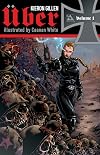
The concept behind this book seems like a distillation of the prologue to Grant Morrison's Zenith, where an Allied superman and a Nazi superman fight on the streets of Berlin in 1945, cut short by an atomic bomb. In Uber, the Nazis get the supermen before anyone else, but only manage to deploy them on the brink of defeat, precipitating a desperate arms race as the superior human weapons of the Reich devastate the conventional forces of the Allies on both fronts.
This is not a superhero book, show more though. This is a book about weapons, and escalation and a new type of war. The supermen are basically walking atom bombs of varying degrees of strength and dexterity, and what follows is cruel and brutal and ugly. It's an Avatar book, so the blood and the guts and limbs fly, and in service to almost any other story you might say it's gratuitous and exploitative, but the development of the story is about the prosecution of a war. The narrative voice is detached and cool and objective, like a historian providing commentary for a documentary. The characters are small set against the huge scale of the conflict, and most of them know it.
It's a cruel, brutal and ugly story and it's a cruel, brutal and ugly book, so why the heck am I reading it on Christmas Eve? It's 2016. Aleppo has fallen, homeless Irish people are squatting in Apollo House, Leonard Cohen is gone, Carrie Fisher is in hospital and the US president elect is announcing a new nuclear arms race via Twitter. Somehow Uber, a comic about what would happen if the Nazis got supermen, is entirely of the moment. I wish it wasn't, but it's still a great comic. show less
This is not a superhero book, show more though. This is a book about weapons, and escalation and a new type of war. The supermen are basically walking atom bombs of varying degrees of strength and dexterity, and what follows is cruel and brutal and ugly. It's an Avatar book, so the blood and the guts and limbs fly, and in service to almost any other story you might say it's gratuitous and exploitative, but the development of the story is about the prosecution of a war. The narrative voice is detached and cool and objective, like a historian providing commentary for a documentary. The characters are small set against the huge scale of the conflict, and most of them know it.
It's a cruel, brutal and ugly story and it's a cruel, brutal and ugly book, so why the heck am I reading it on Christmas Eve? It's 2016. Aleppo has fallen, homeless Irish people are squatting in Apollo House, Leonard Cohen is gone, Carrie Fisher is in hospital and the US president elect is announcing a new nuclear arms race via Twitter. Somehow Uber, a comic about what would happen if the Nazis got supermen, is entirely of the moment. I wish it wasn't, but it's still a great comic. show less

I only have one gripe with this comic, though it's a big one -- the breezy way the characters, especially Rose, accept and go along with the grandmother's crazy orders from the get-go. There are a few hand-wave scenes to try to justify it, but it just doesn't feel real, which severely undermines the story.
But that aside, this is excellent. The handling of Arthurian legend is inventive and exciting, the pacing is break-neck, the dialogue is frequently cool or funny, and the artwork is both show more dynamic and gorgeous. Add to all this some deeply crazy family drama and an intriguing, Unwritten-esque take on the relationship of stories and reality, plus undead knights galore, and you have a terrific reading experience, once you can convince yourself to suspend disbelief on behalf of the character reactions to the events before them. So even with the large caveat I opened this with, "Once & Future" is warmly recommended. I'm excited to read volume 2! show less
But that aside, this is excellent. The handling of Arthurian legend is inventive and exciting, the pacing is break-neck, the dialogue is frequently cool or funny, and the artwork is both show more dynamic and gorgeous. Add to all this some deeply crazy family drama and an intriguing, Unwritten-esque take on the relationship of stories and reality, plus undead knights galore, and you have a terrific reading experience, once you can convince yourself to suspend disbelief on behalf of the character reactions to the events before them. So even with the large caveat I opened this with, "Once & Future" is warmly recommended. I'm excited to read volume 2! show less

The premise of The Wicked + The Divine is that once every ninety years, seven gods emerge, inspire millions and earn rock star-like adulation for two years, and then die. This cycle permits gods to be both immortal and finite - making their very existence into a mystery that underlies the entire book. This also makes most of the gods teenagers, which is interesting, since most actual teenagers seem to think they are immortal, even if they are not. Even the question of whether or not the show more figures at the center of this story are in fact "gods", or are merely charlatans impersonating divinities is left as something of an enigma for the reader to ponder. The fact that one of the alleged gods - Ananke - appears to not die, but live on in perpetuation in between the cycles, just serves to further deepen the mystery surrounding these figures.
The central character of the story in this volume is not one of the gods, but rather a London teenager named Laura who has been swept up in the mania surrounding the gods. After a brief introduction set ninety years before the main events of the book, the plot gets going with Laura sneaking out of her house, skipping her college classes, and attending a concert given by Amaterasu. The concert itself is presented much as a rock concert would be presented, with the added boost of throwing in some sexual ecstasy being engendered in the crowd by Amaterasu as well. The near orgasmic experience of confronting the object of her adoration causes Laura to pass out, and she later wakes up in a room with Lucifer, another one of the gods who takes a liking to the girl and escorts her to where Amaterasu is being interviewed by a skeptical woman named Cassandra with the goddess Sakhmet in the background behaving cat-like on the couch.
It is at this interview that the plot of the book kicks off, when a pair of would-be assassins seemingly try to kill the assembled goddesses from a nearby roof by taking shots into the room, which in turn prompts Lucifer to apparently cause the assailants' heads to explode by snapping her fingers. In the aftermath, Lucifer is arrested and charged with murder. At Lucifer's arraignment, she quite reasonably asks how she could possibly be charged for murder just for snapping her fingers i the next building over - as she points out, there is no way that she logically could have done the two men harm that way. This highlights one of the tensions that exists in the book: How does the world deal with beings who allegedly have inexplicable supernatural powers? One has to wonder exactly how the legal system actually would adjudicate such a case, because none of the normal standards for proving causation could possibly apply. In any event, the judge essentially refuses to believe anything Lucifer says, and when Lucifer gets angry, Lucifer snaps her fingers and the judge's head also explodes.
Lucifer is, of course, immediately swept away and changed with the judge's death as well, despite her protestations that she didn't actually do anything and that she is innocent of the judge's death. This leads to the meat of the book, as Laura befriends Lucifer while visiting her in prison, and then teams up with Cassandra to try to investigate who might have wanted to set Lucifer up to take a fall. This leads Laura to hunt down the Morrigan in the London Underground, where she also comes across the murderous Baphomet, and sees what appears to be yet another series of miracles. Soon enough, Laura and Cassandra receive a rather insistent invitation from Baal himself to come and visit the entire pantheon, where Ananke informs Laura that they are not going to do anything to aid Lucifer and then dismisses the mortal. This, naturally enough, doesn't sit well with Lucifer, who breaks out of her prison, sparking a bloody fight between Lucifer and several of the other gods (with the Morrigan making a late appearance to assist Lucifer) that is only ended when Ananke appears to kill Lucifer off with a snap of her fingers.
The story ends on something of a cliffhanger, as Laura belatedly discovers that she seems to have acquired a power similar to Lucifers, or at least has been gifted with a cigarette that holds a remnant of the goddesses power. But the volume is also filled with unanswered and frequently troubling questions. As Laura points out, one of the pantheon is a murderer and none of the other members seem the least bit interested in finding out who that might be. This, however, is only the most obvious and probably trivial mystery presented by the book. The most tantalizing questions stem from the prologue which is set in 1923, during the previous cycle of the gods, although the reader might not truly understand the significance of the scene when they read it. In this sequence, the gods are assembled around a table, preparing to commit suicide so that they can make their next appearance in ninety years. The curious thing about this scene is that more than half of the places around the table are empty, presumably because the absent deities didn't survive the two years of life that they are allotted each cycle. Even curiouser, Ananke doesn't participate in the mass suicide, and apparently will live through the intervening ninety years until the others return.
The questions that revolve around Ananke alone would be enough to fuel the rest of the series: Why doesn't Ananke participate in the death and rebirth cycle that the other gods endure? Why do all of the other gods seem to defer to Ananke? Why does the ninety year cycle even exist to begin with? Does Ananke enforce it? And so on. But there are a myriad of other questions that come to mind as well: Is the array of gods that is reborn the same in each cycle, or do the gods vary as is implied at one point by Baal? Do the gods personalities override the previous personalities of the beings they are reborn as, or do the gods remember their non-divine lives as Minerva seems to suggest when she bitterly complains about the unfairness of dying before she turns fourteen? Do the gods remember their lives as previous incarnations? The web of questions is tantalizing, pulling the reader in and enticing them further into the story.
The Faust Act is an excellent opening gambit to what promises to be a strong series of stories. This volume contains a story that both feels satisfying in itself, and promises far more to come at the same time. The book also manages the neat trick of making the gods simultaneously mysterious and enigmatic, and yet still so closely analogous to the rock star style media figures that feature so heavily in modern culture now that they seem comfortably familiar. In short, this book is a mass of delightful contradictions encompassing a myriad of intriguing mysteries that presages what appears to be a thoroughly engaging ongoing story.
This review has also been posted to my blog Dreaming About Other Worlds. show less
The central character of the story in this volume is not one of the gods, but rather a London teenager named Laura who has been swept up in the mania surrounding the gods. After a brief introduction set ninety years before the main events of the book, the plot gets going with Laura sneaking out of her house, skipping her college classes, and attending a concert given by Amaterasu. The concert itself is presented much as a rock concert would be presented, with the added boost of throwing in some sexual ecstasy being engendered in the crowd by Amaterasu as well. The near orgasmic experience of confronting the object of her adoration causes Laura to pass out, and she later wakes up in a room with Lucifer, another one of the gods who takes a liking to the girl and escorts her to where Amaterasu is being interviewed by a skeptical woman named Cassandra with the goddess Sakhmet in the background behaving cat-like on the couch.
It is at this interview that the plot of the book kicks off, when a pair of would-be assassins seemingly try to kill the assembled goddesses from a nearby roof by taking shots into the room, which in turn prompts Lucifer to apparently cause the assailants' heads to explode by snapping her fingers. In the aftermath, Lucifer is arrested and charged with murder. At Lucifer's arraignment, she quite reasonably asks how she could possibly be charged for murder just for snapping her fingers i the next building over - as she points out, there is no way that she logically could have done the two men harm that way. This highlights one of the tensions that exists in the book: How does the world deal with beings who allegedly have inexplicable supernatural powers? One has to wonder exactly how the legal system actually would adjudicate such a case, because none of the normal standards for proving causation could possibly apply. In any event, the judge essentially refuses to believe anything Lucifer says, and when Lucifer gets angry, Lucifer snaps her fingers and the judge's head also explodes.
Lucifer is, of course, immediately swept away and changed with the judge's death as well, despite her protestations that she didn't actually do anything and that she is innocent of the judge's death. This leads to the meat of the book, as Laura befriends Lucifer while visiting her in prison, and then teams up with Cassandra to try to investigate who might have wanted to set Lucifer up to take a fall. This leads Laura to hunt down the Morrigan in the London Underground, where she also comes across the murderous Baphomet, and sees what appears to be yet another series of miracles. Soon enough, Laura and Cassandra receive a rather insistent invitation from Baal himself to come and visit the entire pantheon, where Ananke informs Laura that they are not going to do anything to aid Lucifer and then dismisses the mortal. This, naturally enough, doesn't sit well with Lucifer, who breaks out of her prison, sparking a bloody fight between Lucifer and several of the other gods (with the Morrigan making a late appearance to assist Lucifer) that is only ended when Ananke appears to kill Lucifer off with a snap of her fingers.
The story ends on something of a cliffhanger, as Laura belatedly discovers that she seems to have acquired a power similar to Lucifers, or at least has been gifted with a cigarette that holds a remnant of the goddesses power. But the volume is also filled with unanswered and frequently troubling questions. As Laura points out, one of the pantheon is a murderer and none of the other members seem the least bit interested in finding out who that might be. This, however, is only the most obvious and probably trivial mystery presented by the book. The most tantalizing questions stem from the prologue which is set in 1923, during the previous cycle of the gods, although the reader might not truly understand the significance of the scene when they read it. In this sequence, the gods are assembled around a table, preparing to commit suicide so that they can make their next appearance in ninety years. The curious thing about this scene is that more than half of the places around the table are empty, presumably because the absent deities didn't survive the two years of life that they are allotted each cycle. Even curiouser, Ananke doesn't participate in the mass suicide, and apparently will live through the intervening ninety years until the others return.
The questions that revolve around Ananke alone would be enough to fuel the rest of the series: Why doesn't Ananke participate in the death and rebirth cycle that the other gods endure? Why do all of the other gods seem to defer to Ananke? Why does the ninety year cycle even exist to begin with? Does Ananke enforce it? And so on. But there are a myriad of other questions that come to mind as well: Is the array of gods that is reborn the same in each cycle, or do the gods vary as is implied at one point by Baal? Do the gods personalities override the previous personalities of the beings they are reborn as, or do the gods remember their non-divine lives as Minerva seems to suggest when she bitterly complains about the unfairness of dying before she turns fourteen? Do the gods remember their lives as previous incarnations? The web of questions is tantalizing, pulling the reader in and enticing them further into the story.
The Faust Act is an excellent opening gambit to what promises to be a strong series of stories. This volume contains a story that both feels satisfying in itself, and promises far more to come at the same time. The book also manages the neat trick of making the gods simultaneously mysterious and enigmatic, and yet still so closely analogous to the rock star style media figures that feature so heavily in modern culture now that they seem comfortably familiar. In short, this book is a mass of delightful contradictions encompassing a myriad of intriguing mysteries that presages what appears to be a thoroughly engaging ongoing story.
This review has also been posted to my blog Dreaming About Other Worlds. show less

I would've loved this regardless. It's too smart and too fresh and trusts its reader too much for me not to love it, but would I have loved it quite so much if I hadn't read it right after finishing Batman: The Dark Knight Returns? When the lessons of this book were juxtaposed so beautifully against such an ideal trite, dated example? Impossible to know.
All I can say is that there is so much here I want to talk about...not in a review, but with someone who's read it, whose ideas will push my show more own in new directions. Because while I'm greatly enjoying my mind being in a bit of a froth about art and trends and boundaries in media and stories and the way stories shape us and the way stories shape further stories and how we respond to and criticize those stories and how those responses shape us, these are not the sorts of thoughts that do their best work in solitary confinement. show less
All I can say is that there is so much here I want to talk about...not in a review, but with someone who's read it, whose ideas will push my show more own in new directions. Because while I'm greatly enjoying my mind being in a bit of a froth about art and trends and boundaries in media and stories and the way stories shape us and the way stories shape further stories and how we respond to and criticize those stories and how those responses shape us, these are not the sorts of thoughts that do their best work in solitary confinement. show less
Lists
Books Read in 2016 (10)
Awards


You May Also Like


Associated Authors
Statistics
- Works
- 737
- Also by
- 16
- Members
- 20,809
- Popularity
- #1,039
- Rating
- 3.8
- Reviews
- 759
- ISBNs
- 646
- Languages
- 11
- Favorited
- 7