
Tom Raney
Author of Ultimate X-Men Vol. 14: Phoenix?
About the Author
Image credit: Luigi Novi
Series
Works by Tom Raney
Outsiders (2003-2007) #7 — Illustrator — 3 copies
The Uncanny X-Men #393 - Eve of Destruction - Part 3: Like Lambs to the Slaughter! — Illustrator — 3 copies
Outsiders (2003-2007) #2 — Illustrator — 2 copies
Black Widow: Deadly Origin #2 (of 4) — Illustrator — 1 copy
Black Widow: Deadly Origin #1 (of 4) — Illustrator — 1 copy
Black Widow: Deadly Origin #3 (of 4) — Illustrator — 1 copy
Associated Works
All-New Wolverine, Volume 1: The Four Sisters (2016) — Illustrator, some editions — 130 copies, 7 reviews
Young Marvel: Little X-Men, Little Avengers, Big Trouble (2013) — Illustrator — 43 copies, 3 reviews
Heroes: The World's Greatest Super Hero Creators Honor The World's Greatest Heroes 9-11-2001 (2001) — Illustrator — 25 copies, 1 review
Magneto: Dark Seduction #4 - By Right of Force — Cover artist, some editions — 2 copies
New Avengers/Transformers #4 - Man and Machine, Part Four (2007) — Cover artist, some editions — 2 copies
Tagged
Common Knowledge
Members
Reviews
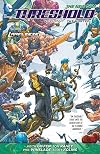
Put me in the 5% (of people who gave this 5 stars) because this was awesome! The first half wasn't as exciting as the second, it was more setup and I'm not sure at all why Blue Beetle was included or that "god" guy. But the Star Hawkins/Ilda stuff was amazing, their banter was hilarious and the Larfleeze stuff had me laughing the whole time too. The art totally rocked with random aliens walking around in the background all the time.
The serious stuff was cool too. The "Hunted" plot seemed show more like something you would see as a movie plot, the twist ending was amazing, and I LOVED K-Rot. More please. You can leave out the Lanterns if you want, except Larfleeze show less
The serious stuff was cool too. The "Hunted" plot seemed show more like something you would see as a movie plot, the twist ending was amazing, and I LOVED K-Rot. More please. You can leave out the Lanterns if you want, except Larfleeze show less
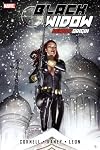
The Black Widow has long been one of my favorite characters in the Marvel Universe. Before the world at large was introduced to her in Iron Man 2, I was reading her adventures. I was thrilled to have her introduced into the cinematic canon because she's a strong female character, a hero of tragic origin with a darkness that brings an enormous amount of depth to her stories. Natasha Romanoff has been involved in many adventures within Marvel comics through the decades, playing an important show more part in various continuities. I hadn't read the Deadly Origin issues, though, and I was looking forward, as I always do, to reading anything Black Widow when I picked this collection up at my local bookstore.
How disappointing.
This story alternates between a plot called the "Icepick Protocol" to kill everyone that Romanoff loves and hinging around the man who was a father figure to her, Ivan...and flashbacks to her past, from her origins as part of the Red Room through her involvement in the Civil War story arc. This is the retconned history for the Black Widow, in which biotechnological enhancements prolong her life substantially, and thus she has lived through a great deal. We see her husband, the Red Guardian, and other interesting glimpses into the Widow's past that has crafted her into the strong and fractured character that she is. The flashbacks seemed to be well-paced within the context of the rest of the story to me, but the dialogue seemed out of character in both present and past on many occasions. The sweep of the story is too broad for so confined a collection...we're simply covering too much of Romanoff's life because we have to see how it collides with present events. The present events are then reduced to a cacophony of violent confrontations that don't leave room for the sort of character evolution that I would hope to see in an origin story.
Then, there's the art.
Two different artists draw this collection: one the modern events, another the flashbacks. The flashback art by Leon is brilliant. The emotions of the characters carry far past the dialogue, and there are moments where I feel I know the Black Widow's character better based only on her facial expression or posture in tableau from these flashback sequences. Comparing this to the majority of the collection...the current events...is striking enough to be painful. In modern day, Romanoff looks as though she's seventeen rather than the woman she is, her apparent age completely incongruous with the skills she evidences in the fighting sequences. Which is sort of noticeable, as fighting sequences are really all we see in the present events.
Overall, I also find the events of the story a bit too steeped in the "off-camera" sex. Yes, the Widow is a product of the Red Room, but she has become so much more as a hero, and this just doesn't do her justice. I think the motivation of the writer was to paint Romanoff as the woman she's become, but this missed the mark entirely.
Deadly Origin's writing is, unfortunately, a lot of failing to do the character of the Black Widow justice. Combined with profoundly disappointing artwork for more than half of the collection, and this is a book that will likely gather dust on my shelf without ever being re-read. If you love the Black Widow, you'll want better. show less
How disappointing.
This story alternates between a plot called the "Icepick Protocol" to kill everyone that Romanoff loves and hinging around the man who was a father figure to her, Ivan...and flashbacks to her past, from her origins as part of the Red Room through her involvement in the Civil War story arc. This is the retconned history for the Black Widow, in which biotechnological enhancements prolong her life substantially, and thus she has lived through a great deal. We see her husband, the Red Guardian, and other interesting glimpses into the Widow's past that has crafted her into the strong and fractured character that she is. The flashbacks seemed to be well-paced within the context of the rest of the story to me, but the dialogue seemed out of character in both present and past on many occasions. The sweep of the story is too broad for so confined a collection...we're simply covering too much of Romanoff's life because we have to see how it collides with present events. The present events are then reduced to a cacophony of violent confrontations that don't leave room for the sort of character evolution that I would hope to see in an origin story.
Then, there's the art.
Two different artists draw this collection: one the modern events, another the flashbacks. The flashback art by Leon is brilliant. The emotions of the characters carry far past the dialogue, and there are moments where I feel I know the Black Widow's character better based only on her facial expression or posture in tableau from these flashback sequences. Comparing this to the majority of the collection...the current events...is striking enough to be painful. In modern day, Romanoff looks as though she's seventeen rather than the woman she is, her apparent age completely incongruous with the skills she evidences in the fighting sequences. Which is sort of noticeable, as fighting sequences are really all we see in the present events.
Overall, I also find the events of the story a bit too steeped in the "off-camera" sex. Yes, the Widow is a product of the Red Room, but she has become so much more as a hero, and this just doesn't do her justice. I think the motivation of the writer was to paint Romanoff as the woman she's become, but this missed the mark entirely.
Deadly Origin's writing is, unfortunately, a lot of failing to do the character of the Black Widow justice. Combined with profoundly disappointing artwork for more than half of the collection, and this is a book that will likely gather dust on my shelf without ever being re-read. If you love the Black Widow, you'll want better. show less

Access a version of the below that includes illustrations on my blog.
Threshold was DC's first attempt at a "New 52"-era space-based ongoing comic, and The Hunted is its first and last volume. Threshold is the creation of Keith Giffen, co-creator of two 1980s space-based DC ongoings, The Omega Men and L.E.G.I.O.N. I don't know why it's called Threshold, but The Hunted is like the Hunger Games in space, sort of: it's a reality television series in Lady Styx's domain of Tolerance where show more political undesirables are forcibly enrolled. They have bounties placed on their heads, and are then let loose in Tolerance, and anyone who kills them gets the prize money. Anyone can take a shot, but popular groups of professionals have evolved. The longer you avoid being killed, the higher your bounty goes; L.E.G.I.O.N.'s Stealth appears as a long-time survivor of the games. The main character is Jediah Caul. Caul is a Green Lantern who sells out a trio of other "spectrum warriors" (purple, blue, and yellow) to The Hunted, but when they escape the game, Styx's people replace them with Caul.
Caul's not a very nice guy, and we watch him try to survive as he encounters 21st-century reworkings of a lot of old-school DC space characters, like Space Ranger and Tommy Tomorrow and Captain Carrot and Star Hawkins and the Star Rovers. Plus characters like the Blue Beetle show up, too. This was what made the book difficult for me: there was a lot to keep track of, and given that these characters were mostly created in the 1950s, most of them were generic white dudes. It seemed like there were too many for Keith Giffen to keep track of, too, as ideas and characters would be set up that went nowhere, or popped up sporadically.
I just could never get into the book as much as I would have liked. Too many characters, a premise that came across as both thin and overegged, a main character I never really enaged with, and too much sub-Firefly future slang that reminded me of the kind of thing Kris Straub parodied in Starslip. That's not to say it was bad: I liked Captain K'rot, and the whole Brainiac subplot was kind of interesting, but at times it was a slog that didn't seem to be going anywhere.
That said, there were two things I enjoyed. The first is the Star Hawkins backups, ten-page strips about what Tolerance's worst P.I. and his robot secretary (who has the mind of his ex-wife) are up to while Caul's on the run. They have some legit laugh-out-loud parts.
The other was the last issue, where Giffen provides a meta-commentary on the whole series by cancelling The Hunted. Blue Beetle even shows up to complain he didn't have anything to do with anything, and a spin-off is proposed, disposed of on the second-last page, a new spin-off is proposed and disposed of on the same page!
The sheer brazenness of the last issue made it hugely enjoyable, especially the way Giffen dovetails the last Star Hawkins backup into the main story, but I think if the best part of your comics series is the issue where you complain about being cancelled, you kinda had a problem from the very beginning.
DC Comics Space Heroes: « Previous in sequence | Next in sequence » show less
Threshold was DC's first attempt at a "New 52"-era space-based ongoing comic, and The Hunted is its first and last volume. Threshold is the creation of Keith Giffen, co-creator of two 1980s space-based DC ongoings, The Omega Men and L.E.G.I.O.N. I don't know why it's called Threshold, but The Hunted is like the Hunger Games in space, sort of: it's a reality television series in Lady Styx's domain of Tolerance where show more political undesirables are forcibly enrolled. They have bounties placed on their heads, and are then let loose in Tolerance, and anyone who kills them gets the prize money. Anyone can take a shot, but popular groups of professionals have evolved. The longer you avoid being killed, the higher your bounty goes; L.E.G.I.O.N.'s Stealth appears as a long-time survivor of the games. The main character is Jediah Caul. Caul is a Green Lantern who sells out a trio of other "spectrum warriors" (purple, blue, and yellow) to The Hunted, but when they escape the game, Styx's people replace them with Caul.
Caul's not a very nice guy, and we watch him try to survive as he encounters 21st-century reworkings of a lot of old-school DC space characters, like Space Ranger and Tommy Tomorrow and Captain Carrot and Star Hawkins and the Star Rovers. Plus characters like the Blue Beetle show up, too. This was what made the book difficult for me: there was a lot to keep track of, and given that these characters were mostly created in the 1950s, most of them were generic white dudes. It seemed like there were too many for Keith Giffen to keep track of, too, as ideas and characters would be set up that went nowhere, or popped up sporadically.
I just could never get into the book as much as I would have liked. Too many characters, a premise that came across as both thin and overegged, a main character I never really enaged with, and too much sub-Firefly future slang that reminded me of the kind of thing Kris Straub parodied in Starslip. That's not to say it was bad: I liked Captain K'rot, and the whole Brainiac subplot was kind of interesting, but at times it was a slog that didn't seem to be going anywhere.
That said, there were two things I enjoyed. The first is the Star Hawkins backups, ten-page strips about what Tolerance's worst P.I. and his robot secretary (who has the mind of his ex-wife) are up to while Caul's on the run. They have some legit laugh-out-loud parts.
The other was the last issue, where Giffen provides a meta-commentary on the whole series by cancelling The Hunted. Blue Beetle even shows up to complain he didn't have anything to do with anything, and a spin-off is proposed, disposed of on the second-last page, a new spin-off is proposed and disposed of on the same page!
The sheer brazenness of the last issue made it hugely enjoyable, especially the way Giffen dovetails the last Star Hawkins backup into the main story, but I think if the best part of your comics series is the issue where you complain about being cancelled, you kinda had a problem from the very beginning.
DC Comics Space Heroes: « Previous in sequence | Next in sequence » show less

Access a version of the below that includes illustrations on my blog.
Paul Cornell's Black Widow: Deadly Origin is one of those comics that takes the tangled history of a superhero character that's been jerked from status quo to status quo over the years, and tries to retroactively impose some kind of characterization on it all. Natalia Romanova was a super-agent of the U.S.S.R., a Russian superhero's wife, a spy in the West, a member of umpteen superhero teams, and a lover of umpteen male show more superheroes.
I don't think he really succeeds, unfortunately. If Natasha has her own core identity, I'm not sure what it is. Cornell's story alternates between the present day (where there's a plot to kill all those who she's ever loved) and the past (where we get snippets of her history). But there's either too many flashbacks or not enough of them. We never spend more than a page or two in any one time period, making it hard to get an emotional bead on Natasha at any given point. If they were expanded, they might work better. Alternatively, focusing on the present-day story might make Natasha's emotional throughline more clear. But as it is, it still feels more like a jumble of comic book continuity than actual story. I don't think I know Natasha any better as a person than I did before reading.
The art doesn't help. John Paul Leon's art for the flashbacks is nice and stylistic, but sometimes cold and hard to follow. Tom Raney's art for the present-day narrative, on the other hand, is often awkward, and his Natasha looks younger and more girly than Leon's in the flashbacks, which seems... misjudged.
My favorite part was when Natasha breaks into a Russian bunker to acquire some secret information, and all the young guys in the bunker are so excited to be defeated by her they just tell her everything she needs to know, and toast her with champagne as she leaves. The inclusion of Cornell's original pitch, including his editor's comments, is a nice bonus too.
P.S. While writing this review, I came across this really nice review of the story from a feminist perspective on Fuck Yeah, Black Widow! A worthwhile read, and it helped clarify to this Black Widow novice what was preexisting continuity, and what was Paul Cornell's interpolation. show less
Paul Cornell's Black Widow: Deadly Origin is one of those comics that takes the tangled history of a superhero character that's been jerked from status quo to status quo over the years, and tries to retroactively impose some kind of characterization on it all. Natalia Romanova was a super-agent of the U.S.S.R., a Russian superhero's wife, a spy in the West, a member of umpteen superhero teams, and a lover of umpteen male show more superheroes.
I don't think he really succeeds, unfortunately. If Natasha has her own core identity, I'm not sure what it is. Cornell's story alternates between the present day (where there's a plot to kill all those who she's ever loved) and the past (where we get snippets of her history). But there's either too many flashbacks or not enough of them. We never spend more than a page or two in any one time period, making it hard to get an emotional bead on Natasha at any given point. If they were expanded, they might work better. Alternatively, focusing on the present-day story might make Natasha's emotional throughline more clear. But as it is, it still feels more like a jumble of comic book continuity than actual story. I don't think I know Natasha any better as a person than I did before reading.
The art doesn't help. John Paul Leon's art for the flashbacks is nice and stylistic, but sometimes cold and hard to follow. Tom Raney's art for the present-day narrative, on the other hand, is often awkward, and his Natasha looks younger and more girly than Leon's in the flashbacks, which seems... misjudged.
My favorite part was when Natasha breaks into a Russian bunker to acquire some secret information, and all the young guys in the bunker are so excited to be defeated by her they just tell her everything she needs to know, and toast her with champagne as she leaves. The inclusion of Cornell's original pitch, including his editor's comments, is a nice bonus too.
P.S. While writing this review, I came across this really nice review of the story from a feminist perspective on Fuck Yeah, Black Widow! A worthwhile read, and it helped clarify to this Black Widow novice what was preexisting continuity, and what was Paul Cornell's interpolation. show less
You May Also Like
Associated Authors
Statistics
- Works
- 29
- Also by
- 21
- Members
- 616
- Popularity
- #40,814
- Rating
- 3.5
- Reviews
- 25
- ISBNs
- 19
- Languages
- 3