
Robert Rodi
Author of Fag Hag
About the Author
Image credit: Photo by Suzanne Plunkett, found at author's website
Series
Works by Robert Rodi
Bitch in a Bonnet: Reclaiming Jane Austen From the Stiffs, the Snobs, the Simps and the Saps (2012) 95 copies, 6 reviews
Dogged Pursuit: My Year of Competing Dusty, the World's Least Likely Agility Dog (2009) 90 copies, 6 reviews
Seven Seasons in Siena: My Quixotic Quest for Acceptance Among Tuscany's Proudest People (2011) 53 copies, 2 reviews
Bitch In a Bonnet: Reclaiming Jane Austen from the Stiffs, the Snobs, the Simps and the Saps (Volume 2) (2014) 34 copies, 3 reviews
Understanding Sexual Orientation and Gender Identity (Living Proud! Growing Up LGBTQ) (2016) 10 copies
Oni Press Pride Spectacular 4 copies
The Bird Cage 4 copies
Tomb of Dracula (2004) #4 — Author — 2 copies
Tomb of Dracula (2004) #3 — Author — 2 copies
Segredos (Em Portugues do Brasil) 2 copies
An Extra Smidgen of Eternity 2 copies
Codename Knockout #0 2 copies
Codename Knockout # 03 2 copies
4 Horsemen 1 copy
Codename; Knockout #s 14-18 1 copy
Codename; Knockout #s 7-13 1 copy
Codename; Knockout #s 0-6 1 copy
Merry Men Issue #2 1 copy
Codename Knockout # 08 1 copy
The Crossovers #s 1-6 1 copy
Codename Knockout # 10 1 copy
Codename Knockout # 11 1 copy
Codename; Knockout #s 19-23 1 copy
Elektra Vol. 2 #s 23-28 1 copy
The Crossovers #s 7-9 1 copy
Codename Knockout # 01 1 copy
Codename Knockout # 02 1 copy
Journey Into Mystery # 626.1 1 copy
Codename Knockout # 04 1 copy
Codename Knockout # 05 1 copy
Codename Knockout # 06 1 copy
Codename Knockout # 07 1 copy
Codename Knockout # 12 1 copy
Codename Knockout # 13 1 copy
Astonishing Thor # 5 1 copy
Astonishing Thor # 1 1 copy
Sheena 3 1 copy
Sheena 4 1 copy
Sheena 5 1 copy
Thor: The Deviants Saga # 4 1 copy
Astonishing Thor # 2 1 copy
Astonishing Thor # 3 1 copy
Astonishing Thor # 4 1 copy
Sheena 2 1 copy
Sheena 1 1 copy
Codename Knockout # 17 1 copy
Codename Knockout # 15 1 copy
Codename Knockout # 16 1 copy
Elektra (2001-2004) #33 1 copy
Elektra (2001-2004) #31 1 copy
Elektra (2001-2004) #30 1 copy
Elektra (2001-2004) #29 1 copy
Codename Knockout # 18 1 copy
Sheena 0 1 copy
Codename Knockout # 19 1 copy
Codename Knockout # 20 1 copy
Codename Knockout # 21 1 copy
Codename Knockout # 22 1 copy
Codename Knockout # 23 1 copy
Thor: For Asgard #3 1 copy
Associated Works
Too Much Tuscan Sun: Confessions of a Chianti Tour Guide (Insiders' Guides) (2002) 220 copies, 5 reviews
Wonder Woman, Vol. 2 #200 — Author — 3 copies
Tagged
Common Knowledge
- Canonical name
- Rodi, Robert
- Birthdate
- 1956
- Gender
- male
- Occupations
- musician
performance artist
novelist
playwright
essayist - Nationality
- USA
- Birthplace
- Chicago, Illinois, USA
- Places of residence
- Chicago, Illinois, USA
- Associated Place (for map)
- Chicago, Illinois, USA
Members
Discussions
Bitch in a Bonnet in I Love Jane Austen (September 2014)
Reviews
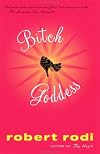
I needed to read some prose snarkier, bitchier, and more cruelly insulting than my email. I found a whole shelf of Rodi's novels in my local liberry...mother lode!
Who cares what books like this are "about"? The plot's an excuse to travel through the meanest, nastiest corners of your psyche guilt-free! And what a catharsis it is. Not one of Rodi's characters could remotely be called a "hero" except in the lit-crit sense. Everyone, but everyone, is a self-seeking scumbag with multi-level show more agendas of unkindness and power-seeking and ego gratification.
*aaahhh*
Honesty is the best policy? Ha! Honesty needs the best insurance policy, more like! The crashing of dream-castles and the fracturing of hopes and the flattening of the well-intentioned is sheer, vicious, Dorothy-Parker-esque Schadenfreude.
Pop a cork. Sip slowly. Savor the wine, inhale the fumes, and remember not to snort the stuff out your nose laughing. show less
Who cares what books like this are "about"? The plot's an excuse to travel through the meanest, nastiest corners of your psyche guilt-free! And what a catharsis it is. Not one of Rodi's characters could remotely be called a "hero" except in the lit-crit sense. Everyone, but everyone, is a self-seeking scumbag with multi-level show more agendas of unkindness and power-seeking and ego gratification.
*aaahhh*
Honesty is the best policy? Ha! Honesty needs the best insurance policy, more like! The crashing of dream-castles and the fracturing of hopes and the flattening of the well-intentioned is sheer, vicious, Dorothy-Parker-esque Schadenfreude.
Pop a cork. Sip slowly. Savor the wine, inhale the fumes, and remember not to snort the stuff out your nose laughing. show less
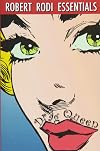
I remember reading Drag Queen sometime in the early 00s, freshly out of the closet; it was a cute little satire that vaguely resembled real life at the time. Re-reading it as a queer adult, one who is now comfortable in who and what he is, I found this both a refreshing reminder of the fun of my early gay days and a more sobering reminder of the inherent danger we all felt back then. Not that there isn't some level of inherent danger today, especially given the current political climate in show more the country, but I do like to think we've come some way since Drag Queen was originally published, and I generally don't think twice about holding my boyfriend's hand out in public.
Drag Queen is a comedy of errors as Mitchell Sayer, an attorney at an established law firm, discovers he has a long lost twin brother. However, Donald is everything that Mitchell is not: he's flamboyant, in-your-face, and a drag queen. As each brother tries to reconcile their feelings about the other, circumstances bring them to an unexpected finale that challenges each brother's very core and brings them ever closer together.
Rodi captures each brother's personalities perfectly; Mitchell is so scared of being too gay, Donald is terrified of being normal. These may be read more as stereotypes now, but there is some definite truth in what each brother is feeling - and this is where Rodi shines as a writer. He gives an honest voice to the fears that many gay men, then and now, feel about who and what they are, and while he covers everything in the laughable shine of satire so that it doesn't seem so terribly bad, these are truths we have all at one time or another faced or are currently facing now. The fear of being found out, the fear of being harassed both physically and emotionally; these are all things that have been at the root of so many men not coming to terms with who they are or letting their friends or family get too close.
After I re-read Drag Queen, I discovered that Rodi wrote several novels chronicling the trials and tribulations of being gay in the 90s and I'm going to go back and start at the beginning of these stories and read my way thru them, both for a chuckle but also as a reminder of how far we've come and how far we still have to go. show less
Drag Queen is a comedy of errors as Mitchell Sayer, an attorney at an established law firm, discovers he has a long lost twin brother. However, Donald is everything that Mitchell is not: he's flamboyant, in-your-face, and a drag queen. As each brother tries to reconcile their feelings about the other, circumstances bring them to an unexpected finale that challenges each brother's very core and brings them ever closer together.
Rodi captures each brother's personalities perfectly; Mitchell is so scared of being too gay, Donald is terrified of being normal. These may be read more as stereotypes now, but there is some definite truth in what each brother is feeling - and this is where Rodi shines as a writer. He gives an honest voice to the fears that many gay men, then and now, feel about who and what they are, and while he covers everything in the laughable shine of satire so that it doesn't seem so terribly bad, these are truths we have all at one time or another faced or are currently facing now. The fear of being found out, the fear of being harassed both physically and emotionally; these are all things that have been at the root of so many men not coming to terms with who they are or letting their friends or family get too close.
After I re-read Drag Queen, I discovered that Rodi wrote several novels chronicling the trials and tribulations of being gay in the 90s and I'm going to go back and start at the beginning of these stories and read my way thru them, both for a chuckle but also as a reminder of how far we've come and how far we still have to go. show less
Bitch In a Bonnet: Reclaiming Jane Austen from the Stiffs, the Snobs, the Simps and the Saps (Volume 1) by Robert Rodi
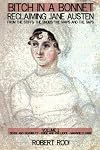
I finished the first volume of Bitch in a Bonnet, covering Sense and Sensibility, Pride and Prejudice, and Mansfield Park, and thoroughly enjoyed it. I'll pick up the second on Kindle when we get back to the states. There's one reason I wish I had it in hard copy, which is to give you more of his wonderful, funny quotes, like his description of Bingley and Jane: "Mr. Bingley, who's basically a man-sized plush toy, has fallen for Jane, the vanilla ice cream cone of the Bennett sisters. show more There's not enough erotic spark there to charge an AA battery."
I thought he was right on the money with S & S and P& P, but not so much with Mansfield Park.
I agree that MP is generally the least-liked of her six novels, and it's certainly my least favorite. And I agree that Fanny Price is the most difficult of Austen's heroines to warm up to. (A spoilery discussion of his take on MP follows).
MANSFIELD PARK SPOILER: But his theory is that in MP she is trying to stretch herself with more complex characters and more subtle shadings than what has come before in S& S and P &P. The novel fails, in his view (although full of all sorts of good Austenian stuff), but it allows her to triumph with all she's learned in Emma. The problem for me is the characters are not more complex and the shadings are not more subtle. Mrs. Norris and Lady Bertram - please! It's just she's chosen a very reserved and reticent heroine (who's been taken from poverty to high society, so her caution seems reasonable), and she has the sibling Crawfords, who are a little reminiscent of Wickham - able to seem awfully good, but unable to overcome their baser instincts. (Well, Henry Crawford can't; Mary Crawford just wants to live in a high style and makes no bones about it).
Rodi also thinks that Edmund should have married Mary, and Fanny should have married Henry, because reserved and somewhat dull Edmund and Fanny would have benefited from the Crawfords' liveliness, and the Crawfords would have been led to lead more kind, moral, sensitive of others lives. What he misses, from my POV, is that those relationships are about constancy vs. inconstancy. There's no way Mary could have lived the life of a clergyman's wife (as she well knew), and a life together with Edmund would have been a misery of entrapment and dissatisfaction. If Fanny had married Henry, there's no way he would've remained faithful, and even Mary acknowledged, while trying to put a happy face on the idea, that he would continue flirting with other women. Fanny would have been miserable, and she didn't even respect him in the first place. END OF SPOILER
Anyway, it was great fun to read. Rodi's deeply steeped in Austen, wonderfully non-stuffy, like he's sitting and chatting with you, and quite insightful. He picked up on all sorts of things I missed, even though I've read the books multiple times.
He believes Austen is widely mis-viewed as "a woman's writer . . . quaint and darling, doe-eyed and demure, parochial if not pastoral, and dizzyingly, swooningly romantic, the inventor and goddess of chick lit." Au contraire. She's "a sly subversive, a clear-eyed social Darwinist, and the most unsparing satirist of her century." She is "wicked, arch, and utterly merciless. She skewers the pompous, the pious, and the libidinous." He'd seat her with Voltaire, Twain and Swift.
Yes! It is her dazzling wit, her eloquent way with the subtle but devastating skewer, that keeps so many coming back again and again. I think he goes too far and generalizes too much, though, in distancing her from romance novels and chick lit. We also come back because we care about Lizzie and Jane and Darcy, and Anne Eliot and Captain Wentworth and so on. But I like very much that he ranks her up there with Shakespeare. Me, too. show less
I thought he was right on the money with S & S and P& P, but not so much with Mansfield Park.
I agree that MP is generally the least-liked of her six novels, and it's certainly my least favorite. And I agree that Fanny Price is the most difficult of Austen's heroines to warm up to. (A spoilery discussion of his take on MP follows).
MANSFIELD PARK SPOILER: But his theory is that in MP she is trying to stretch herself with more complex characters and more subtle shadings than what has come before in S& S and P &P. The novel fails, in his view (although full of all sorts of good Austenian stuff), but it allows her to triumph with all she's learned in Emma. The problem for me is the characters are not more complex and the shadings are not more subtle. Mrs. Norris and Lady Bertram - please! It's just she's chosen a very reserved and reticent heroine (who's been taken from poverty to high society, so her caution seems reasonable), and she has the sibling Crawfords, who are a little reminiscent of Wickham - able to seem awfully good, but unable to overcome their baser instincts. (Well, Henry Crawford can't; Mary Crawford just wants to live in a high style and makes no bones about it).
Rodi also thinks that Edmund should have married Mary, and Fanny should have married Henry, because reserved and somewhat dull Edmund and Fanny would have benefited from the Crawfords' liveliness, and the Crawfords would have been led to lead more kind, moral, sensitive of others lives. What he misses, from my POV, is that those relationships are about constancy vs. inconstancy. There's no way Mary could have lived the life of a clergyman's wife (as she well knew), and a life together with Edmund would have been a misery of entrapment and dissatisfaction. If Fanny had married Henry, there's no way he would've remained faithful, and even Mary acknowledged, while trying to put a happy face on the idea, that he would continue flirting with other women. Fanny would have been miserable, and she didn't even respect him in the first place. END OF SPOILER
Anyway, it was great fun to read. Rodi's deeply steeped in Austen, wonderfully non-stuffy, like he's sitting and chatting with you, and quite insightful. He picked up on all sorts of things I missed, even though I've read the books multiple times.
He believes Austen is widely mis-viewed as "a woman's writer . . . quaint and darling, doe-eyed and demure, parochial if not pastoral, and dizzyingly, swooningly romantic, the inventor and goddess of chick lit." Au contraire. She's "a sly subversive, a clear-eyed social Darwinist, and the most unsparing satirist of her century." She is "wicked, arch, and utterly merciless. She skewers the pompous, the pious, and the libidinous." He'd seat her with Voltaire, Twain and Swift.
Yes! It is her dazzling wit, her eloquent way with the subtle but devastating skewer, that keeps so many coming back again and again. I think he goes too far and generalizes too much, though, in distancing her from romance novels and chick lit. We also come back because we care about Lizzie and Jane and Darcy, and Anne Eliot and Captain Wentworth and so on. But I like very much that he ranks her up there with Shakespeare. Me, too. show less
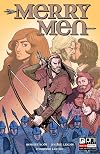
First issue in a new comic series about Robin Hood. The hook is that the merry men all enjoy sex with men. (Modern readers will see some of them as gay and some as bi; these are not concepts that existed at the time in the way we understand them. These were behaviors, not identities.) They live in a band in the woods in order to keep themselves safe from the Sherriff of Nottingham, who, among other dastardlinesses, wants to make life wretched for men such as Robin and his friends. This issue show more is mostly about introducing the concept and the characters (one of whom is Scarlett, who is trans*), but we do get a hint that Scarlett's arrival in Sherwood is going to spur Robin to the kind of action (savior of the poor etc) that we associate with the character. What little comics reading I do, I do in trade, but this series might prompt me to pick up each issue as it comes out--not so much because I can't wait for five or so issues to hit a trade edition (although, I am pleased with the first issue and want to know more) but because I am *in* for a queered version of this tale and I want to support the title. And I gather that in the world of comics, things like buying individual issues and especially ordering issues before they've come out has a huge impact on whether titles carry on. I may actually have to go to the comics shop and set up a pull list. *grumbles* Anyway, recommended. show less
Lists
Awards


You May Also Like


Associated Authors
Statistics
- Works
- 149
- Also by
- 20
- Members
- 2,279
- Popularity
- #11,256
- Rating
- 3.6
- Reviews
- 62
- ISBNs
- 138
- Languages
- 8
- Favorited
- 3