
Ray Vincent
Author of Let the Bible Be Itself: Learning to Read It Right
Works by Ray Vincent
Tagged
Common Knowledge
There is no Common Knowledge data for this author yet. You can help.
Members
Reviews
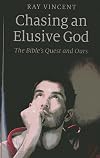
This is the second book by Vincent that I’ve reviewed, and I enjoyed it as much as the first. Ray writes simply and draws on a lifetime of Biblical research. His approach is an even mix of informative and entertaining without coddling.
This book tackles the personal quest for God … a quest which repeats itself throughout the Bible. When we question our origin and cosmic purpose, trying to understand who or what God is and what he wants, we’re in good company. We see the same pondering show more throughout our holy book, from Genesis to Revelation. When we reach different conclusions than our neighbors, we’re again in good company, for the Bible’s authors hardly reached any consensus.
So Ray’s newest book is an exploration of the themes of a very human book: the Bible. From the mystery of the divine to the quest for meaning in life to the cry of the oppressed for justice to the emotions which rule us as human recipients to the great question of life after death, Ray journeys through what the Bible has to say—and not say—as the ancients struggle to make sense of the same questions we ponder today.
Ray sees the Bible as art, not history. That is what brings life to its pages. He explains with a comparison: “Van Gogh did not set out to inform us what sunflowers look like: a photograph or a botanical drawing could tell us that. What he did was to contemplate sunflowers, to open his heart to them, and to express in his painting the feeling they gave him. Because he did this we can look at that picture today, feel something of what he felt and see sunflowers, and perhaps the whole world, in a new way. That is what great art is about.”
Likewise, we must open ourselves up to the world of the Bible, its human struggles and dreams, in order to share in its journey.
Excellent reading! I can’t wait for Ray’s next work. show less
This book tackles the personal quest for God … a quest which repeats itself throughout the Bible. When we question our origin and cosmic purpose, trying to understand who or what God is and what he wants, we’re in good company. We see the same pondering show more throughout our holy book, from Genesis to Revelation. When we reach different conclusions than our neighbors, we’re again in good company, for the Bible’s authors hardly reached any consensus.
So Ray’s newest book is an exploration of the themes of a very human book: the Bible. From the mystery of the divine to the quest for meaning in life to the cry of the oppressed for justice to the emotions which rule us as human recipients to the great question of life after death, Ray journeys through what the Bible has to say—and not say—as the ancients struggle to make sense of the same questions we ponder today.
Ray sees the Bible as art, not history. That is what brings life to its pages. He explains with a comparison: “Van Gogh did not set out to inform us what sunflowers look like: a photograph or a botanical drawing could tell us that. What he did was to contemplate sunflowers, to open his heart to them, and to express in his painting the feeling they gave him. Because he did this we can look at that picture today, feel something of what he felt and see sunflowers, and perhaps the whole world, in a new way. That is what great art is about.”
Likewise, we must open ourselves up to the world of the Bible, its human struggles and dreams, in order to share in its journey.
Excellent reading! I can’t wait for Ray’s next work. show less
O daughter of Babylon … blessed shall he be that taketh thy children and throweth them against the stones. –Psalm 137
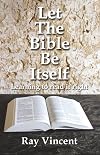
In my book about Revelation, I suggest that this psalm may be both the most heartrending and the most disturbing passage in the Bible. Interesting that Vincent should choose it to highlight the question of how to read the Bible. What are we supposed to do with verses like this?
Vincent reminds us that much of the Bible is a cry of pain: “This psalm is in fact a very show more moving piece of dramatic poetry. If we were in the theater and heard someone cursing their enemy and calling on God for revenge in this kind of language, we would not ‘tut-tut’ or walk out in disgust! We would be caught up in the power of the drama, and go away saying what a good play it was. It is only the fact that the Bible has been set up as a theological and moral authority that makes this psalm a problem.”
Let the Bible be itself, Vincent suggests, and I really enjoyed his discussion. He describes briefly what to expect in the Bible, how it came to be, and the hazards of reading it as a divine instruction book. While it’s been a long time since I read the Bible as a fundamentalist, I do remember the awkwardness of trying to justify its errors, outdated morals, and claims of divinely sanctioned killing. Vincent has a knack for simple, understandable writing, bringing the Bible alive with both its warts and its beauty. Here’s an interesting observation: “If we believe God speaks through the bible, this must surely imply that God too is playful, experimental, changing and developing, even in some mysterious way self-contradictory and self-correcting—in other words, alive.”
Short book, but highly recommended. show less
In my book about Revelation, I suggest that this psalm may be both the most heartrending and the most disturbing passage in the Bible. Interesting that Vincent should choose it to highlight the question of how to read the Bible. What are we supposed to do with verses like this?
Vincent reminds us that much of the Bible is a cry of pain: “This psalm is in fact a very show more moving piece of dramatic poetry. If we were in the theater and heard someone cursing their enemy and calling on God for revenge in this kind of language, we would not ‘tut-tut’ or walk out in disgust! We would be caught up in the power of the drama, and go away saying what a good play it was. It is only the fact that the Bible has been set up as a theological and moral authority that makes this psalm a problem.”
Let the Bible be itself, Vincent suggests, and I really enjoyed his discussion. He describes briefly what to expect in the Bible, how it came to be, and the hazards of reading it as a divine instruction book. While it’s been a long time since I read the Bible as a fundamentalist, I do remember the awkwardness of trying to justify its errors, outdated morals, and claims of divinely sanctioned killing. Vincent has a knack for simple, understandable writing, bringing the Bible alive with both its warts and its beauty. Here’s an interesting observation: “If we believe God speaks through the bible, this must surely imply that God too is playful, experimental, changing and developing, even in some mysterious way self-contradictory and self-correcting—in other words, alive.”
Short book, but highly recommended. show less
Statistics
- Works
- 6
- Members
- 15
- Popularity
- #708,119
- Rating
- 5.0
- Reviews
- 2
- ISBNs
- 7
- Languages
- 1
