
Gao E
Author of The Debt of Tears
About the Author
Works by Gao E
Associated Works
Tagged
Common Knowledge
Members
Reviews
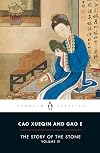
Unsurprisingly, it gets a lot more exciting when things start falling apart for the Jias. I still think everyone is too hard on Xi-feng. For one, she's sick all the time and no one else can do her job properly. She also has the gall to make the hard decisions and be a snake when no one else will.
But also how could they just let Dai-yu die alone and act all shocked about it? Everyone knew she was dying and they specifically avoided her anyway.
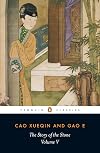
The last couple of chapters contain an absurdly happy ending — notwithstanding all the unhappiness already recorded — but in general I have a lot of sympathy for Gao E’s production of chapters 81-120. Considering the magnitude of his task, to wrap up a story that seemed to be going nowhere yet everywhere, to document the dissolution of a dynasty, to please the fans — he did OK.
For much of my trip through DoRC I was focused on various supporting characters. Xi Feng, Skybright, Xue show more Pan, Tan Chun all won me over. But looking back on it all, the one I miss most is young Bao Yu. I loved his haplessness, his last-minute excuses and dissimulations, his sudden “aiyos” whe he realises he’s screwed up which are like Bart Simpson’s “d’oh”. His kindness and real concern for his servants, not an educated veneer but real humanity. And in the end this is what tears him away from the world, his connection to it.
It’s been a wonderful, enriching experience. The second volume is on a par with the second volume of Proust, very similar in its themes too. The slowly melting ice of the third book with its sudden violent cracks is brilliant. The sheer confusion of who’s who, replenished by infusions of new characters who inevitably fall ill, have their pulses taken through curtains, are prescribed incredibly complicated compounds and then either recover or perish. To quote Blackadder, “the endless, bloody, poetry!” Although the poetry translated by Hawkes was generally amazing. The earthly paradise of the garden in its halcyon days.
Sometimes boring, sometimes compulsive, almost always convincing, the Story of the Stone, like all great stories, is the story of life itself. show less
For much of my trip through DoRC I was focused on various supporting characters. Xi Feng, Skybright, Xue show more Pan, Tan Chun all won me over. But looking back on it all, the one I miss most is young Bao Yu. I loved his haplessness, his last-minute excuses and dissimulations, his sudden “aiyos” whe he realises he’s screwed up which are like Bart Simpson’s “d’oh”. His kindness and real concern for his servants, not an educated veneer but real humanity. And in the end this is what tears him away from the world, his connection to it.
It’s been a wonderful, enriching experience. The second volume is on a par with the second volume of Proust, very similar in its themes too. The slowly melting ice of the third book with its sudden violent cracks is brilliant. The sheer confusion of who’s who, replenished by infusions of new characters who inevitably fall ill, have their pulses taken through curtains, are prescribed incredibly complicated compounds and then either recover or perish. To quote Blackadder, “the endless, bloody, poetry!” Although the poetry translated by Hawkes was generally amazing. The earthly paradise of the garden in its halcyon days.
Sometimes boring, sometimes compulsive, almost always convincing, the Story of the Stone, like all great stories, is the story of life itself. show less
The plot moves along a bit more briskly now that we're outside the dilatory dreamscape of Cao's authenticated 80 chapters. Whoever wrote, arranged, or otherwise cobbled together the material in Book IV, I think they did a pretty good job of it. The chapters leading up to Bao Yu's wedding in particular are really propulsive in a way we haven't hitherto seen. The other major event here is the hopeless liability Xue Pan being arrested for murder for the second time, necesitating masses more show more silver to be disbursed in bribes. Looking forward to everything coming completely unglued in the last installment. show less
In the fourth volume of The Story of the Stone, tragic events long foreshadowed come to pass. The first half of [b:The Story of the Stone, or The Dream of the Red Chamber, Vol. 4: The Debt of Tears|139820|The Story of the Stone, or The Dream of the Red Chamber, Vol. 4 The Debt of Tears|Cao Xueqin|https://i.gr-assets.com/images/S/compressed.photo.goodreads.com/books/1172113533l/139820._SY75_.jpg|49685167] is somewhat lighter, featuring Bao-yu's attempts to keep his father happy and Xue Pan's show more latest way to shame the family. In a drunken fit of pique, he murders a man at a bar in front of many witnesses then, stupidly, confesses to it. His family have to make strenuous efforts at bribery to get the charge reduced from murder to accidental death, as otherwise he would be exiled or get the death penalty. That man is the worst. There is also some fascinating discussion of the Qin as Dai-yu takes it up again. I've only come across this instrument before while watching The Untamed, so it was lovely to learn something about it in a historical rather than xianxia context. The observations and plans of the maids were also enjoyable and insightful as ever.
The second half of the book becomes exceedingly tragic.Bao-yu loses his magic jade, sending him into a withdrawn and unstable state. His relatives decide that marriage will bring him out of it and hatch an astonishingly cruel plot. They know he loves Dai-yu, who is ailing, so tell him that he will be marrying her. In fact, Bao-yu will be married to Bao-chai. (Both are his first cousins, incidentally.) When Dai-yu hears of this, she goes into rapid decline and perishes without even saying goodbye to Bao-yu or confessing her love. Bao-yu, meanwhile, only learns after the wedding has taken place that his expected bride is dead and he is actually married to someone different. This sequence of events is moving and extraordinarily compelling.
As ever in this long novel, there is a striking balance between practical matters of daily life (meals, clothing, medicine, etc) and existential considerations (fortunes foretold, prophetic dreams, previous lives, etc). The 1985 edition I borrowed from the library also contains a charming account in the preface of the translator searching for and seemingly finding the house where the novel's events take place. I wonder at what further sadness the fifth and final volume will bring. [b:The Story of the Stone, or The Dream of the Red Chamber, Vol. 4: The Debt of Tears|139820|The Story of the Stone, or The Dream of the Red Chamber, Vol. 4 The Debt of Tears|Cao Xueqin|https://i.gr-assets.com/images/S/compressed.photo.goodreads.com/books/1172113533l/139820._SY75_.jpg|49685167] continues to be fast-paced and highly readable, a fascinating domestic saga filled with psychological insight and historical details. show less
The second half of the book becomes exceedingly tragic.
As ever in this long novel, there is a striking balance between practical matters of daily life (meals, clothing, medicine, etc) and existential considerations (fortunes foretold, prophetic dreams, previous lives, etc). The 1985 edition I borrowed from the library also contains a charming account in the preface of the translator searching for and seemingly finding the house where the novel's events take place. I wonder at what further sadness the fifth and final volume will bring. [b:The Story of the Stone, or The Dream of the Red Chamber, Vol. 4: The Debt of Tears|139820|The Story of the Stone, or The Dream of the Red Chamber, Vol. 4 The Debt of Tears|Cao Xueqin|https://i.gr-assets.com/images/S/compressed.photo.goodreads.com/books/1172113533l/139820._SY75_.jpg|49685167] continues to be fast-paced and highly readable, a fascinating domestic saga filled with psychological insight and historical details. show less
Awards

You May Also Like
Associated Authors
Statistics
- Works
- 2
- Also by
- 1
- Members
- 859
- Popularity
- #29,779
- Rating
- 4.0
- Reviews
- 17
- ISBNs
- 9
- Languages
- 1