
Clive Gifford
Author of So You Think You Know Harry Potter?
About the Author
Clive Gifford is a highly experienced journalist and author with over 170 books published and more than 800 features and stories written for adults and children. Clive is an unique author who likes to work in both fiction and non-fiction. Perhaps this reflects his unusual life which, so far, has show more seen him travel to over 70 countries, be held hostage in Colombia, go parachuting, coach several sports and run a computer games company. His title,The Official Rugby World Cup 2015 Fact File, made The New Zealand Best Seller List. (Bowker Author Biography) show less
Series
Works by Clive Gifford
Cars, Trains, Ships, and Planes: A Visual Encyclopedia of Every Vehicle (DK Our World in Pictures) (2015) — Author — 221 copies, 2 reviews
Space in 30 Seconds: 30 Super-stellar Subjects for Cosmic Kids Explained in Half a Minute (Children's 30 Second) (2013) 35 copies
First Body Book-Set off on a Head-to-Toe Adventure through the Human Body-Includes over 20 Anatomical Diagrams and a Colorful Body Systems Wall Poster (2018) 31 copies
OPTICAL ILLUSIONS: 50 HANDS-ON MODELS AND EXPERIMENTS TO MAKE AND DO (INCLUDES PRESS-OUT PIECES TO BUILD AMAZING MODELS) (2018) 25 copies
So You Think You Know Narnia?: Over 1,000 Quiz Questions About the Magical Narnia Books (2005) 25 copies
How The World Works: Know It All, From How the Sun Shines to How the Pyramids Were Built (2013) 24 copies
Historias sobre las matemáticas : desde los cálculos cavernícolas hasta los computadores (2020) 20 copies, 3 reviews
Robotic Hornet: Learn How Hornets Have Inspired the Design of RobotsThen Build a Crawling Hornet with Light-Up Eyes and Flapping Wings! (2005) 20 copies
The Human Brain in 30 Seconds: 30 amazing topics for brilliant brains explained in half a minute (Kids 30 Second) (2016) 17 copies, 1 review
The Kingfisher Facts and Records Book of Space: The Ultimate Information Database (Kingfisher Riding Club) (2001) 15 copies
Powered by Plants: Meet the trees, flowers, and vegetation that inspire our everyday technology (Designed by Nature) (2022) 13 copies, 1 review
So You Think You Know Roald Dahl?: Over 1000 Questions About All Your Favourite Books (2005) 13 copies
Quiz Quest: Search for the Facts and Put Your Knowledge to the Test (Quiz Book): Search for the Facts and Put Your Knowledge to the Test (Quiz Book) (2006) 10 copies, 1 review
The Ancient World in 100 Words: Start conversations and spark inspiration (In a Nutshell) (2019) 8 copies
You Smell!: (And so does everything else!) (An Educational Humor Book About Smelly Things) (2019) 6 copies
Ancient Greeks: A new illustrated children’s would you rather book on history and the past (Book 6) (2024) 6 copies
Out of This World: All The Cool Bits About Space [Paperback] [Jul 06, 2017] Clive Gifford (2017) 6 copies, 1 review
Very Short Introduction for Curious Young Minds: The Causes and Impact of Climate Change (Very Short Introductions for Curious Young Minds) (2022) 5 copies
Number Shocker: A new illustrated STEAM book for children aged 6+: A new illustrated book for children aged 6+ who love facts and stats (2022) 5 copies
Ancient Egyptians: A new children’s illustrated history book on the world of ancient Egypt (Would You Rather?) (2023) 4 copies
Je lichaam binnenstebuiten 3 copies
Explorers: A new illustrated children’s would you rather book on exploration, discovery and history: Book 4 (2023) 3 copies
Philosophy for Everyone: Understand How Philosophers Have Helped Us to Tackle the Big Mysteries of Life (2023) 2 copies
Would You Rather? Tudors: A new illustrated children’s would you rather book on history and the past. (Book 5) (2024) 2 copies
Why Does Plastic Hurt the Planet?: How our stuff is harming the Earth, and what you can do to reduce your use (Mind Mappers) (2023) 2 copies
Onde Tudo Comecou 2 copies
Would You Rather? Vikings: A new illustrated children’s book on history, filled with hilarious facts (Book 2) (2023) 1 copy
Das grosse Buch der Zeit von tickenden Uhren, rasenden Sekunden und unendlichen Jahrmillionen (2023) 1 copy
Incredible Rugby 1 copy
A Question of Technology: How Do You Go to Toilet in Space?: And other questions about space (2023) 1 copy
A Historia das Cores 1 copy
Onze wereld in getallen 1 copy
Gross Tech (Super Tech) 1 copy
AI (Super Tech) 1 copy
O Cérebro em 30 Segundos 1 copy
Ilusões de Ótica 1 copy
Family Flip Quiz: Geography 1 copy
Será verdade? 1 copy
Minu jalgratas 1 copy
The World in Numbers 1 copy
Everyday life 1 copy
Tagged
Common Knowledge
- Canonical name
- Gifford, Clive
- Legal name
- Gifford, Clive
- Birthdate
- 1966-04-05
- Gender
- male
- Short biography
- Clive Gifford is a highly experienced journalist and author with over 170 books published and more than 800 features and stories written for adults and children.
Clive is an unusual author who likes to work in both fiction and non-fiction. Perhaps this reflects his unusual life which, so far, has seen him travel to over 70 countries, be held hostage in Colombia, go parachuting, coach several sports and run a computer games company. - Nationality
- England
UK - Associated Place (for map)
- England, UK
Members
Reviews
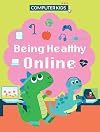
Thank you to NetGalley and the publisher, Windmill Books (Rosen Publishing Group) for this DRC in exchange for a fair and honest review. The thoughts and opinions expressed below are my own.
As someone who’s worked extensively with and has always loved children, I naturally have thoughts and concerns about the increased amount of time that they spend in front of screens, at increasingly younger ages. In this short and timely guide for children, author Clive Gifford demonstrates how to show more practice healthy habits while engaging in online activities. Mini, console-loving dinosaurs converse with each other and the reader, demonstrating real-world situations that children are likely to find themselves in and offering tips for them to have fun safely. The colors and overall presentation of the book are bright and welcoming, and the information, including the reflection questions, are presented simply and effectively.
Gifford’s tone is that of one who is very familiar with the online spaces that children inhabit. He understands the sense of excitement and fulfilment that they get from their time there. As such, his approach is not to completely deter them from spending time online altogether, but to appeal to them with kid-friendly logic about how to balance their time appropriately. The author respects children by speaking directly to them with the understanding that they will be on their own with their devices. At the same time however, there’s also the implicit assumption that an adult will be nearby. The author makes frequent references to children speaking with their adults, such as asking them questions about something they view online which may seem untrue.
In addition to the practical advice about their online behavior, Gifford takes care to talk to children about the physical care for the devices. This includes advice about handling them firmly so that they aren’t in danger of dropping, making sure that they don’t overcharge or overheat, and not eating or drinking while using them to prevent food gumming up the works, literally. These messages about the importance of caring for one’s belongings are important ones that children can carry with them as they participate in many activities, both online and off, and which parents and caregivers can reinforce.
I thoroughly enjoyed Gifford’s discussions with the reader about establishing the difference between fact and opinion, asking questions to determine whether something is too good to be true. This is a necessary skill for children to have in the age of AI and deepfakes (some of which they’ve likely encountered already) and the tips here provide them with a skillset that they can build on for the future. One of my favorite aspects of the book is the way that Gifford draws clear distinctions between online worlds and the real world. He firmly states that the real world is a fun, important place and that care of the physical body is important, hence the importance of taking stretch and snack breaks and setting timers. There’s a deep sense of empathy that runs through the text, coupled with the importance of emotional health and thinking about how online behavior can impact others. Gifford emphasizes the importance of establishing and maintaining human relationships with friends and family, and to be considerate of the people they talk to on the other side of the screen. These are great lessons for children (as well as older readers) and help reinforce the connection between responsible digital activity and social-emotional skills.
This book is the latest iteration of a long line of technology etiquette manuals for devices such as telephones (shout out to Bell Laboratories!) record players and personal computers, tailoring the guide to correlate with children’s needs in a new, constantly evolving digital age. Same traditions; new media. I see that it’s one of a series of books about online skills for children. I would like to read them all and see how they complement each other. The series would make a good acquisition choice for a library that seeks books about digital citizenship information for young readers. Although directed towards children, there’s a lot of potential for parents and caregivers to read the book with their children, prompting good and meaningful discussions that will be beneficial as they grow. show less
As someone who’s worked extensively with and has always loved children, I naturally have thoughts and concerns about the increased amount of time that they spend in front of screens, at increasingly younger ages. In this short and timely guide for children, author Clive Gifford demonstrates how to show more practice healthy habits while engaging in online activities. Mini, console-loving dinosaurs converse with each other and the reader, demonstrating real-world situations that children are likely to find themselves in and offering tips for them to have fun safely. The colors and overall presentation of the book are bright and welcoming, and the information, including the reflection questions, are presented simply and effectively.
Gifford’s tone is that of one who is very familiar with the online spaces that children inhabit. He understands the sense of excitement and fulfilment that they get from their time there. As such, his approach is not to completely deter them from spending time online altogether, but to appeal to them with kid-friendly logic about how to balance their time appropriately. The author respects children by speaking directly to them with the understanding that they will be on their own with their devices. At the same time however, there’s also the implicit assumption that an adult will be nearby. The author makes frequent references to children speaking with their adults, such as asking them questions about something they view online which may seem untrue.
In addition to the practical advice about their online behavior, Gifford takes care to talk to children about the physical care for the devices. This includes advice about handling them firmly so that they aren’t in danger of dropping, making sure that they don’t overcharge or overheat, and not eating or drinking while using them to prevent food gumming up the works, literally. These messages about the importance of caring for one’s belongings are important ones that children can carry with them as they participate in many activities, both online and off, and which parents and caregivers can reinforce.
I thoroughly enjoyed Gifford’s discussions with the reader about establishing the difference between fact and opinion, asking questions to determine whether something is too good to be true. This is a necessary skill for children to have in the age of AI and deepfakes (some of which they’ve likely encountered already) and the tips here provide them with a skillset that they can build on for the future. One of my favorite aspects of the book is the way that Gifford draws clear distinctions between online worlds and the real world. He firmly states that the real world is a fun, important place and that care of the physical body is important, hence the importance of taking stretch and snack breaks and setting timers. There’s a deep sense of empathy that runs through the text, coupled with the importance of emotional health and thinking about how online behavior can impact others. Gifford emphasizes the importance of establishing and maintaining human relationships with friends and family, and to be considerate of the people they talk to on the other side of the screen. These are great lessons for children (as well as older readers) and help reinforce the connection between responsible digital activity and social-emotional skills.
This book is the latest iteration of a long line of technology etiquette manuals for devices such as telephones (shout out to Bell Laboratories!) record players and personal computers, tailoring the guide to correlate with children’s needs in a new, constantly evolving digital age. Same traditions; new media. I see that it’s one of a series of books about online skills for children. I would like to read them all and see how they complement each other. The series would make a good acquisition choice for a library that seeks books about digital citizenship information for young readers. Although directed towards children, there’s a lot of potential for parents and caregivers to read the book with their children, prompting good and meaningful discussions that will be beneficial as they grow. show less
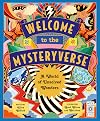
In a Nutshell: Not a book you will read for answers but to discover more questions about the world around you. Welcome to the ‘Mysteryverse’! #CliveGiffordRocks!
This is my fifth Clive Gifford book, and I am yet to be disappointed by his works. In fact, when I saw this book on Edelweiss, I grabbed it as soon as I saw the author’s name, without even bothering to read the synopsis. The content delivers, and how!
The word ‘multiverse’ has become quite popular in the last few years show more courtesy some books and movies. Playing around with the same, Gifford offers us the concept of ‘mysteryverse’, representing the (as yet) unknown and/or unknowable elements of our world and beyond.
As humans are inherently curious (which is also evident in our habit of poking our noses in others’ businesses!), we always want to find out more not just about ourselves but also about other creatures and the world in general. All of today’s scientific, technological, medical and other advancements spring from this curiosity. Our need to learn more has made us reach a point where we consider ourselves knowledgeable. This book proves how minuscule our awareness is, and how many components of the universe are still unfathomable to our puny brains.
This book touches upon a variety of mysteries connected to the human body, earth, wildlife, space, and miscellanea. Most of the information offered is mindboggling. There are scientific theories offered as possible solutions to a few of the puzzles, but as the title makes it clear, most of the trivia concerns unsolved mysteries. The number of questions and doubts the book will generate in your mind will far outnumber any answers or solutions it might offer.
As a STEM resource, the book stays restricted to tangible mysteries and doesn’t venture into unexplainable concepts such as ghosts or UFOs.
There is a glossary at the end, to explain the terms that can be explained.
The content thus delighted the geek in me. Where the book lost a star is in its presentation.
Each page is like a visual bombardment, with too many trippy illustrations in hallucinatory colours. I am not sure if this creative choice intended to add to the intrigue of the mysteryverse, but it made concentrating on the content very difficult. (Not to forget that I was reading this digitally, so the teeny font set against a rainbow of bright hues further aggravated my annoyance. I hope the physical copy will be more eye-friendly.)
All in all, if you can wear sunglasses to mitigate the effect of the pseudo-psychedelic graphics, this will be an excellent resource to learn more about things you cannot learn more about. show less
This is my fifth Clive Gifford book, and I am yet to be disappointed by his works. In fact, when I saw this book on Edelweiss, I grabbed it as soon as I saw the author’s name, without even bothering to read the synopsis. The content delivers, and how!
The word ‘multiverse’ has become quite popular in the last few years show more courtesy some books and movies. Playing around with the same, Gifford offers us the concept of ‘mysteryverse’, representing the (as yet) unknown and/or unknowable elements of our world and beyond.
As humans are inherently curious (which is also evident in our habit of poking our noses in others’ businesses!), we always want to find out more not just about ourselves but also about other creatures and the world in general. All of today’s scientific, technological, medical and other advancements spring from this curiosity. Our need to learn more has made us reach a point where we consider ourselves knowledgeable. This book proves how minuscule our awareness is, and how many components of the universe are still unfathomable to our puny brains.
This book touches upon a variety of mysteries connected to the human body, earth, wildlife, space, and miscellanea. Most of the information offered is mindboggling. There are scientific theories offered as possible solutions to a few of the puzzles, but as the title makes it clear, most of the trivia concerns unsolved mysteries. The number of questions and doubts the book will generate in your mind will far outnumber any answers or solutions it might offer.
As a STEM resource, the book stays restricted to tangible mysteries and doesn’t venture into unexplainable concepts such as ghosts or UFOs.
There is a glossary at the end, to explain the terms that can be explained.
The content thus delighted the geek in me. Where the book lost a star is in its presentation.
Each page is like a visual bombardment, with too many trippy illustrations in hallucinatory colours. I am not sure if this creative choice intended to add to the intrigue of the mysteryverse, but it made concentrating on the content very difficult. (Not to forget that I was reading this digitally, so the teeny font set against a rainbow of bright hues further aggravated my annoyance. I hope the physical copy will be more eye-friendly.)
All in all, if you can wear sunglasses to mitigate the effect of the pseudo-psychedelic graphics, this will be an excellent resource to learn more about things you cannot learn more about. show less
Powered by Plants: Meet the trees, flowers, and vegetation that inspire our everyday technology (Designed by Nature) by Clive Gifford
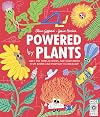
What a marvellous book this is!
We’ve seen so many books praising the skills of animals. But nature isn’t just animals. Finally, here’s a children’s nonfiction that celebrates plants and their ingenious ways of surviving and thriving in nature.
The book covers a wide variety of plants of all types and demonstrates one unique ability that they have, which human engineers have replicated or are trying to replicate. These range from common plants such as the peace lily to weeds such as show more tumbleweeds to carnivorous plants such as the Venus Flytrap to underwater plants such as the kelp to trees such as the willow.
The book is 80 pages long, and each of these pages (except for a few) contains details on one specific plant, its features and the ability that we humans could learn. I liked how the content was presented from the first person perspective of the specific plant on that page. This created a beautiful connect and also helped incorporate a touch of humour to the narration.
The accompanying illustrations are fabulous and show not just the plant but also a detailed view of their relevant habits. Every page is completely in colour, and I am sure the physical copy would be outstanding to look at.
The only complaint I have is that the text is a little cramped up. I think this is because there is a lot of content per page. Though the text is definitely easy to understand for the target age group (7-12 years) and is sectioned into logical paragraphs, it still looks a bit cluttered on the digital copy. This might not be an issue in the physical copy.
Humankind has always considered itself the smartest of the species. This book shows that even plants can be way smarter than us and we still have a long way to go in making the maximum use of available natural resources while causing minimal destruction to the environment. Hopefully, we learn a little humility as well by reading about these amazing plants and trees. Humans have a lot to learn from nature after all; high time we stop considering ourselves the masters of the planet and incorporate more respect in our dealings with nature.
Recommended not just to every little plant lover but to anyone who wants to see the wonders of nature. What a wonderful addition this would make to homes, schools and libraries!
This is my third book by Clive Gifford and all three of them have been enlightening experiences. Definitely a children’s author worth reading!
4.5 stars.
My thanks to Quarto Publishing Group – Wide Eyed Editions and NetGalley for the DRC of “Powered by Plants”. This review is voluntary and contains my honest opinion about the book.
———————————————
Connect with me through:
My Blog | The StoryGraph | Facebook | Twitter show less
We’ve seen so many books praising the skills of animals. But nature isn’t just animals. Finally, here’s a children’s nonfiction that celebrates plants and their ingenious ways of surviving and thriving in nature.
The book covers a wide variety of plants of all types and demonstrates one unique ability that they have, which human engineers have replicated or are trying to replicate. These range from common plants such as the peace lily to weeds such as show more tumbleweeds to carnivorous plants such as the Venus Flytrap to underwater plants such as the kelp to trees such as the willow.
The book is 80 pages long, and each of these pages (except for a few) contains details on one specific plant, its features and the ability that we humans could learn. I liked how the content was presented from the first person perspective of the specific plant on that page. This created a beautiful connect and also helped incorporate a touch of humour to the narration.
The accompanying illustrations are fabulous and show not just the plant but also a detailed view of their relevant habits. Every page is completely in colour, and I am sure the physical copy would be outstanding to look at.
The only complaint I have is that the text is a little cramped up. I think this is because there is a lot of content per page. Though the text is definitely easy to understand for the target age group (7-12 years) and is sectioned into logical paragraphs, it still looks a bit cluttered on the digital copy. This might not be an issue in the physical copy.
Humankind has always considered itself the smartest of the species. This book shows that even plants can be way smarter than us and we still have a long way to go in making the maximum use of available natural resources while causing minimal destruction to the environment. Hopefully, we learn a little humility as well by reading about these amazing plants and trees. Humans have a lot to learn from nature after all; high time we stop considering ourselves the masters of the planet and incorporate more respect in our dealings with nature.
Recommended not just to every little plant lover but to anyone who wants to see the wonders of nature. What a wonderful addition this would make to homes, schools and libraries!
This is my third book by Clive Gifford and all three of them have been enlightening experiences. Definitely a children’s author worth reading!
4.5 stars.
My thanks to Quarto Publishing Group – Wide Eyed Editions and NetGalley for the DRC of “Powered by Plants”. This review is voluntary and contains my honest opinion about the book.
———————————————
Connect with me through:
My Blog | The StoryGraph | Facebook | Twitter show less
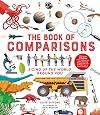
So interesting, so much cool trivia, great pictures showing the relative heights of famous buildings, mountains, the relative size of various animals and ... pretty much everything, the solar system as fruit.
Try to get the edition with measurements in your preferred system. Amazon has many reviews from Americans complaining about the metric measurements plus one review from someone in the UK who likes metric except when it's kph instead of mph. However, I'm in Canada and ended up with the show more "first American edition" -- we really do kph so the mph weren't helpful, the temperatures were completely incomprehensible, and I could sort of get on board with the lengths and weights only because I learnt measurements at school in the pre-metric days two generations ago. My grandchildren would be completely confused, or at least they would be if not for the clarity of the pictures. Every page is jam packed with colourful illustrations, worth quite a few words apiece! show less
Try to get the edition with measurements in your preferred system. Amazon has many reviews from Americans complaining about the metric measurements plus one review from someone in the UK who likes metric except when it's kph instead of mph. However, I'm in Canada and ended up with the show more "first American edition" -- we really do kph so the mph weren't helpful, the temperatures were completely incomprehensible, and I could sort of get on board with the lengths and weights only because I learnt measurements at school in the pre-metric days two generations ago. My grandchildren would be completely confused, or at least they would be if not for the clarity of the pictures. Every page is jam packed with colourful illustrations, worth quite a few words apiece! show less
Lists
Awards


You May Also Like


Associated Authors
Statistics
- Works
- 540
- Members
- 7,140
- Popularity
- #3,440
- Rating
- 3.9
- Reviews
- 60
- ISBNs
- 1,469
- Languages
- 21
