
William Bayer
Author of The Magician's Tale
About the Author
Crime writer David Hunt is the pen name of William Bayer, a graduate of Phillips Exeter Academy and Harvard University. Bayer was a Foreign Service Officer with the U.S. Information Agency where he created many documentaries, two of which received Cine Golden Eagle awards. His feature film titled show more Mississippi Summer won Best Feature by a Director at the Chicago International Film Festival. Bayer has written several novels including In Search of a Hero, Switch, Wallflower, Mirror Maze, and Peregrine, which won the Edgar Award for Best Novel. He has also authored Breaking Through, Selling Out, and the nonfiction work Dropping Dead and Other Notes on Film Making. After Bayer moved to San Francisco, he began writing under David Hunt, his pen name. Among his most recent novels are The Magician's Tale and Trick of Light. (Bowker Author Biography) William Bayer's first novel, "In Search of a Hero" was published in 1962. He has since written two books of non-fiction and thirteen other novels, including the Edgar award-winning "Peregrine", and four subsequent mystery thrillers in which NYPD detective Frank Janek was the main character, among them the New York Times bestseller "Switch", which became the basis of the first of seven TV films in which Richard Crenna played Janek. "Pattern Crimes" was also a New York Times bestseller. Bayer's last two thrillers featured the color-blind photographer Kay Farrow and were written under the pen-name David Hunt: "The Magician's Tale", which was a New York Time Notable Book of the Year and won the Lambda Literacy Award for Best Mystery, and "Trick of Light". Bayer lives in San Francisco. (Bowker Author Biography) show less
Image credit:
www.vjbooks.com
Series
Works by William Bayer
In search of a hero 1 copy
Peregrin 1 copy
Associated Works
Tagged
Common Knowledge
- Canonical name
- Bayer, William
- Other names
- Hunt, David
- Birthdate
- 1939-02-20
- Gender
- male
- Education
- Harvard College
- Occupations
- writer
- Relationships
- Wolfert, Paula (wife)
- Nationality
- USA
- Birthplace
- Cleveland, Ohio, USA
- Places of residence
- Sonoma, California, USA
- Associated Place (for map)
- USA
Members
Reviews

One of the really nifty things about the e-book revolution is that authors are bringing out some of their earlier works at very reduced prices making them irresistible. That’s how I discovered William Bayer. This is the first I have read, but intend to read all of them. They are excellent.
A killer is out there who has switched the heads on his victims. The women appear at first glance to have nothing in common; no link between them. Lt. Frank Janek and his partner are assigned the case. show more The killer is one of the creepiest I’ve read about in a long time.
There’s a parallel investigation that Frank runs on the side involving the suicide of his old friend and mentor. That investigation soon also involves a switch.
For those who might wonder, the title of one of Bayer’s talks was, “Why are my killers always from Cleveland?” Bayer was born there and said in the same piece that he considered Cleveland his Heart of Darkness, although its not so apparent in this book. Judging from synopses of his other books photography and art play a role in most of his works.
Switch is not so much a “who done it?” as "why it was done". The characters are real, the investigation difficult, the love story realistic if a bit coincidental. The results for the reader are solid enjoyment.
Re Janek: “He had been conscious for some time that all his relationships were tainted by his work. The searching look he applied to people, his constant quest for motives, strengths and weaknesses, figuring how to play someone, seize psychological advantage, manipulate, interrogate, break a person down—all of that, which was the essence of being a good detective, seemed to work against any possibility of intimacy. “ show less
A killer is out there who has switched the heads on his victims. The women appear at first glance to have nothing in common; no link between them. Lt. Frank Janek and his partner are assigned the case. show more The killer is one of the creepiest I’ve read about in a long time.
There’s a parallel investigation that Frank runs on the side involving the suicide of his old friend and mentor. That investigation soon also involves a switch.
For those who might wonder, the title of one of Bayer’s talks was, “Why are my killers always from Cleveland?” Bayer was born there and said in the same piece that he considered Cleveland his Heart of Darkness, although its not so apparent in this book. Judging from synopses of his other books photography and art play a role in most of his works.
Switch is not so much a “who done it?” as "why it was done". The characters are real, the investigation difficult, the love story realistic if a bit coincidental. The results for the reader are solid enjoyment.
Re Janek: “He had been conscious for some time that all his relationships were tainted by his work. The searching look he applied to people, his constant quest for motives, strengths and weaknesses, figuring how to play someone, seize psychological advantage, manipulate, interrogate, break a person down—all of that, which was the essence of being a good detective, seemed to work against any possibility of intimacy. “ show less
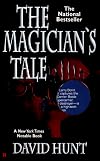
It seems fashionable nowadays for mystery authors to provide their protagonist with a physical or emotional handicap. David Hunt's heroine Kay Farrow is a photographer with autosomal recessive achromatopsia. It means she is totally color blind, and sees only shades of gray - except when the author forgets!
Naturally she sticks to black and white photography. Since she sees in monochrome anyway, it makes it easy for her to categorise everyone - no shades of grey here. Only black hats and show more white hats would have made the definitions sharper.
Kay draws on her fascination with San Francisco's hustling scene to document commercial sex. She soon finds herself, if not accepted, at least tolerated in the Gulch, where she forms an unusual bond with Tim Lovesey, whose beauty entrances both Kay and her camera. Though their worlds are so different, Kay and Tim become close (or so she thinks), as she works on a series of studies for a potential book.
After Tim does not turn up at a pre-arranged meeting, Kay's fears are realised when his head and some body parts turn up in a dumpster. Kay then makes a sometimes uncomfortable alliance with the police investigating the case, and discovers a link with an old serial killing case that, incredibly, involved her ex-cop father. She also discovers she knew absolutely nothing about Tim at all.
I don't know what the other readers will think about Kay's Indian lover Sasha, but I found him incredibly annoying. Not even the cheapest romance writer would have dared to trot out such a picture-perfect, implausible and one-dimensional Prince Charming. After a while, I found myself suspecting that in fact he was the murderer, since such a pristine appearance could only hide something sinister. He wasn't, of course; he wouldn't do anything as interesting as that. After a while, I just skipped the parts in which he appeared, and believe me, this did not affect my understanding of the plot one whit. And the guy in the park, PUHL-EEASE!
Like many novels of this genre, The Magician's Tale relies on readers accepting a larger than life protagonist and a complex and incredible set of coincidences. The alliance with the good cop/bad cop police was barely credible, and San Francisco must be the only place in the world where someone passing by with a camera can photograph a corpse. Or bits of one. Maybe they just have to be daughters of ex-cops.
Most of those criticisms came in retrospect, as I was quickly absorbed in the voyeuristic look at the world of commercial and bizarre sex, and the blurred line between the hunters and the prey.
All faults aside, "The Magician's Tale" is certainly a compelling thriller and it's pretty obvious Kay Farrow is destined to make a return appearance. However, I would reserve my opinion regarding comparisons made on the jacket to Cornwell's Scarpetta, or Hoeg's Smilla until I see something more. show less
Naturally she sticks to black and white photography. Since she sees in monochrome anyway, it makes it easy for her to categorise everyone - no shades of grey here. Only black hats and show more white hats would have made the definitions sharper.
Kay draws on her fascination with San Francisco's hustling scene to document commercial sex. She soon finds herself, if not accepted, at least tolerated in the Gulch, where she forms an unusual bond with Tim Lovesey, whose beauty entrances both Kay and her camera. Though their worlds are so different, Kay and Tim become close (or so she thinks), as she works on a series of studies for a potential book.
After Tim does not turn up at a pre-arranged meeting, Kay's fears are realised when his head and some body parts turn up in a dumpster. Kay then makes a sometimes uncomfortable alliance with the police investigating the case, and discovers a link with an old serial killing case that, incredibly, involved her ex-cop father. She also discovers she knew absolutely nothing about Tim at all.
I don't know what the other readers will think about Kay's Indian lover Sasha, but I found him incredibly annoying. Not even the cheapest romance writer would have dared to trot out such a picture-perfect, implausible and one-dimensional Prince Charming. After a while, I found myself suspecting that in fact he was the murderer, since such a pristine appearance could only hide something sinister. He wasn't, of course; he wouldn't do anything as interesting as that. After a while, I just skipped the parts in which he appeared, and believe me, this did not affect my understanding of the plot one whit. And the guy in the park, PUHL-EEASE!
Like many novels of this genre, The Magician's Tale relies on readers accepting a larger than life protagonist and a complex and incredible set of coincidences. The alliance with the good cop/bad cop police was barely credible, and San Francisco must be the only place in the world where someone passing by with a camera can photograph a corpse. Or bits of one. Maybe they just have to be daughters of ex-cops.
Most of those criticisms came in retrospect, as I was quickly absorbed in the voyeuristic look at the world of commercial and bizarre sex, and the blurred line between the hunters and the prey.
All faults aside, "The Magician's Tale" is certainly a compelling thriller and it's pretty obvious Kay Farrow is destined to make a return appearance. However, I would reserve my opinion regarding comparisons made on the jacket to Cornwell's Scarpetta, or Hoeg's Smilla until I see something more. show less
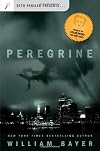
It's very seldom that I give a book only one star (if I dislike it that much I normally won't finish it). However, having set myself the task of reading all the Edgar Best Novel winners, I finished this one regardless. It was icky. I'm not the biggest fan of thrillers in any case, I much prefer whodunnits. When the thriller genre is mixed with sadistic eroticism, sex scenes from a woman's point of view that were obviously written by a man, and general misogyny, count me out. I felt icky show more after reading this book. It's about a falconer who trains an extra-large peregrine falcon to kill humans on command. And of course, the humans are young career women. I would not recommend this book to anyone. show less

This 1973 book, from a time when interest in film and film history was at its height after some seven decades of scant interest, has achieved a place of honor, though the author was not one of many notable writers on film (such as Pauline Kael, Andrew Sarris, Peter Cowie) who were at their height at this time. Instead William Bayer was and is known as a writer of mysteries and thrillers, yet his connection to film and film history is rather genetic, him being the son of award winning screen show more writer and indie icon Eleanor Perry (best known for her work with second husand director Frank Perry on such films as David and Lisa and Diary of a Mad Housewife, none of which get a mention in the text of this book). However, despite its luxurious, high gloss, coffee table look, this is a remarkably intelligent and somewhat prescient book on which films, in the author's opinion, are great and just why they are. It must be stated that this book, written by a more objective outsider to the film world, is blessedly free of jargon and agendas (no auteur theory discussed here, though the author plainly is aware of the works of great film makers).
The book tackles 60 films in 12 categories. Some of the categories are the usual genre fixtures such as westerns, mysteries, musicals, and horror (though his take on that one is very sophisticated and not what is expected). However, he also includes unexpected corners such as "the personal cinema" and "the concerned cinema". There are several of the usual suspects such as...well, Casablanca, M, Singin' in the Rain, Stagecoach and the author's film of all films, Citizen Kane (Orson Welles appears in this book more than anyone else, with three films as director and one additional as actor). However, some of these films, such as From Here to Eternity, Shane, Tom Jones, and Gone With the Wind have not weathered the years so well. Conversely, the author, somewhat understandably, includes flms of a more recent vintage to the time of the book's writing. Remarkably, his batting average on these isn't too bad at all. Easy Rider (a choice he admits having to defend to his publisher) and M*A*S*H (beloved for opening Robert Altman's directorial era but now looking sexist and lopsided in structure and eclipsed by an entity as promiment in its medium as this film ever was in its own) and Blow-Up look a bit odd being in the book today but Cabaret, A Hard Day's Night, and, espeically, The Wild Bunch look right at home (more so than they did at the time). However, where the author really shines (or, maybe, was influential) is in his choosing of films which were either locked away at the time, forgotten by the mainstream, or remmebered in a less than optimal way. The introduction (not written by the author)states that some of the films "are hard to see on a big screen anymore". The jawdropping selections in this category include Howard Hawks' The Big Sleep, Robert Bresson's Au Hazard Balthazar, Gillo Pontecorvo's The Battle of Algiers, Welles' Touch of Evil, which the author terms the greatest B movie ever made (all the more remarkable in that he had only the butchered, long circulated version to go by, not the refurbished efforts of later years), John Ford's The Searchers (then rather forgotten), and John Frankenheimer's then dismissed, long unseen The Manchurian Candidate! Now, all of this creates a chicken and egg question: was the author ahead of his time or did he help to create the current reputations for these films? It must be stated, whatever the case, if the films didn't have the basic quality, they wouldn't have taken hold. Sadlly, the author has only written one other book concerning that film world (an accute work on the hard work of getting a film made, respected for being both accurate and so depressing). That he hasn't continued writing about film is the cinematic world's loss. show less
The book tackles 60 films in 12 categories. Some of the categories are the usual genre fixtures such as westerns, mysteries, musicals, and horror (though his take on that one is very sophisticated and not what is expected). However, he also includes unexpected corners such as "the personal cinema" and "the concerned cinema". There are several of the usual suspects such as...well, Casablanca, M, Singin' in the Rain, Stagecoach and the author's film of all films, Citizen Kane (Orson Welles appears in this book more than anyone else, with three films as director and one additional as actor). However, some of these films, such as From Here to Eternity, Shane, Tom Jones, and Gone With the Wind have not weathered the years so well. Conversely, the author, somewhat understandably, includes flms of a more recent vintage to the time of the book's writing. Remarkably, his batting average on these isn't too bad at all. Easy Rider (a choice he admits having to defend to his publisher) and M*A*S*H (beloved for opening Robert Altman's directorial era but now looking sexist and lopsided in structure and eclipsed by an entity as promiment in its medium as this film ever was in its own) and Blow-Up look a bit odd being in the book today but Cabaret, A Hard Day's Night, and, espeically, The Wild Bunch look right at home (more so than they did at the time). However, where the author really shines (or, maybe, was influential) is in his choosing of films which were either locked away at the time, forgotten by the mainstream, or remmebered in a less than optimal way. The introduction (not written by the author)states that some of the films "are hard to see on a big screen anymore". The jawdropping selections in this category include Howard Hawks' The Big Sleep, Robert Bresson's Au Hazard Balthazar, Gillo Pontecorvo's The Battle of Algiers, Welles' Touch of Evil, which the author terms the greatest B movie ever made (all the more remarkable in that he had only the butchered, long circulated version to go by, not the refurbished efforts of later years), John Ford's The Searchers (then rather forgotten), and John Frankenheimer's then dismissed, long unseen The Manchurian Candidate! Now, all of this creates a chicken and egg question: was the author ahead of his time or did he help to create the current reputations for these films? It must be stated, whatever the case, if the films didn't have the basic quality, they wouldn't have taken hold. Sadlly, the author has only written one other book concerning that film world (an accute work on the hard work of getting a film made, respected for being both accurate and so depressing). That he hasn't continued writing about film is the cinematic world's loss. show less
Lists
Awards


You May Also Like


Associated Authors
Statistics
- Works
- 34
- Also by
- 1
- Members
- 1,536
- Popularity
- #16,752
- Rating
- 3.4
- Reviews
- 23
- ISBNs
- 166
- Languages
- 7