
Ernst Bloch (1885–1977)
Author of The Spirit of Utopia
About the Author
Ernst Bloch ranks as a major German Marxist philosopher. Beginning his career as author and teacher during World War I, he moved in the orbit of Marxist thought during the 1920s. In 1933 he left Germany and eventually found his way to the United States, where he created his major work The Principle show more of Hope. After World War II, he settled in East Germany, where from 1948 to 1957 he was professor at the University of Leipzig. His work eventually aroused the hostility of the authorities, and in 1961 he was granted political asylum in West Germany. Bloch departed from orthodox Marxism by attending to the problem of intellectual culture and refraining from treating it merely as superstructure determined by the materialist elements of political economy. Emphasizing the role of hope-as an inner drive, or hunger, in human beings-for a possible ideal future order, Bloch's thought may be described as utopian, involving the realization of a religious community akin to the kingdom of God, where people are no longer exploited but are free. Bloch's style echoes recent expressionism and is also rich in mystical overtones of biblical origin. Bloch died in 1977. (Bowker Author Biography) show less
Image credit: Photograph by Stadtverwaltung Ludwigshafen. From Wikipedia.
Series
Works by Ernst Bloch
Gesamtausgabe in 16 Bänden. stw-Werkausgabe. Mit einem Ergänzungsband: Band 9: Literarische Aufsätze (suhrkamp taschenbuch wissenschaft) (1985) 10 copies
Tagtraume vom aufrechten Gang: Sechs Interviews mit Ernst Bloch (Edition Suhrkamp ; 920) (German Edition) (1977) 7 copies
Leipziger Vorlesungen I zur Geschichte der Philosophie 1950 - 1956. Antike Philosophie. (1985) 6 copies
Neuzeitliche Philosophie I. Von Descartes bis Rousseau. Leipziger Vorlesungen zur Geschichte der Philosophie 1950 - 1956. Band 3 (1985) 5 copies
Dialettica e speranza 2 copies
Marxove teze o Feuerbachu 2 copies
Philosophische Grundfragen I : Zur Ontologie des Noch-Nicht-Seins : Ein Vortrag und zwei Abhandlungen (1961) 2 copies
Ουτοπία και επανάσταση 1 copy
Filosofi tedeschi d'oggi — Author — 1 copy
O umjetnosti 1 copy
Thomas Manns Manifest 1 copy
Suite for Viola and Piano 1 copy
Bd. 1. Spuren 1 copy
Karl Marx und die Revolution 1 copy
Associated Works
Tagged
Common Knowledge
- Canonical name
- Bloch, Ernst
- Legal name
- Bloch, Ernst Simon
- Other names
- Jahraus, Karl
Knerz, Jakob - Birthdate
- 1885-07-08
- Date of death
- 1977-08-04
- Gender
- male
- Education
- University of Würzburg (Ph.D | 1908)
University of Munich - Occupations
- philosopher
- Organizations
- University of Tübingen
Leipzig University - Relationships
- Külpe, Oswald (teacher)
- Nationality
- Germany
- Birthplace
- Ludwigshafen, German Empire
- Places of residence
- Cambridge, Massachusetts, USA
- Place of death
- Tübingen, Germany
Members
Reviews

The Spirit of Utopia, known for its influence upon the thinking of Adorno and his contributions to the Frankfurt School philosophy, is a wonderfully composed and creatively structured text which, though it says only so much in many many words, has its thrilling passages that are sure to further and expound even the slightest of Utopian thoughts.
Bloch opens with a rather poetic statement of society's State insofar as he sees it. As he makes quite clear in his penultimate section, "The Shape show more of the Inconstruable Question", Bloch's theory appears quite Hegelian in its own way. Doubling down on that, the second and by far the longest section, "The Philosophy of Music" Bloch attempts to rouse the philosophical question, the unbounded thought, the question of substantiating the human Spirit, by tracing a path through the history and evolution of music.
This section is incredibly dense. Not just in Bloch's own style of writing but in his revealing of such depth of knowledge when it comes to his analysis. His references not only to particular composers, but to their contemporaries and the effects with which one had upon the other. Without having some idea of who he references, things can get a little hard to follow. That being said, Bloch most definitely presents an entrancing thread through history not by tracing the most prominent cases of human action, but by tracing the most prominent demands of particular human satisfaction. Bloch, much like Hegel, sees an circular influence of Society and Spirit which is emphasized by exposing the thought and the preference applied to music since antiquity. For Bloch, The Philosophy of Music is precisely the awakening agent for the dormant Spirit as he saw it.
After the lengthy exposition of musical philosophy, the medium and the contours of the Spirit have been divulged. It is from here in which Bloch now poses the Inconstruable Question. This question is one which Bloch poses as something more recent and, indeed, we see this in his criticism of Kant's philosophy as something inhuman in its nature which, he believes, is why it was possible for his symmetrical holism; the notion of his Pure and Practical reason. This is where Bloch makes his stance clear by not only pitting Hegel against Kant, but by emphasizing Hegel's intentional asymmetry. Hegel wasn't intending to delude anyone with his Phenomenology, himself included. Hegel, like Bloch, sees the Spirit as something inevitable and necessitating of enrichment. It is here that Bloch speaks to the fire that went up too quickly, as a result of the optimism and innocence of the newly enlightened thinker and, as such, it could not help supressing itself to smoke.
The cornerstone of Bloch's thought is finalized with the final section, "Karl Marx, Death, and the Apocalypse." Bloch emphasizes the unity of Marxism which he appreciates for its simplistic approach to the unknown in its attempt to insulate itself with its then quite scientific veneer. Bloch's primary purpose here is to disassemble the purity of Marxist doctrine and expose it as it is: an Idea, just like any other. Death, being another importance to the Spirit, is something else that Bloch tackles, though I didn't personally find anything too enlivening here. He seeks to make Death something of wonder while rationalizing it insofar as it can be without making it exactly Nothing. The final subject, the Apocalypse, is Bloch's term for the reinvigorated Spirit of Society (which, to me, seemed relatively similar to the modern Marxist notion of "infinite revolution") which is simply the salvation and redemption of us all – something that is only possible when we are freed from the Idea and the Notion as Absolute.
Three stars mostly because of the effort I personally had to put in through the Philosophy of Music. Having to track down the compositions of many composers and pieces that I haven't heard in some time or have not heard at all took quite a bit of effort. This certainly helped in understanding some very particular things, but overall, this section is quite long (too long, in my opinion) and nothing would be lost with a good skim. show less
Bloch opens with a rather poetic statement of society's State insofar as he sees it. As he makes quite clear in his penultimate section, "The Shape show more of the Inconstruable Question", Bloch's theory appears quite Hegelian in its own way. Doubling down on that, the second and by far the longest section, "The Philosophy of Music" Bloch attempts to rouse the philosophical question, the unbounded thought, the question of substantiating the human Spirit, by tracing a path through the history and evolution of music.
This section is incredibly dense. Not just in Bloch's own style of writing but in his revealing of such depth of knowledge when it comes to his analysis. His references not only to particular composers, but to their contemporaries and the effects with which one had upon the other. Without having some idea of who he references, things can get a little hard to follow. That being said, Bloch most definitely presents an entrancing thread through history not by tracing the most prominent cases of human action, but by tracing the most prominent demands of particular human satisfaction. Bloch, much like Hegel, sees an circular influence of Society and Spirit which is emphasized by exposing the thought and the preference applied to music since antiquity. For Bloch, The Philosophy of Music is precisely the awakening agent for the dormant Spirit as he saw it.
After the lengthy exposition of musical philosophy, the medium and the contours of the Spirit have been divulged. It is from here in which Bloch now poses the Inconstruable Question. This question is one which Bloch poses as something more recent and, indeed, we see this in his criticism of Kant's philosophy as something inhuman in its nature which, he believes, is why it was possible for his symmetrical holism; the notion of his Pure and Practical reason. This is where Bloch makes his stance clear by not only pitting Hegel against Kant, but by emphasizing Hegel's intentional asymmetry. Hegel wasn't intending to delude anyone with his Phenomenology, himself included. Hegel, like Bloch, sees the Spirit as something inevitable and necessitating of enrichment. It is here that Bloch speaks to the fire that went up too quickly, as a result of the optimism and innocence of the newly enlightened thinker and, as such, it could not help supressing itself to smoke.
The cornerstone of Bloch's thought is finalized with the final section, "Karl Marx, Death, and the Apocalypse." Bloch emphasizes the unity of Marxism which he appreciates for its simplistic approach to the unknown in its attempt to insulate itself with its then quite scientific veneer. Bloch's primary purpose here is to disassemble the purity of Marxist doctrine and expose it as it is: an Idea, just like any other. Death, being another importance to the Spirit, is something else that Bloch tackles, though I didn't personally find anything too enlivening here. He seeks to make Death something of wonder while rationalizing it insofar as it can be without making it exactly Nothing. The final subject, the Apocalypse, is Bloch's term for the reinvigorated Spirit of Society (which, to me, seemed relatively similar to the modern Marxist notion of "infinite revolution") which is simply the salvation and redemption of us all – something that is only possible when we are freed from the Idea and the Notion as Absolute.
Three stars mostly because of the effort I personally had to put in through the Philosophy of Music. Having to track down the compositions of many composers and pieces that I haven't heard in some time or have not heard at all took quite a bit of effort. This certainly helped in understanding some very particular things, but overall, this section is quite long (too long, in my opinion) and nothing would be lost with a good skim. show less
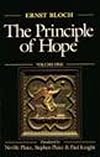
I want to write a thank you note to [a:José Muñoz|215886|José Muñoz|http://www.goodreads.com/assets/nophoto/nophoto-U-50x66.jpg] who introduced me to Ernst Bloch's work in [b:Cruising Utopia: The Then and There of Queer Futurity|10437104|Cruising Utopia The Then and There of Queer Futurity|José Muñoz|http://photo.goodreads.com/books/1302359585s/10437104.jpg|15341658]. This author is exactly what I've been looking for - a philosopher of the Not-Yet-Conscious, an esoteric Marxist show more theologian and more. I started with his defense of Expressionism in [b:Aesthetics and Politics|162570|Aesthetics and Politics|Theodor W. Adorno|http://photo.goodreads.com/books/1172302443s/162570.jpg|156918], then proceeded to this volume. In the span of a month, I've also acquired [b:Traces|344005|Traces|Ernst Bloch|http://photo.goodreads.com/books/1173910096s/344005.jpg|334346], Man On His Own and [b:Atheism in Christianity: The Religion of the Exodus and the Kingdom|6105759|Atheism in Christianity The Religion of the Exodus and the Kingdom|Ernst Bloch|http://photo.goodreads.com/books/1266513494s/6105759.jpg|266347]. The latter is especially enticing because in my Bay Area poetry scene, Giorgio Agamben rules everything around me, which is fine, I guess, but he never really lit my fire. Now I have my own go to person for atheist eschatology.
Plus, Bloch really set 'em up and knocks 'em down. Freud's bourgeois system of psychology, Heidegger's assertion of anxiety as the basic state-of-mind. Although Bloch focuses heavily on dreams, especially day dreams and seems to be delving into literary analysis (and from flipping ahead - film, too), this theoretical work far exceeds the ambitions and scope of my softy, Romantic boyfriend, Gaston Bachelard. I've known in my gut for years that reverie was not just aesthetically but also politically important.
If you cut your teeth on Hakim Bey's TAZ and Bachelard's Poetics of Space and have since pulled your hair out trying to read Being and Time, Bloch may be for you.
Nota bene: show less
Plus, Bloch really set 'em up and knocks 'em down. Freud's bourgeois system of psychology, Heidegger's assertion of anxiety as the basic state-of-mind. Although Bloch focuses heavily on dreams, especially day dreams and seems to be delving into literary analysis (and from flipping ahead - film, too), this theoretical work far exceeds the ambitions and scope of my softy, Romantic boyfriend, Gaston Bachelard. I've known in my gut for years that reverie was not just aesthetically but also politically important.
If you cut your teeth on Hakim Bey's TAZ and Bachelard's Poetics of Space and have since pulled your hair out trying to read Being and Time, Bloch may be for you.
Nota bene: show less

Lists
Awards


You May Also Like


Associated Authors
Statistics
- Works
- 132
- Also by
- 4
- Members
- 1,934
- Popularity
- #13,313
- Rating
- 3.7
- Reviews
- 6
- ISBNs
- 244
- Languages
- 13
- Favorited
- 3