
Jerome Bruner (1915–2016)
Author of The Process of Education
About the Author
Jerome Seymour Bruner was born in Manhattan, New York on October 1, 1915. Born blind because of cataracts, he had an experimental operation to restore his vision at the age of 2. He received a degree in psychology from Duke University in 1937 and received a doctorate from Harvard University. His show more theories about perception, child development, and learning informed education policy and helped launch the cognitive revolution. He wrote or co-wrote several books including A Study of Thinking written with Jacqueline J. Goodnow and George A. Austin and The Process of Education. He helped design Head Start, the federal program introduced in 1965 to improve preschool development. He died on June 5, 2016 at the age of 100. (Bowker Author Biography) show less
Disambiguation Notice:
(yid) VIAF:108296631
Image credit: © Vincent W. Hevern
Series
Works by Jerome Bruner
In Search of Pedagogy Volume I: The Selected Works of Jerome Bruner, 1957-1978 (World Library of Educationalists) (2006) 11 copies
Cultura da Educação 2 copies
In Search of Pedagogy Volume II: The Selected Works of Jerome Bruner, 1979-2006 (World Library of Educationalists Series (2006) 2 copies
Il Pensiero. Strategie e categorie 2 copies
Desarrollo cognitivo y educación: Selección de textos por Jesús Palacios (Spanish Edition) (2018) 1 copy
The Culture of Education 1 copy
Om å lære 1 copy
Process of Education 1 copy
El proceso de la educación 1 copy
EL PROCESO DE LA EDUCACIÓN 1 copy
Associated Works
A World of Babies: Imagined Childcare Guides for Seven Societies (2000) — Foreword — 58 copies, 1 review
Montessori in the Classroom: A Teacher's Account of How Children Really Learn (1997) — Foreword — 51 copies
Tagged
Common Knowledge
- Legal name
- Bruner, Jerome Semour
- Birthdate
- 1915-10-01
- Date of death
- 2016-06-05
- Gender
- male
- Education
- Duke University (BA|1937)
Harvard University (MA|Psychology1939)
Harvard University (PhD|Psychology|1941) - Occupations
- child psychologist
- Organizations
- Harvard University
University of Oxford
New York University
American Academy of Arts and Letters - Awards and honors
- Balzan Prize (1987)
- Relationships
- Fox, Eleanor M. (partner)
- Nationality
- USA
- Birthplace
- New York, New York, USA
- Places of residence
- New York, New York, USA
- Place of death
- New York, New York, USA
- Disambiguation notice
- VIAF:108296631
- Associated Place (for map)
- New York, New York, USA
Members
Reviews
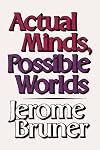
Recently, I have been reading a bit on social construction and constructivist arguments about the social reality that we live in. Those arguments have focused on the construction of material facts, institutions, social conventions. The part that I did not recognize as missing, because I was taking it for granted, is how the individual mind becomes part of and contributes to the constructed social. This work is central to Bruner's argument.
Much of the focus is on what Bruner calls a show more "narrative mode" of thought, which is a way of engaging with the world and the minds that reside in it through narrative (e.g., prose, poetry, history, etc.). He then constructs an argument about how the interpretive flexibility and purposeful engagement of narrative builds a transactive relationship with individual minds. As readers, we envision possible worlds in those narratives, worlds that connect with and modify the experiences that we bring. It is through our engagement with narratives that we construct "right versions" of the world that we act upon until we come into contact with other minds and the narratives that they bring, which then results in additional, transactive reordering of experience. Iterate this process enough and it becomes clear how social reality starts to form.
Bruner's argument about narrative and its transactive effects still rings true, but the presupposition that people are willing to seek out narratives that challenge or at least alter their ordered sense of the world seems less true today than it must have in the mid 1980's. So, too, does the presupposition of a narrative's presumed honesty. The ease with which people can control the narratives that they do interact with (via filter bubbles, e.g.) and the unreliability of some narratives shows how this transactive relationship can just as easily reinforce bias or create parallel, hostile realities, especially if minds do not come into contact with others or with narratives that challenge their experiences. This is not to say that Bruner's argument is outdated, rather, I think it argues for new and continued life for this work investigating how our modern media environment leads to a retrenchment of experience.
Highly recommend. The argument is clear, well researched, and compelling. show less
Much of the focus is on what Bruner calls a show more "narrative mode" of thought, which is a way of engaging with the world and the minds that reside in it through narrative (e.g., prose, poetry, history, etc.). He then constructs an argument about how the interpretive flexibility and purposeful engagement of narrative builds a transactive relationship with individual minds. As readers, we envision possible worlds in those narratives, worlds that connect with and modify the experiences that we bring. It is through our engagement with narratives that we construct "right versions" of the world that we act upon until we come into contact with other minds and the narratives that they bring, which then results in additional, transactive reordering of experience. Iterate this process enough and it becomes clear how social reality starts to form.
Bruner's argument about narrative and its transactive effects still rings true, but the presupposition that people are willing to seek out narratives that challenge or at least alter their ordered sense of the world seems less true today than it must have in the mid 1980's. So, too, does the presupposition of a narrative's presumed honesty. The ease with which people can control the narratives that they do interact with (via filter bubbles, e.g.) and the unreliability of some narratives shows how this transactive relationship can just as easily reinforce bias or create parallel, hostile realities, especially if minds do not come into contact with others or with narratives that challenge their experiences. This is not to say that Bruner's argument is outdated, rather, I think it argues for new and continued life for this work investigating how our modern media environment leads to a retrenchment of experience.
Highly recommend. The argument is clear, well researched, and compelling. show less
This collection of essays, compiled in 1965, lays out some important ideas about learning and knowing and the importance of creativity, discovery, surprise, intuition, and experience. By accident, I started by reading work Bruner did on these subjects more than 20 years later, and it feels like that perspective helped me recognize earlier versions of ideas about how language, creativity, myth, narrative, art, and literature are important frames for experience and how experience is a basis show more for creative discovery that leads to new insights and knowledge. These essays also appear to be where Bruner is laying out a contrast between forms of knowing that later get labeled as the "narrative" mode (based on experience and tropes we use to make sense of experience) and the "logico-scientific" mode that simplifies experience by abstracting, classifying, labeling, and formalizing experience.
Outdated pronoun usage notwithstanding, a core insight across these essays seems to be this: "There is, perhaps one universal truth about all forms of human cognition: the ability to deal with knowledge is hugely exceeded by the potential knowledge contained in man's environment. To cope with this diversity, man's perception, his memory, and his thought processes early become governed by strategies for protecting his limited capacities from the confusion of overloading" (p.65). We can choose to protect our capacities by applying formal techniques of creating knowledge (e.g., the scientific method) but we must recognize that in doing so we are taking a slice of what can be known and calling it the limits of what can be legitimately known. The arts and narrative afford new ways of reflecting on experience and for creating new connections between domains of experience that allow for new, creative insights. Of course, the scientific enterprise is also, arguably, creative and equally driven by its own narratives.
Good essays. There is a lot to think about here and the ideas are generally presented clearly and with solid examples. Compared to other work I've read, the points are a bit more sweeping and less well supported by a paper trail of citations, but that may be due to the fact that these essays were originally given as lectures. Or it may just be that my need for a paper trail of citations already shows the way that I am closed off from using my own experiences as a way to connect with those Bruner is offering. show less
Outdated pronoun usage notwithstanding, a core insight across these essays seems to be this: "There is, perhaps one universal truth about all forms of human cognition: the ability to deal with knowledge is hugely exceeded by the potential knowledge contained in man's environment. To cope with this diversity, man's perception, his memory, and his thought processes early become governed by strategies for protecting his limited capacities from the confusion of overloading" (p.65). We can choose to protect our capacities by applying formal techniques of creating knowledge (e.g., the scientific method) but we must recognize that in doing so we are taking a slice of what can be known and calling it the limits of what can be legitimately known. The arts and narrative afford new ways of reflecting on experience and for creating new connections between domains of experience that allow for new, creative insights. Of course, the scientific enterprise is also, arguably, creative and equally driven by its own narratives.
Good essays. There is a lot to think about here and the ideas are generally presented clearly and with solid examples. Compared to other work I've read, the points are a bit more sweeping and less well supported by a paper trail of citations, but that may be due to the fact that these essays were originally given as lectures. Or it may just be that my need for a paper trail of citations already shows the way that I am closed off from using my own experiences as a way to connect with those Bruner is offering. show less

I read this in German. In general I found the arguments hard to follow. They either seemed to be so obvious that they could hardly be called a theory or so vague as to be unuseful. Unfortunately, most of the children's speech was translated, making some of the data unhelpful. As Brunner is considered to be an important expert, I might be willing to try the original (It's a short book), with the thought that some of the shortcomings might be due to translation.
I would be a lot more convinced show more if his data included children from different backgrounds. show less
I would be a lot more convinced show more if his data included children from different backgrounds. show less
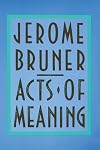
Decent. A guy who knows how to stick to an outline. Seriously, some great, groundbreaking ideas stated in a straightforward and accessible way... for an academic text, that is. What I wouldn't give to have a novel on my reading list.
Lists
You May Also Like


Associated Authors
Statistics
- Works
- 54
- Also by
- 3
- Members
- 1,830
- Popularity
- #14,059
- Rating
- 4.0
- Reviews
- 18
- ISBNs
- 136
- Languages
- 10
- Favorited
- 2