
Michelle Duster
Author of Ida B. the Queen: The Extraordinary Life and Legacy of Ida B. Wells
About the Author
Michelle Duster is a writer, speaker, professor, and champion of racial and gender equity. She has written, edited, or contributed to sixteen books, two that feature the writing of her great-grandmother Ida B. Wells. She has written articles for Time, Essence, Refinery29, HuffPost, Teen Vogue, and show more the North Star. Her advocacy has led to street names, monuments, historical markers, and other public history projects that highlight women and African Americans, including Wells. show less
Image credit: Unattributed photo at Musewrite.com.
Works by Michelle Duster
Ida B. Wells, Voice of Truth: Educator, Feminist, and Anti-Lynching Civil Rights Leader (2022) 40 copies, 5 reviews
Associated Works
Four Hundred Souls: A Community History of African America, 1619-2019 (2021) — Contributor — 1,169 copies, 25 reviews
Crusade for Justice: The Autobiography of Ida B. Wells (1970) — Afterword, some editions — 264 copies, 4 reviews
We Refuse to Be Silent: Women's Voices on Justice for Black Men (2024) — Contributor — 16 copies, 9 reviews
Tagged
Common Knowledge
- Canonical name
- Duster, Michelle
- Birthdate
- 1964
- Gender
- female
- Education
- Dartmouth College (B.A., Psychology)
New School for Social Research (M.A., Communications)
Columbia College Chicago - Occupations
- advertising copywriter
film producer
marketing manager - Organizations
- Ida B. Wells Memorial Foundation
Ida B. Wells Commemorative Art Committee
Association of Writers & Writing Programs
Association of Black Women Historians
Chicago Area Women's History Council - Relationships
- Wells, Ida B. (great-grandmother)
- Nationality
- USA
- Places of residence
- Chicago, Illinois, USA
New York, New York, USA - Associated Place (for map)
- USA
Members
Reviews
Ida B. Wells, Voice of Truth: Educator, Feminist, and Anti-Lynching Civil Rights Leader by Michelle Duster

This book is narrated by the author, who is the great-granddaughter of Ida B. Wells - the renown investigative journalist, suffragist, and civil rights activist inter alia born into slavery in Mississippi in 1862.
Wells became one of the founders of the National Association for the Advancement of Colored People (NAACP) and in her lifetime was arguably the most famous Black woman in the United States.
Duster explains that when Ida was 16, she lost both of her parents and a younger brother to show more yellow fever. It was Ida who had to take care of her five remaining siblings. When they were grown, she began a career as a teacher, first in Mississippi and later in Memphis, Tennessee.
In 1884, when Ida was in her early twenties and on a train, she was asked to relocate from the “ladies’ car” to the “colored car.” She refused and was ejected from the train. She sued the Chesapeake, Ohio & Southwestern Railroad, won her case and all the appeals, and was awarded $500. (Unfortunately, in 1896 the Supreme Court, in Plessy v. Ferguson, upheld state-imposed racial segregation, establishing the “separate but equal” doctrine.)
While still teaching, Ida became co-owner of the “Memphis Free Speech” newspaper and built up a following as a writer.
In 1892, her life completely changed, her great granddaughter reports, when three of her friends who owned a grocery store were lynched by whites. Duster writes:
“Ida . . . knew that her friends . . . were only guilty of being economic rivals to a white-owned business. . . . She realized lynching was used to keep the Black community in an economically and socially inferior position.”
Ida employed her newspaper to write about the incident and to urge Memphis Blacks to boycott streetcars and white-owned businesses. But while she was out of town, her printing press was destroyed and her life threatened: “She lost everything she owned and never returned to Memphis.”
Ida moved to New York City, where she worked on the “New York Age” newspaper and wrote pamphlets about lynching, using investigative techniques to expose the extent of the problem. For example, she discovered that in 1892 a lynching in Tunica, Mississippi occurred after the father of a young white woman implored a lynch mob to kill a Black man with whom his daughter was having a sexual relationship, under the pretense of saving the reputation of his daughter.
[You can read Wells' pamphlets online, such as the 1892 “Southern Horrors: Lynch Law in All Its Phases,” here.]. She also began speaking publicly both in the US and abroad about what she learned.
In 1895 she married newspaper owner Ferdinand L. Barnett and, as Duster observes, “did what few married women did at that time: she hyphenated her last name, becoming Ida B. Wells-Barnett.” They had four children, the youngest of whom, Alfreda, is the author’s grandmother.
In addition to her other accomplishments, Ida started the first kindergarten for Black children in Chicago; was involved in the fight for women to get the vote; and she founded and managed the Negro Fellowship League:
“Wherever she saw injustice or inequality, Ida raised her voice and did what she could to effect change.”
Ida B. Wells Barnett died at age 68 on March 25, 1931.
Back matter includes a timeline and list of tributes to Ida B. Wells.
Laura Freeman selected bold colors to display the well-researched historical events the book describes. As always, her collages include many clever but subtle touches to add meaning to the narrative.
Evaluation: There are many reasons for kids to learn about Ida B. Wells-Barnett and her accomplishments. Her dedication to finding out facts and countering rumors and misinformation, such as the common canard that lynchings all were caused by rapes by Black men of white women, and the publication of those facts in pamphlets with wide distribution, was so important to setting the historical record straight.
Specifically, as an online analysis of her work points out:
”The pamphlet refuted the justification for lynching as punishment for black on white rape by revealing that, according to published sources, fewer than 30% of reported lynchings even involved the charge of rape much less a legally proven case of it. This finding became the cornerstone of all subsequent arguments against lynching by a wide range of reformers and critics.”
Rather, this analysis continues, “the rape charge obscured the economic and political competition that fueled white racial hostility toward African Americans in the post-Reconstruction era. Second, it hid the consensual and sometimes illicit sexual contacts between white women and black men that took place in the past and the present. Third, by describing rape as an inherent inclination of black men, white men's institutionalized sexual power over black women (which included long-standing patterns of abuse and victimization that arose under slavery and continued in its aftermath) was eclipsed by sensationalism and an appeal to ‘nature.’"
As Ida wrote, “The way to right wrongs is to turn the light of truth upon them.”
Ida did not let her gender or race deter her from pursuing justice, nor even physical attacks. Her inspiring story is an important part of American history. show less
Wells became one of the founders of the National Association for the Advancement of Colored People (NAACP) and in her lifetime was arguably the most famous Black woman in the United States.
Duster explains that when Ida was 16, she lost both of her parents and a younger brother to show more yellow fever. It was Ida who had to take care of her five remaining siblings. When they were grown, she began a career as a teacher, first in Mississippi and later in Memphis, Tennessee.
In 1884, when Ida was in her early twenties and on a train, she was asked to relocate from the “ladies’ car” to the “colored car.” She refused and was ejected from the train. She sued the Chesapeake, Ohio & Southwestern Railroad, won her case and all the appeals, and was awarded $500. (Unfortunately, in 1896 the Supreme Court, in Plessy v. Ferguson, upheld state-imposed racial segregation, establishing the “separate but equal” doctrine.)
While still teaching, Ida became co-owner of the “Memphis Free Speech” newspaper and built up a following as a writer.
In 1892, her life completely changed, her great granddaughter reports, when three of her friends who owned a grocery store were lynched by whites. Duster writes:
“Ida . . . knew that her friends . . . were only guilty of being economic rivals to a white-owned business. . . . She realized lynching was used to keep the Black community in an economically and socially inferior position.”
Ida employed her newspaper to write about the incident and to urge Memphis Blacks to boycott streetcars and white-owned businesses. But while she was out of town, her printing press was destroyed and her life threatened: “She lost everything she owned and never returned to Memphis.”
Ida moved to New York City, where she worked on the “New York Age” newspaper and wrote pamphlets about lynching, using investigative techniques to expose the extent of the problem. For example, she discovered that in 1892 a lynching in Tunica, Mississippi occurred after the father of a young white woman implored a lynch mob to kill a Black man with whom his daughter was having a sexual relationship, under the pretense of saving the reputation of his daughter.
[You can read Wells' pamphlets online, such as the 1892 “Southern Horrors: Lynch Law in All Its Phases,” here.]. She also began speaking publicly both in the US and abroad about what she learned.
In 1895 she married newspaper owner Ferdinand L. Barnett and, as Duster observes, “did what few married women did at that time: she hyphenated her last name, becoming Ida B. Wells-Barnett.” They had four children, the youngest of whom, Alfreda, is the author’s grandmother.
In addition to her other accomplishments, Ida started the first kindergarten for Black children in Chicago; was involved in the fight for women to get the vote; and she founded and managed the Negro Fellowship League:
“Wherever she saw injustice or inequality, Ida raised her voice and did what she could to effect change.”
Ida B. Wells Barnett died at age 68 on March 25, 1931.
Back matter includes a timeline and list of tributes to Ida B. Wells.
Laura Freeman selected bold colors to display the well-researched historical events the book describes. As always, her collages include many clever but subtle touches to add meaning to the narrative.
Evaluation: There are many reasons for kids to learn about Ida B. Wells-Barnett and her accomplishments. Her dedication to finding out facts and countering rumors and misinformation, such as the common canard that lynchings all were caused by rapes by Black men of white women, and the publication of those facts in pamphlets with wide distribution, was so important to setting the historical record straight.
Specifically, as an online analysis of her work points out:
”The pamphlet refuted the justification for lynching as punishment for black on white rape by revealing that, according to published sources, fewer than 30% of reported lynchings even involved the charge of rape much less a legally proven case of it. This finding became the cornerstone of all subsequent arguments against lynching by a wide range of reformers and critics.”
Rather, this analysis continues, “the rape charge obscured the economic and political competition that fueled white racial hostility toward African Americans in the post-Reconstruction era. Second, it hid the consensual and sometimes illicit sexual contacts between white women and black men that took place in the past and the present. Third, by describing rape as an inherent inclination of black men, white men's institutionalized sexual power over black women (which included long-standing patterns of abuse and victimization that arose under slavery and continued in its aftermath) was eclipsed by sensationalism and an appeal to ‘nature.’"
As Ida wrote, “The way to right wrongs is to turn the light of truth upon them.”
Ida did not let her gender or race deter her from pursuing justice, nor even physical attacks. Her inspiring story is an important part of American history. show less
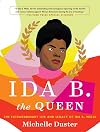
This book surprised me -- first because the cover somehow led me to believe that this might be adapted for young readers. It wasn't. I think many teen readers would really enjoy it, but it's probably too dense for middle grade. Next, I thought it would be a pretty straightforward biography of Ida B. Wells. It's not really that, either -- I mean, there is a solid biographical piece to it, but it reads like a series of interconnected essays that draw parallels between Ida's life and the way show more her legacy is interconnected through history until now. I learned a lot about points of history I did not know, both in Ida's time and since. I enjoyed the narration by the author, who is also one of Ida's descendants. Altogether, I found it to be a powerful book, with a lot of insightful commentary on American racism. I sometimes found it a bit repetitive about the major events of Ida's life, but I also found it very enjoyable.
Advanced Reader's Copy provided by Libro.fm. show less
Advanced Reader's Copy provided by Libro.fm. show less

A brief and heartfelt biography of a true legend in activism, Ida B. Wells. This book is written by the great granddaughter of Ms. Wells who shares how having such an ancestor inspired her and her entire family to believe in themselves, justice, and helping others.
This book is very enlightening, but not terribly engaging. The prose is very dry and tends overly towards lists of accomplishments and events without enough narrative to keep the reader paying attention.
This book is very enlightening, but not terribly engaging. The prose is very dry and tends overly towards lists of accomplishments and events without enough narrative to keep the reader paying attention.
Ida B. Wells, Voice of Truth: Educator, Feminist, and Anti-Lynching Civil Rights Leader by Michelle Duster

An informative profile of trailblazing African American journalist and civil rights activist Ida B. Wells.
Author Duster introduces the book’s subject in the form of an illustrated family photo album, explaining that Wells was her great-grandmother. Duster chronicles the major events in Wells’ life, beginning with her birth into slavery in 1862 and ending with her death in 1931. At the age of 16, Wells’ parents died, leaving her to care for five younger siblings. She became a teacher, show more began to write about social and political issues of the time, and stood up for social justice. In 1892, the lynching of three of Wells’ friends further stoked the fire in her belly. Her writing grew bolder, and she began to speak out publicly against racial discrimination, gender inequality, and lynching at the cost of her livelihood and personal safety. The text incorporates a few details about Wells’ personal life and includes an overview of her professional accomplishments—her work with the suffrage movement, co-founding of the NAACP, and creation of the Negro Fellowship League. Freeman’s trademark multitextured digital art emotionalizes the matter-of-fact text. Photographs and pamphlets written by Wells appear in the artwork as illustrated facsimiles. The story is bookended by striking double spreads displaying stirring quotes attributed to Wells in enormous hand lettering. (This book was reviewed digitally.)
A straightforward biography that pays tribute to an impressive and courageous life. (timeline, tributes) (Picture book biography. 5-8)
-Kirkus Review show less
Author Duster introduces the book’s subject in the form of an illustrated family photo album, explaining that Wells was her great-grandmother. Duster chronicles the major events in Wells’ life, beginning with her birth into slavery in 1862 and ending with her death in 1931. At the age of 16, Wells’ parents died, leaving her to care for five younger siblings. She became a teacher, show more began to write about social and political issues of the time, and stood up for social justice. In 1892, the lynching of three of Wells’ friends further stoked the fire in her belly. Her writing grew bolder, and she began to speak out publicly against racial discrimination, gender inequality, and lynching at the cost of her livelihood and personal safety. The text incorporates a few details about Wells’ personal life and includes an overview of her professional accomplishments—her work with the suffrage movement, co-founding of the NAACP, and creation of the Negro Fellowship League. Freeman’s trademark multitextured digital art emotionalizes the matter-of-fact text. Photographs and pamphlets written by Wells appear in the artwork as illustrated facsimiles. The story is bookended by striking double spreads displaying stirring quotes attributed to Wells in enormous hand lettering. (This book was reviewed digitally.)
A straightforward biography that pays tribute to an impressive and courageous life. (timeline, tributes) (Picture book biography. 5-8)
-Kirkus Review show less
Lists
BLM (1)
Awards


You May Also Like
Associated Authors
Statistics
- Works
- 6
- Also by
- 3
- Members
- 207
- Popularity
- #106,919
- Rating
- 4.2
- Reviews
- 12
- ISBNs
- 12
- Languages
- 1