
Robert Evert
Author of Riddle in Stone
About the Author
Series
Works by Robert Evert
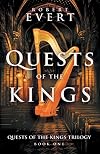
Quests of the Kings: The Quests of the Kings Trilogy - Book One (The Quest of Kings Trilogy) (2017) 13 copies, 1 review
Tagged
Common Knowledge
- Other names
- Cimera, Robert Evert
- Birthdate
- 1968
- Gender
- male
- Education
- Purdue University (PhD)
- Occupations
- university professor
- Organizations
- Kent State University
- Nationality
- USA
- Places of residence
- Ohio, USA
- Associated Place (for map)
- Ohio, USA
Members
Reviews

Absolutely brilliant tale of adventure, family, and being torn between two fates. Edris was born to follow his heart. His father was born to follow power. Familial pressure can be crushing, but Edris can't help but dream of freedom. The ultimate test comes when he decides to undertake the quest to find the sword of betrayal for the king. Should he succeed, will he use the power to free himself from his father's suffocating grasp, or further his father's agenda against the king? You'll have show more to dive in to find out! show less
Quests of the Kings: The Quests of the Kings Trilogy - Book One (The Quest of Kings Trilogy) by Robert Evert
I have to admit, this was a hard book to read as a woman because of the sheer violence and attitudes towards women in this book even if it was part of the culture/history of a certain age. Thankfully the main female character is portrayed to be strong, independent and with a high sense of self-esteem so there was some ‘balance’ to the vehement antagonistic attitudes that permeated the story line. She had to be strong because she was ferociously beaten up multiple times and would not have show more survived such ravage violence otherwise. At least the author did a poignant job in allowing the character to talk about the sense of violation a woman would feel at being damaged this way and unable to get help simply because she’s a woman.
The author did a great job in character development and creation because I very much was made to hate the bad guys, want to root for the good guys and I could feel what was being done to Natalie as if I was there including being proud when she picked herself up to fight back.
The scenes were detailed so I could get a sense of what our characters were seeing, touching and hearing. The plot line was well thought out and realistic, too realistic at times according to the tears falling down my face for Natalie.
I thought the treasure hunt part was interesting as they sought out clues along a quest so you get to explore more of the world Evert created.
I can’t blame the author for using a piece of history that actually occurred, and still does even in 2017 in some parts of the world. It doesn’t make it any easier knowing he didn’t make this stuff up for his book but the fact he got me so emotional over fictional characters is a testament to his writing skill.
Knowing this is a first in the series has me curious what more will come if only to see how far Natalie can go in a world decidedly against her gender. What I did appreciate is that as much as the author laid the groundwork for a story that says women are less than second class citizens he still created a character to shatter those stereotypes and find a place in this world where she can succeed on her terms. show less
The author did a great job in character development and creation because I very much was made to hate the bad guys, want to root for the good guys and I could feel what was being done to Natalie as if I was there including being proud when she picked herself up to fight back.
The scenes were detailed so I could get a sense of what our characters were seeing, touching and hearing. The plot line was well thought out and realistic, too realistic at times according to the tears falling down my face for Natalie.
I thought the treasure hunt part was interesting as they sought out clues along a quest so you get to explore more of the world Evert created.
I can’t blame the author for using a piece of history that actually occurred, and still does even in 2017 in some parts of the world. It doesn’t make it any easier knowing he didn’t make this stuff up for his book but the fact he got me so emotional over fictional characters is a testament to his writing skill.
Knowing this is a first in the series has me curious what more will come if only to see how far Natalie can go in a world decidedly against her gender. What I did appreciate is that as much as the author laid the groundwork for a story that says women are less than second class citizens he still created a character to shatter those stereotypes and find a place in this world where she can succeed on her terms. show less
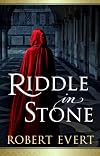
Riddle in Stone is a pleasant surprise -- a fantasy novel that is not bloated, that is a refreshing take on the quest tradition, and has an interesting use of internal dialogue. Initially the hero is quite unheroic: a fat, middle-aged, stuttering scholar/librarian who is quite naïve. At times he is so unheroic that he becomes almost unlikeable. But as the story progresses Edmund evolves -- not quite in the formulaic manner, but in a near-believable fashion, even though he has a great deal show more to learn.
Robert Evert alternates humor and grossness in this more-or-less realistic take on the fantasy epic. The novel, the first of a trilogy, has many fantasy tropes but they are used in a way far different from most traditional fantasy epics. Questing hero, comic companion, faithful dog, magic, goblins, trolls, damsels in distress, glittering citadels, and an ageless evil are part of Riddle in Stone but Evert has a deft hand. Much is not as it seems and Edmund slowly begins to perceive that you can't believe everything you read.
While Edmund is the central character and Pond grows in prominence as the novel progresses, two of the most arresting figures are the goblins Kravel and Gurding. Every time they show up nastiness ensues but their dark humor banter is a real treat. They are mystery figures in the goblin realm, somewhat highly placed and seem to be what could be called special operators in a fantasy setting. Their background story would be an interesting read on its own.
For some readers the novel may seem to lag a bit in the goblin mine section but the time spent there is necessary for physical change, character development, and slow revelation. When the time for action is at hand swords are drawn and much blood is spilled.
While the novel should be praised for its leanness the final section seems rushed. If there is any place in the novel that should have a little more exposition it is definitely that sequence.
All in all, Riddle in Stone is a fine read. There is much that is alluded to in the novel -- hints dropped here and there, casual references that cry for more detail. The history of this fantasy land is long and darker than has been represented in its libraries. The groundwork has been laid for the novel's sequels. I have already begun the second book and look forward to completing the trilogy. show less
Robert Evert alternates humor and grossness in this more-or-less realistic take on the fantasy epic. The novel, the first of a trilogy, has many fantasy tropes but they are used in a way far different from most traditional fantasy epics. Questing hero, comic companion, faithful dog, magic, goblins, trolls, damsels in distress, glittering citadels, and an ageless evil are part of Riddle in Stone but Evert has a deft hand. Much is not as it seems and Edmund slowly begins to perceive that you can't believe everything you read.
While Edmund is the central character and Pond grows in prominence as the novel progresses, two of the most arresting figures are the goblins Kravel and Gurding. Every time they show up nastiness ensues but their dark humor banter is a real treat. They are mystery figures in the goblin realm, somewhat highly placed and seem to be what could be called special operators in a fantasy setting. Their background story would be an interesting read on its own.
For some readers the novel may seem to lag a bit in the goblin mine section but the time spent there is necessary for physical change, character development, and slow revelation. When the time for action is at hand swords are drawn and much blood is spilled.
While the novel should be praised for its leanness the final section seems rushed. If there is any place in the novel that should have a little more exposition it is definitely that sequence.
All in all, Riddle in Stone is a fine read. There is much that is alluded to in the novel -- hints dropped here and there, casual references that cry for more detail. The history of this fantasy land is long and darker than has been represented in its libraries. The groundwork has been laid for the novel's sequels. I have already begun the second book and look forward to completing the trilogy. show less
[MARKED SPOILER ALERT NEAR END OF REVIEW] {Review originally posted on Goodreads.}
I saw a description of this work, and added it to my “To Read” list. After a note from the author letting me know that the books were on sale, I decided to buy the first one and give it a shot.
I really enjoy new takes on the hero’s journey trope. In this case, the unwilling/non-heroic hero piqued my curiosity. The fact that he—overweight, untrained in any type of self-defense, with few redeeming show more emotional qualities—set out on his journey honestly expecting a quick success was both ludicrous and a little heartrending. So many heroes in other novels are beat and banged up but never really damaged, so Edmund’s treatement at the hands of the goblins is notable for the genre. He has changed drastically both emotionally and physically, and I appreciate the realism.
Another point I’d like to touch on is the world-building. I delight in falling into the mores, customs, and traditions created for fantasy worlds. I think that the author develops the life of prisoners in the goblin mines brilliantly, exploring and exploiting the emotional reactions of the slaves to the brutality and sadism (both of which are quite graphically depicted—YOU HAVE BEEN WARNED) of their imprisonment. The kingdom of the goblins is less defined, however, which could be chalked up to seeing it all through the eyes of Edmund, who admittedly wouldn’t have a complete picture. However, since so much hinges on the goblin POV of humans, and an inordinate amount of the book is devoted to Edmund’s stay in the mines, I found that gap unfortunate.
Along those lines, the scenes in which Edmund appealed to the king and knights for help lacked the gritty realism and meaningfulness of the rest of the book. They were rather obvious in a)setting up how un-heroic Edmund’s world/kingdom/idealized heroes were, b) showing how naïve Edmund was even after surviving his ordeals, and c) contrasting the sheer insipidness of the supposed rulers and protectors of the realm to Edmund’s own growing courage and sense of duty. However, the heavy-handed portrayal went on way too long. I just felt those scenes were so extensive to bring up the page count.
My last point regarding the world building is that it would have been useful, and more in proportion to the amount of time given to the goblin world if some time had been spent with how magic is used/viewed by the human populace—perhaps showing how magic users are treated would give more credence to some of the hints about Edmund’s parents. It could be that is done in the sequel, though, so that is a minor point.
********!!!!!!!!Spoiler Alert Following paragraph!!!!!!!********
My only other issue is that the ending seemed a bit facile. The amount of time given to Edmund’s imprisonment was long, but set up the almost inescapable aspect of the mines. Edmund was at the end of his rope. He was physically beat after having suffered incredible privation and torture. He had no hope of assistance from either the people of the village or the knights. He only had the help of a couple of untrained, uncultured bumpkins, but few weapons or tools. Thus, the ease with which he came up with the rescue plan, located, and escaped with Molly—with only the one setback—from the inescapable goblin mines was rather easy.
********!!!!!!!!Spoiler Done!!!!!!!********
I have to say I found Edmund’s darkly humorous inner dialogue amusing. However, a shining part of the book were the cruelly witty exchanges of the goblins, Kravel and Gurding. In spite of their sadism and viciousness, I was chuckling at some points and laughing out loud at others. show less
I saw a description of this work, and added it to my “To Read” list. After a note from the author letting me know that the books were on sale, I decided to buy the first one and give it a shot.
I really enjoy new takes on the hero’s journey trope. In this case, the unwilling/non-heroic hero piqued my curiosity. The fact that he—overweight, untrained in any type of self-defense, with few redeeming show more emotional qualities—set out on his journey honestly expecting a quick success was both ludicrous and a little heartrending. So many heroes in other novels are beat and banged up but never really damaged, so Edmund’s treatement at the hands of the goblins is notable for the genre. He has changed drastically both emotionally and physically, and I appreciate the realism.
Another point I’d like to touch on is the world-building. I delight in falling into the mores, customs, and traditions created for fantasy worlds. I think that the author develops the life of prisoners in the goblin mines brilliantly, exploring and exploiting the emotional reactions of the slaves to the brutality and sadism (both of which are quite graphically depicted—YOU HAVE BEEN WARNED) of their imprisonment. The kingdom of the goblins is less defined, however, which could be chalked up to seeing it all through the eyes of Edmund, who admittedly wouldn’t have a complete picture. However, since so much hinges on the goblin POV of humans, and an inordinate amount of the book is devoted to Edmund’s stay in the mines, I found that gap unfortunate.
Along those lines, the scenes in which Edmund appealed to the king and knights for help lacked the gritty realism and meaningfulness of the rest of the book. They were rather obvious in a)setting up how un-heroic Edmund’s world/kingdom/idealized heroes were, b) showing how naïve Edmund was even after surviving his ordeals, and c) contrasting the sheer insipidness of the supposed rulers and protectors of the realm to Edmund’s own growing courage and sense of duty. However, the heavy-handed portrayal went on way too long. I just felt those scenes were so extensive to bring up the page count.
My last point regarding the world building is that it would have been useful, and more in proportion to the amount of time given to the goblin world if some time had been spent with how magic is used/viewed by the human populace—perhaps showing how magic users are treated would give more credence to some of the hints about Edmund’s parents. It could be that is done in the sequel, though, so that is a minor point.
********!!!!!!!!Spoiler Alert Following paragraph!!!!!!!********
My only other issue is that the ending seemed a bit facile. The amount of time given to Edmund’s imprisonment was long, but set up the almost inescapable aspect of the mines. Edmund was at the end of his rope. He was physically beat after having suffered incredible privation and torture. He had no hope of assistance from either the people of the village or the knights. He only had the help of a couple of untrained, uncultured bumpkins, but few weapons or tools. Thus, the ease with which he came up with the rescue plan, located, and escaped with Molly—with only the one setback—from the inescapable goblin mines was rather easy.
********!!!!!!!!Spoiler Done!!!!!!!********
I have to say I found Edmund’s darkly humorous inner dialogue amusing. However, a shining part of the book were the cruelly witty exchanges of the goblins, Kravel and Gurding. In spite of their sadism and viciousness, I was chuckling at some points and laughing out loud at others. show less
Statistics
- Works
- 8
- Members
- 101
- Popularity
- #188,709
- Rating
- 3.6
- Reviews
- 13
- ISBNs
- 8