
Nic Fields
Author of Thermopylae 480 BC: Last Stand of the 300
About the Author
Dr Nic Fields a lecturer in Ancient History at the University of Edinburgh
Image credit: Babelio.com
Works by Nic Fields
Associated Works
Tagged
Common Knowledge
- Gender
- male
- Education
- University of Newcastle (BA|Ancient History)
University of Newcastle (PhD|Ancient History) - Occupations
- historian
university professor
academic administrator - Organizations
- Royal Marines
British School in Athens - Nationality
- UK
- Associated Place (for map)
- UK
Members
Reviews
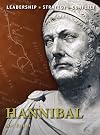
Excellent art, very good intro to Hannibal. Makes me want to read more about him (Everything an Osprey book should do in my opinion). What I appreciated though is that one can tell how passionate Nic Fields is about the subject from the writing alone. It is almost, dare I say, irreverent? What I mean by that is, I felt like I was sitting down in a pub with Nic, listening to him describe Hannibal's greatest hits with great animation and excitement, rather than hearing him speak in a stuffy, show more 'these are the hallowed halls of history' setting. show less
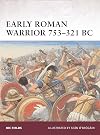
A good look at the Early Roman soldiers and warriors. Writing flows nicely and isnt dry, the author takes time to show the differences between a soldier and a warrior, as well as how agriculture and booty shaped a large part of early conflicts. The writing style and artwork are very good.
Sorry I have been remiss on book reporting duties, but I’ve been busy keeping my house from collapsing and haven’t had much time to spare. Today, however, I’m at a Starbucks® hiding out from rampaging Trick-or-Treaters, so I might as well catch up a little.
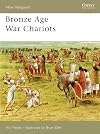
Bronze Age War Chariots is a typical Osprey/New Vanguard book; mostly intended for modelers or miniatures gamers, lots of pretty pictures, minimal but adequate text, not cheap. The black and white illustrations provide a useful show more reference for more scholarly books on chariot warfare; the color plates are highly detailed – perhaps overly so, with more things shown than the archaeological record actually justifies. There’s one egregious error; in a plate supposedly depicting action at the battle of Kadesh, Hittite charioteers overrun an Egyptian infantry unit. The Egyptians are all shown wearing the nmsh headdress; this is the cloth head covering with shoulder lappets that’s ubiquitous in cartoons and popular illustrations of ancient Egyptians. Unfortunately for the illustrator, the nmsh is restricted to Pharaoh; it’s essentially yet another Egyptian royal crown and no one else ever wears one. Actual Egyptian infantry head covering at this time would have been a heavy wig, thoroughly greased so weapon strikes had a better chance of glancing off. An Egyptian infantry platoon must have had an interesting odor after a day’s heavy fighting.
Possibly useful for a very quick background on chariot fighting, or if you want to model them. show less
Bronze Age War Chariots is a typical Osprey/New Vanguard book; mostly intended for modelers or miniatures gamers, lots of pretty pictures, minimal but adequate text, not cheap. The black and white illustrations provide a useful show more reference for more scholarly books on chariot warfare; the color plates are highly detailed – perhaps overly so, with more things shown than the archaeological record actually justifies. There’s one egregious error; in a plate supposedly depicting action at the battle of Kadesh, Hittite charioteers overrun an Egyptian infantry unit. The Egyptians are all shown wearing the nmsh headdress; this is the cloth head covering with shoulder lappets that’s ubiquitous in cartoons and popular illustrations of ancient Egyptians. Unfortunately for the illustrator, the nmsh is restricted to Pharaoh; it’s essentially yet another Egyptian royal crown and no one else ever wears one. Actual Egyptian infantry head covering at this time would have been a heavy wig, thoroughly greased so weapon strikes had a better chance of glancing off. An Egyptian infantry platoon must have had an interesting odor after a day’s heavy fighting.
Possibly useful for a very quick background on chariot fighting, or if you want to model them. show less

This is a decent overview of the state-of-affairs of the archaeological reality of Troy as opposed to the City of Myth. It introduces the local variant of the Bronze Age, provides a sober account of Schliemann's exploits and discusses the architecture and the culture of the nine successive archaeological stages (albeit briefly) before going into detail about the construction and the continuous restoration of the fortifications of Troy VI. Many sections are supported by clear illustrations show more and reconstructive drawings, which make up one of the main assets of this booklet (practically all of the photographs were taken by Fields himself). I also liked the chapter on what the "historical reality" of the Trojan Horse might have been.
Fields does have a tendency to insert references to Homer whenever the Iliad can be cited to back up a point -- windy area! fast-flowing waters! -- and once the main points have been made there follow a couple of sections where he connects features from geographic reality with events from the Iliad (e.g. the Trojans attacking the Achaean rampart) without justification outside the poem. But these criticisms are aesthetic only; overall I liked this book. It's clear, concise, and it's well-written by somebody who clearly knows what they're talking about. show less
Fields does have a tendency to insert references to Homer whenever the Iliad can be cited to back up a point -- windy area! fast-flowing waters! -- and once the main points have been made there follow a couple of sections where he connects features from geographic reality with events from the Iliad (e.g. the Trojans attacking the Achaean rampart) without justification outside the poem. But these criticisms are aesthetic only; overall I liked this book. It's clear, concise, and it's well-written by somebody who clearly knows what they're talking about. show less
Lists
You May Also Like


Associated Authors
Statistics
- Works
- 54
- Also by
- 1
- Members
- 2,088
- Popularity
- #12,316
- Rating
- 3.7
- Reviews
- 24
- ISBNs
- 112
- Languages
- 5