
Gillian Flynn
Author of Gone Girl
About the Author
Born in Kansas City, Missouri, on February 24, 1971, Gillian Flynn earned English and journalism undergraduate degrees from the University of Kansas. She wrote for a trade magazine in California before moving to Chicago, where she received a master's degree in journalism from Northwestern show more University. Flynn moved to New York City and wrote for Entertainment Weekly for 10 years. She was the magazine's television critic for four years. Her debut novel, Sharp Objects, was published in 2006 and won two Dagger Awards. Her other works include Dark Places and Gone Girl. In 2014 Gone Girl was released as a major motion picture which starred Ben Affleck. Her books have been on the New York Times bestseller list for many weeks. (Bowker Author Biography) show less
Works by Gillian Flynn
控制 1 copy
Associated Works
I'll Be Gone in the Dark: One Woman's Obsessive Search for the Golden State Killer (2018) — Introduction — 4,481 copies, 186 reviews
The Mystery Writers of America Cookbook: Wickedly Good Meals and Desserts to Die For (2015) — Contributor — 142 copies, 20 reviews
Tagged
Common Knowledge
- Canonical name
- Flynn, Gillian
- Birthdate
- 1971-02-24
- Gender
- female
- Education
- University of Kansas (BA)
Northwestern University (MA) - Occupations
- author
television critic (Entertainment Weekly) - Awards and honors
- New Blood Dagger Award
Steel Dagger Award
Edgar Award Nominee - Short biography
- Gillian Flynn was the chief TV critic for ENTERTAINMENT WEEKLY and now writes full-time. Her first novel SHARP OBJECTS was the winner of two CWA DAGGERS and was shortlisted for the GOLD DAGGER. Her latest novel, GONE GIRL, is a massive No.1 bestseller. The film adaptation of GONE GIRL, directed by David Fincher and starring Ben Affleck and Rosamund Pike, won the Hollywood Film Award 2014.
- Nationality
- USA
- Birthplace
- Kansas City, Missouri, USA
- Places of residence
- Kansas City, Missouri, USA
Chicago, Illinois, USA
New York, New York, USA - Associated Place (for map)
- USA
Members
Discussions
Gone Girl: Hash it, bash it, defend it, spoilers allowed in Girlybooks (March 2015)
Gone Girls, Found in Reading Books by Women (February 2015)
Sharp Objects in Missouri Readers (January 2015)
Gone Girl in Orange January/July (March 2013)
Gone Girl by Gillian Flynn in Missouri Readers (February 2013)
Gone Girl by Gillian Flynn: Spoiler Thread in 75 Books Challenge for 2012 (August 2012)
Reviews

I suppose given its popularity and success there isn't much point describing the plot. To discuss it in too much detail is to risk spoiling it, anyway, so here:
It really is an incredible thriller. Her previous books primed me for dark and mean and nasty, but by the time I got to the end, whole new dimensions of nightmare were opening up. The first half of the book - I confess I twigged vaguely to what was going on, but only because I'd been aware that there was a twist coming, which often facilitates spotting what the twist is. Once Amy talked about her treasure hunts, I figured, ah, she's doing it, and it's a treasure hunt for Nick. Then it was easy to spot that Nick's lies of omission was probably an affair. That was fine, I got to feel clever, and this is written amazingly well, literary level, and is so devious and twisted I never really knew what to expect or how it was going to play out. I did not comprehend, for example, exactly HOW fabricated Amy's diary was, and bought into that whole trying-too-hard passive aggressive personality she concocted, but thank God she switched halfway through, because it was a bit wearing, and the shock of the transition was jolting. The ending was monstrous, a locked nightmarish existential domestic dilemma that gives the ending of The Getaway a run for its money. All the more so because it trips someone who is merely flawed, Nick, and someone who is innocent, the child, into a potential hell. Anyway, a brilliant book, meticulously constructed, as deceitful and manipulative as Amy at times, and actually kind of terrifying.
show less
It really is an incredible thriller. Her previous books primed me for dark and mean and nasty, but by the time I got to the end, whole new dimensions of nightmare were opening up. The first half of the book - I confess I twigged vaguely to what was going on, but only because I'd been aware that there was a twist coming, which often
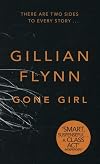
On the morning of their fifth anniversary, Nick kisses Amy goodbye and heads to work. When he returns, later that day, Amy has disappeared. There seems to have been a struggle in the house and blood is found. Nick is shocked and upset but he seems to be hiding something. Lies abound.
Reading this taunt, darkly, wicked tale, is like touring a funhouse. There may not be any monsters leaping out like banshees (another lie perhaps?) but there are plenty of shadowy corridors, twisting down show more deceptive passages and as the reader takes each shuddering step, there is a niggling fear that the floor beneath you will collapse at any moment.
Flynn is the real deal. She has crafted a top-notch psychological thriller. Read it, but first make sure you pay the creepy fat guy at the door. show less
Reading this taunt, darkly, wicked tale, is like touring a funhouse. There may not be any monsters leaping out like banshees (another lie perhaps?) but there are plenty of shadowy corridors, twisting down show more deceptive passages and as the reader takes each shuddering step, there is a niggling fear that the floor beneath you will collapse at any moment.
Flynn is the real deal. She has crafted a top-notch psychological thriller. Read it, but first make sure you pay the creepy fat guy at the door. show less
So the good news is that Gone Girl is a fantastic thriller, entirely as unputdownable as everybody says it is. Though by no means perfect (most of the side characters are cartoonish caricatures; 50 or 100 pages could probably have been trimmed off), the novel stands apart because the murder plot is really just a backdrop, an occasion for Flynn to delve into the psychology (and psychosis) of romantic relationships. Yes, you'll keep reading it because of the usual "whodunnit" reasons, but for show more me at least, the real enjoyment of the novel came from getting to know the protagonists and understand how they tick.
The bad news, however, is that, despite being a novel that so consciously flips the standard "wife killer" suspense thriller paradigm on its head, Gone Girl ultimately ends up falling into the same genre tropes it rails against, especially in its second act. What makes Amy such an attractive villain in the first half of the book is that she seems to have a legitimate complaint against Nick and the male oppression she's suffered, and she, unlike so many others, is actually doing something about it, and something entirely uncompromising. Yet when she starts to trip up in the second half of the book, she turns back into the demure, helpless "standard female character" that she so consciously refuses to be earlier on: she is easily overpowered by a couple strangers, she no longer even considers retaliating or taking revenge on them later, and instead she simply runs into the arms of the nearest man who can provide for her (and who, as it happens, turns out to be a psycho rapist). The really disturbing part, however, is that what the reader is supposed to feel through all this is, it seems, some sort of schadenfreude, some sort of sick pleasure is discovering that Amy is just as weak as the sexist female stereotype she initially opposed. We are supposed to delight in her assault, her downfall, her rape. And that is, simply put, not okay.
Gone Girl, for the most part, is a novel about playing with our expectations, about shaking us out of the standard voyeurism trafficked in by so much pulp fiction. So when it ends up glorifying that very same voyeurism and asking us to participate in it halfway through, this should give us pause. But maybe I'm overthinking things. Maybe Gone Girl should be treated as a beach read and nothing more -- and in that respect at least, it's really quite good. show less
The bad news, however, is that, despite being a novel that so consciously flips the standard "wife killer" suspense thriller paradigm on its head, Gone Girl ultimately ends up falling into the same genre tropes it rails against, especially in its second act. What makes Amy such an attractive villain in the first half of the book is that she seems to have a legitimate complaint against Nick and the male oppression she's suffered, and she, unlike so many others, is actually doing something about it, and something entirely uncompromising. Yet when she starts to trip up in the second half of the book, she turns back into the demure, helpless "standard female character" that she so consciously refuses to be earlier on: she is easily overpowered by a couple strangers, she no longer even considers retaliating or taking revenge on them later, and instead she simply runs into the arms of the nearest man who can provide for her (and who, as it happens, turns out to be a psycho rapist). The really disturbing part, however, is that what the reader is supposed to feel through all this is, it seems, some sort of schadenfreude, some sort of sick pleasure is discovering that Amy is just as weak as the sexist female stereotype she initially opposed. We are supposed to delight in her assault, her downfall, her rape. And that is, simply put, not okay.
Gone Girl, for the most part, is a novel about playing with our expectations, about shaking us out of the standard voyeurism trafficked in by so much pulp fiction. So when it ends up glorifying that very same voyeurism and asking us to participate in it halfway through, this should give us pause. But maybe I'm overthinking things. Maybe Gone Girl should be treated as a beach read and nothing more -- and in that respect at least, it's really quite good. show less
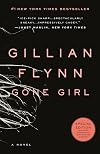
How is it that one can hate and love a book at the same time? The answer is in a story well told and expertly developed characters.
When I finished, I absolutely hated the book. I hated the characters. I hated the story. I was just mad. My initial reaction was… Since I only give 0’s to books that do not compel me to finish, it’s gotta be a 1.
Then I was in the car on my way to work. I found myself complaining out loud to myself about it… about how the characters were unlikeable and show more had no redeeming qualities, about how the story wasn’t good, and about how it didn’t leave me with any kind of satisfaction whatsoever. I realized that based solely on the emotion it evoked, I needed to give a higher rating than a 1.
I started thinking more about the characters. It dawned on me that even though the reader (me) wanted something good to come out of the whole thing, the author stayed very true to the characters she had developed. Granted, it would have been more satisfying if one of them had deviated, but it would have been less realistic given the characters’ painted backgrounds. Rating is still climbing... we’re at or above a 3 by now.
So, I thought more about the style and voice(s). I think audio did help. First person is hard to do effectively and with consistency. She did it twice and with two characters who make empathy difficult. The optimist in me likes to think that can be attributed to the author’s creativity vs. ability to identify with either character. Pushing 4.
Finally, to the way the story was constructed… In the middle, I felt like I was getting all sorts of superfluous information. At the end, I really can’t think of many details that could have or should have been left out. Every little detail attributed to how the characters viewed themselves and the world around them.
My rating… 4.5 show less
When I finished, I absolutely hated the book. I hated the characters. I hated the story. I was just mad. My initial reaction was… Since I only give 0’s to books that do not compel me to finish, it’s gotta be a 1.
Then I was in the car on my way to work. I found myself complaining out loud to myself about it… about how the characters were unlikeable and show more had no redeeming qualities, about how the story wasn’t good, and about how it didn’t leave me with any kind of satisfaction whatsoever. I realized that based solely on the emotion it evoked, I needed to give a higher rating than a 1.
I started thinking more about the characters. It dawned on me that even though the reader (me) wanted something good to come out of the whole thing, the author stayed very true to the characters she had developed. Granted, it would have been more satisfying if one of them had deviated, but it would have been less realistic given the characters’ painted backgrounds. Rating is still climbing... we’re at or above a 3 by now.
So, I thought more about the style and voice(s). I think audio did help. First person is hard to do effectively and with consistency. She did it twice and with two characters who make empathy difficult. The optimist in me likes to think that can be attributed to the author’s creativity vs. ability to identify with either character. Pushing 4.
Finally, to the way the story was constructed… In the middle, I felt like I was getting all sorts of superfluous information. At the end, I really can’t think of many details that could have or should have been left out. Every little detail attributed to how the characters viewed themselves and the world around them.
My rating… 4.5 show less
Lists
Summer Books (1)
Gen X Library (1)
Read in 2014 (1)
Thrillers (1)
Female Author (1)
To Read (1)
Secrets Books (1)
. (1)
ScaredyKIT 2024 (1)
A Novel Cure (1)
100 Hemskaste (1)
Missing! (1)
Overdue Podcast (2)
el (2)
To Read - Horror (2)
Florida (2)
TDCD BOOK LIST (1)
sad girl books (1)
USA Road Trip (1)
Favourite Books (1)
Edgar Award (1)
sad girl books (1)
Awards


You May Also Like


Associated Authors
Statistics
- Works
- 9
- Also by
- 6
- Members
- 51,340
- Popularity
- #296
- Rating
- 3.8
- Reviews
- 2,838
- ISBNs
- 391
- Languages
- 29
- Favorited
- 97
