
Esther Safran Foer
Author of I Want You to Know We're Still Here: A Post-Holocaust Memoir
About the Author
Works by Esther Safran Foer
Tagged
Common Knowledge
- Birthdate
- 1946-09-08
- Gender
- female
- Occupations
- memoirist
press secretary
public relations executive
philanthropist - Relationships
- Foer, Jonathan Safran (Son)
Foer, Franklin (son)
Foer, Joshua (son) - Short biography
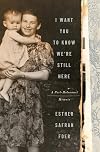
- Esther Safran Foer was born in Łódź, Poland. Her parents were Ethel and Louis Safran, who met and married in 1945, each the sole Holocaust survivor of their families. She spent her early childhood in a displaced persons camp in Germany before moving with her family to the USA in 1949. The family later settled in Washington, DC. Her father took his own life in 1954, when she was eight years old. Esther married Albert Foer, a lawyer and president of the American Antitrust Institute, with whom she had three sons: novelist Jonathan Safran Foer and journalists Franklin Foer and Joshua Foer. Ms. Foer worked as a press secretary for Sen. George McGovern. She founded the public-relations firm FM Strategic Communications in 2002 and served for 10 years as CEO of Sixth & I, a synagogue and cultural center. In 2008, The Forward recognized Ms. Foer as one of its Forward 50; The Washingtonian included her in its 2015 list of The Most Powerful Women in Washington. In 2020, Ms. Foer made her literary debut with her post-Holocaust memoir I Want You To Know We're Still Here.
- Nationality
- USA
- Birthplace
- Lodz, Poland
- Places of residence
- Washington, D.C., USA
- Associated Place (for map)
- USA
Members
Reviews
This beautifully written book flowed so smoothly I felt was having coffee with Ms. Foer as she told her story. I have read countless stories of the Holocaust yet from each I learn something new. The biggest “take-away” for me from this book was that “life was all about moving forward” which may explain why many survivors did not talk about the past. The book is filled with many truly memorable and heartfelt statements. There are stories of heroism and stories of shame (such as how show more the survivors were so poorly treated in American DP camps that President Truman actually ordered an investigation of the problem). The Jewish people have many traditions of which many we do not know why the tradition exists. I loved Ms. Foer’s take on why we leave stones on a grave instead of flowers, and the significance of a mezuzah on our doorposts.
One of the most poignant parts of the book, at least to me, is the statement “Jews are concerned more with memory than with history”. We believe that a person never really dies as long as someone remembers her/his name. This is why Foer was so determined to learn the name of her half-sister that was murdered by the Nazis. Someone, somewhere must know her name. A little girl who had barely lived must be remembered.
“History is public. Memory is private.” While Ms. Foer’s parents chose to keep their memories private, fortunately for us she chose to share the memories she uncovered and to keep these stories alive.
Thank you to Book Browse for an advance copy of this book. All opinions are my own. I highly recommend this book. show less
One of the most poignant parts of the book, at least to me, is the statement “Jews are concerned more with memory than with history”. We believe that a person never really dies as long as someone remembers her/his name. This is why Foer was so determined to learn the name of her half-sister that was murdered by the Nazis. Someone, somewhere must know her name. A little girl who had barely lived must be remembered.
“History is public. Memory is private.” While Ms. Foer’s parents chose to keep their memories private, fortunately for us she chose to share the memories she uncovered and to keep these stories alive.
Thank you to Book Browse for an advance copy of this book. All opinions are my own. I highly recommend this book. show less
"Putting together the fragments of my family's story has been a lifelong pursuit," says Esther Safran Foer. In her memoir, "I Want You to Know We're Still Here," Esther describes her determination to unearth information about her ancestors, most of whom were victims of Nazi extermination squads in Eastern Europe during the Holocaust. When Esther's mother, Ethel, was twenty-one-years-old, she fled from Kolki, Ukraine (which was then in Eastern Poland). Ever after, Ethel was reluctant to show more discuss the torment that she endured while on the run. Esther eventually learns that her father, Louis Safran, had a first wife and young daughter who had been killed while he was on a work detail. Foer decides to dig further. She hires researchers in Ukraine; studies genealogy websites; pays an FBI agent to analyze old photos; conducts DNA searches online; looks through archives; and travels to Israel and Ukraine, where she interviews witnesses to events that were destined to alter the trajectory of her mother and father's lives.
This evocative and heartfelt book is a testament to Esther Safran Foer's resolve to find the answers that she seeks. She credits the support of her husband, Bert, and their sons, Frank, Jonathan, and Joshua, for encouraging her to persist in spite of the obstacles that she encounters. Interspersed throughout the book are black and white snapshots of various individuals who played a part in what turns out to be a complex history. Esther's parents were the only survivors from their large extended families. That is why, until now, their recollections "were too terrible to commit to words." Esther Safran Foer's joy at having had the opportunity to build a satisfying life in America was always "tempered by the shadows of the past." Now, she sheds light on these dark places.
This memoir is not always easy to read. There are dozens of names to keep track of, although the family tree at the back does help somewhat. At times, Foer meanders a bit and overwhelms us with too many details, but the final chapters are dramatic and poignant. When she meets the granddaughters of the brave man who was compassionate enough to hide her father from the Germans, Esther has a chance to express her gratitude. During her trip to Ukraine, Esther visits the grounds of her parents' shtetls and says Kaddish at the graves of her relatives. In "I Want You to Know We're Still Here," Esther Safran Foer fulfills her solemn duty "to keep the past alive." show less
This evocative and heartfelt book is a testament to Esther Safran Foer's resolve to find the answers that she seeks. She credits the support of her husband, Bert, and their sons, Frank, Jonathan, and Joshua, for encouraging her to persist in spite of the obstacles that she encounters. Interspersed throughout the book are black and white snapshots of various individuals who played a part in what turns out to be a complex history. Esther's parents were the only survivors from their large extended families. That is why, until now, their recollections "were too terrible to commit to words." Esther Safran Foer's joy at having had the opportunity to build a satisfying life in America was always "tempered by the shadows of the past." Now, she sheds light on these dark places.
This memoir is not always easy to read. There are dozens of names to keep track of, although the family tree at the back does help somewhat. At times, Foer meanders a bit and overwhelms us with too many details, but the final chapters are dramatic and poignant. When she meets the granddaughters of the brave man who was compassionate enough to hide her father from the Germans, Esther has a chance to express her gratitude. During her trip to Ukraine, Esther visits the grounds of her parents' shtetls and says Kaddish at the graves of her relatives. In "I Want You to Know We're Still Here," Esther Safran Foer fulfills her solemn duty "to keep the past alive." show less
I Want You To Know We’re Still Here, A Post-Holocaust Memoir, Ether Safran Foer, author
This is the poignant story of Esther Foer’s search for the truth about her parent’s history. Late in life, she learned that her father had once had another wife and child. She knew nothing about them, and her mother was not forthcoming with any information. Many Holocaust survivors refused to discuss, or rarely discussed, their previous lives. They preferred to move on and to forget the horror and show more unspeakable losses of that time which kept their children in the dark about what they had to suffer through in order to survive. Often, there was another whole side to a parent that they never would have dreamed possible.
In her search for the truth about her family and what happened to those murdered by Hitler, she learns that her father was briefly hidden by a Christian family. Now her search extended to finding them too, if possible. She thought they belonged in the special category of Righteous Gentiles, honored by Jews for risking their own lives to save them. She was determined that they be added to the list. Her search took her back to Europe and Trochenbrod, part of Ukraine where massacres of whole families of Jews occurred and where her father had lived. The Jewish people in that area were rounded up and forced to strip and then lie down in pits that had been dug. They were then mercilessly gunned down. Layer upon layer of people followed. The dirt that covered them was described as moving for days after, since some did not die immediately. So much for the anti-Semites who said they never knew what was going on, they sure did. Yes, many were too frightened to intercede, but early on, they acquiesced and opened the door for Hitler’s minions to enter and murder innocent people.
Although many of Esther’s efforts were thwarted by a lack of records and dim memories or missing witnesses who either died or left no discernible way to find them, she did uncover many secrets and learned a great deal about her background. She knew influential people, she had had high-powered jobs, her sons were authors, one even wrote a fictional account about her ancestor’s home town, and this enabled her to get more and more information. When she returned to what she thought was her father’s home “town”, she was welcomed and treated royally by the surviving townspeople and their families. They were eager to help her garner information and to show her the memorial sites. There were no Jews left there, however. Hitler had indeed made it judenrein.
To make sure that those who were murdered were not forgotten, she visited the sites where her relatives either once lived or where they were murdered, whenever possible, to mark their existence and to honor them, to let them know that someone remembered them and would go on remembering them afterwards. She left a family photo there, buried or in a crack somewhere at a memorial, to commemorate their lives and remind the world and the victims that they were not forgotten.
The past existed only in remnants, for Esther, but she was able to piece it together to find some satisfaction and put many of her questions to rest. Most of her relatives either died during the Holocaust or died afterwards, she herself was in her seventh decade of live when she embarked on this project. This is the story of her search for answers and her effort to keep the memories of those who were unjustly sacrificed alive. This is the story of her closure as she remembered them with her prayers. show less
This is the poignant story of Esther Foer’s search for the truth about her parent’s history. Late in life, she learned that her father had once had another wife and child. She knew nothing about them, and her mother was not forthcoming with any information. Many Holocaust survivors refused to discuss, or rarely discussed, their previous lives. They preferred to move on and to forget the horror and show more unspeakable losses of that time which kept their children in the dark about what they had to suffer through in order to survive. Often, there was another whole side to a parent that they never would have dreamed possible.
In her search for the truth about her family and what happened to those murdered by Hitler, she learns that her father was briefly hidden by a Christian family. Now her search extended to finding them too, if possible. She thought they belonged in the special category of Righteous Gentiles, honored by Jews for risking their own lives to save them. She was determined that they be added to the list. Her search took her back to Europe and Trochenbrod, part of Ukraine where massacres of whole families of Jews occurred and where her father had lived. The Jewish people in that area were rounded up and forced to strip and then lie down in pits that had been dug. They were then mercilessly gunned down. Layer upon layer of people followed. The dirt that covered them was described as moving for days after, since some did not die immediately. So much for the anti-Semites who said they never knew what was going on, they sure did. Yes, many were too frightened to intercede, but early on, they acquiesced and opened the door for Hitler’s minions to enter and murder innocent people.
Although many of Esther’s efforts were thwarted by a lack of records and dim memories or missing witnesses who either died or left no discernible way to find them, she did uncover many secrets and learned a great deal about her background. She knew influential people, she had had high-powered jobs, her sons were authors, one even wrote a fictional account about her ancestor’s home town, and this enabled her to get more and more information. When she returned to what she thought was her father’s home “town”, she was welcomed and treated royally by the surviving townspeople and their families. They were eager to help her garner information and to show her the memorial sites. There were no Jews left there, however. Hitler had indeed made it judenrein.
To make sure that those who were murdered were not forgotten, she visited the sites where her relatives either once lived or where they were murdered, whenever possible, to mark their existence and to honor them, to let them know that someone remembered them and would go on remembering them afterwards. She left a family photo there, buried or in a crack somewhere at a memorial, to commemorate their lives and remind the world and the victims that they were not forgotten.
The past existed only in remnants, for Esther, but she was able to piece it together to find some satisfaction and put many of her questions to rest. Most of her relatives either died during the Holocaust or died afterwards, she herself was in her seventh decade of live when she embarked on this project. This is the story of her search for answers and her effort to keep the memories of those who were unjustly sacrificed alive. This is the story of her closure as she remembered them with her prayers. show less
This is a memoir of Esther's family - four generations who are unable to pass her mother's stories to each generation because her mother's memories were so terrible that she refused to talk about them. She would occasionally give a small amount of information but would refuse to answer questions. When Esther finds out that her father had been married before and had a daughter, she know that she must travel to the Ukraine to find out all she can about her half-sister.
Esther's mother and show more father were both the only survivors of the Holocaust in their immediate family. Since her mother refused to share information about this horrific time, Esther spent her entire life searching for answers. Armed with only a hand drawn map and an old photograph, Esther and her son travel to the Ukraine to try to get some answers to her lifelong questions about her parents' lives. She wants to find where her father hid during the war and the people who helped him, she wants to find her mother's village and anyone who remembered her and she wants to find out information about her half sister born before the war started. It was difficult to find out too many answers since so many people were dead but she was able to find children and grand children of the people she was searching for and get information. The town her mother grew up in was totally demolished but she was found someone who grew up there and was able to show her where her mother had grown up. As she and her son travel, they find mass graves where Jewish people were shot and buried. Many of the markers on these mass graves were falling apart and covered in weeds indicating that the newer generations memory of that time in history is being lost. At each mass grave and grave marker of family members, she left a picture of her family to let her ancestors know that part of the family had survived and was 'still here'.
This was a beautiful and well written memoir about one person's goal to find the memories of her mother and pass them down to future generations so that family history wouldn't be lost.
Thanks to Book Browse for a copy of this book to read and review. All opinions are my own. show less
Esther's mother and show more father were both the only survivors of the Holocaust in their immediate family. Since her mother refused to share information about this horrific time, Esther spent her entire life searching for answers. Armed with only a hand drawn map and an old photograph, Esther and her son travel to the Ukraine to try to get some answers to her lifelong questions about her parents' lives. She wants to find where her father hid during the war and the people who helped him, she wants to find her mother's village and anyone who remembered her and she wants to find out information about her half sister born before the war started. It was difficult to find out too many answers since so many people were dead but she was able to find children and grand children of the people she was searching for and get information. The town her mother grew up in was totally demolished but she was found someone who grew up there and was able to show her where her mother had grown up. As she and her son travel, they find mass graves where Jewish people were shot and buried. Many of the markers on these mass graves were falling apart and covered in weeds indicating that the newer generations memory of that time in history is being lost. At each mass grave and grave marker of family members, she left a picture of her family to let her ancestors know that part of the family had survived and was 'still here'.
This was a beautiful and well written memoir about one person's goal to find the memories of her mother and pass them down to future generations so that family history wouldn't be lost.
Thanks to Book Browse for a copy of this book to read and review. All opinions are my own. show less
Lists
Awards


Statistics
- Works
- 1
- Members
- 206
- Popularity
- #107,331
- Rating
- 3.8
- Reviews
- 13
- ISBNs
- 17
- Languages
- 5