

Robert Forczyk
Author of Moscow 1941 : Hitler's first defeat
About the Author
Robert Forczyk is a leading expert on the history of armored warfare, and he has made a particular study of the Second World War on the Eastern Front. His many books include Georgy Zhukov, Demyansk 1942-43, Red Christmas: The Tatsinskaya Airfield Raid 1942, Rescuing Mussolini: Gran Sasso 1943, show more Sevastopol 1942: Von Manstein's Triumph, Leningrad 1941-44, Model, Erich Von Manstein, Panther Vs T-34: Ukraine 1943. show less
Image credit: Tank and AFV News
Works by Robert Forczyk
Erich von Manstein: The background, strategies, tactics and battlefield experiences of the greatest commanders of history (2010) 42 copies, 1 review
Walther Model: The background, strategies, tactics and battlefield experiences of the greatest commanders of history (2011) 31 copies
Desert Armour: Tank Warfare in North Africa: Beda Fomm to Operation Crusader 1940–41 (2023) 28 copies, 1 review
The Kamenets–Podolsky Pocket 1944: Encirclement of Hube’s 1st Panzer Army (Campaign, 411) (2025) 13 copies, 1 review
Demiansk 1942-1943 1 copy
Tagged
Common Knowledge
- Gender
- male
- Education
- University of Notre Dame (BS|History)
University of Virginia, MA
University of Maryland (PhD|International Relations and National Security) - Occupations
- consultant
army officer (US Army) - Short biography
- Robert Forczyk has a BA in History from the University of Notre Dame, a MA from the University of Virginia and a PhD in International Relations and National Security from the University of Maryland. He is a retired US Army lieutenant colonel, having served in armour and intelligence roles. Dr Forczyk is a specialist in Asian and European military history. Currently, he is a consultant in the Washington, DC area. [short biography from Osprey Publishing]
- Nationality
- USA
- Associated Place (for map)
- USA
Members
Reviews
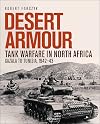
If you've read the first half of this extended study of the use and abuse of tank warfare in the extended North African campaign, you know what to expect: Forczyk giving you a blow by blow of the failures of technique of the responsible parties. He has come to criticize, not praise, as there is much to be underwhelmed about.
To be honest, Forczyk is now writing a somewhat broader study then merely the use and abuse of tanks as an arm of service. He is now really writing an account of how show more modern combined-arms operational technique emerged from the North African combat, meaning that Forczyk is as interested in matters of field engineering, artillery and logistics as he is in the cut and thrust of tank-on-tank action, which was really not that common.
What has not changed is that Forczyk is as astringent as ever in terms of his personal estimates of the protagonists, though always with sympathy for the much-put-upon tanker forced to deal with infantry generals who had been promoted beyond their level of competence. In particular, Forczyk has no use for Claude Auchinleck, and the British historians who have tried to argue that the general was more sinned against than sinner, arguing that the man not only didn't understand tanks, but he was basically a professional failure across the board during his tenure in the Middle East theatre.
Apart from that, I also remain impressed by Forczyk's efforts to work the Italian experience into his narrative.
A final thought that this is probably not a one-stop read for the North African campaign, as even though Forczyk can be acid towards a lot of the historiography of this chunk of the war, you have to be familiar with what is being critiqued to get the most out of these books. show less
To be honest, Forczyk is now writing a somewhat broader study then merely the use and abuse of tanks as an arm of service. He is now really writing an account of how show more modern combined-arms operational technique emerged from the North African combat, meaning that Forczyk is as interested in matters of field engineering, artillery and logistics as he is in the cut and thrust of tank-on-tank action, which was really not that common.
What has not changed is that Forczyk is as astringent as ever in terms of his personal estimates of the protagonists, though always with sympathy for the much-put-upon tanker forced to deal with infantry generals who had been promoted beyond their level of competence. In particular, Forczyk has no use for Claude Auchinleck, and the British historians who have tried to argue that the general was more sinned against than sinner, arguing that the man not only didn't understand tanks, but he was basically a professional failure across the board during his tenure in the Middle East theatre.
Apart from that, I also remain impressed by Forczyk's efforts to work the Italian experience into his narrative.
A final thought that this is probably not a one-stop read for the North African campaign, as even though Forczyk can be acid towards a lot of the historiography of this chunk of the war, you have to be familiar with what is being critiqued to get the most out of these books. show less
Desert Armour: Tank Warfare in North Africa: Beda Fomm to Operation Crusader, 1940–41 by Robert Forczyk
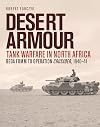
There's a lot to like about this book, but how you really feel about it will depend on how you feel about Forczyk's outlook as a writer, as it's best described as acerbic. He starts out early, by making no apologies for bringing more contemporary military theory than the typical "academic" or "general" reader might be comfortable with to his writing, which comes off as patronizing for me, but then ruthlessly applies those same standards to the period flag-rank commanders, and really takes no show more prisoners. At various points Forczyk refers to Erwin Rommel as being "egomaniacal" and a "con man," and certainly promoted beyond his abilities. On the other hand, less controversially, most of the British commanders get criticized for lack of energy and a failure to understand combined-arms warfare; even the men who beat the Italians in 1940. In fact, the Italians come off rather better in this book than one generally sees; at least Forczyk detects a determined effort to learn from mistakes and improve.
Apart from that, Forczyk keeps coming back to issues of logistics, training, and communication, emphasizing that unless you have these aspects of military art in order, you're unlikely going to be successful in regards to mechanized warfare.
As for what I'd criticize, I do wonder if Forczyk is always in control of his material, as he is trying to cover a lot. I've seen reviews that have "dinged" Forczyk on some factual issues that are mostly small scale. At some points, Forczyk also might have wanted to step back from issues with doctrine, operations, and tactics and consider the general strategic picture. Yes, too many resources were being thrown at North Africa by the powers in question, but for the British this was the best war they had to convince the Americans that they were serious (and Churchill was never going to write off holding the British Empire together), and the German military high command still felt stung by the escape of the BEF from France in 1940, and North Africa in 1941 was the best way to collect prestige points. Still, this an advance over what the general reader has probably read about this campaign, Forczyk actually makes the most use yet I've seen of Italian sources, and I'm looking forward to seeing that the second half of this study is like. show less
Apart from that, Forczyk keeps coming back to issues of logistics, training, and communication, emphasizing that unless you have these aspects of military art in order, you're unlikely going to be successful in regards to mechanized warfare.
As for what I'd criticize, I do wonder if Forczyk is always in control of his material, as he is trying to cover a lot. I've seen reviews that have "dinged" Forczyk on some factual issues that are mostly small scale. At some points, Forczyk also might have wanted to step back from issues with doctrine, operations, and tactics and consider the general strategic picture. Yes, too many resources were being thrown at North Africa by the powers in question, but for the British this was the best war they had to convince the Americans that they were serious (and Churchill was never going to write off holding the British Empire together), and the German military high command still felt stung by the escape of the BEF from France in 1940, and North Africa in 1941 was the best way to collect prestige points. Still, this an advance over what the general reader has probably read about this campaign, Forczyk actually makes the most use yet I've seen of Italian sources, and I'm looking forward to seeing that the second half of this study is like. show less
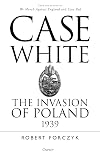
If I were to simply regard this book from the perspective of straight military history I would rank it somewhat higher, as this is the best operational account of Germany's invasion of 1939 I've ever seen. Forczyk's perspective regarding most of the participants is unsparing, and he is often as critical of Polish actors as he is of the Germans or Soviets. However, particular disdain is reserved for Chamberlain's government in Britain; let's just say that when Forczyk uses the word show more "appeasement" you can hear the sibilant hiss of contempt. As for what would have really made a difference Forczyk tends to focus on Anglo-American willingness to provide resources to the Soviet state in the name of business and the Anglo-French unwillingness to truly punish the Nazi Regime for it's flagrant disregard of Versailles, which allowed Berlin and Moscow to accelerate their military preparations; though this seems to be a rather unrealistic perspective considering the political chaos of the post-1929 era. Still, Forczyk essentially does admit that the Polish Second Republic was often its own worst enemy, what with grandiose dreams of territorial expansion and a military high command warped by internal political conflict. Poland deserved better, but that's usually besides the point in international conflict. show less
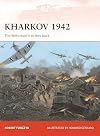
Another "Campaign" booklet from one of Osprey's regulars. You could argue over whether the world needed another book about this fight, seeing as David Glantz had already written about it (and Forcyzk leans on Glantz as a source), but there's a big publication gap between those two publications (1996 to 2013). Not to mention that Glantz's study doesn't seem to be in print and Forczyk appears to have done significant archival research on his own.
Apart from that, Forczyk brings his own show more astringent outlook to this enterprise, being a Polish sympathizer with no use for either regime, and also granting no slack to what he sees as sloppy operational thinking. Semyon Timoshenko, the senior Soviet field commander, gets heavily slagged, as whatever else Kharkov represented it was the last stand of Red Army Cavalry Mafia that Stalin was comfortable with. On the other hand, Friedrich Paulus, just starting his career as the commander of the German 6th Armee, is shown to be already demonstrating the flaws in leadership that contributed to the German disaster at Stalingrad.
I have very little to mark down this booklet for, though Osprey is almost always good for one editorial gaffe per book, and this one comes on page 90, where the picture of wrecked Soviet tanks are described as BT-7 fast tanks, when they are actually T-26 light tanks. You might ask aren't I'm being unusually picky? Maybe, but since this book has been published hundreds of thousands of people, if not millions, have played the computer games "World of Tanks" and "War Thunder," and they damn well know the difference between a T-26 and a BT-7! show less
Apart from that, Forczyk brings his own show more astringent outlook to this enterprise, being a Polish sympathizer with no use for either regime, and also granting no slack to what he sees as sloppy operational thinking. Semyon Timoshenko, the senior Soviet field commander, gets heavily slagged, as whatever else Kharkov represented it was the last stand of Red Army Cavalry Mafia that Stalin was comfortable with. On the other hand, Friedrich Paulus, just starting his career as the commander of the German 6th Armee, is shown to be already demonstrating the flaws in leadership that contributed to the German disaster at Stalingrad.
I have very little to mark down this booklet for, though Osprey is almost always good for one editorial gaffe per book, and this one comes on page 90, where the picture of wrecked Soviet tanks are described as BT-7 fast tanks, when they are actually T-26 light tanks. You might ask aren't I'm being unusually picky? Maybe, but since this book has been published hundreds of thousands of people, if not millions, have played the computer games "World of Tanks" and "War Thunder," and they damn well know the difference between a T-26 and a BT-7! show less
Lists
AJD Buy (1)
You May Also Like


Associated Authors
Statistics
- Works
- 48
- Members
- 1,816
- Popularity
- #14,158
- Rating
- 3.8
- Reviews
- 40
- ISBNs
- 130
- Languages
- 8
- Favorited
- 2