

Evan Friss
Author of The Bookshop: A History of the American Bookstore
About the Author
Evan Friss is associate professor of history at James Madison University and author of On Bicycles: A 200-Year History of Cycling in New York City.
Image credit: photo by Rachel Holderman
Works by Evan Friss
Tagged
Common Knowledge
- Canonical name
- Friss, Evan
- Legal name
- Friss, Evan J.
- Birthdate
- 1980
- Gender
- male
- Education
- University of Maryland (BA|2002)
New York University (MA|2005)
City University of New York (Ph.D|2011) - Occupations
- professor
historian - Organizations
- James Madison University
Society for American City and Regional Planning History
Urban History Association - Agent
- Authors Unbound
- Nationality
- USA
- Places of residence
- Harrisonburg, Virginia, USA
- Associated Place (for map)
- Virginia, USA
Members
Reviews
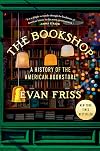
This is a very well researched book, with lots of references to archives and other primary sources. Not surprising for a book by a professional historian. More surprising is that it is readable and entertaining. Friss follows a roughly chronological arrangement and covers a small number of bookshops in depth, with some others noted in passing. He begins with Franklin in Philadelphia and next moves on to the Old Corner Bookstore/Ticknor and Fields in Boston, a major force in early show more nineteenth-century American literature. Then he moves to bookshops on wheels, department store bookshops (Marshall Field's), Bookshop Row (NYC), Gotham Book Mart (NYC), The Strand (NYC), a variety of theme-oriented bookshops (feminist, LGBTQ, radical, Black), street booksellers, Barnes & Noble, Amazon. He ends with Ann Patchett's indie bookshop, Parnassus, in Nashville.
This is very much an east coast book; it reminds one of the New Yorker map of the US. Most of the bookshops are in the northeast, mostly in NYC. I will grant the cultural and commercial significance of most of his picks, but he omits or scants a lot. City Lights in San Francisco, at least as significant as Gotham and the Strand, gets only a couple of mentions. Powell's (Portland) likewise. Border's also gets relatively little attention; the Borders in Ann Arbor, originally an indie, was a great bookshop and the chain was higher quality than most of the competition. Barnes & Noble may have been first, but it was never as good as Borders. Antiquarian and second-hand bookshops get relatively little attention. Friss also generally ignores specialty bookshops: mystery, scifi (e.g., Uncle Edgar's and Uncle Hugo's in Minneapolis), non-English language books (e.g., Schoenhof's in Cambridge) etc. But they are an important part of the bookshop scene.
This is a pretty good book and I learned a number of things that I hadn't known. But as a history of American bookshops, it is quite selective and spotty. Much is a paean to the indies (Friss is married to an indie bookseller). I like indies and buy a lot of books from them (most recently Moon Palace in Minneapolis). But I also buy from chains and Amazon. People forget that in the days before Borders, Barnes & Noble, and Amazon, most places were book deserts. And even if you had a good indie nearby, there was a lot that you could only get by special order and mail order. I only started buying from Amazon, when our really fine local indie was taken over by Books-a-Million (aka, the barbarians from Birmingham) and they told me to take my special orders to Amazon. Which I did, along with much of the rest of my business. When I was a college student, I had to open an account with Blackwells in Oxford to get Latin and Greek books by mail; nobody much in America stocks them (then and now).
Four stars and not three because I am uncomfortable dinging an author for not writing the book that I would have wanted him to write. show less
This is very much an east coast book; it reminds one of the New Yorker map of the US. Most of the bookshops are in the northeast, mostly in NYC. I will grant the cultural and commercial significance of most of his picks, but he omits or scants a lot. City Lights in San Francisco, at least as significant as Gotham and the Strand, gets only a couple of mentions. Powell's (Portland) likewise. Border's also gets relatively little attention; the Borders in Ann Arbor, originally an indie, was a great bookshop and the chain was higher quality than most of the competition. Barnes & Noble may have been first, but it was never as good as Borders. Antiquarian and second-hand bookshops get relatively little attention. Friss also generally ignores specialty bookshops: mystery, scifi (e.g., Uncle Edgar's and Uncle Hugo's in Minneapolis), non-English language books (e.g., Schoenhof's in Cambridge) etc. But they are an important part of the bookshop scene.
This is a pretty good book and I learned a number of things that I hadn't known. But as a history of American bookshops, it is quite selective and spotty. Much is a paean to the indies (Friss is married to an indie bookseller). I like indies and buy a lot of books from them (most recently Moon Palace in Minneapolis). But I also buy from chains and Amazon. People forget that in the days before Borders, Barnes & Noble, and Amazon, most places were book deserts. And even if you had a good indie nearby, there was a lot that you could only get by special order and mail order. I only started buying from Amazon, when our really fine local indie was taken over by Books-a-Million (aka, the barbarians from Birmingham) and they told me to take my special orders to Amazon. Which I did, along with much of the rest of my business. When I was a college student, I had to open an account with Blackwells in Oxford to get Latin and Greek books by mail; nobody much in America stocks them (then and now).
Four stars and not three because I am uncomfortable dinging an author for not writing the book that I would have wanted him to write. show less
Summary: A history of bookstores in America through the lens of fourteen bookstores or bookselling venues.
As a bibliophile, I love books on books, reading, and bookstores. In The Bookshop, Evan Friss offers a history of bookshops in America through the lens of fourteen bookshops or bookselling venues. Friss tells us he prefers the term “shop” at the outset. “Stores” sound too commercial. While there is a necessity to make enough to keep bookshops afloat (always a challenge throughout show more their history), a theme here is the unique bond booksellers build (or don’t build, in one case) with their customers.
Friss establishes that ethos in his Introduction, profiling the small Three Lives & Company shop in New York’s West Village. From Toby the owner to “the regulars” to Miriam, who listens well to customers, one has the sense that, like “Cheers,” this is a place where everyone knows, or wants to know, your name. After this, and each following chapter, there is a vignette on bookshop life–the UPS driver, the smell of books, the store buyer, and the ubiquitous bookstore cat among them.
From the Introduction, Friss takes us on a journey in time and geography from Ben Franklin’s shop in Philadelphia to Ann Patchett’s Parnassus books in Nashville. Along the way we learn Franklin didn’t call it a bookstore. He was a printer, and that led to printing and selling a number of books, including his own Almanac. His first big hit was the preacher, George Whitefield, selling his journals and sermons. Meanwhile, in another cradle of the Revolution, also a cradle of bookselling, we are introduced to the Old Corner bookshop. It was the hangout for the likes of Emerson, Holmes, Harriet Beecher Stowe, and Longfellow. Behind it was the partnership of William D. Ticknor and a clerk, James D. Fields, who rose to become a partner.
Friss introduces us to some legendary stores. Having worked in a department store, I was fascinated by the sheer magnificence of the Marshall Field book department in Chicago, especially under Marcella Hahner. Another woman-run store was the Gotham Book Mart. Frances Steloff maintained an office in this rambling store with books piled everywhere until she was over one hundred. She found a way to sell the books that were banned. And then there was the Strand, once on Booksellers Row before it moved a few blocks. A Bass family member still manages it.
By contrast, there are the niche stores. One of those was the Aryan Book Store, selling, you guessed it, Nazi literature. Friss notes similar shops around the country for workers and the Communist Party. Then there is the Oscar Wilde, a pathbreaker in the sale of LGBTQ+ literature. Finally, the Drum & Spear represents Black bookseller, on the rise with Black Lives Matter.
Friss also chronicles the booksellers who don’t sell from brick and mortar shops. Parnassus on Wheels from the early 1900’s represents the booksellers who sold books from wagons and later bookmobiles. Then there are the sidewalk booksellers in New York City and other places, following the precedent of the bouquinistes selling books along the West Bank of the Seine in Paris. In New York, we learn of the hassles they face from the city, even while building their own community of clientele. Finally, there is the story of online bookselling typified by Amazon, the behemoth. Friss also covers their misbegotten venture into brick and mortar stores, and their failure to embrace a bookselling ethos.
The book concludes with the two major players in the bookshop world of today. There are the big box chains, represented by Barnes and Noble. And there are the thousands of indies, represented by Ann Patchett’s Parnassus Books. The chapters devoted to each trace their birth and growth. For Barnes and Noble, it is a longer story, from a single New York store, to Leonard Riggio’s pivotal role in building the chain, to James Daunt’s role as rescuer, teaching booksellers to think like indies. On the other hand, the story of Parnassus is one where an accomplished author and a publisher’s sales rep team up when Nashville’s beloved Davis-Kidd store closed. and we learn how Barnes and Noble and the indies, once rivals, have learned to see each other as allies in the effort to keep bookselling personal and a presence in every community.
Of course, there are thousands of stories that go untold. Places like Austin’s BookPeople and Powell’s only have cameo appearances. Not one of the many great bookshops in my home state were mentioned. But no matter. The various expressions of bookselling were there and the stores featured are kin. Friss captures both the hard work behind bookselling and the wonder of these special “third places.” Whether the street stand, a corner shop, the indies I know of that create events and comfortable spaces in small towns, or my local Barnes and Noble, all are celebrated in Friss’ account. And because of that, I appreciate even more the gift all of these are to the common good. show less
As a bibliophile, I love books on books, reading, and bookstores. In The Bookshop, Evan Friss offers a history of bookshops in America through the lens of fourteen bookshops or bookselling venues. Friss tells us he prefers the term “shop” at the outset. “Stores” sound too commercial. While there is a necessity to make enough to keep bookshops afloat (always a challenge throughout show more their history), a theme here is the unique bond booksellers build (or don’t build, in one case) with their customers.
Friss establishes that ethos in his Introduction, profiling the small Three Lives & Company shop in New York’s West Village. From Toby the owner to “the regulars” to Miriam, who listens well to customers, one has the sense that, like “Cheers,” this is a place where everyone knows, or wants to know, your name. After this, and each following chapter, there is a vignette on bookshop life–the UPS driver, the smell of books, the store buyer, and the ubiquitous bookstore cat among them.
From the Introduction, Friss takes us on a journey in time and geography from Ben Franklin’s shop in Philadelphia to Ann Patchett’s Parnassus books in Nashville. Along the way we learn Franklin didn’t call it a bookstore. He was a printer, and that led to printing and selling a number of books, including his own Almanac. His first big hit was the preacher, George Whitefield, selling his journals and sermons. Meanwhile, in another cradle of the Revolution, also a cradle of bookselling, we are introduced to the Old Corner bookshop. It was the hangout for the likes of Emerson, Holmes, Harriet Beecher Stowe, and Longfellow. Behind it was the partnership of William D. Ticknor and a clerk, James D. Fields, who rose to become a partner.
Friss introduces us to some legendary stores. Having worked in a department store, I was fascinated by the sheer magnificence of the Marshall Field book department in Chicago, especially under Marcella Hahner. Another woman-run store was the Gotham Book Mart. Frances Steloff maintained an office in this rambling store with books piled everywhere until she was over one hundred. She found a way to sell the books that were banned. And then there was the Strand, once on Booksellers Row before it moved a few blocks. A Bass family member still manages it.
By contrast, there are the niche stores. One of those was the Aryan Book Store, selling, you guessed it, Nazi literature. Friss notes similar shops around the country for workers and the Communist Party. Then there is the Oscar Wilde, a pathbreaker in the sale of LGBTQ+ literature. Finally, the Drum & Spear represents Black bookseller, on the rise with Black Lives Matter.
Friss also chronicles the booksellers who don’t sell from brick and mortar shops. Parnassus on Wheels from the early 1900’s represents the booksellers who sold books from wagons and later bookmobiles. Then there are the sidewalk booksellers in New York City and other places, following the precedent of the bouquinistes selling books along the West Bank of the Seine in Paris. In New York, we learn of the hassles they face from the city, even while building their own community of clientele. Finally, there is the story of online bookselling typified by Amazon, the behemoth. Friss also covers their misbegotten venture into brick and mortar stores, and their failure to embrace a bookselling ethos.
The book concludes with the two major players in the bookshop world of today. There are the big box chains, represented by Barnes and Noble. And there are the thousands of indies, represented by Ann Patchett’s Parnassus Books. The chapters devoted to each trace their birth and growth. For Barnes and Noble, it is a longer story, from a single New York store, to Leonard Riggio’s pivotal role in building the chain, to James Daunt’s role as rescuer, teaching booksellers to think like indies. On the other hand, the story of Parnassus is one where an accomplished author and a publisher’s sales rep team up when Nashville’s beloved Davis-Kidd store closed. and we learn how Barnes and Noble and the indies, once rivals, have learned to see each other as allies in the effort to keep bookselling personal and a presence in every community.
Of course, there are thousands of stories that go untold. Places like Austin’s BookPeople and Powell’s only have cameo appearances. Not one of the many great bookshops in my home state were mentioned. But no matter. The various expressions of bookselling were there and the stores featured are kin. Friss captures both the hard work behind bookselling and the wonder of these special “third places.” Whether the street stand, a corner shop, the indies I know of that create events and comfortable spaces in small towns, or my local Barnes and Noble, all are celebrated in Friss’ account. And because of that, I appreciate even more the gift all of these are to the common good. show less
A terrific book about America’s bookstores, primarily its independent stores. The giants, the big box bookstores, both past and current, are also discussed. Friss obviously put in a lot of time and energy researching “The Bookshop: A History of the American Bookstore,” and the information it contains is so much more than merely talking about the various well known and not so well known bookstores around the country. Much of the story of America’s bookstores is the story of American show more in general. So this book is a history lesson as well. If you are a book lover, a bookstore lover, a library lover, or all three, this book is a must read. I highly recommend it. show less
Books about books often win a high ranking in my book, and Friss’ anecdote-driven tome about bookstores is no exception. It offers something for every bibliophile regardless of reading preference or geographical locale.
From overviews of Ben Franklin’s involvement in the business and thumbnail sketches of several “little, mighty, and resilient independent” shops, to the origins of behemoths such as Amazon and Barnes and Noble, Friss’ work provides a fascinating glimpse into the show more industry. True, this isn’t a definitive or linear look at the history of the American book industry. It’s more of an eclectic collection of vignettes about a diverse number of bookstores that touches on their marketing tactics, their challenges and some of the colorful characters behind these enterprises.
Like any smorgasbord, not every literary morsel will delight every reader. A few chapters were a tad tedious. The nice thing about this book’s structure is that a chapter or two can be skimmed or even skipped without hurting the overall reading experience.
The book is laced with some “fun facts,” including profiles of sidewalk booksellers. Also, who knew there was a law on the books for a short period that prevented booksellers from discounting new titles?
The clear takeaway is that bookstores possess magical powers that can help shape our communities. show less
From overviews of Ben Franklin’s involvement in the business and thumbnail sketches of several “little, mighty, and resilient independent” shops, to the origins of behemoths such as Amazon and Barnes and Noble, Friss’ work provides a fascinating glimpse into the show more industry. True, this isn’t a definitive or linear look at the history of the American book industry. It’s more of an eclectic collection of vignettes about a diverse number of bookstores that touches on their marketing tactics, their challenges and some of the colorful characters behind these enterprises.
Like any smorgasbord, not every literary morsel will delight every reader. A few chapters were a tad tedious. The nice thing about this book’s structure is that a chapter or two can be skimmed or even skipped without hurting the overall reading experience.
The book is laced with some “fun facts,” including profiles of sidewalk booksellers. Also, who knew there was a law on the books for a short period that prevented booksellers from discounting new titles?
The clear takeaway is that bookstores possess magical powers that can help shape our communities. show less
Lists
Awards


You May Also Like
Associated Authors
Statistics
- Works
- 3
- Members
- 850
- Popularity
- #30,104
- Rating
- 4.1
- Reviews
- 22
- ISBNs
- 10


