
Heraclitus
Author of Fragments
About the Author
Disambiguation Notice:
Ancient Greek Ἡράκλειτος ὁ Ἐφέσιος
Heraclitus of Ephesus (ca. 535–475 BCE), known as The Obscure, pre-Socratic Ionian philosopher, native of Ephesus
Image credit: Image © ÖNB/Wien
Works by Heraclitus
The Art and Thought of Heraclitus: An Edition of the Fragments with Translation and Commentary (1979) 142 copies
Yksi ja sama : aforismeja 8 copies
O prirodi 3 copies
Allégories d'Homère 3 copies
I frammenti e le testimonianze 2 copies
Das Wort Heraklits 2 copies
Eraclito: Vita e frammenti : facsimile del manoscritto della traduzione dal Diels (Opere complete di Giovanni Gentile. S (1995) 2 copies
Heraclitus fragments 1 copy
Herakleitos von Ephesos 1 copy
Testimonianze e imitazioni 1 copy
4: Refectio libri Heracliti. 1 copy
Heraclitus: The Fragments 1 copy
Urworte 1 copy
Epistolas pseudo-Heracliteas 1 copy
Allégories d'Homère 1 copy
Doctrinas filosóficas. Íntegramente traducidas — Author — 1 copy
Testimonianze e frammenti 1 copy
Associated Works
World Poetry: An Anthology of Verse from Antiquity to Our Time (1998) — Contributor — 497 copies, 2 reviews
Tagged
Common Knowledge
- Canonical name
- Hérakleitos
- Legal name
- Hérakleitos z Efezu
- Other names
- Heraclitus
- Birthdate
- 535 BCE (c.)
- Date of death
- 475 BCE (c.)
- Gender
- male
- Occupations
- philosopher
- Cause of death
- covered in cow dung (either drowned in wet dung or baked to death in dry dung depending on the version of the story)
- Nationality
- Greece (cultural)
Persia (subject) - Places of residence
- Ephesus
- Map Location
- Selçuk, İzmir, Türkiye
- Disambiguation notice
- Ancient Greek Ἡράκλειτος ὁ Ἐφέσιος Heraclitus of Ephesus (ca. 535–475 BCE), known as The Obscure, pre-Socratic Ionian philosopher, native of Ephesus
Members
Reviews
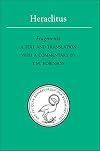
Heraclitus is one of those philosophers who is rewarding to read because he is so hard to understand. After all, Diogenes Laertius did call him “Heraclitus the Obscure.”
Heraclitus challenges the very ways in which we think and try to understand the world, not just what we think but how. If we push ourselves and resist trying to reduce his thought to something familiar, we are changed by the experience.
Central to that experience for me is trying to understand the play of change and show more constancy, and diversity and unity in Heraclitus’ thought.
There is one common understanding of Heraclitus as the philosopher of change or “flux” and “strife” to the point of an anti-philosophical position. If all is endless flux and strife, nothing is truly constant, and there is no “way that things are” to be known.
The fragments though contradict any understanding of Heraclitus as rejecting the philosophical and the rational. Fragment 1 speaks of the logos (translated here as “account”). Robinson is careful to distinguish between Heraclitus’ sense of the logos and what comes to be known among the Stoics as the “rational principle” of reality — the logos for Heraclitus seems more to be just “the way things are” (whether a generative rational principle or not), or the “account” of the way things are.
But this “way things are” is a bit closer to Parmenides than we might have thought. Parmenides, coming a bit later than Heraclitus and usually taken as his opposite pole, claimed that Being was unchanging, undivided. But see Heraclitus’ Fragment 50, in which he says, “Not after listening to me, but after listening to the account [again, the logos], one does wisely in agreeing that all things are one.”
Even the best known fragment associated with Heraclitus — Fragment 91a, attributed to him by Plutarch (also attributed to Heraclitus by Plato), stating that “it is impossible to step into the same river twice” — may not support a rejection of constancy. Look at Fragment 12 — “As they step into the same rivers, different and different waters flow upon them.” There it is not the river that loses its identity in change. The river is constant, and the waters change within it. Other fragments seem to support the latter interpretation. See, for example, Fragment 84a — “While changing it rests.”
I think the more interesting position to consider for Heraclitus is one in which change and constancy are not strictly distinguished. The “way things are” encompasses change, and if “all things are one” that one thing is changing. The river in the famous metaphor is inherently changing — its very nature is change, even though it maintains its identity through change.
Likewise with unity and diversity. Look at Fragment 10 — “Out of all things one thing, and out of one thing all things.”
That would seemingly compel the question, what is it about the river then that is constant if not the waters that make it up? Robinson, in his Commentary, suggests that “structure” is constant, as maybe the course of the river remains the same as different waters flow along it.
Maybe. There are also Heraclitus’ comments on the elements. Fragment 76a says, “Fire lives the death of earth and air lives the death of fire; water lives the death of air, earth that of water.” There is an order here — fire does not live the death of air, only of earth. And so forth for the other elements. The same ordering is repeated in Fragment 76c, from a different source. There is also evidence (e.g., Fragment 30) to give fire a priority among the elements, maybe as the agent of change itself.
I find it hard to resist, somewhat contrary to Robinson, abstracting the themes of change/constancy and diversity/unity as ones that recur and are themselves a kind of “principle” in Heraclitus’ thinking. They recur in discussions of the four elements, in his discussions of life and death, and in those more explicitly abstract-sounding fragments I quoted above.
It may be tempting to fall back to the idea that the only constant is change. Too easy. I don’t even know what that means, except a kind of illusion of insight (and one that ignores that Heraclitus claimed that change wasn’t just random change, but ordered). I think Heraclitus was after something more interesting.
You could imagine he was after something that Robinson suggests at one point — something like a “formula” that describes change, that all change follows the “formula” (akin to Robinson’s translation of “logos”).
But “formula” is too modern a notion, I think, for Heraclitus. A reminder that, in trying to understand ancient Greek thought, we need to keep in mind that ancient Greek solutions as to how to think about the world answered ancient Greek problems as to how to think about the world, not our own problems. We need to think our way to the question or the problem that Heraclitus was responding to as much (or more) as the answer.
I think maybe the most interesting way to interpret what Heraclitus says about unity/diversity and constancy/change is to start with the seemingly trivial observation that opposites have in common that they are opposites. Opposition does exclude — silent opposes loud but not green — and by doing so they work to identify. Sound is what is constant in the opposition between silent and loud, for example.
And opposition needn’t be polar opposition. Thus fire, earth, air, and water can oppose one another.
And, as above, oppositions, in Heraclitus’ thinking, have order. Fire lives the death of earth but not the death of air. Water lives the death of air, earth the death of water, and air the death of fire. Sleep follows waking, and waking follows sleep.
Oppositions, in other words, are unities. And the oppositions within unities move in an order of change.
None of this is to deny the reality of opposites, or their real distinctiveness. Fire is not the same as air, sleep is not the same as wakefulness, etc. The unity of opposites in fact resides in the play of opposition itself. A thing is its distinctive play of oppositions.
There is also good reason to believe that opposition is cyclical. Certainly the oppositions of fire, earth, air, and water describe, in Heraclitus’ account comprise a recurrent cycle.
The exercise of understanding Heraclitus is the reward for reading him, more so, I think than reaching a resolution.
All this is set aside from some basic difficulties. We shouldn’t forget, for example, that Heraclitus was Greek in the sense of being a participant, at some level, in the world of the Greek gods. See Fragment 32, where he seems to identify the “one thing, the only wise thing” with Zeus. (Actually, that fragment is a very provocative one. The full text reads, “One thing, the only wise thing, is unwilling and willing to be called by the name Zeus,” as if “being called by the name Zeus” were some sort of not-quite-right way of thinking of what we are trying to get at with “Zeus.”). Understanding Heraclitus will also mean understanding what it is to live in the world of Zeus.
The over-riding difficulty though with understanding Heraclitus is that we don’t have his original writings. We don’t have his “book” (if there even was one single treatise written by him). What we have are fragments from secondary sources. Some are undoubtedly influenced by later writers’ biases and purposes (Robinson cites the Stoics in particular, who claimed Heraclitus as a precursor).
But I still think we should try to understand Heraclitus as an original thinker to invest the exploration and interpretation required to get into the insights and elements that cohered in his own thought. Doing so promises to change the very patterns in which we ourselves think.
The book contains the original Greek fragments with Robinson’s English translations on facing pages. Robinson also provides a fragment-by-fragment commentary, primarily focused on translation issues and on the pedigrees of the fragments.
The commentary is followed by the Testamonia — discussions of Heraclitus by the various sources, including Diogenes Laertius, Plato, Aristotle, Plutarch, and others.
Finally, Robinson gives a brief overview of Heraclitus’ thought, by Robinson’s own interpretation. This is not the strength of the book. I think the book is best treated as a definitive source for interpretation rather than an interpretation itself.
The primary audience for this book is classicists. I’m not a classicist, and even though I am a once-upon-a-time academic philosopher, my focus was not on ancient philosophy. Nevertheless, for the reasons I’ve given, the experience of trying to understand Heraclitus, even for a non-expert, is worth the investment. show less
Heraclitus challenges the very ways in which we think and try to understand the world, not just what we think but how. If we push ourselves and resist trying to reduce his thought to something familiar, we are changed by the experience.
Central to that experience for me is trying to understand the play of change and show more constancy, and diversity and unity in Heraclitus’ thought.
There is one common understanding of Heraclitus as the philosopher of change or “flux” and “strife” to the point of an anti-philosophical position. If all is endless flux and strife, nothing is truly constant, and there is no “way that things are” to be known.
The fragments though contradict any understanding of Heraclitus as rejecting the philosophical and the rational. Fragment 1 speaks of the logos (translated here as “account”). Robinson is careful to distinguish between Heraclitus’ sense of the logos and what comes to be known among the Stoics as the “rational principle” of reality — the logos for Heraclitus seems more to be just “the way things are” (whether a generative rational principle or not), or the “account” of the way things are.
But this “way things are” is a bit closer to Parmenides than we might have thought. Parmenides, coming a bit later than Heraclitus and usually taken as his opposite pole, claimed that Being was unchanging, undivided. But see Heraclitus’ Fragment 50, in which he says, “Not after listening to me, but after listening to the account [again, the logos], one does wisely in agreeing that all things are one.”
Even the best known fragment associated with Heraclitus — Fragment 91a, attributed to him by Plutarch (also attributed to Heraclitus by Plato), stating that “it is impossible to step into the same river twice” — may not support a rejection of constancy. Look at Fragment 12 — “As they step into the same rivers, different and different waters flow upon them.” There it is not the river that loses its identity in change. The river is constant, and the waters change within it. Other fragments seem to support the latter interpretation. See, for example, Fragment 84a — “While changing it rests.”
I think the more interesting position to consider for Heraclitus is one in which change and constancy are not strictly distinguished. The “way things are” encompasses change, and if “all things are one” that one thing is changing. The river in the famous metaphor is inherently changing — its very nature is change, even though it maintains its identity through change.
Likewise with unity and diversity. Look at Fragment 10 — “Out of all things one thing, and out of one thing all things.”
That would seemingly compel the question, what is it about the river then that is constant if not the waters that make it up? Robinson, in his Commentary, suggests that “structure” is constant, as maybe the course of the river remains the same as different waters flow along it.
Maybe. There are also Heraclitus’ comments on the elements. Fragment 76a says, “Fire lives the death of earth and air lives the death of fire; water lives the death of air, earth that of water.” There is an order here — fire does not live the death of air, only of earth. And so forth for the other elements. The same ordering is repeated in Fragment 76c, from a different source. There is also evidence (e.g., Fragment 30) to give fire a priority among the elements, maybe as the agent of change itself.
I find it hard to resist, somewhat contrary to Robinson, abstracting the themes of change/constancy and diversity/unity as ones that recur and are themselves a kind of “principle” in Heraclitus’ thinking. They recur in discussions of the four elements, in his discussions of life and death, and in those more explicitly abstract-sounding fragments I quoted above.
It may be tempting to fall back to the idea that the only constant is change. Too easy. I don’t even know what that means, except a kind of illusion of insight (and one that ignores that Heraclitus claimed that change wasn’t just random change, but ordered). I think Heraclitus was after something more interesting.
You could imagine he was after something that Robinson suggests at one point — something like a “formula” that describes change, that all change follows the “formula” (akin to Robinson’s translation of “logos”).
But “formula” is too modern a notion, I think, for Heraclitus. A reminder that, in trying to understand ancient Greek thought, we need to keep in mind that ancient Greek solutions as to how to think about the world answered ancient Greek problems as to how to think about the world, not our own problems. We need to think our way to the question or the problem that Heraclitus was responding to as much (or more) as the answer.
I think maybe the most interesting way to interpret what Heraclitus says about unity/diversity and constancy/change is to start with the seemingly trivial observation that opposites have in common that they are opposites. Opposition does exclude — silent opposes loud but not green — and by doing so they work to identify. Sound is what is constant in the opposition between silent and loud, for example.
And opposition needn’t be polar opposition. Thus fire, earth, air, and water can oppose one another.
And, as above, oppositions, in Heraclitus’ thinking, have order. Fire lives the death of earth but not the death of air. Water lives the death of air, earth the death of water, and air the death of fire. Sleep follows waking, and waking follows sleep.
Oppositions, in other words, are unities. And the oppositions within unities move in an order of change.
None of this is to deny the reality of opposites, or their real distinctiveness. Fire is not the same as air, sleep is not the same as wakefulness, etc. The unity of opposites in fact resides in the play of opposition itself. A thing is its distinctive play of oppositions.
There is also good reason to believe that opposition is cyclical. Certainly the oppositions of fire, earth, air, and water describe, in Heraclitus’ account comprise a recurrent cycle.
The exercise of understanding Heraclitus is the reward for reading him, more so, I think than reaching a resolution.
All this is set aside from some basic difficulties. We shouldn’t forget, for example, that Heraclitus was Greek in the sense of being a participant, at some level, in the world of the Greek gods. See Fragment 32, where he seems to identify the “one thing, the only wise thing” with Zeus. (Actually, that fragment is a very provocative one. The full text reads, “One thing, the only wise thing, is unwilling and willing to be called by the name Zeus,” as if “being called by the name Zeus” were some sort of not-quite-right way of thinking of what we are trying to get at with “Zeus.”). Understanding Heraclitus will also mean understanding what it is to live in the world of Zeus.
The over-riding difficulty though with understanding Heraclitus is that we don’t have his original writings. We don’t have his “book” (if there even was one single treatise written by him). What we have are fragments from secondary sources. Some are undoubtedly influenced by later writers’ biases and purposes (Robinson cites the Stoics in particular, who claimed Heraclitus as a precursor).
But I still think we should try to understand Heraclitus as an original thinker to invest the exploration and interpretation required to get into the insights and elements that cohered in his own thought. Doing so promises to change the very patterns in which we ourselves think.
The book contains the original Greek fragments with Robinson’s English translations on facing pages. Robinson also provides a fragment-by-fragment commentary, primarily focused on translation issues and on the pedigrees of the fragments.
The commentary is followed by the Testamonia — discussions of Heraclitus by the various sources, including Diogenes Laertius, Plato, Aristotle, Plutarch, and others.
Finally, Robinson gives a brief overview of Heraclitus’ thought, by Robinson’s own interpretation. This is not the strength of the book. I think the book is best treated as a definitive source for interpretation rather than an interpretation itself.
The primary audience for this book is classicists. I’m not a classicist, and even though I am a once-upon-a-time academic philosopher, my focus was not on ancient philosophy. Nevertheless, for the reasons I’ve given, the experience of trying to understand Heraclitus, even for a non-expert, is worth the investment. show less
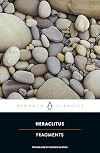
Hmmm, I’m not completely sure I know where I stand on Heraclitus the Obscure. On the one hand, he stresses the logos and its collective, shared nature, as the basis of knowledge (or he seems to! It should go without saying that 90% of what we think we know about Heraclitus is wrong, given that all we have is fragments), a stance with which I have much sympathy. On the other hand, he seems to approach this in a literal-minded way—in the beginning is the Word—and that I have less show more patience for.
At least, if we’re trying to be real. If we’re aphoristic, more can be forgiven. And Heraclitus is very aphoristic. But it’s not Nietzschean and wild—it’s mystical, but more this plodding mysticism of homespun commonplaces dressed up as portents—signs taken for wonders. BUT THEN, you really can’t blame Heraclitus for that, because he wrote a whole book and it was the rest of us who let it get burned when the Temple of Artemis was sacked and then combed out the quotes from Plato and whoever and numbered them and treated them like koans.
Speaking of koans, the main thing that H shares with the Buddhists is seemingly the interest in flux—you can’t step in the same river twice, change is eternal, panta rhei and all that. For me, that’s beauty, and it goes right to moral philosophy—ripeness is all, or all that is solid melts into air in the sense of its Marxist implications. But Heraclitus goes ontological instead—all that is solid melts into air, and air gives birth to fire, just as earth gives birth to water and vice versa. A pretty but inconsequential physics.
I think that might be where I would have let things rest on our guy—pretty but inconsequential; or more accurately, pretty but I am in no way even remotely capable of evaluating his consequentiality given what’s been lost and misused and appropriated in him (the internet, because he was the big name in philosophy BS,* makes him responsible for everything from dialectical materialism to the Tao to something called “process philosophy”).**
But then he still leaves me with a little additional frowny feeling I’d like to express while I’m on my soapbox. They call Heraclitus the “weeping philosopher,” in contradistinction to Democritus, the laughing, and while I’m very clear that I stand with big D (as did Montaigne),*** certainly the world is beautiful and awful and it is apposite to laugh through your tears. But weeping of any sort doesn’t seem to be Heraclitus’s MO, really, in the event: he’s more the quietly judgmental philosopher, looking down his nose at the people and their small minds and their weak wisdom and their easily led herdsheepery. But not in an extensive, magnificently misanthropic way, or like, with the sincerity to elaborate an alternative protofascistic political philosophy like Plato, or to pull out the people in the agora like Socrates, or any number of other possibilities. No, Heraclitus (who let it be noted should have been king in Ephesus, but the Persians installed a satrap and left him a figurehead and so he renounced the throne) is more the philosopher of taking his ball and going home: quitting his job (king!!) writing a big book and leaving it with the goddess so people could come and consult and see that Heraclitus thinks that they are foolish and ephemeral. No snarling hermit, but a bit of a sulk, perhaps, like how I imagine Henry James.
But aphorism sells, and (because?) you can’t say shit based on it. So I will endeavour to appreciate Heraclitus for his beauties, mull how it is that a sulk of Becoming is so much easier to take than a sulk of Being, remember that I can’t step in the same river twice (OR, ERGO, EVEN ONCE), and try to get some things done today.
*before Socrates! Not whatever you thought.
**THALES WUZ ROBBED
***definite extra credit question: is there something intrinsically comforting about a static atomism and intrinsically depressing about quantum relativity? The laughing and weeping pals say yes? show less
At least, if we’re trying to be real. If we’re aphoristic, more can be forgiven. And Heraclitus is very aphoristic. But it’s not Nietzschean and wild—it’s mystical, but more this plodding mysticism of homespun commonplaces dressed up as portents—signs taken for wonders. BUT THEN, you really can’t blame Heraclitus for that, because he wrote a whole book and it was the rest of us who let it get burned when the Temple of Artemis was sacked and then combed out the quotes from Plato and whoever and numbered them and treated them like koans.
Speaking of koans, the main thing that H shares with the Buddhists is seemingly the interest in flux—you can’t step in the same river twice, change is eternal, panta rhei and all that. For me, that’s beauty, and it goes right to moral philosophy—ripeness is all, or all that is solid melts into air in the sense of its Marxist implications. But Heraclitus goes ontological instead—all that is solid melts into air, and air gives birth to fire, just as earth gives birth to water and vice versa. A pretty but inconsequential physics.
I think that might be where I would have let things rest on our guy—pretty but inconsequential; or more accurately, pretty but I am in no way even remotely capable of evaluating his consequentiality given what’s been lost and misused and appropriated in him (the internet, because he was the big name in philosophy BS,* makes him responsible for everything from dialectical materialism to the Tao to something called “process philosophy”).**
But then he still leaves me with a little additional frowny feeling I’d like to express while I’m on my soapbox. They call Heraclitus the “weeping philosopher,” in contradistinction to Democritus, the laughing, and while I’m very clear that I stand with big D (as did Montaigne),*** certainly the world is beautiful and awful and it is apposite to laugh through your tears. But weeping of any sort doesn’t seem to be Heraclitus’s MO, really, in the event: he’s more the quietly judgmental philosopher, looking down his nose at the people and their small minds and their weak wisdom and their easily led herdsheepery. But not in an extensive, magnificently misanthropic way, or like, with the sincerity to elaborate an alternative protofascistic political philosophy like Plato, or to pull out the people in the agora like Socrates, or any number of other possibilities. No, Heraclitus (who let it be noted should have been king in Ephesus, but the Persians installed a satrap and left him a figurehead and so he renounced the throne) is more the philosopher of taking his ball and going home: quitting his job (king!!) writing a big book and leaving it with the goddess so people could come and consult and see that Heraclitus thinks that they are foolish and ephemeral. No snarling hermit, but a bit of a sulk, perhaps, like how I imagine Henry James.
But aphorism sells, and (because?) you can’t say shit based on it. So I will endeavour to appreciate Heraclitus for his beauties, mull how it is that a sulk of Becoming is so much easier to take than a sulk of Being, remember that I can’t step in the same river twice (OR, ERGO, EVEN ONCE), and try to get some things done today.
*before Socrates! Not whatever you thought.
**THALES WUZ ROBBED
***definite extra credit question: is there something intrinsically comforting about a static atomism and intrinsically depressing about quantum relativity? The laughing and weeping pals say yes? show less

Herakleitos of Heraclitus van Efeze (ca. 540 – ca. 480) was een van de eerste westerse filosofen. Maar wat weten we over hem? En hoe weten we het? Er is immers van zijn levenswerk niets overgebleven. De papyrusrol waarop het stond, werd anderhalve eeuw lang bewaard in de tempel van Artemis in Efeze, een van de zeven antieke wereldwonderen, maar ging verloren toen een sensatiezoeker die tempel in brand stak. Ondertussen was de faam van Herakleitos echter dermate verspreid dat allerlei show more overblijfsels van zijn oorspronkelijke teksten tot ons gekomen zijn als citaten bij andere auteurs. Maar je weet hoe het gaat in het gezelschapsspelletje waarbij kinderen een gefluisterd bericht doorgeven in een kring: wanneer het bericht bij aankomt waar het vertrokken is, blijkt het totaal verschillend geworden te zijn, door de toevallige of moedwillige vervormingen onderweg. In de 2500 jaar die ons scheiden van Herakleitos is er allicht veel verloren gegaan en veel vervormd. Zelfs met de beste middelen van de taalwetenschap kunnen we vandaag niet met zekerheid zeggen dat alle citaten die men nu aan Herakleitos toeschrijft ook van hem zijn en door hem zo geschreven werden. Zelfs het meest bekende: panta rei, is onzeker.
Paul Claes heeft die citaten, ongeveer 140 in aantal, verzameld, in het Nederlands vertaald en telkens aangegeven waar de tekst vandaan komt, elk citaat voorzien van verklarend commentaar en ook de nawerking toegelicht: wie heeft dit citaat nadien gebruikt, al dan niet met bronvermelding?
Herakleitos. Alles stroomt, vertaald en toegelicht door Paul Claes, Athenaeum-Pollak & Van Gennep, Amsterdam, 2011, 197 blz., gebonden, ongeveer 30 euro.
Het is een prachtig boek in alle opzichten. Milieuvriendelijk crèmekleurig luxueus papier, voorbeeldig luchtige typografie, degelijk ingebonden, volle linnen band in stijlvol zwart met goudopdruk, sobere maar stevige academische stofwikkel met een extra 2/3 wikkel met een knappe kleurenfoto. Er is zelfs dat sprekend detail, het fijn gevlochten draadje dat boven en onderaan de rug van het boek gekleefd is, vroeger ter bescherming ingenaaid, nu als versiering gekleefd. Het enige dat ontbreekt is een mooi leeslint, maar dat kleef ik er zelf wel in.
Ook over de inhoud niets dan goeds. De inleiding is bondig maar geeft je al de informatie die je nodig hebt voor het belangrijkste deel van het boek; de teksten van Herakleitos en de toelichting van Paul Claes, de meest betrouwbare gids die men zich kan wensen waar het gaat om klassieke auteurs en hun nawerking in de literatuur en de cultuur in het algemeen. Het is geen goedkoop boek, maar als je het koopt, ben je wel zeker dat je nooit meer een ander hoeft aan te schaffen over Herakleitos: beter dan dit is er niet, zowel voor de geïnteresseerde leek als voor specialisten. Ktèma eis aiei, a thing of beauty and a joy forever. show less
Paul Claes heeft die citaten, ongeveer 140 in aantal, verzameld, in het Nederlands vertaald en telkens aangegeven waar de tekst vandaan komt, elk citaat voorzien van verklarend commentaar en ook de nawerking toegelicht: wie heeft dit citaat nadien gebruikt, al dan niet met bronvermelding?
Herakleitos. Alles stroomt, vertaald en toegelicht door Paul Claes, Athenaeum-Pollak & Van Gennep, Amsterdam, 2011, 197 blz., gebonden, ongeveer 30 euro.
Het is een prachtig boek in alle opzichten. Milieuvriendelijk crèmekleurig luxueus papier, voorbeeldig luchtige typografie, degelijk ingebonden, volle linnen band in stijlvol zwart met goudopdruk, sobere maar stevige academische stofwikkel met een extra 2/3 wikkel met een knappe kleurenfoto. Er is zelfs dat sprekend detail, het fijn gevlochten draadje dat boven en onderaan de rug van het boek gekleefd is, vroeger ter bescherming ingenaaid, nu als versiering gekleefd. Het enige dat ontbreekt is een mooi leeslint, maar dat kleef ik er zelf wel in.
Ook over de inhoud niets dan goeds. De inleiding is bondig maar geeft je al de informatie die je nodig hebt voor het belangrijkste deel van het boek; de teksten van Herakleitos en de toelichting van Paul Claes, de meest betrouwbare gids die men zich kan wensen waar het gaat om klassieke auteurs en hun nawerking in de literatuur en de cultuur in het algemeen. Het is geen goedkoop boek, maar als je het koopt, ben je wel zeker dat je nooit meer een ander hoeft aan te schaffen over Herakleitos: beter dan dit is er niet, zowel voor de geïnteresseerde leek als voor specialisten. Ktèma eis aiei, a thing of beauty and a joy forever. show less

Heraclitus, the ancient Greek philosopher, may have written a book that he might have called On Nature. If Heraclitus did write such a book, and if that’s what it was called, he did so while Pythagoras, Buddha, and Lao Tzu were all alive. But nobody really knows for sure—all that survives the intervening 2,500 years are fragments incorporated in the works of others. Personally, I’m not convinced that Heraclitus wrote a book—whatever it may have been called—at all. I think the old show more philosopher was a little like Ludwig Wittgenstein in that respect: mistrusting of the permanence of words on paper, never quite satisfied with the way things came out when he did write things down. Heraclitus seemed to have preferred conversation (when, as legend has it, he let you within a hundred feet), just like Wittgenstein, so much of whose thought was written down by his students, his listeners.
But without a doubt, Heraclitus was a master of the first, last, and only line. Heraclitus, like Wittgenstein, is unparalleled in giving us the line that stops our thought of the world in its tracks. The first line of Wittgenstein’s Tractatus Logico-Philosophicus is the breathtaking “The world is everything that is the case” (which we realize, once we catch our breath, neatly dispenses with both the supernatural and metaphysics). With Heraclitus’s “The world is flux,” these are lines that define while escaping the pedantic box of definitionism. Instead of putting an end to further discussion and closing down thought, these lines open the mind to, well, everything that is the case: the world in flux. They begin conversations (or arguments!), which is just what a first line is supposed to do.
Not that “The world is flux” is the first line of Haxton’s translation of the scattered fragments attributed to Heraclitus. Haxton goes for the line that is an inverted echo of the line that, centuries later, John would employ to kick off his gospel: “The Word proves / those first hearing it / as numb to understanding / as the ones who have not heard.” Already we have a possible subtext for (re)reading John’s first line: “In the beginning was the Word” but no one understood it. Nevertheless, as Heraclitus continues, “all things follow from the Word.”
Like Wittgenstein, and the postmodernists who (mostly unwittingly) follow him, Heraclitus was obsessed with language. This really shouldn’t surprise us: in Heraclitus’s time Greek culture was being, to use scholar Walter Ong’s word, “alphabetized.” They were learning how to write—or, more accurately, they were debating whether to write at all, and asking the question, What will writing things down do to the mind, to a person’s character? We may think, immersed as we are in a thoroughly alphabetized culture, that such questions are naïve. But consider that, up until the fifth or fourth century BC, the way things got done was mostly by word of mouth—and the mouth’s necessary ally, memory. No wonder the Odyssey beings (in the old Harvard Classics translation), “Tell me, Muse, of that man.” Mnemosyne was the mother of the Muses, and the goddess of memory: her name survives in our word mnemonic. The ancient Greeks knew, at least some of them did, that taking pen to papyrus would rob Mnemosyne of some of her power, and us of our mindfulness. Thus, when Heraclitus uses verbs like “speak” he is not, as we modern writers would be, using them metaphorically:
Since mindfulness, of all things,
is the ground of being,
to speak one’s true mind,
and to keep things known
in common, serves all being,
just as laws made clear
uphold the city,
yet with greater strength.
Of all pronouncements of the law
the one source is the Word
whereby we choose what helps
true mindfulness prevail.
Heraclitus is always provocative, clarifying and simultaneously enigmatic: his lines, in other words, are chewy. He’s the kind of thinker, like his contemporary Lao Tzu, you want to devour one phrase at a time—making every opening of his book a reading of a first line, wherever it may happen to fall in the text. Heraclitus invites us to read him the way we found him: random bits in stolen moments, as unattributed quotes in the works of scores of writers over the last 2,500 years. For all his invisible popularity, Heraclitus may be the best-kept secret in Western literature.
Haxton’s poetic translation of these ancient wisdom sayings is as spare and dense as Emily Dickinson’s poetry, and flows like water drawn from the same well as Dickinson’s. This translation is inspired, generous, and stern—because wisdom is, I think, always all of those things. The book itself is a minor masterpiece of the designer’s art (Francesca Belanger gets the nod there): elegant and without frills. Best of all, the ancient Greek is presented side by side with the translation, giving the ambitious logophile a chance to ferret out the roots of modern English words in one of their oldest written contexts.
Originally published in The First Line show less
But without a doubt, Heraclitus was a master of the first, last, and only line. Heraclitus, like Wittgenstein, is unparalleled in giving us the line that stops our thought of the world in its tracks. The first line of Wittgenstein’s Tractatus Logico-Philosophicus is the breathtaking “The world is everything that is the case” (which we realize, once we catch our breath, neatly dispenses with both the supernatural and metaphysics). With Heraclitus’s “The world is flux,” these are lines that define while escaping the pedantic box of definitionism. Instead of putting an end to further discussion and closing down thought, these lines open the mind to, well, everything that is the case: the world in flux. They begin conversations (or arguments!), which is just what a first line is supposed to do.
Not that “The world is flux” is the first line of Haxton’s translation of the scattered fragments attributed to Heraclitus. Haxton goes for the line that is an inverted echo of the line that, centuries later, John would employ to kick off his gospel: “The Word proves / those first hearing it / as numb to understanding / as the ones who have not heard.” Already we have a possible subtext for (re)reading John’s first line: “In the beginning was the Word” but no one understood it. Nevertheless, as Heraclitus continues, “all things follow from the Word.”
Like Wittgenstein, and the postmodernists who (mostly unwittingly) follow him, Heraclitus was obsessed with language. This really shouldn’t surprise us: in Heraclitus’s time Greek culture was being, to use scholar Walter Ong’s word, “alphabetized.” They were learning how to write—or, more accurately, they were debating whether to write at all, and asking the question, What will writing things down do to the mind, to a person’s character? We may think, immersed as we are in a thoroughly alphabetized culture, that such questions are naïve. But consider that, up until the fifth or fourth century BC, the way things got done was mostly by word of mouth—and the mouth’s necessary ally, memory. No wonder the Odyssey beings (in the old Harvard Classics translation), “Tell me, Muse, of that man.” Mnemosyne was the mother of the Muses, and the goddess of memory: her name survives in our word mnemonic. The ancient Greeks knew, at least some of them did, that taking pen to papyrus would rob Mnemosyne of some of her power, and us of our mindfulness. Thus, when Heraclitus uses verbs like “speak” he is not, as we modern writers would be, using them metaphorically:
Since mindfulness, of all things,
is the ground of being,
to speak one’s true mind,
and to keep things known
in common, serves all being,
just as laws made clear
uphold the city,
yet with greater strength.
Of all pronouncements of the law
the one source is the Word
whereby we choose what helps
true mindfulness prevail.
Heraclitus is always provocative, clarifying and simultaneously enigmatic: his lines, in other words, are chewy. He’s the kind of thinker, like his contemporary Lao Tzu, you want to devour one phrase at a time—making every opening of his book a reading of a first line, wherever it may happen to fall in the text. Heraclitus invites us to read him the way we found him: random bits in stolen moments, as unattributed quotes in the works of scores of writers over the last 2,500 years. For all his invisible popularity, Heraclitus may be the best-kept secret in Western literature.
Haxton’s poetic translation of these ancient wisdom sayings is as spare and dense as Emily Dickinson’s poetry, and flows like water drawn from the same well as Dickinson’s. This translation is inspired, generous, and stern—because wisdom is, I think, always all of those things. The book itself is a minor masterpiece of the designer’s art (Francesca Belanger gets the nod there): elegant and without frills. Best of all, the ancient Greek is presented side by side with the translation, giving the ambitious logophile a chance to ferret out the roots of modern English words in one of their oldest written contexts.
Originally published in The First Line show less
Lists
Awards


You May Also Like


Associated Authors
Statistics
- Works
- 60
- Also by
- 5
- Members
- 1,378
- Popularity
- #18,656
- Rating
- 4.0
- Reviews
- 19
- ISBNs
- 75
- Languages
- 13
- Favorited
- 7
