

Nova Jacobs
Author of The Last Equation of Isaac Severy: A Novel in Clues
Works by Nova Jacobs
Associated Works
Tagged
Common Knowledge
- Birthdate
- 20th century
- Gender
- female
- Education
- University of Southern California, School of Cinematic Arts (MFA)
- Agent
- Lisa Bankoff
- Short biography
- [from author's website]
Nova Jacobs has an MFA from the USC School of Cinematic Arts and a Nicholl Fellowship in Screenwriting from the Academy of Motion Picture Arts and Sciences. Her novel The Last Equation of Isaac Severy, a literary mystery set in the world of mathematics, was named a Best Mystery of 2018 by The Wall Street Journal and nominated for a 2019 Edgar Award by the Mystery Writers of America. She is co-writer with Donnie Eichar on the nonfiction mystery and New York Times best-seller Dead Mountain: The Untold True Story of the Dyatlov Pass Incident. She lives in Los Angeles with her husband. - Nationality
- USA
- Places of residence
- Los Angeles, California, USA
- Associated Place (for map)
- California, USA
Members
Reviews
I binge-read this book in three days. I almost just had to call in sick to work to stay home to read.
Isaac Severy, a renowned mathematician, has died, and in a secret missive to his adopted granddaughter Hazel, he commands that all his work be destroyed so that no one will get their hands on his last equation. His letter also says that two more people will die.
Thus begins the race for Hazel to decode the letter and figure out what her grandfather is alluding to in his furtive message show more before anyone else, other math-genius relatives included, get their hands on Isaac’s work. This is a little bit Mr. Penumbra’s 24-hour Bookstore, a little bit DaVinci Code, but The Last Equation of Isaac Severy is superior to both of these other books. Pigeon-holing it into the “thriller” category isn’t quite accurate.
Do not be deterred by the math element! This book is fascinating, fast-paced, and there are numerous twists throughout the story to keep your mind sharp and your fingers flying through the pages. And the best thing is, you don’t need to understand the math to appreciate the complexity of the story. There are surprises throughout the story, so instead of it being a huge slog of set-up to get to the epiphany at the denouement (I’m looking at you, Girl with the Dragon Tattoo), there are constant revelations and unforeseen curve balls to keep interest piqued throughout. There are numerous characters introduced quickly in the beginning, which can seem overwhelming, but the author deftly aids the reader in keeping everything straight.
The Last Equation of Isaac Severy is an exciting ride, and though I am loath to encourage more book-to-screen adaptations, it would make an incredible Netflix series.
Many thanks to Netgalley and Touchstone for this advance copy in exchange for my honest review. show less
Isaac Severy, a renowned mathematician, has died, and in a secret missive to his adopted granddaughter Hazel, he commands that all his work be destroyed so that no one will get their hands on his last equation. His letter also says that two more people will die.
Thus begins the race for Hazel to decode the letter and figure out what her grandfather is alluding to in his furtive message show more before anyone else, other math-genius relatives included, get their hands on Isaac’s work. This is a little bit Mr. Penumbra’s 24-hour Bookstore, a little bit DaVinci Code, but The Last Equation of Isaac Severy is superior to both of these other books. Pigeon-holing it into the “thriller” category isn’t quite accurate.
Do not be deterred by the math element! This book is fascinating, fast-paced, and there are numerous twists throughout the story to keep your mind sharp and your fingers flying through the pages. And the best thing is, you don’t need to understand the math to appreciate the complexity of the story. There are surprises throughout the story, so instead of it being a huge slog of set-up to get to the epiphany at the denouement (I’m looking at you, Girl with the Dragon Tattoo), there are constant revelations and unforeseen curve balls to keep interest piqued throughout. There are numerous characters introduced quickly in the beginning, which can seem overwhelming, but the author deftly aids the reader in keeping everything straight.
The Last Equation of Isaac Severy is an exciting ride, and though I am loath to encourage more book-to-screen adaptations, it would make an incredible Netflix series.
Many thanks to Netgalley and Touchstone for this advance copy in exchange for my honest review. show less
The first thing I have to say about this story is that it contains a lot of Physics -- really, really a lot. I know nothing about Physics having managed to dodge the subject in high school, college, and graduate school. The story is also a mystery which is a genre I read and enjoy.
When the body of a young, brilliant physicist is found in the tunnel of the Large Hadron Collider at CERN, the director calls in her college friend Sabine Leroux, a private investigator, to determine not only how show more Howard Anderby died but how he found himself in the tunnel in the first place. Sabine studied Physics in college but decided that police work and later private investigation were the career for her. She sees much similarity between her job and the jobs of scientists. Fearing for CERN's funding, the director would greatly prefer not to have to call in the police.
As Sabine investigates, she finds herself dealing with all sorts of academic rivalries and secrets as she tries to learn about the life of a man who was very good at keeping his own secrets. Luckily for us readers, the story is also told in part by Eve who is another physicist at CERN. Eve also had a relationship with Howard and has more insight into his mind than anyone at the lab. The story also includes a large number of flashbacks detailing Eve and Howard's growing relationship and Howard's relationship with some of the others at CERN.
But when a second physicist is murdered and his body shows on a live stream of a tank built to capture dark matter, it is impossible to keep the police away from CERN. The second death also shifts the investigation to missing data from the lab and the scientific rivalries between the EU, China and Russia. Spies and moles and traitors to CERN are revealed in the conclusion of this mystery.
Once I allowed myself to skim lightly over the physics and the philosophy, I enjoyed this story. The characters were what kept me reading when the science went too far over my head. I recommend this one especially to science nerds, but mystery lovers will enjoy it too. show less
When the body of a young, brilliant physicist is found in the tunnel of the Large Hadron Collider at CERN, the director calls in her college friend Sabine Leroux, a private investigator, to determine not only how show more Howard Anderby died but how he found himself in the tunnel in the first place. Sabine studied Physics in college but decided that police work and later private investigation were the career for her. She sees much similarity between her job and the jobs of scientists. Fearing for CERN's funding, the director would greatly prefer not to have to call in the police.
As Sabine investigates, she finds herself dealing with all sorts of academic rivalries and secrets as she tries to learn about the life of a man who was very good at keeping his own secrets. Luckily for us readers, the story is also told in part by Eve who is another physicist at CERN. Eve also had a relationship with Howard and has more insight into his mind than anyone at the lab. The story also includes a large number of flashbacks detailing Eve and Howard's growing relationship and Howard's relationship with some of the others at CERN.
But when a second physicist is murdered and his body shows on a live stream of a tank built to capture dark matter, it is impossible to keep the police away from CERN. The second death also shifts the investigation to missing data from the lab and the scientific rivalries between the EU, China and Russia. Spies and moles and traitors to CERN are revealed in the conclusion of this mystery.
Once I allowed myself to skim lightly over the physics and the philosophy, I enjoyed this story. The characters were what kept me reading when the science went too far over my head. I recommend this one especially to science nerds, but mystery lovers will enjoy it too. show less
SPOILERS. I was hoping for a mystery I could solve along with the characters, since it was "a novel in clues," but there was little I could guess on my own; instead, it was seeing the characters figure stuff out. I did not find any of the solutions to the deaths compelling; I especially did not appreciate the way that Isaac died -- it totally undermined his character. And the whole "a woman who was not his wife" bit was clunkily obvious, not to mention the way there are no consequences for show more him killing Sybil. I mean, the plot was mildly interesting and scenes mostly competently written, but I need more than that to make up for the missteps.
The author referred to two secondary characters as not being white -- otherwise, white was default (in Los Angeles?) and the black character was the magical Negro who worked to save "the Jasmines and Jamals" who figured out what Gregory was doing, and the other a hotel maid who surprisingly! spoke fluent English.
Then there is the cliché of the abused foster children recused by the perfect Severys -- except of course one of the adopted children is permanently damaged. And the rampant affairs, professor-grad student inappropriate relationship, and the it's-ok-they're-not-really-cousins-because-adoption double whammy.
And now let's talk about chronic pain. And how someone with chronic pain is completely villainized and not fleshed out beyond his chronic pain and how poorly he deals with it. We know almost nothing about Tom beyond his pain and how the family tries to help him and then gives up on him because he is not worthy of more help and he is an awful human who abuses children. Why does he abuse them? Because he has chronic pain with makes him an addict -- what more do you need? Ugh. The more I write the less I like the book ... It's a perfect example of poor craft making cross-cultural portrayals/portrayals of people with specific issues not just poor prose but offensive. show less
The author referred to two secondary characters as not being white -- otherwise, white was default (in Los Angeles?) and the black character was the magical Negro who worked to save "the Jasmines and Jamals" who figured out what Gregory was doing, and the other a hotel maid who surprisingly! spoke fluent English.
Then there is the cliché of the abused foster children recused by the perfect Severys -- except of course one of the adopted children is permanently damaged. And the rampant affairs, professor-grad student inappropriate relationship, and the it's-ok-they're-not-really-cousins-because-adoption double whammy.
And now let's talk about chronic pain. And how someone with chronic pain is completely villainized and not fleshed out beyond his chronic pain and how poorly he deals with it. We know almost nothing about Tom beyond his pain and how the family tries to help him and then gives up on him because he is not worthy of more help and he is an awful human who abuses children. Why does he abuse them? Because he has chronic pain with makes him an addict -- what more do you need? Ugh. The more I write the less I like the book ... It's a perfect example of poor craft making cross-cultural portrayals/portrayals of people with specific issues not just poor prose but offensive. show less
Disappointing Lack of Clues
Review of the Touchstone paperback (2018) edition
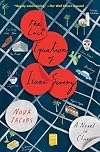
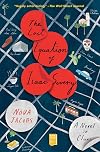
I'll confess that it was the marketing that led me astray on this one. A map on the cover image with marking stickers and apparent sites for clues leads one to believe the hyberbolic promise of the subtitle "A Novel in Clues" and the promo blurbs of "Hugely entertaining." A Edgar Award nomination for Best First Novel seemed to indicate that there would be at least some fulfillment to the promise. Such was not to be show more however.
Family patriarch and mathematical genius Isaac Severy dies of an apparent suicide and leaves a letter to his adopted grand-daughter Hazel which sets her off on a hunt for his rumoured last equation. It turns out that she is in competition on the search with several members of her own family and a suspicious government organization as well. It all plays out with very little suspense and a very anticlimactic conclusion. The "clues" are few and far between and not really anything of the sort where the reader can enjoy attempting to decipher them along the way. Although you would have expected the focus to be on Hazel as the main protagonist, the PoV is split fairly evenly with her uncle Philip and brother Gregory, both of whom are involved in other deceptions that are not very compelling.
Hazel's background as an independent book shop owner also holds out the promise for strings of clues related to books, which is also mostly not fulfilled. The use of F. Scott Fitzgerald's "Tender Is the Night" being the single exception.
This had the makings of a possibly delightful cozy mystery but complicated itself with needless characters and subplots. A tonal shift into the topic of child abuse also felt completely repulsive rather than a cause for empathy. show less
Review of the Touchstone paperback (2018) edition
I'll confess that it was the marketing that led me astray on this one. A map on the cover image with marking stickers and apparent sites for clues leads one to believe the hyberbolic promise of the subtitle "A Novel in Clues" and the promo blurbs of "Hugely entertaining." A Edgar Award nomination for Best First Novel seemed to indicate that there would be at least some fulfillment to the promise. Such was not to be show more however.
Family patriarch and mathematical genius Isaac Severy dies of an apparent suicide and leaves a letter to his adopted grand-daughter Hazel which sets her off on a hunt for his rumoured last equation. It turns out that she is in competition on the search with several members of her own family and a suspicious government organization as well. It all plays out with very little suspense and a very anticlimactic conclusion. The "clues" are few and far between and not really anything of the sort where the reader can enjoy attempting to decipher them along the way. Although you would have expected the focus to be on Hazel as the main protagonist, the PoV is split fairly evenly with her uncle Philip and brother Gregory, both of whom are involved in other deceptions that are not very compelling.
Hazel's background as an independent book shop owner also holds out the promise for strings of clues related to books, which is also mostly not fulfilled. The use of F. Scott Fitzgerald's "Tender Is the Night" being the single exception.
This had the makings of a possibly delightful cozy mystery but complicated itself with needless characters and subplots. A tonal shift into the topic of child abuse also felt completely repulsive rather than a cause for empathy. show less
Awards


You May Also Like


Associated Authors
Statistics
- Works
- 2
- Also by
- 1
- Members
- 720
- Popularity
- #35,253
- Rating
- 3.7
- Reviews
- 32
- ISBNs
- 18