
Ai Jiang
Author of Linghun
About the Author
Works by Ai Jiang
An Empire in the Clouds 1 copy
Associated Works
Silk & Sinew: A Collection of Folk Horror From the Asian Diaspora (2025) — Contributor — 24 copies, 2 reviews
Year's Best Canadian Fantasy and Science Fiction: Volume One (2023) — Contributor — 22 copies, 1 review
Long Division: Stories of Social Decay, Societal Collapse, and Bad Manners — Contributor — 10 copies
Interzone 295 — Short story: We Are a Little Hotel — 9 copies
Collage Macabre: An Exhibition of Art Horror — Contributor — 1 copy
The Earth Bleeds At Night: Anthology of Horror — Contributor — 1 copy
Tagged
Common Knowledge
- Birthdate
- 1997-06-18
- Gender
- female
- Nationality
- Canada
China (birth) - Birthplace
- Changle, Fuzhou, China
- Places of residence
- Toronto, Ontario, Canada
Members
Reviews
Knowing that Linghun would be focused on grief, I took far longer than I might have in getting around to reading it, but I'm so glad I finally did.
A haunting meditation, the novella Linghun is also a magical story which is as sweet as is it is horrific. For readers who've spent serious time wrapped in their own grief, there are moments where which will ring as true as any memory or moment in time, when you'll see each other in each of the characters and their flawed struggles, and too easily show more be able to imagine yourself ensnared in the simple traps laid out in the world Jiang builds here. Because what is so magical here--and so terrifying--is that the grief tearing at each character's fabric is just so connective that it makes each desperate situation understandable, even as different as the characters and their choices may be. As such, the novella is incredibly powerful, and with characters that will live with me for a long time yet. Even as I hated Jiang for making some of the eventual choices she made, I ended up loving the book all the more, and I suppose that goes to show the true craftsmanship here, even atop her gorgeous way with language.
The one caveat I have to give about this book: I actually went in thinking that Linghun was ONLY a novella. I didn't realize there were a few short stories included at the end of the book. The problem, simply, is that while those stories are incredible--wonderful feats of world-building and story-telling in and of themselves--they can't help paling after the depth and power encased in the fuller novella preceding them. I wish I'd known they were there and read them first, to be honest, or simply put the book down for a few weeks and then got back to them, and I think I would have appreciated them more. I'm not sure why the editors made the choice to include them after the novella, but personally, I'd suggest readers experience them seperately, either earlier or quite a bit after, so that they can receive their due attention/worth.
Either way, though, this small collection is wonderful. I'll read anything Jiang writes in the future. show less
A haunting meditation, the novella Linghun is also a magical story which is as sweet as is it is horrific. For readers who've spent serious time wrapped in their own grief, there are moments where which will ring as true as any memory or moment in time, when you'll see each other in each of the characters and their flawed struggles, and too easily show more be able to imagine yourself ensnared in the simple traps laid out in the world Jiang builds here. Because what is so magical here--and so terrifying--is that the grief tearing at each character's fabric is just so connective that it makes each desperate situation understandable, even as different as the characters and their choices may be. As such, the novella is incredibly powerful, and with characters that will live with me for a long time yet. Even as I hated Jiang for making some of the eventual choices she made, I ended up loving the book all the more, and I suppose that goes to show the true craftsmanship here, even atop her gorgeous way with language.
The one caveat I have to give about this book: I actually went in thinking that Linghun was ONLY a novella. I didn't realize there were a few short stories included at the end of the book. The problem, simply, is that while those stories are incredible--wonderful feats of world-building and story-telling in and of themselves--they can't help paling after the depth and power encased in the fuller novella preceding them. I wish I'd known they were there and read them first, to be honest, or simply put the book down for a few weeks and then got back to them, and I think I would have appreciated them more. I'm not sure why the editors made the choice to include them after the novella, but personally, I'd suggest readers experience them seperately, either earlier or quite a bit after, so that they can receive their due attention/worth.
Either way, though, this small collection is wonderful. I'll read anything Jiang writes in the future. show less

I AM AI.This starts fairly strongly. The first-person narrator is a rare human creative worker in a world of AIs; she provides written content for her clients. But her clients don't even want human-generated content, they just want more unique and interesting AI-generated content, so she has to pretend to be an AI to keep up with her competition. But the harder things get for human creators, the more she has to keep show more augmenting herself cybernetically—making herself more and more like her competition. It's a cracker of a premise, delving into the very real issues forthcoming in our own world, and if it had finished as strongly as it started, I am sure I would have enjoyed it a lot. Unfortunately, it has a bit of a cheeseball, simplistic conclusion that meant it ended up not dealing with the complexities of the situation it had set up. show less
It isn't a lie. I am Ai, though not necessarily an actual AI.
This novelette packs an effective punch as it shows us a frightenly plausible future. The short length is perfect as it emphasises the sense of running out of time, and the tension is high throughout. Main character Ai is sympathetic if somewhat remote (understandably). It was almost painful witnessing her make decisions that we (the readers) knew would make everything worse. But those decisions made perfect sense in the context.
Overall, powerful, disturbing and well worth a read.
Overall, powerful, disturbing and well worth a read.
In a Nutshell: A high-fantasy novella about a Tree-like girl seeking revenge against a human. The first of a duology. Grand world-building, okay character development, amazing themes, slow pace, lyrical writing. This could have been a single novel instead of a pair of novellas.
~~~~~~~~~~~~~~~~~~~~~~~
Plot Preview:
For a book of just 192 pages, it sure packs in a lot. With various types of character species, a number of characters, multiple distinct localities, allegorical themes, and ambitious worldbuilding, the novella collapses somewhat under its own weight.
The allegorical content is fabulous. In a very subtle yet impactful way, the plot covers the modern obsessions with commercialism, technology, and human development, all of which are often at the cost of the natural world. The limitless human greed, which doesn’t think twice about anything except itself, is depicted strongly.
The writing is equally excellent. The author’s prose is quite lyrical and vivid, so every single scene comes alive with richness. So much energy has been put in the worldbuilding! However, think of the world building as Google Maps without the ability to zoom in. You can see its immense scope but not the micro-level view of the characters and places except for a few hazy details. Maybe this is revealed in the sequel.
The imaginative characters are also the novel’s strength. The residents of Feng, also called Windwalkers for their ability to command the wind, are strange tree-like humanoids. I am stunned by how true-to-life they felt, which is such an odd thing to say about characters who seem like pseudo-Ents in their appearance.
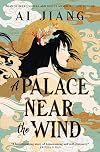
That said, actually picturing these beings was a big challenge, especially considering the misleading cover art. The blurb clearly says: “The Feng people have bark faces, carved limbs, arms of braided branches, and hair of needle threads”, and this is further confirmed multiple times in the book. Now look at the picture of Lufeng on the cover and tell me if any part of this description matches the woman there. It is a stunning cover, no doubt. But it seems to indicate some exotic East-Asian fantasy, which this book isn't.
The pacing is very much on the slower side. It took me ages to get going as the worldbuilding was too dense, but I did go slightly faster towards the end. On the whole though, the content doesn’t allow you to zoom.
Throughout the book, there are plenty of whats and not enough hows or whys. I was hoping at least some of these would be clarified by the ending. But it is rushed, and it leaves us with too many questions. (Heck, I still don’t know why this series is called “Natural Engines”.) The core story arc is not complete by the ending; bad news for those who don’t like cliffhangers.
There’s no doubting the imagination and the writing talent of this author. I had first encountered her writing in Linghun, which was also an allegorical story. But unlike Linghun, this book is a proper high-fantasy. And as we know, high fantasy needs space to create the world and fit in its characters.
The biggest injustice to this plot was done by whoever decided to make it a novella duology instead of a single novel. Such a complex world and varying character types is too hefty for a short work to do justice to. This novella could easily been doubled in length, such that the plot, the characters, as well as the intricacies of the Feng and other worlds could have had more page space to be crafted in detail.
Regardless, I was still captivated by the core plot, the poetic writing, and the allegorical content. I also am curious to see how the story continues and reaches its finale. I’ll probably need to reread this first book when the sequel comes out as it is too convoluted to remember. I just hope the series does end with Book Two and there are no further extensions.
Recommended to high fantasy fans who enjoy lyrical writing and don’t mind a slow pace, unanswered questions, or a cliffhanger ending.
3.5 stars, rounding up for the fabulous allegory and the description of the Wind Walkers.
My thanks to author Ai Jiang for providing me with a complimentary copy of “A Palace Near the Wind” at my request. This review is voluntary and contains my honest opinion about the book.
~~~~~~~~~~~~~~~~~~~~~~~
Connect with me through:
My Blog || The StoryGraph || Instagram || Threads || X/Twitter || Facebook || show less
~~~~~~~~~~~~~~~~~~~~~~~
Plot Preview:
Liu Lufeng is the eldest princess of the Feng, nature-loving and tree-resembling forest dwellers. Because of her grandmother’s insistence on her duty, Lufeng is the next bride ofshow more
the human king. The bridewealth of their proposed wedding is the only way to ensure a future for Feng by stopping the unbridled human expansion into Feng land. Feng has already lost four family members to the king. So Lufeng has a secret agenda – she will kill the king to stop his devious plans. But when she reaches the palace of the human king, she realises that there are many more secrets hidden inside its bone walls, and her earlier plan might not work. How can she save herself, her remaining family members and Feng itself from destruction?
The story comes to us in Lufeng’s first-person POV.
For a book of just 192 pages, it sure packs in a lot. With various types of character species, a number of characters, multiple distinct localities, allegorical themes, and ambitious worldbuilding, the novella collapses somewhat under its own weight.
The allegorical content is fabulous. In a very subtle yet impactful way, the plot covers the modern obsessions with commercialism, technology, and human development, all of which are often at the cost of the natural world. The limitless human greed, which doesn’t think twice about anything except itself, is depicted strongly.
The writing is equally excellent. The author’s prose is quite lyrical and vivid, so every single scene comes alive with richness. So much energy has been put in the worldbuilding! However, think of the world building as Google Maps without the ability to zoom in. You can see its immense scope but not the micro-level view of the characters and places except for a few hazy details. Maybe this is revealed in the sequel.
The imaginative characters are also the novel’s strength. The residents of Feng, also called Windwalkers for their ability to command the wind, are strange tree-like humanoids. I am stunned by how true-to-life they felt, which is such an odd thing to say about characters who seem like pseudo-Ents in their appearance.
That said, actually picturing these beings was a big challenge, especially considering the misleading cover art. The blurb clearly says: “The Feng people have bark faces, carved limbs, arms of braided branches, and hair of needle threads”, and this is further confirmed multiple times in the book. Now look at the picture of Lufeng on the cover and tell me if any part of this description matches the woman there. It is a stunning cover, no doubt. But it seems to indicate some exotic East-Asian fantasy, which this book isn't.
The pacing is very much on the slower side. It took me ages to get going as the worldbuilding was too dense, but I did go slightly faster towards the end. On the whole though, the content doesn’t allow you to zoom.
Throughout the book, there are plenty of whats and not enough hows or whys. I was hoping at least some of these would be clarified by the ending. But it is rushed, and it leaves us with too many questions. (Heck, I still don’t know why this series is called “Natural Engines”.) The core story arc is not complete by the ending; bad news for those who don’t like cliffhangers.
There’s no doubting the imagination and the writing talent of this author. I had first encountered her writing in Linghun, which was also an allegorical story. But unlike Linghun, this book is a proper high-fantasy. And as we know, high fantasy needs space to create the world and fit in its characters.
The biggest injustice to this plot was done by whoever decided to make it a novella duology instead of a single novel. Such a complex world and varying character types is too hefty for a short work to do justice to. This novella could easily been doubled in length, such that the plot, the characters, as well as the intricacies of the Feng and other worlds could have had more page space to be crafted in detail.
Regardless, I was still captivated by the core plot, the poetic writing, and the allegorical content. I also am curious to see how the story continues and reaches its finale. I’ll probably need to reread this first book when the sequel comes out as it is too convoluted to remember. I just hope the series does end with Book Two and there are no further extensions.
Recommended to high fantasy fans who enjoy lyrical writing and don’t mind a slow pace, unanswered questions, or a cliffhanger ending.
3.5 stars, rounding up for the fabulous allegory and the description of the Wind Walkers.
My thanks to author Ai Jiang for providing me with a complimentary copy of “A Palace Near the Wind” at my request. This review is voluntary and contains my honest opinion about the book.
~~~~~~~~~~~~~~~~~~~~~~~
Connect with me through:
My Blog || The StoryGraph || Instagram || Threads || X/Twitter || Facebook || show less
Lists
Awards


You May Also Like
Associated Authors
Statistics
- Works
- 13
- Also by
- 15
- Members
- 342
- Popularity
- #69,720
- Rating
- 3.5
- Reviews
- 28
- ISBNs
- 17
- Languages
- 1