
Jiang Yang (1911–2016)
Author of Six Chapters from My Life "Downunder"
About the Author
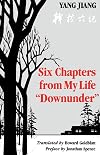
Yang Jiang was born in Beijing, China on July 17, 1911. She studied political science at Soochow University and later enrolled at Tsinghua University in Beijing. After marrying Qian Zhongshu in 1935, they moved to England and then Paris. They moved back to China in 1938. In the 1940s, Yang Jiang show more found success as a playwright in wartime Shanghai with a series of witty comedies. After the Communists took power in 1949, the couple moved to Beijing, where she taught and worked on translation projects. During the Cultural Revolution, she and her husband were sent to the countryside in Henan Province and consigned to reform through labor. They remained in Henan for several years. Her memoir about these years, Six Chapters from My Life "Downunder," was published in 1981. Her other works include Baptism and We Three. She translated Don Quixote and Plato's Phaedo. She died on May 25, 2016 at the age of 104. (Bowker Author Biography) show less
Works by Jiang Yang
Associated Works
Tagged
Common Knowledge
- Birthdate
- 1911-07-17
- Date of death
- 2016-05-25
- Gender
- female
- Education
- University of Oxford
Soochow University, Taiwan
Tsinghua University, Beijing, China - Occupations
- memoirist
essayist
translator
novelist
playwright - Nationality
- China
- Birthplace
- Beijing, China
- Place of death
- Beijing, China
- Associated Place (for map)
- Beijing, China
Members
Reviews

Cadre schools have a somewhat innocuous sound to them, perhaps places where civil servants go off to study the latest policy initiatives. In the People’s Republic of China during the Cultural Revolution, that was definitely not the case. Rather they were labour camps where people of suspect background were sent to be re-educated under dismal conditions.
Yang Jiang was a prime candidate for this reform through labour. Her education had included stints at both Oxford and the University of show more Paris. She and her husband were both fluent in French. She was a translator into Chinese of European literature, including Don Quixote. How could she not be suspect?
Yang and her husband, the scholar Qian Zhongshu, were sent to a cadre school in the fall of 1969. There in rural Henan province, they would work, study, and do everything they could to survive for the next two years. Although they were sent to the same school, they lived in different regiments, divided by gender and work load.
Yang’s particular unit was to directed to grow vegetables. This entailed digging a well, building huts, building irrigation systems, and setting up beds, all before the first seeds could be sown. As soon as anything emerged, it was a constant battle with local villagers to keep the crops from being stolen .One of the few personal things Yang says is that her time working in the fields taught her to think of an “us”, of a unit, instead of the academic “I”.
One day, the entire enterprise was moved to a new location. Everything they had built had to be torn down and pulled out. The fields were levelled before they left. The new quarters were somewhat better, and the work load was much lighter; instead the concentration was on political thought. In the late spring of 1971, a group of “old, weak, ill, and disabled cadres” was given permission to return to Beijing. This group included Yang and her husband, then in their sixties.
Yang’s account of her time in the cadre school in strangely laconic. It is so flat that it wasn’t until I reached the last page and found a date from 1994 that I realised I had read it before. Accounts by other authors contain details of events only alluded to in Yang’s book, as if from a distance. Why was this I wondered.
The translator, Geremie Barmé gives an explanation. Although both Yang and Qian had lived and studied abroad, they had returned to China in 1938, turning down offers of work elsewhere. He says They saw their personal fate irrevocable linked with China”. Yang says in her last paragraph only all of the little details and personal concerns of those days are still fresh in my mind. Those years provided me with a rare and unforgettable experience, and these six chapters are my record of them.
Was this her usual way of expression? Her book received official approval. Did she restrain herself deliberately knowing she and her husband would continue to live in the PRC? She never did say. Yang Jiang died in Beijing in 2016, aged 104, a death which was reported in the People’s Daily, a sign of high regard.
______________
*In her western obituary*, the New York Times called her book a “stoically restrained memoir”.
The NYT obituary references another later translation by Howard Goldblatt.
https://www.nytimes.com/2016/05/27/books/yang-jiang-chinese-author-and-translato... show less
Yang Jiang was a prime candidate for this reform through labour. Her education had included stints at both Oxford and the University of show more Paris. She and her husband were both fluent in French. She was a translator into Chinese of European literature, including Don Quixote. How could she not be suspect?
Yang and her husband, the scholar Qian Zhongshu, were sent to a cadre school in the fall of 1969. There in rural Henan province, they would work, study, and do everything they could to survive for the next two years. Although they were sent to the same school, they lived in different regiments, divided by gender and work load.
Yang’s particular unit was to directed to grow vegetables. This entailed digging a well, building huts, building irrigation systems, and setting up beds, all before the first seeds could be sown. As soon as anything emerged, it was a constant battle with local villagers to keep the crops from being stolen .One of the few personal things Yang says is that her time working in the fields taught her to think of an “us”, of a unit, instead of the academic “I”.
One day, the entire enterprise was moved to a new location. Everything they had built had to be torn down and pulled out. The fields were levelled before they left. The new quarters were somewhat better, and the work load was much lighter; instead the concentration was on political thought. In the late spring of 1971, a group of “old, weak, ill, and disabled cadres” was given permission to return to Beijing. This group included Yang and her husband, then in their sixties.
Yang’s account of her time in the cadre school in strangely laconic. It is so flat that it wasn’t until I reached the last page and found a date from 1994 that I realised I had read it before. Accounts by other authors contain details of events only alluded to in Yang’s book, as if from a distance. Why was this I wondered.
The translator, Geremie Barmé gives an explanation. Although both Yang and Qian had lived and studied abroad, they had returned to China in 1938, turning down offers of work elsewhere. He says They saw their personal fate irrevocable linked with China”. Yang says in her last paragraph only all of the little details and personal concerns of those days are still fresh in my mind. Those years provided me with a rare and unforgettable experience, and these six chapters are my record of them.
Was this her usual way of expression? Her book received official approval. Did she restrain herself deliberately knowing she and her husband would continue to live in the PRC? She never did say. Yang Jiang died in Beijing in 2016, aged 104, a death which was reported in the People’s Daily, a sign of high regard.
______________
*In her western obituary*, the New York Times called her book a “stoically restrained memoir”.
The NYT obituary references another later translation by Howard Goldblatt.
https://www.nytimes.com/2016/05/27/books/yang-jiang-chinese-author-and-translato... show less

Contemporary Chinese Literature, Chinese Memoir, Cultural Revolution
Lists
Awards

You May Also Like
Associated Authors
Statistics
- Works
- 21
- Also by
- 1
- Members
- 158
- Popularity
- #133,025
- Rating
- 3.5
- Reviews
- 3
- ISBNs
- 50
- Languages
- 4