
Tae Keller
Author of When You Trap a Tiger
Series
Works by Tae Keller
Tagged
Common Knowledge
- Birthdate
- 1993
- Gender
- female
- Nationality
- USA
- Birthplace
- Honolulu, Hawaii, USA
- Associated Place (for map)
- Hawaii, USA
Members
Reviews
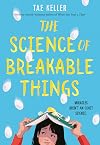
Entering seventh grade is particularly challenging for Natalie, not because of academics or friendships necessarily, but because her mother is going through a major depressive episode and her parents don’t want to talk about it. Encouraged by her science teacher to enter an egg drop competition, Natalie is determined to win because there’s a cash prize that she thinks will help her mother return to ‘normal’ again.
This book was very engaging, written in the style of a school notebook show more for science class, interspersing observations and footnotes with Natalie’s distinct voice. Natalie’s friends and schoolmates round out the cast of characters who are quirky but believable. The book is an emotional rollercoaster – in a good way – as readers experience the tension of the egg drop competition and the sadness that Natalie feels when she sees her mother doing unwell. This is a great read for those who like character-driven realistic fiction. show less
This book was very engaging, written in the style of a school notebook show more for science class, interspersing observations and footnotes with Natalie’s distinct voice. Natalie’s friends and schoolmates round out the cast of characters who are quirky but believable. The book is an emotional rollercoaster – in a good way – as readers experience the tension of the egg drop competition and the sadness that Natalie feels when she sees her mother doing unwell. This is a great read for those who like character-driven realistic fiction. show less

"A young girl bargaining for the health of her grandmother discovers both her family’s past and the strength of her own voice.
For many years, Lily’s Korean grandmother, Halmoni, has shared her Asian wisdom and healing powers with her predominantly White community. When Lily, her sister, Sam—both biracial, Korean and White—and their widowed mom move in with Halmoni to be close with her as she ages, Lily begins to see a magical tiger. What were previously bedtime stories become show more dangerously prophetic, as Lily begins to piece together fact from fiction. There is no need for prior knowledge of Korean folktales, although a traditional Korean myth propels the story forward. From the tiger, Lily learns that Halmoni has bottled up the hard stories of her past to keep sadness at bay. Lily makes a deal with the tiger to heal her grandmother by releasing those stories. What she comes to realize is that healing doesn’t mean health and that Halmoni is not the only one in need of the power of storytelling. Interesting supporting characters are fully developed but used sparingly to keep the focus on the simple yet suspenseful plot. Keller infuses this tale, which explores both the end of life and coming-of-age, with a sensitive examination of immigration issues and the complexity of home. It is at one and the same time completely American and thoroughly informed by Korean culture.
Longing—for connection, for family, for a voice—roars to life with just a touch of magic. (Fiction. 10-14)" A Kirkus Starred Review, www.kirkusreviews.com show less
For many years, Lily’s Korean grandmother, Halmoni, has shared her Asian wisdom and healing powers with her predominantly White community. When Lily, her sister, Sam—both biracial, Korean and White—and their widowed mom move in with Halmoni to be close with her as she ages, Lily begins to see a magical tiger. What were previously bedtime stories become show more dangerously prophetic, as Lily begins to piece together fact from fiction. There is no need for prior knowledge of Korean folktales, although a traditional Korean myth propels the story forward. From the tiger, Lily learns that Halmoni has bottled up the hard stories of her past to keep sadness at bay. Lily makes a deal with the tiger to heal her grandmother by releasing those stories. What she comes to realize is that healing doesn’t mean health and that Halmoni is not the only one in need of the power of storytelling. Interesting supporting characters are fully developed but used sparingly to keep the focus on the simple yet suspenseful plot. Keller infuses this tale, which explores both the end of life and coming-of-age, with a sensitive examination of immigration issues and the complexity of home. It is at one and the same time completely American and thoroughly informed by Korean culture.
Longing—for connection, for family, for a voice—roars to life with just a touch of magic. (Fiction. 10-14)" A Kirkus Starred Review, www.kirkusreviews.com show less
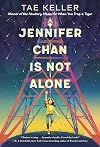
Despite what the title implies, Jennifer Chan is not the focus of this book. Except, of course, that it’s all about her. But Jennifer isn’t the protagonist; that’s 12-year-old Mallory Moss, who narrates the story for the reader. Mallory lives across the street from Jennifer Chan, the new girl in town who somehow already has rumors swirling all about her, despite no one in their school having met her yet. Mallory is intrigued by Jennifer’s confidence and her quest to find show more extraterrestrial life, but not enough to gamble her social capital on it. For Mallory is one of the popular girls at school, and she doesn’t want to risk that, especially because she tends to have a lot of anxiety in general. When Jennifer goes missing right after something Mallory calls “the Incident” and many suspect she has run away, Mallory is convinced that Jennifer must have found evidence of extraterrestrial life, and now Mallory must also track down and contact the aliens to find Jennifer. Because if the aliens didn’t take Jennifer, then there’s a very real possibility that Mallory has to face her own conscience and decide if Jennifer’s actions are a result of her own.
This book is very interesting and engaging, pulling the reader into its world immediately and taking hold. Being written by Tae Keller, the book is unsurprisingly full of absolutely beautiful prose. I love how Keller makes the theme of each of her books a recurring motif in the writing style, without being too hamfisted about it. Here, metaphors about space sneak their way into all kinds of situations and thoughts. For instance, when Mallory and her schoolmates try to signal aliens through a radio station, she narrates, “We wait. These minutes last so long you could stuff entire galaxies into them.” There’s tons of little moments like this, and they all feel so organic and perfect. While the book is mostly taking place in the here and now, some chapters alternate to the recent past of Jennifer’s introduction to the neighborhood and school, with little bits of Mallory’s role being revealed each time. These build tension up surrounding the mysterious “Incident.” Occasionally interspersed between the chapters are short entries from Jennifer’s notebooks full of observations about aliens, the universe, and her own family dynamics.
As much as this book is about aliens on the surface level, it is firmly rooted in the realistic fiction genre and is much more a testament about personal character development than anything else. Mallory is torn between wanting to be popular, wanting to be good, and trying to understand who in her life is trustworthy and truly kind. It’s a story about the search for one’s identity that just so happens to be couched in a story about the search for extraterrestrial life. Consider another piece of Mallory’s narration: “... I climb out my window again, just to look up at that infinite sky. Why would aliens come so far, just for us? If they’re not planning to interfere, what are they looking for? What are they trying to learn? I imagine them asking questions I don’t know how to answer. How are you? Who are you? Who do you think you are?” These italicized questions are central ones that Mallory, and by extension the reader, are trying to answer.
I appreciated that while there are certainly lessons to be learned here about being yourself, standing up against bullying, and so on, Keller doesn’t provide easy answers or moralistic one-liners. She reflects the reality of life in all its complexities, including that a person could be a supportive friend to one person but that doesn’t necessarily mean they are a good person all around. The book itself reads pretty quickly because of the beautiful writing and the compelling story, but you’ll be left with plenty to chew over and think about when you’re done reading it.
All of this is made that much more poignant by reading the Author’s Note at the end of the book, in which Keller reveals that she was much like the Jennifer character in school, being bullied by classmates and so-called friends. She goes on to explain how she processed and dealt with her own “Incident” well in adulthood, and reconnected with her former bullies to discover how they had grown since then. show less
This book is very interesting and engaging, pulling the reader into its world immediately and taking hold. Being written by Tae Keller, the book is unsurprisingly full of absolutely beautiful prose. I love how Keller makes the theme of each of her books a recurring motif in the writing style, without being too hamfisted about it. Here, metaphors about space sneak their way into all kinds of situations and thoughts. For instance, when Mallory and her schoolmates try to signal aliens through a radio station, she narrates, “We wait. These minutes last so long you could stuff entire galaxies into them.” There’s tons of little moments like this, and they all feel so organic and perfect. While the book is mostly taking place in the here and now, some chapters alternate to the recent past of Jennifer’s introduction to the neighborhood and school, with little bits of Mallory’s role being revealed each time. These build tension up surrounding the mysterious “Incident.” Occasionally interspersed between the chapters are short entries from Jennifer’s notebooks full of observations about aliens, the universe, and her own family dynamics.
As much as this book is about aliens on the surface level, it is firmly rooted in the realistic fiction genre and is much more a testament about personal character development than anything else. Mallory is torn between wanting to be popular, wanting to be good, and trying to understand who in her life is trustworthy and truly kind. It’s a story about the search for one’s identity that just so happens to be couched in a story about the search for extraterrestrial life. Consider another piece of Mallory’s narration: “... I climb out my window again, just to look up at that infinite sky. Why would aliens come so far, just for us? If they’re not planning to interfere, what are they looking for? What are they trying to learn? I imagine them asking questions I don’t know how to answer. How are you? Who are you? Who do you think you are?” These italicized questions are central ones that Mallory, and by extension the reader, are trying to answer.
I appreciated that while there are certainly lessons to be learned here about being yourself, standing up against bullying, and so on, Keller doesn’t provide easy answers or moralistic one-liners. She reflects the reality of life in all its complexities, including that a person could be a supportive friend to one person but that doesn’t necessarily mean they are a good person all around. The book itself reads pretty quickly because of the beautiful writing and the compelling story, but you’ll be left with plenty to chew over and think about when you’re done reading it.
All of this is made that much more poignant by reading the Author’s Note at the end of the book, in which Keller reveals that she was much like the Jennifer character in school, being bullied by classmates and so-called friends. She goes on to explain how she processed and dealt with her own “Incident” well in adulthood, and reconnected with her former bullies to discover how they had grown since then. show less

From the day Mallory Moss meets her new neighbor Jennifer Chan, she knows there's going to be social trouble when school begins in the fall. Mallory is best friends with Reagan and Tess, and Jennifer - with her self-confidence, belief in aliens (and research notebooks of evidence), and capoeira - is not going to fit in. Mallory takes part in a bullying incident with Reagan and Tess, and soon afterward, Jennifer disappears. Has she found the aliens at last (or have they found her), or did show more Mallory's actions cause her to run away? Mallory joins forces with former friend Ingrid and Ingrid's friend Kath, members of the science club, to find Jennifer and make amends.
See also: The Shape of Thunder by Jasmine Warga, The Insiders by Mark Oshiro, Merci Suarez Changes Gears by Meg Medina, Wolf Hollow by Lauren Wolk
Quotes
In Nowheresville, someone's always saying something, and nobody knows what's real. But the truth doesn't always matter. Sometimes the idea of someone, the things people say about them , matters so much more. Because when you think about it, isn't that who we really are - a collection of the things people think about us? (14)
"Most people run from the truth. But I run toward it. I'm going to make history. I'm going to change the world." (Jennifer to Mallory, 28)
For whatever reason, the universe decided that I had to worry, all the time, about how things looked and what people thought, and Jennifer just...didn't. (40)
"I think you're trying to do the right thing. And when people are trying to do the right thing, it's probably the right thing to help them, right?" (Kath, 74)
For the first time, I wonder if my friends are good people. And I wonder if I am. (86)
It's hard to do it alone, of course, because the world is easier with someone who gets you. (Jennifer's journal 93)
A weird thing happens when you see something with your own eyes and then you hear about it later. It's like your reality merges with the rumors, and you aren't sure what's real anymore. You can't trust your own memory.
But here's what I remember:..." (107)
"Maybe it's more complicated than knowing the right thing. Maybe people are just trying to balance helping other people and keeping themselves safe." (Mal to Kath, 123)
Maybe I am someone new, someone fearless. And maybe I don't need anyone else to see that in me. Maybe it's enough to see it in myself." (153)
And then I wonder: How many followers does it take to make a leader? And what if someone decided not to follow? (163)
How much difference can one human possibly make? (182)
A weird thing happens when you see something with your own eyes - when you participate, when you do something wrong - and nobody ever talks about it again. The less you hear about it, the more you tell yourself it never happened at all. You can shove reality into the shadows of your mind, so it's always lurking but never fully present. You're afraid of your own memory. You're afraid to believe it. (223)
"You have to be kind enough to forgive yourself when you make mistakes. You have to trust yourself to fix them." (Mom to Mal, 229)
Why are people afraid to believe? Maybe it's because if they believe in a better world, then they have to work to make that world happen. (250) show less
See also: The Shape of Thunder by Jasmine Warga, The Insiders by Mark Oshiro, Merci Suarez Changes Gears by Meg Medina, Wolf Hollow by Lauren Wolk
Quotes
In Nowheresville, someone's always saying something, and nobody knows what's real. But the truth doesn't always matter. Sometimes the idea of someone, the things people say about them , matters so much more. Because when you think about it, isn't that who we really are - a collection of the things people think about us? (14)
"Most people run from the truth. But I run toward it. I'm going to make history. I'm going to change the world." (Jennifer to Mallory, 28)
For whatever reason, the universe decided that I had to worry, all the time, about how things looked and what people thought, and Jennifer just...didn't. (40)
"I think you're trying to do the right thing. And when people are trying to do the right thing, it's probably the right thing to help them, right?" (Kath, 74)
For the first time, I wonder if my friends are good people. And I wonder if I am. (86)
It's hard to do it alone, of course, because the world is easier with someone who gets you. (Jennifer's journal 93)
A weird thing happens when you see something with your own eyes and then you hear about it later. It's like your reality merges with the rumors, and you aren't sure what's real anymore. You can't trust your own memory.
But here's what I remember:..." (107)
"Maybe it's more complicated than knowing the right thing. Maybe people are just trying to balance helping other people and keeping themselves safe." (Mal to Kath, 123)
Maybe I am someone new, someone fearless. And maybe I don't need anyone else to see that in me. Maybe it's enough to see it in myself." (153)
And then I wonder: How many followers does it take to make a leader? And what if someone decided not to follow? (163)
How much difference can one human possibly make? (182)
A weird thing happens when you see something with your own eyes - when you participate, when you do something wrong - and nobody ever talks about it again. The less you hear about it, the more you tell yourself it never happened at all. You can shove reality into the shadows of your mind, so it's always lurking but never fully present. You're afraid of your own memory. You're afraid to believe it. (223)
"You have to be kind enough to forgive yourself when you make mistakes. You have to trust yourself to fix them." (Mom to Mal, 229)
Why are people afraid to believe? Maybe it's because if they believe in a better world, then they have to work to make that world happen. (250) show less
Lists
Awards


You May Also Like


Associated Authors
Statistics
- Works
- 10
- Members
- 1,969
- Popularity
- #13,056
- Rating
- 4.1
- Reviews
- 101
- ISBNs
- 80
- Languages
- 4
- Favorited
- 1