
Jon Klassen
Author of I Want My Hat Back
About the Author
Jon Klassen is a writer and illustrator of children's books. He won the 2013 Caldecott Medal for illustration, recognizing This Is Not My Hat, which he also wrote. He is also well known for his 2011 picture book I Want My Hat Back. Jon studied animation at Sheridan College. He moved to Los Angeles show more after graduation and made an animated short with Dan Rodriques, An Eye for Annai. He worked on Neil Gaiman's Coralin and Kung Fu Panda, and was the art director for U2's animated video for I'll Go Crazy If I Don't Go Crazy Tonight." (Bowker Author Biography) show less
Series
Works by Jon Klassen
Your Truck: (A Board Book with Minimalist Illustrations That Explores Ownership, Imagination, and Perspective) (Your Things) (2026) 23 copies, 1 review
Have You Seen My Hat? 1 copy
PAX JOURNEY HOME 1 copy
Ta ferme 1 copy
Deine Insel – Neuheit vom Gewinner des Astrid Lindgren Memorial Award 2026! (Klassen Deine Orte) 1 copy
Your Rock (Your Things) 1 copy
Associated Works
The Watch That Ends the Night: Voices from the Titanic (2011) — Cover artist — 422 copies, 36 reviews
William Shakespeare Punches a Friggin' Shark and/or Other Stories (2017) — Illustrator — 52 copies, 1 review
Tagged
Common Knowledge
- Birthdate
- 1981
- Gender
- male
- Education
- Sheridan College (Animation, 2005)
- Awards and honors
- Governor General's Award
Astrid Lindgren Memorial Award (2026) - Agent
- Steven Malk (Writers House)
- Nationality
- Canada
- Birthplace
- Niagara Falls, Ontario, Canada
- Places of residence
- Niagara Falls, Ontario, Canada
Los Angeles, California, USA - Associated Place (for map)
- Canada
Members
Reviews

I'm not sure how Klassen's hat books continue to be so appealing. I think it's that his stories manage to tap into pretty deep emotions, while keeping zen-like calm through simple declarative text. Also the subtexts that tell the real story are so charming and silly and obvious. This is a great book about friendship and jealousy and kindness and empathy. About making kind choices and not betraying trust, even when it's tempting to do otherwise. Or about 2 turtles and a hat. Good times.
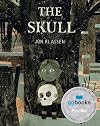
One of my favourite areas of interest is the subtle dark pagan culture of the Alps, which I didn't realize was even a thing until I started exploring the Alps in real life. I can't get enough of learning about it. So when I heard about this children's book, I had to order it immediately.
Canadian children's author Jon Klassen , while visiting a library in Alaska, came across this retelling of a tale in a book written in the 1960s. He thought about it for a year before contacting the library show more to have them help him remember what he read, and when he reread the story, he found that he had changed it significantly. In the tradition of folktales, this is his version.
Otilla runs away in the dark of night, deep, deep into the forest. Eventually she comes across an abandoned great house, which is occupied by a skull which can move around, speak, and act human. They make friends, and he shows her around the vast house before night falls and they have to fight off the headless skeleton.
Does it make sense? Within the world of this book, yes.
Recommended for: lovers of odd stories and new takes on old legends. This is written for kids who are just getting into chapter books (or even a little before). It is not scary, but if your child has only ever seen flowers and rainbows, it might be a titch dark. Or maybe it's time for a titch dark. show less
Canadian children's author Jon Klassen , while visiting a library in Alaska, came across this retelling of a tale in a book written in the 1960s. He thought about it for a year before contacting the library show more to have them help him remember what he read, and when he reread the story, he found that he had changed it significantly. In the tradition of folktales, this is his version.
Otilla runs away in the dark of night, deep, deep into the forest. Eventually she comes across an abandoned great house, which is occupied by a skull which can move around, speak, and act human. They make friends, and he shows her around the vast house before night falls and they have to fight off the headless skeleton.
Does it make sense? Within the world of this book, yes.
Recommended for: lovers of odd stories and new takes on old legends. This is written for kids who are just getting into chapter books (or even a little before). It is not scary, but if your child has only ever seen flowers and rainbows, it might be a titch dark. Or maybe it's time for a titch dark. show less
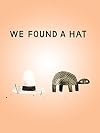
I love this book, but in some ways I'm not sure it works as a children's book. My toddler seems to like it, and maybe even seems to get the basic gist of what's going on, but what's great about it is how little is explicitly said. Almost all the narrative work is done by the (very simple) drawings, and the emotional clues we pick up by following a character's line of sight. It's quite complex in that way, despite superficially seeming incredibly simple.
Anyway, I don't usually review my show more kid's books, but this one really strikes me as something special. It's beautiful and subtle and strange in all the right ways. show less
Anyway, I don't usually review my show more kid's books, but this one really strikes me as something special. It's beautiful and subtle and strange in all the right ways. show less

Otilla runs away in this beginning chapter-book retelling of a Tyrolean folktale from award-winning author/illustrator Jon Klassen, making her way through the dark woods until she reaches an old, seemingly abandoned house. Here she discovers a skull in residence, and once permitted entry to the house, becomes friends with this odd being—clearly a ghost of the house's prior owner. Defending the skull against the headless skeleton which would claim it, Otilla goes to great lengths to defend show more her new friend, and having done so, finds her reward...
Published last year (2023), The Skull: A Tyrolean Folktale is an adaptation of a traditional Tyrolean tale that Jon Klassen encountered in Ruth Manning-Sanders' 1969 collection, A Book of Ghosts and Goblins, a volume which I own, and which I read many years ago. According to his author's note, he significantly changed the ending, transforming the tale into the story that he remembered reading, after a gap of one year, rather than the tale he actually read. I appreciated his transparency in this issue, and his thoughts on the transmission of folklore. While I do often prefer the original versions of stories, finding them more authentic, I also acknowledge that folklore itself came about because of such transformations as Klassen's. I suppose my own attitude is that we no longer live in a predominantly oral age, making written sources more important than they might have been in prior generations. In light of this, I still prefer the originals, although I do find transformative retellings acceptable when done honestly, with transparency as to source, and without ideological bias (i.e., attempts to make folklore "diverse" by changing cultural and racial identities, rather than highlighting and presenting the great diversity and cultural richness of existing folklore).
In any case, leaving all that aside, I found this one immensely engaging, appreciating both the story and the artwork. I always enjoy Jon Klassen's dry sense of humor, which comes through here in particular in the dialogue between Otilla and the skull. I also appreciated the decisive thoroughness with with our heroine deconstructs the headless skeleton. The artwork is classic Klassen—muted but also very expressive. This is the length of a short novel, and has chapters, but is also very short and simple, textually speaking. I'd recommend it to beginning readers who are just getting going on longer fiction. It's a little scary in places, so adult caregivers should keep that in mind, of course. As for me, I think I need to reread that Ruth Manning-Sanders book, as well as some of her others—she used to be a favorite of mine, when I was a girl! show less
Published last year (2023), The Skull: A Tyrolean Folktale is an adaptation of a traditional Tyrolean tale that Jon Klassen encountered in Ruth Manning-Sanders' 1969 collection, A Book of Ghosts and Goblins, a volume which I own, and which I read many years ago. According to his author's note, he significantly changed the ending, transforming the tale into the story that he remembered reading, after a gap of one year, rather than the tale he actually read. I appreciated his transparency in this issue, and his thoughts on the transmission of folklore. While I do often prefer the original versions of stories, finding them more authentic, I also acknowledge that folklore itself came about because of such transformations as Klassen's. I suppose my own attitude is that we no longer live in a predominantly oral age, making written sources more important than they might have been in prior generations. In light of this, I still prefer the originals, although I do find transformative retellings acceptable when done honestly, with transparency as to source, and without ideological bias (i.e., attempts to make folklore "diverse" by changing cultural and racial identities, rather than highlighting and presenting the great diversity and cultural richness of existing folklore).
In any case, leaving all that aside, I found this one immensely engaging, appreciating both the story and the artwork. I always enjoy Jon Klassen's dry sense of humor, which comes through here in particular in the dialogue between Otilla and the skull. I also appreciated the decisive thoroughness with with our heroine deconstructs the headless skeleton. The artwork is classic Klassen—muted but also very expressive. This is the length of a short novel, and has chapters, but is also very short and simple, textually speaking. I'd recommend it to beginning readers who are just getting going on longer fiction. It's a little scary in places, so adult caregivers should keep that in mind, of course. As for me, I think I need to reread that Ruth Manning-Sanders book, as well as some of her others—she used to be a favorite of mine, when I was a girl! show less
Lists
Awards


You May Also Like


Associated Authors
Statistics
- Works
- 37
- Also by
- 19
- Members
- 15,539
- Popularity
- #1,460
- Rating
- 4.1
- Reviews
- 1,193
- ISBNs
- 347
- Languages
- 18
- Favorited
- 9
