
Lawrence Lessig
Author of Free Culture: The Nature and Future of Creativity
About the Author
Lawrence Lessig is the Roy L. Furman Professor of Law and Leadership at Harvard Law School, host of the podcast Another Way, and co-founder of Creative Commons. Lessig has received numerous awards, including a Webby Life Time Achievement Award and the Free Software Foundation's Freedom Award. He is show more the author of ten books, including Republic, Lost, and a member of the American Academy of Arts and Sciences and the American Philosophical Society. He lives in Brookline, Massachusetts. show less
Image credit: Joi Ito
Works by Lawrence Lessig
One Way Forward: The Outsider's Guide to Fixing the Republic (Kindle Single) (2012) 32 copies, 2 reviews
Laws that Choke Creativity 1 copy
Open Code and Open Societies 1 copy
Associated Works
Free Software, Free Society: Selected Essays of Richard M. Stallman (2002) — Introduction — 318 copies, 3 reviews
The Boy Who Could Change the World: The Writings of Aaron Swartz (2016) — some editions — 123 copies, 2 reviews
Good Faith Collaboration: The Culture of Wikipedia (2010) — Foreword, some editions — 79 copies, 1 review
Tagged
Common Knowledge
- Canonical name
- Lessig, Lawrence
- Legal name
- Lessig, Lester Lawrence, III
- Other names
- Lessig, Larry
- Birthdate
- 1961-06-03
- Gender
- male
- Education
- University of Pennsylvania (BA|Economics|BS|Management|1983)
Trinity College, Cambridge (MA|Philosophy|1986)
Yale Law School (JD|1989) - Occupations
- professor (law)
journalist
writer
author - Organizations
- Stanford Law School
Harvard Law School
University of Chicago
Free Software Foundation
Electronic Frontier Foundation
Public Library of Science (show all 8)
Public Knowledge
Creative Commons - Awards and honors
- American Philosophical Society (2007)
American Academy of Arts & Sciences (2006) - Relationships
- Neuefeind, Bettina (spouse)
- Nationality
- USA
- Birthplace
- Rapid City, South Dakota, USA
- Places of residence
- Stanford, California, USA
Williamsport, Pennsylvania, USA - Map Location
- South Dakota, USA
Members
Reviews
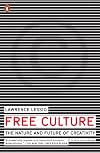
Given all the hype over this book, including the comments I've heard from several people with whom I'm acquainted to the effect that this book changed people's lives or how they thought about things, it is rather disappointing to finish reading it with the same opinion I had after reading the first chapter:
It's pretty damned mediocre.
Lessig appears to have written this book after he read Peter Drahos' text Information Feudalism, which makes the disappointment even sharper, given that the show more greatest value of Free Culture seems to be his recounting of examples and observations of the problems of an "intellectual property" restrictive culture gone wildly out of control. That's basically the same thing as roughly half the primary value of Information Feudalism but, even with that earlier book to inspire and guide him, Lessig's treatment of that subject matter falls well short of the bar set by Drahos' book.
My favorite way to define cynic is "an idealist who learns from experience", which I think describes me pretty well. Lessig appears to be an idealist who does not learn from experience, whose biases stand in the way of really examining where he stands and what he thinks in a meaningful manner, and finding new insights. Even his direct explanation of his experience taking a case to the US Supreme Court, and learning important lessons from his failure there, does not really seem to indicate he learned anything worthwhile. He seems to have only learned new ways to make excuses for the naive ideological biases he carries with him about the law, the common platitudes about the relationship between copyright and starving artists, and other inanities. He's a lawyer, of course, and a law professor, and probably cannot continue working in that field as he does now without adhering to those unquestioned biases of his -- but that is not an acceptable excuse for his willful ignorance when he then tries to indoctrinate others with the same notions.
Throughout the book, he spends a great deal of time explaining how our restrictive copyright culture in the US is destroying pretty much all the rest of our culture, and touches on similar problems in other parts of the world in passing. He stresses his desire to take a "middle path" between the "copyright warriors" (those who support locking down our culture as a set of properties controlled by a tiny minority of corporate interests) and the "anarchists" (those who wish to abolish copyright altogether). His entire argument seems to rest on tradition and some hand-wavy notions about how the law is all about "balance". He manages to subtly miscast the state of "copyright" before there was copyright as we would recognize it today, suggesting that before the beginnings of the current copyright regime all the world of culture was somehow owned in perpetuity with no way for anyone to expand upon what came before, which is patently ludicrous nonsense, though I don't think he does this maliciously.
In the process of portraying the controversy over the state of copyright as a war between extremes, both of which are (he claims) horribly wrong, he manages to make the copyright abolitionists look like cackling villains who would reduce all the world to dust, rot, and stagnation, a blasted post-apocalyptic wasteland in the realm of culture, by saying almost nothing about them apart from his strident claims he is not among them. He even goes so far as to say that if the only choice was between the extremes he describes he would choose the route of absolute, perpetual, multinational corporate control of all culture.
In the midst of all this, he utterly fails to make any meaningful argument at all that copyright abolition, or even a less restrictive copyright regime than he proposes, would cause any actual harm at all. He states that great harm would be caused, several times, especially when he makes sudden (and strangely inappropriate) apologies for having the temerity to oppose corporate market domination even a little, but the statements come with precisely zero supporting argument. In fact, by implication, many of his examples of how to improve things by reducing the autocratic control of culture would serve exceedingly well to strongly support copyright abolition.
You may believe you have strong arguments supporting his view, or even the view of the corporate monopolists, and that's fine. If you do, you should share them. If you believe that Lessig arrives at the correct conclusions, you should support his causes. None of that, however, should blind you to the fact that his efforts to make his case are woefully inadequate in at least some areas, to the fact that his ability to construct a coherent justification is terribly deficient and in some ways even counterproductive, or to the fact that he is a naively biased ideologue with the apparent rationality of a typical Jerry Springer guest, if this book is the sole indication of such characteristics.
If copyright abolition is zero on the scale of positions in this controversial area, Lessig's position is three, and absolute, perpetual, universal corporate monopoly is five, I could construct a stronger argument for any position between zero and five -- including Lessig's own position -- in terms of underlying justifications, consistency, coherence, and logical validity, in probably about three thousand words, than Lessig did in more than three hundred pages.
Don't make the mistake I made, if you must read Free Culture: don't pay for this book or get someone else to buy it for you as a birthday or Christmas gift. Download it for free. It is available under a Creative Commons license for free download and distribution. That way you don't waste paper, money, or space on a book that may generously be described as barely rising to the level of mediocrity.
note: I find it ironic, having read this book, that Lessig expresses awareness of the burdens of intricate, finicky, and often unpredictable copyright law as one of the biggest problems facing creative people today, then goes on to (co-)author and champion a bunch of licenses (the Creative Commons licenses) that -- apart from the CC0 license -- impose significant legal compliance burdens on licensees. Even the CC-BY (attribution) license, supposedly requiring nothing more than giving attribution to the copyright holder when modifying, deriving from, displaying/performing, and/or distributing a work, contains complex legalities that create shadowy little nooks and crannies that can trip up a licensee as well as a plague of license incompatibilities, and even contains some little-known restrictions that are not represented in the "human readable summary" of the license propagated by the Creative Commons organization (such as the technology restriction clause). Lessig manages to contradict himself or undermine his own arguments at every turn, and often develops supposed solutions that create many of the same problems he purports to solve. show less
It's pretty damned mediocre.
Lessig appears to have written this book after he read Peter Drahos' text Information Feudalism, which makes the disappointment even sharper, given that the show more greatest value of Free Culture seems to be his recounting of examples and observations of the problems of an "intellectual property" restrictive culture gone wildly out of control. That's basically the same thing as roughly half the primary value of Information Feudalism but, even with that earlier book to inspire and guide him, Lessig's treatment of that subject matter falls well short of the bar set by Drahos' book.
My favorite way to define cynic is "an idealist who learns from experience", which I think describes me pretty well. Lessig appears to be an idealist who does not learn from experience, whose biases stand in the way of really examining where he stands and what he thinks in a meaningful manner, and finding new insights. Even his direct explanation of his experience taking a case to the US Supreme Court, and learning important lessons from his failure there, does not really seem to indicate he learned anything worthwhile. He seems to have only learned new ways to make excuses for the naive ideological biases he carries with him about the law, the common platitudes about the relationship between copyright and starving artists, and other inanities. He's a lawyer, of course, and a law professor, and probably cannot continue working in that field as he does now without adhering to those unquestioned biases of his -- but that is not an acceptable excuse for his willful ignorance when he then tries to indoctrinate others with the same notions.
Throughout the book, he spends a great deal of time explaining how our restrictive copyright culture in the US is destroying pretty much all the rest of our culture, and touches on similar problems in other parts of the world in passing. He stresses his desire to take a "middle path" between the "copyright warriors" (those who support locking down our culture as a set of properties controlled by a tiny minority of corporate interests) and the "anarchists" (those who wish to abolish copyright altogether). His entire argument seems to rest on tradition and some hand-wavy notions about how the law is all about "balance". He manages to subtly miscast the state of "copyright" before there was copyright as we would recognize it today, suggesting that before the beginnings of the current copyright regime all the world of culture was somehow owned in perpetuity with no way for anyone to expand upon what came before, which is patently ludicrous nonsense, though I don't think he does this maliciously.
In the process of portraying the controversy over the state of copyright as a war between extremes, both of which are (he claims) horribly wrong, he manages to make the copyright abolitionists look like cackling villains who would reduce all the world to dust, rot, and stagnation, a blasted post-apocalyptic wasteland in the realm of culture, by saying almost nothing about them apart from his strident claims he is not among them. He even goes so far as to say that if the only choice was between the extremes he describes he would choose the route of absolute, perpetual, multinational corporate control of all culture.
In the midst of all this, he utterly fails to make any meaningful argument at all that copyright abolition, or even a less restrictive copyright regime than he proposes, would cause any actual harm at all. He states that great harm would be caused, several times, especially when he makes sudden (and strangely inappropriate) apologies for having the temerity to oppose corporate market domination even a little, but the statements come with precisely zero supporting argument. In fact, by implication, many of his examples of how to improve things by reducing the autocratic control of culture would serve exceedingly well to strongly support copyright abolition.
You may believe you have strong arguments supporting his view, or even the view of the corporate monopolists, and that's fine. If you do, you should share them. If you believe that Lessig arrives at the correct conclusions, you should support his causes. None of that, however, should blind you to the fact that his efforts to make his case are woefully inadequate in at least some areas, to the fact that his ability to construct a coherent justification is terribly deficient and in some ways even counterproductive, or to the fact that he is a naively biased ideologue with the apparent rationality of a typical Jerry Springer guest, if this book is the sole indication of such characteristics.
If copyright abolition is zero on the scale of positions in this controversial area, Lessig's position is three, and absolute, perpetual, universal corporate monopoly is five, I could construct a stronger argument for any position between zero and five -- including Lessig's own position -- in terms of underlying justifications, consistency, coherence, and logical validity, in probably about three thousand words, than Lessig did in more than three hundred pages.
Don't make the mistake I made, if you must read Free Culture: don't pay for this book or get someone else to buy it for you as a birthday or Christmas gift. Download it for free. It is available under a Creative Commons license for free download and distribution. That way you don't waste paper, money, or space on a book that may generously be described as barely rising to the level of mediocrity.
note: I find it ironic, having read this book, that Lessig expresses awareness of the burdens of intricate, finicky, and often unpredictable copyright law as one of the biggest problems facing creative people today, then goes on to (co-)author and champion a bunch of licenses (the Creative Commons licenses) that -- apart from the CC0 license -- impose significant legal compliance burdens on licensees. Even the CC-BY (attribution) license, supposedly requiring nothing more than giving attribution to the copyright holder when modifying, deriving from, displaying/performing, and/or distributing a work, contains complex legalities that create shadowy little nooks and crannies that can trip up a licensee as well as a plague of license incompatibilities, and even contains some little-known restrictions that are not represented in the "human readable summary" of the license propagated by the Creative Commons organization (such as the technology restriction clause). Lessig manages to contradict himself or undermine his own arguments at every turn, and often develops supposed solutions that create many of the same problems he purports to solve. show less
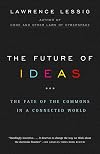
A cracking read in Lessig's easily accessible style. A book about the 'innovation commons', the way the internet was designed as a neutral platform, free from central control, which was meant to allow people to innovate and use the network how they chose. The problem is, the debate about old v new has tilted in favour of the old, so that content providers and IP owners can stifle creativity by asserting their ever-increasing property rights. Lessig skips freely over topics such as the show more physical architecture of the internet, the history of TV and other technologies, the distinction we should draw between property rights in physical space and in 'the ether', and the nature of intellectual property and its relation to innovation. So much packed into 265 pages, because the prose is so tight, clear and neat. Great book. show less
I was hesitant at first to read this book because it was published more than a decade ago (in 2004). Some of the age shows; Lessig spends a paragraph explaining the new fangled conception of a "blog" and remarks with surprise that the Japanese are streaming mp3s through their cell phones. I'm glad I pushed through and finished the book, it was worth all the dated references. I learned a lot about intellectual property, and came across arguments that are original and relevant even 12 years show more later.
I enjoyed in particular the "legal" aspects of the work. I had never heard of Causby vs. US before. Lessig uses this as an example of how property rights have always been balanced against the greater good of society. In Causby, under common law, one's property included the sky above one's land. This was seriously challenged with the invention of the airplane. The Causby's sued the government for flying over their land, arguing that their property rights were violated. The supreme court dismissed the Causbys, arguing that it simply defied common sense. I also found Lessig's description of the Statue of Anne and the birth of public domain interesting. For the first time, parliament limited copyright (instead of perpetual copyright under common law) in order to avoid the power of the publishing monopolies and encourage the growth of knowledge. Lastly, it was interesting to get the personal perspective of Lessig in the case he argued in front of the Supreme court (Eldred). Lessig's legal theory, that the extension of copyright to existing works was a violation of the progress clause was fascinating (as well as the rent seeking susceptibility of copyright extension). Ultimately, Lessig failed, and he reflects on the reasons for that failure (mainly failing to make a policy argument and an over reliance on constitutional principle).
Law professors (at least in my mind) have a reputation for being a bit radical and off the rocker. I was surprised to find Lessig's proposals and ideas moderate. He doesn't call for the abolition of property rights or property fundamentalism. What he calls for is a rebalancing of property, and he demonstrates that it has been in our tradition to balance property with the betterment of society. He discusses compulsory licenses, and the congressional decision to require radio to pay composers not recording artists royalties as attempts in our tradition to balance the rights of ownership against the good of broader society. Unlike most politics that are black and white, Lessig puts forth arguments that argue for the protection of property (he is against music pirating for example) while making sure that the owners do not overreach and choke off transformative content or distribution (he discusses various examples of aggressive RIAA lawsuits). He suggests shorting copyright terms, banning copyright extensions, requiring registration and markings for copyrighted material (he also explains why the last two have been dropped as copyright requirements).
The last main idea I really liked in the book was the discussion of types of regulation over culture. Lessig lists four, architecture, law, norms and markets. He discusses how free culture (in the sense of free markets, not free beer) is threatened by the convergence of concentrated media, excessive DRM technology, and the ever increasing scope of copyright law. Though copyrighted material in theory can be used in other works through fair use, Lessig argues that fair use is now facing a burden it was not designed to bear. Technology, big media and the over protecting legal system have created an environment unfriendly to creativity and innovation. DRM and a myriad of laws now allow copyright owners to regulate and require permission for activities that would have never been so regulated before.
I don't agree with Lessig on every issue, but I respect how original and reasonable his positions are. I'm also impressed that his arguments are still enough to make someone think a decade later. I recommend it for anyone who has a beginner's interest in intellectual property rights, technology and the law and even economics. show less
I enjoyed in particular the "legal" aspects of the work. I had never heard of Causby vs. US before. Lessig uses this as an example of how property rights have always been balanced against the greater good of society. In Causby, under common law, one's property included the sky above one's land. This was seriously challenged with the invention of the airplane. The Causby's sued the government for flying over their land, arguing that their property rights were violated. The supreme court dismissed the Causbys, arguing that it simply defied common sense. I also found Lessig's description of the Statue of Anne and the birth of public domain interesting. For the first time, parliament limited copyright (instead of perpetual copyright under common law) in order to avoid the power of the publishing monopolies and encourage the growth of knowledge. Lastly, it was interesting to get the personal perspective of Lessig in the case he argued in front of the Supreme court (Eldred). Lessig's legal theory, that the extension of copyright to existing works was a violation of the progress clause was fascinating (as well as the rent seeking susceptibility of copyright extension). Ultimately, Lessig failed, and he reflects on the reasons for that failure (mainly failing to make a policy argument and an over reliance on constitutional principle).
Law professors (at least in my mind) have a reputation for being a bit radical and off the rocker. I was surprised to find Lessig's proposals and ideas moderate. He doesn't call for the abolition of property rights or property fundamentalism. What he calls for is a rebalancing of property, and he demonstrates that it has been in our tradition to balance property with the betterment of society. He discusses compulsory licenses, and the congressional decision to require radio to pay composers not recording artists royalties as attempts in our tradition to balance the rights of ownership against the good of broader society. Unlike most politics that are black and white, Lessig puts forth arguments that argue for the protection of property (he is against music pirating for example) while making sure that the owners do not overreach and choke off transformative content or distribution (he discusses various examples of aggressive RIAA lawsuits). He suggests shorting copyright terms, banning copyright extensions, requiring registration and markings for copyrighted material (he also explains why the last two have been dropped as copyright requirements).
The last main idea I really liked in the book was the discussion of types of regulation over culture. Lessig lists four, architecture, law, norms and markets. He discusses how free culture (in the sense of free markets, not free beer) is threatened by the convergence of concentrated media, excessive DRM technology, and the ever increasing scope of copyright law. Though copyrighted material in theory can be used in other works through fair use, Lessig argues that fair use is now facing a burden it was not designed to bear. Technology, big media and the over protecting legal system have created an environment unfriendly to creativity and innovation. DRM and a myriad of laws now allow copyright owners to regulate and require permission for activities that would have never been so regulated before.
I don't agree with Lessig on every issue, but I respect how original and reasonable his positions are. I'm also impressed that his arguments are still enough to make someone think a decade later. I recommend it for anyone who has a beginner's interest in intellectual property rights, technology and the law and even economics. show less
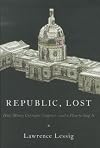
"Republic, Lost" is the latest book written by a disillusioned conservative (which are relabeled locally as "liberals"). Lawrence Lessig started as an enthusiastic Teenage Republican and Reaganite, a true believer in "Morning in America" and steadily advanced in the academic core from Chicago Law School to Harvard to Stanford and back to Harvard. A firm believer in the US constitution and the law, his fight for reforming the borked copyright laws showed him how detrimental and corrupt the US show more power structure actually is. A conclusion also reached by other technocratic conservatives such as Paul Krugman, Glenn Greenwald and Elizabeth Warren. The strange current US political landscape mislabels them as "liberals".
In his new book, Lessig convincingly and methodically shows, in a bipartisan way, that the US Congress is fundamentally corrupted and democracy as the enactment of the will of the people fundamentally broken. His examples infuriatingly and drastically illustrate how the influence of money produces objectively worse outcomes from both a Republican and Democratic standpoint: American democracy is broken (whether the rosy golden age of American democracy promoted by Krugman, Lessig, Greenwald and Warren ever existed for groups other than male WASPs, is another question.).
The analysis is sharp and well documented. What is Lessig's remedy? He seeks to establish citizen activism under the uncool (classic Teenage Republican?) name of "rootstrikers" that leads ultimately to amending the US constitution to lessen the influence of money. Unfortunately, Lessig's sound remedies neglect to include the reactions of his monied adversaries. How likely is a constitutional amendment if even the stupidly indefensible and unpaid Bush tax cuts were not allowed to expire. Even efforts to close the hedge fund manager tax loop holes failed to pass. In contrast to "Independence Day", political change is not a single payload delivery but a slow grinding and painful build-up of local alliances. The Nixon-Reagan movement took thirty years to develop. Its demise will need a 21st century Abraham Lincoln. Barack Obama, another member of that conservative cohort and probably a Republican if they had let him enter the club house, promised "hope and change" but delivered more of the same. An important but frustrating read. show less
In his new book, Lessig convincingly and methodically shows, in a bipartisan way, that the US Congress is fundamentally corrupted and democracy as the enactment of the will of the people fundamentally broken. His examples infuriatingly and drastically illustrate how the influence of money produces objectively worse outcomes from both a Republican and Democratic standpoint: American democracy is broken (whether the rosy golden age of American democracy promoted by Krugman, Lessig, Greenwald and Warren ever existed for groups other than male WASPs, is another question.).
The analysis is sharp and well documented. What is Lessig's remedy? He seeks to establish citizen activism under the uncool (classic Teenage Republican?) name of "rootstrikers" that leads ultimately to amending the US constitution to lessen the influence of money. Unfortunately, Lessig's sound remedies neglect to include the reactions of his monied adversaries. How likely is a constitutional amendment if even the stupidly indefensible and unpaid Bush tax cuts were not allowed to expire. Even efforts to close the hedge fund manager tax loop holes failed to pass. In contrast to "Independence Day", political change is not a single payload delivery but a slow grinding and painful build-up of local alliances. The Nixon-Reagan movement took thirty years to develop. Its demise will need a 21st century Abraham Lincoln. Barack Obama, another member of that conservative cohort and probably a Republican if they had let him enter the club house, promised "hope and change" but delivered more of the same. An important but frustrating read. show less
Lists
culture (1)
Awards


You May Also Like


Associated Authors
Statistics
- Works
- 18
- Also by
- 4
- Members
- 4,910
- Popularity
- #5,114
- Rating
- 4.0
- Reviews
- 62
- ISBNs
- 79
- Languages
- 12
- Favorited
- 23

