
Clay Shirky
Author of Here Comes Everybody: The Power of Organizing Without Organizations
About the Author
Clay Shirky is on the faculty of NYU's Interactive Telecommunications Program.
Image credit: Photo by Joi Ito
Works by Clay Shirky
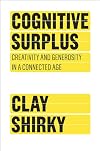
Cognitive Surplus: Creativity and Generosity in a Connected Age (2010) — Author — 918 copies, 29 reviews
Mediactive 4 copies
Exiting Deanspace 1 copy
WHY SOPA IS A BAD IDEA 1 copy
Associated Works
This Will Make You Smarter: New Scientific Concepts to Improve Your Thinking (Edge Question Series) (2012) — Contributor — 904 copies, 17 reviews
What Is Your Dangerous Idea? Today's Leading Thinkers on the Unthinkable (2007) — Contributor — 668 copies, 8 reviews
Will the Last Reporter Please Turn Out the Lights: The Collapse of Journalism and What Can Be Done to Fix It (2010) — Contributor — 62 copies
Tagged
Common Knowledge
- Birthdate
- 1964
- Gender
- male
- Education
- Yale College (AB ∙ Fine Arts ∙ 1986)
- Occupations
- university professor
- Organizations
- New York University
Berkman Center for Internet and Society - Awards and honors
- New York University distinguished writer in residence
Edward R. Murrow Visiting Lecturer at Joan Shorenstein Center on the Press, Politics, and Public Policy (2010) - Agent
- John Brockman
- Nationality
- USA
- Places of residence
- Brooklyn, New York, USA
- Associated Place (for map)
- New York, USA
Members
Reviews

All through Cognitive Surplus I was compulsively underlining and marking key paragraphs in an approved Jacobsean manner. Shirky elegantly illustrates how participatory culture–like Wikipedia or YouTube–changes the nature of media, and gives names to many of the phenomena we’re peripherally aware of as users. He attempts to draw up guidelines for successful harnessing of cognitive surplus at the end, although I didn’t find that as successful as his catalogue of examples. But the man show more is amazingly quotable, and you feel like he actually understands where media is going (his online writing on the state of newspapers has been the best analysis of their woes I’ve read). show less

"Group action gives human society its particular character, and anything that changes the way groups get things done will affect society as a whole. ... These changes will transform the world everywhere groups of people come together to accomplish something, which is to say everywhere."
In this excellent book, the author examines how technology is making communication easier, and what effects that is having on society. Why do some projects -- be they businesses, communities, or projects -- show more succeed, and others fail? Why do the blogs of young people read so differently to those of older people? Which professions are at risk of obsolescence? Do new social tools enable new kinds of social groups, and what might these groups be like?
Shirky is a clear writer, slowly building up observation upon observation until his conclusions seem obvious. The whole volume is a fairly easy read. And, tellingly, I've found myself bringing up many of his points in a variety of conversations since I finished it. The book is never shouty or dull, and it seems to have changed the way I think about a number of things.
Highly recommended for anyone interested in technology and society, and how they affect each other. show less
In this excellent book, the author examines how technology is making communication easier, and what effects that is having on society. Why do some projects -- be they businesses, communities, or projects -- show more succeed, and others fail? Why do the blogs of young people read so differently to those of older people? Which professions are at risk of obsolescence? Do new social tools enable new kinds of social groups, and what might these groups be like?
Shirky is a clear writer, slowly building up observation upon observation until his conclusions seem obvious. The whole volume is a fairly easy read. And, tellingly, I've found myself bringing up many of his points in a variety of conversations since I finished it. The book is never shouty or dull, and it seems to have changed the way I think about a number of things.
Highly recommended for anyone interested in technology and society, and how they affect each other. show less
Free LibraryThing Early Reviewer book. (Seriously, this program is amazing. If it exists in your country, you should sign up.) Flippant capsule review: great book, too bad about its adoption of the Geek Hierarchy.
Less flippant review: Shirky’s typical wit and verve are on display here as he passionately advocates for the value of online engagement; he’s particularly good on the ridiculous dismissiveness of “where do people find the time to do all this trivial stuff online?” Sample show more line: “Did you ever see that episode of Gilligan’s Island where they almost get off the island and then Gilligan messes up and they don’t? I saw that one a lot when I was growing up.” That’s the cognitive surplus—all the free time that internet-enabled citizens have and can use to watch and talk and tweet and share.
Unfortunately, while Shirky gets the Sturgeon’s Law defense of online content absolutely right—it’s not just that 90% of everything is crap, but that in any given genre you don’t get the good stuff without the crap—he seems uninterested in performing the same analysis on varieties of online participation. Of course lolcats are dumb and irrelevant, he argues, but the tools that produce them also allow direct political engagement, and that’s what we should care about.
Thus: “making and sharing open source software creates value for more people than making and sharing Harry Potter fan fiction.” I’m pretty sure that this incorporates the Sturgeon’s Law mistake—the average open source software project is as unsuccessful as the average work of fan fiction, and while I’ll happily celebrate the immense value of open source, I’m not quite sure how to measure it against the literacy benefits of even average fan fiction, the community benefits of fandom ([livejournal.com profile] help_haiti and [livejournal.com profile] help_pakistan come to mind), and the New York Times-best-selling authors (plural!) I know who came out of fandom.
More to the point, why do I have to choose? (The whole point of fandom as I know it is having one’s cake and eating it too.) The relationship between lolcats and Tea Parties is more complex than lolcats being a mere epiphenomenon of the really significant uses of online tools. Shirky identifies a “spectrum” of forms of creation that range from creating personal value to creating civic value, but his conception seems static: each person’s activity emits light at a certain frequency only.
I would argue instead that “trivial” social spaces are an on-ramp for engagement of all kinds: seeing oneself as a producer is an important way of seeing oneself as a citizen. As Mimi Ito puts it, “[i]n fact it is the flow between the serious and the playful where we are seeing so much energy and engagement.” Shirky even uses Ito’s example of South Korean protests against American beef imports, significant enough that they threatened the entire South Korean government and led to the firing of the cabinet, along with an apology from the president for moving too fast without consulting the public. The protesters numbered over a million, an estimated 60-70% teens, mostly teenage girls. And a lot of them organized using fannish spaces—many were fans of a boy band, Dong Bang Shin Gi. Ito reports, “young women fans of this boy group were mobilizing to attend the protests. They carried placards saying ‘We don't want our boys to get sick because of mad[] cows.’ Their participation in the protests was grounded less in the concrete conditions of their everyday lives, and more in their solidarity with a shared media fandom.” As Ito concludes, “you should never underestimate the power of peer-to-peer social communication and the bonding force of popular culture. Although so much of what kids are doing online may look trivial and frivolous, what they are doing is building the capacity to connect, to communicate, and ultimately, to mobilize.” (This is also true of another story to which Shirky returns several times, the charitable fundraising performed by (female) fans of Josh Groban, without giving significance to the fact that it was founded out of fannishness.)
Shirky says that one thirteen-year-old Korean protester said outright, “I’m here because of Dong Bang Shin Ki.” (I note that I couldn’t find that quote in the cited Ito piece.) That resonated strongly with me, because I’m here because of Kirk and Spock, and Sime/Gen, and Mulder and Scully. Fandom taught me that if I had something to say, I could say it, and if that I wanted something to exist, it was worth trying to build it. The run-it-up-the-flagpole attitude I learned in fandom was what convinced me to start a teaching resource for use in my field that, five years after I started it, is now used by teachers around the world, equalizing access and, I strongly believe, enhancing students’ understanding of the material.
Anyway, key examples of social /civic participation in Shirky’s account involve women coming from fandom. And yet Shirky reassures us that we don’t have to worry about organizing our social or technological worlds to support fannish engagement, because it will naturally be provisioned (if I were being snarky, I’d say, “like housework and childcare”): it’s not that there’s anything wrong with lolcats and fan fiction, but “anything at the personal and communal end of the spectrum isn’t in much danger of going away, or even of being underprovisioned.”
If only that were true, I wouldn’t be as troubled as I am by Shirky’s rhetorical choice to throw fandom under the bus. But laws like the DMCA and anti-anonymity measures taken by multiple governments (not for nothing, including South Korea) don’t leave fannish spaces untouched. A culture or a legal system that discourages you from commenting on and remixing the first things you love, in communities who love the same thing you do, also discourages you from commenting on and remixing everything else.
This problem is related to another vital silence in Shirky’s book: the role of government. I know Larry Lessig already told us about West Coast Code versus East Coast Code, but hey, East Coast Code is still around. Take another prominent example Shirky uses to show the power of (women) organizing online: a Facebook group, the Association of Pub-going, Loose and Forward Women, organized to fight back against anti-woman violence perpetrated in the Indian city of Mangalore by the religious fundamentalist group Sri Ram Sene. As Shirky tells it, “women communicated their shared resolve to politicians in Mangalore and to the regional government of Karnatka. Unfortunately politicians and police tend to react to threats more readily if there is evidence of public concern. Participation in the Pink Chaddi [underwear] campaign demonstrated publicly that a constituency of women were willing to counter Sene and wanted politicians and the police to do the same…. [T]he state of Mangalore arrested Muthali and several key members of Sene … as a way of preventing a repeat of the January attacks.”
Shirky emphasizes the need for hard work by participants to sustain effective groups, and that’s clearly correct. A lot of that, government can’t help with. But there are definitely ways that it can hinder—and, as the Mangalore example suggests, those groups that get things done will often in the end get them done at least in part by getting government on their side. I’m sure Shirky would have some fascinating things to say about that. I’m just left wondering what they’d be. show less
Less flippant review: Shirky’s typical wit and verve are on display here as he passionately advocates for the value of online engagement; he’s particularly good on the ridiculous dismissiveness of “where do people find the time to do all this trivial stuff online?” Sample show more line: “Did you ever see that episode of Gilligan’s Island where they almost get off the island and then Gilligan messes up and they don’t? I saw that one a lot when I was growing up.” That’s the cognitive surplus—all the free time that internet-enabled citizens have and can use to watch and talk and tweet and share.
Unfortunately, while Shirky gets the Sturgeon’s Law defense of online content absolutely right—it’s not just that 90% of everything is crap, but that in any given genre you don’t get the good stuff without the crap—he seems uninterested in performing the same analysis on varieties of online participation. Of course lolcats are dumb and irrelevant, he argues, but the tools that produce them also allow direct political engagement, and that’s what we should care about.
Thus: “making and sharing open source software creates value for more people than making and sharing Harry Potter fan fiction.” I’m pretty sure that this incorporates the Sturgeon’s Law mistake—the average open source software project is as unsuccessful as the average work of fan fiction, and while I’ll happily celebrate the immense value of open source, I’m not quite sure how to measure it against the literacy benefits of even average fan fiction, the community benefits of fandom ([livejournal.com profile] help_haiti and [livejournal.com profile] help_pakistan come to mind), and the New York Times-best-selling authors (plural!) I know who came out of fandom.
More to the point, why do I have to choose? (The whole point of fandom as I know it is having one’s cake and eating it too.) The relationship between lolcats and Tea Parties is more complex than lolcats being a mere epiphenomenon of the really significant uses of online tools. Shirky identifies a “spectrum” of forms of creation that range from creating personal value to creating civic value, but his conception seems static: each person’s activity emits light at a certain frequency only.
I would argue instead that “trivial” social spaces are an on-ramp for engagement of all kinds: seeing oneself as a producer is an important way of seeing oneself as a citizen. As Mimi Ito puts it, “[i]n fact it is the flow between the serious and the playful where we are seeing so much energy and engagement.” Shirky even uses Ito’s example of South Korean protests against American beef imports, significant enough that they threatened the entire South Korean government and led to the firing of the cabinet, along with an apology from the president for moving too fast without consulting the public. The protesters numbered over a million, an estimated 60-70% teens, mostly teenage girls. And a lot of them organized using fannish spaces—many were fans of a boy band, Dong Bang Shin Gi. Ito reports, “young women fans of this boy group were mobilizing to attend the protests. They carried placards saying ‘We don't want our boys to get sick because of mad[] cows.’ Their participation in the protests was grounded less in the concrete conditions of their everyday lives, and more in their solidarity with a shared media fandom.” As Ito concludes, “you should never underestimate the power of peer-to-peer social communication and the bonding force of popular culture. Although so much of what kids are doing online may look trivial and frivolous, what they are doing is building the capacity to connect, to communicate, and ultimately, to mobilize.” (This is also true of another story to which Shirky returns several times, the charitable fundraising performed by (female) fans of Josh Groban, without giving significance to the fact that it was founded out of fannishness.)
Shirky says that one thirteen-year-old Korean protester said outright, “I’m here because of Dong Bang Shin Ki.” (I note that I couldn’t find that quote in the cited Ito piece.) That resonated strongly with me, because I’m here because of Kirk and Spock, and Sime/Gen, and Mulder and Scully. Fandom taught me that if I had something to say, I could say it, and if that I wanted something to exist, it was worth trying to build it. The run-it-up-the-flagpole attitude I learned in fandom was what convinced me to start a teaching resource for use in my field that, five years after I started it, is now used by teachers around the world, equalizing access and, I strongly believe, enhancing students’ understanding of the material.
Anyway, key examples of social /civic participation in Shirky’s account involve women coming from fandom. And yet Shirky reassures us that we don’t have to worry about organizing our social or technological worlds to support fannish engagement, because it will naturally be provisioned (if I were being snarky, I’d say, “like housework and childcare”): it’s not that there’s anything wrong with lolcats and fan fiction, but “anything at the personal and communal end of the spectrum isn’t in much danger of going away, or even of being underprovisioned.”
If only that were true, I wouldn’t be as troubled as I am by Shirky’s rhetorical choice to throw fandom under the bus. But laws like the DMCA and anti-anonymity measures taken by multiple governments (not for nothing, including South Korea) don’t leave fannish spaces untouched. A culture or a legal system that discourages you from commenting on and remixing the first things you love, in communities who love the same thing you do, also discourages you from commenting on and remixing everything else.
This problem is related to another vital silence in Shirky’s book: the role of government. I know Larry Lessig already told us about West Coast Code versus East Coast Code, but hey, East Coast Code is still around. Take another prominent example Shirky uses to show the power of (women) organizing online: a Facebook group, the Association of Pub-going, Loose and Forward Women, organized to fight back against anti-woman violence perpetrated in the Indian city of Mangalore by the religious fundamentalist group Sri Ram Sene. As Shirky tells it, “women communicated their shared resolve to politicians in Mangalore and to the regional government of Karnatka. Unfortunately politicians and police tend to react to threats more readily if there is evidence of public concern. Participation in the Pink Chaddi [underwear] campaign demonstrated publicly that a constituency of women were willing to counter Sene and wanted politicians and the police to do the same…. [T]he state of Mangalore arrested Muthali and several key members of Sene … as a way of preventing a repeat of the January attacks.”
Shirky emphasizes the need for hard work by participants to sustain effective groups, and that’s clearly correct. A lot of that, government can’t help with. But there are definitely ways that it can hinder—and, as the Mangalore example suggests, those groups that get things done will often in the end get them done at least in part by getting government on their side. I’m sure Shirky would have some fascinating things to say about that. I’m just left wondering what they’d be. show less
 This review was written for LibraryThing Early Reviewers.
A good examination of the ways new social tools have changed our society and will continue to do so. Although the book is already more than four years old, an eternity in the world of Internet commentary, most of what he has to say is still valid—and because his tone is measured and he avoids gee-whizzing, it's not hard to imagine where he would have gone with his ideas in 2012.
Shirky takes off from the concept of Coasian economics, market theory originated by Ronald Coase in 1937 that show more looked at the contractual costs and benefits of hierarchical organizations and their advantages over the free market. The premise here is that because online communications have lowered the cost of gathering groups of people together—whether in money, effort, time, materials, or manpower—this radically alters all sorts of equations throughout society. He cycles through a series of anecdotal scenarios to make his points, explaining them clearly and relevantly, without jargon; the examples are well-picked and illustrate his ideas without being heavy-handed. And his commentary is open-ended enough that you can sit back afterward and extrapolate on how it bears on the wired world of 2012, what works and fails online, and why. It's smart and thoughtful, and still relevant—no mean feat for an Internet sociology study. show less
Shirky takes off from the concept of Coasian economics, market theory originated by Ronald Coase in 1937 that show more looked at the contractual costs and benefits of hierarchical organizations and their advantages over the free market. The premise here is that because online communications have lowered the cost of gathering groups of people together—whether in money, effort, time, materials, or manpower—this radically alters all sorts of equations throughout society. He cycles through a series of anecdotal scenarios to make his points, explaining them clearly and relevantly, without jargon; the examples are well-picked and illustrate his ideas without being heavy-handed. And his commentary is open-ended enough that you can sit back afterward and extrapolate on how it bears on the wired world of 2012, what works and fails online, and why. It's smart and thoughtful, and still relevant—no mean feat for an Internet sociology study. show less
Lists
Awards


You May Also Like


Associated Authors
Statistics
- Works
- 18
- Also by
- 4
- Members
- 3,006
- Popularity
- #8,486
- Rating
- 3.8
- Reviews
- 88
- ISBNs
- 39
- Languages
- 5
- Favorited
- 6

