

Kevin Kelly (1) (1952–)
Author of Out of Control: The New Biology of Machines, Social Systems, & the Economic World
For other authors named Kevin Kelly, see the disambiguation page.
About the Author
Kevin Kelly was born in 1952 in Pennsylvania. He attended the University of Rhode Island but dropped out after one year. He became a freelance photo journalist. His photographs have appeared in several magazines including Life. In 1981, Kelly founded Walking Journal. He is a former editor of Whole show more Earth Review, Signal, and some of the later editions of the Whole Earth Catalog. With Whole Earth's founder, Stewart Brand, Kelly helped found the WELL, a highly regarded online community. He has been a director of the Point Foundation, which sponsored the first Hackers Conference in 1984 (before the word "hacker" had its current common, negative connotation). In 1994, Wired Magazine, for which Kelly was executive director, won the National Magazine Award for General Excellence. Kelly is now editor at large for the magazine. His writing has appeared in numerous publications including The New York Times, The Economist, Time, Harper's Magazine, Science, Veneer Magazine, GQ, and Esquire. He is the author of several books including What Technology Wants, The Inevitable: Understanding the 12 Technological Forces That Will Shape Our Future, and Out of Control: The New Biology of Machines, Social Systems, and the Economic World. (Bowker Author Biography) show less
Works by Kevin Kelly
Out of Control: The New Biology of Machines, Social Systems, & the Economic World (1994) 969 copies, 8 reviews
The Inevitable: Understanding the 12 Technological Forces That Will Shape Our Future (2016) 781 copies, 23 reviews
New Rules for the New Economy: 10 Radical Strategies for a Connected World (1999) 356 copies, 2 reviews
Whole Earth Catalog : signal communication tools for the information age (1988) 102 copies, 2 reviews
NetEconomy. 1 copy
Associated Works
What Is Your Dangerous Idea? Today's Leading Thinkers on the Unthinkable (2007) — Contributor — 668 copies, 8 reviews
Tagged
Common Knowledge
- Canonical name
- Kelly, Kevin
- Legal name
- Kelly, Kevin
- Birthdate
- 1952-08-14
- Gender
- male
- Education
- Westfield High School, Westfield, New Jersey, USA
University of Rhode Island - Occupations
- magazine editor
writer
publisher
conservationist - Organizations
- Wired
Whole Earth Review - Nationality
- USA
- Birthplace
- Pennsylvania, USA
- Places of residence
- Pacifica, California, USA
- Associated Place (for map)
- USA
Members
Reviews
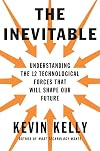
Kevin Kelly reprises his role as the eternal techno-optimist. At one point, he mentions that we (as a species) will probably spend the next hundred or so years in constant Existential retreat, as the need for human beings shrinks and our self-definition diminishes unremittingly in grandeur, but you get the sense, when he writes it, that it's something we're meant to look forward to. I guess I don't share his excitement, but I admit that he's probably right about a lot of the broad show more predictions he makes (though, as with all futurists, he will be laughably wrong about most of the tenor and almost all of the details).
I imagine Kelly as someone who would walk up to the Terminator and exclaim how cool machine consciousness was as he was getting targeted by a combat computer. On the other hand, he makes a lot of very clever observations, and has a gift for arguments that want to be followed. show less
I imagine Kelly as someone who would walk up to the Terminator and exclaim how cool machine consciousness was as he was getting targeted by a combat computer. On the other hand, he makes a lot of very clever observations, and has a gift for arguments that want to be followed. show less
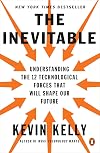
"Massive tracking and total surveillance is here to stay" (p 5), and this guy insists we should "embrace" it! He loves the takeover of modern societies by many of the worst-ever tech ideas (cloud computing, Internet of Things, owner-tracking smartphones, Facebook, etc) and argues that "anonymity should never be eliminated completely, but it should be kept as close to zero as possible." (p 264) Yes, his book is intelligently written and is an importantly informative thing to read, but it is show more also unintentionally horrifying. If all his discussed tech trends are indeed inevitable (i.e., if tech isn't or can't be drastically reformed to act and develop in a *right* way), perhaps those of us who understand that robust privacy rights are an essential part of freedom should not bother trying to help the human species avoid the self-destruction it seems to be headed for. show less
(Reprinted from the Chicago Center for Literature and Photography [cclapcenter.com]. I am the original author of this essay, as well as the owner of CCLaP; it is not being reprinted illegally.)
It was a fascinating experience to read Kevin Kelly's The Inevitable right after tackling Nicholas Carr's Utopia is Creepy, an experience that teaches a lot about why so many other tech writers come and go with the same blazingly fast trendiness of teenage pop singers, while Kelly has been around since show more literally the 1970s and continues to be one of the most thought-provoking writers of that entire industry. For while Carr's book is a disappointing series of blog-sized old-man rants about basically any name-brand technology that's crossed his eyes over the last few years ("What's the deal with Wikipedia!? What's the deal with Twitter!? What's the deal with Second Life!?"), The Inevitable takes a holistic and big-picture look at all the larger trends that have been happening in all of human culture over the last twenty years, to deliver a series of predictions not about what specific technologies or webapps will be the next big trendy ones, but the ways that general human behavior and human society is changing based on whatever the newest trendy apps are.
And indeed, Kelly is in a particularly suitable position to do such a thing -- a former editor of the proto-cyberpunk hippie publication The Whole Earth Catalog, a founding member of proto-web online community The WELL, and one of the founders of Wired magazine, he's made a nearly half-century career now out of taking sweeping looks at the way technology has been changing the very nature of human existence and consciousness since the end of World War Two, delivering in this case a book of 12 chapters that each focus not on a specific technology but a general verb like "cognifying," "accessing" and "filtering." Within each of these intriguingly titled chapters, then, Kelly delves into the recent history of these kinds of activities (for example, the history of chess-playing computers in the "cognifying" chapter), which then inevitably leads to a look at the most cutting-edge current research on the subject (an extended examination of IBM's Watson), a discussion of what surprising things we can learn from this latest research (in this case, that artificial intelligence is likely never going to come in a monolithic, human-aping form like HAL from 2001, but rather an endless series of "dumbly focused" intelligent apps that each do only one thing, but do them better than literally any human could even imagine that subject being done), then ending by speculating a bit on what this trend might foretell in a science-fictional near future (here, for example, that perhaps computers will one day soon figure out how quantum mechanics work, a subject that is quite literally too difficult for human brain comprehension but that might not be for a "silicon brain").
As usual with Kelly's writing, it all adds up to some pretty heady stuff, an admirable hallmark from the optimistic, psychedelia-influenced era of cutting-edge technology in the 1970s he comes from, that we are sadly losing more and more in our current age of technology as capitalist commodity. One of the last grand thinkers from that era of the industry, Kelly's writing is still worth gobbling up with both hands whenever you can get ahold of it, with The Inevitable coming wildly more recommended than any of the other "What's the deal with...?" old-man rants of the moment that litter the tech bookshelves these days.
Out of 10: 9.8 show less
It was a fascinating experience to read Kevin Kelly's The Inevitable right after tackling Nicholas Carr's Utopia is Creepy, an experience that teaches a lot about why so many other tech writers come and go with the same blazingly fast trendiness of teenage pop singers, while Kelly has been around since show more literally the 1970s and continues to be one of the most thought-provoking writers of that entire industry. For while Carr's book is a disappointing series of blog-sized old-man rants about basically any name-brand technology that's crossed his eyes over the last few years ("What's the deal with Wikipedia!? What's the deal with Twitter!? What's the deal with Second Life!?"), The Inevitable takes a holistic and big-picture look at all the larger trends that have been happening in all of human culture over the last twenty years, to deliver a series of predictions not about what specific technologies or webapps will be the next big trendy ones, but the ways that general human behavior and human society is changing based on whatever the newest trendy apps are.
And indeed, Kelly is in a particularly suitable position to do such a thing -- a former editor of the proto-cyberpunk hippie publication The Whole Earth Catalog, a founding member of proto-web online community The WELL, and one of the founders of Wired magazine, he's made a nearly half-century career now out of taking sweeping looks at the way technology has been changing the very nature of human existence and consciousness since the end of World War Two, delivering in this case a book of 12 chapters that each focus not on a specific technology but a general verb like "cognifying," "accessing" and "filtering." Within each of these intriguingly titled chapters, then, Kelly delves into the recent history of these kinds of activities (for example, the history of chess-playing computers in the "cognifying" chapter), which then inevitably leads to a look at the most cutting-edge current research on the subject (an extended examination of IBM's Watson), a discussion of what surprising things we can learn from this latest research (in this case, that artificial intelligence is likely never going to come in a monolithic, human-aping form like HAL from 2001, but rather an endless series of "dumbly focused" intelligent apps that each do only one thing, but do them better than literally any human could even imagine that subject being done), then ending by speculating a bit on what this trend might foretell in a science-fictional near future (here, for example, that perhaps computers will one day soon figure out how quantum mechanics work, a subject that is quite literally too difficult for human brain comprehension but that might not be for a "silicon brain").
As usual with Kelly's writing, it all adds up to some pretty heady stuff, an admirable hallmark from the optimistic, psychedelia-influenced era of cutting-edge technology in the 1970s he comes from, that we are sadly losing more and more in our current age of technology as capitalist commodity. One of the last grand thinkers from that era of the industry, Kelly's writing is still worth gobbling up with both hands whenever you can get ahold of it, with The Inevitable coming wildly more recommended than any of the other "What's the deal with...?" old-man rants of the moment that litter the tech bookshelves these days.
Out of 10: 9.8 show less
When it comes to the future and technological advance, I think there are generally three responses: 1) fear. 2) dismissal. 3) awe-inspired worship. Kelly undoubtedly falls into third grouping. I sit uncomfortably in the first. For that reason, I really really did not like the book. In fact I put it down twice to read something else. It genuinely gave me anxiety.
That said, it was not what I expected. I had thought the "12 Technological Forces" were going to be specific technologies, such as show more VR, the Internet of Things, the brain-net, AI, or some other life-altering technology in the making. That and so many more technologies are described in detail, but his "forces" - and chapter titles - are trends or trajectories of where he sees us going. Here they are:
1) Becoming: Moving from fixed products to always upgrading services and subscriptions. We will be forever noobs having to learn new things.
2) Cognifying: Making everything much smarter using cheap, powerful AI that we get from the cloud. The general innovation was to electrify all new produces. Now we will cognify them.
3) Flowing: Depending on unstoppable streams in real-time for everything. Infinite scroll wins.
4) Screening: Turning all surfaces into screens. The "people of the book" are becoming the "people of the screen."
5) Accessing: Shifting society from one where we own assets, to one where instead we will have access to services at all times. Delayed gratification becomes a relic of the past.
6) Sharing: Collaboration at mass-scale. Here he assumes ownership will less and less common. Consider spotify, netflix, uber, amazon kindle, etc.
7) Filtering: Harnessing intense personalization in order to anticipate our desires
8) Remixing: Unbundling existing products into their most primitive parts and then recombine in all possible ways
9) Interacting: Immersing ourselves inside our computers to maximize their engagement. If you can't interact with it, it must be broken.
10) Tracking: Employing total surveillance for the benefit of citizens and consumers.
11) Questioning: Promoting good questions are far more valuable than good answers. Answers, it turns out, are cheap... and getting cheaper.
12) Beginning: Constructing a planetary system connecting all humans and machines into a global matrix.
At first glance (and even after reading the book), it's easy to be skeptical of some them. In particular that last chapter, which I just just finished is really where he moves from being an enthusiast to a worshiper. In a thousand years, he says, humans will look back on this time as the beginning of wild wonder (my phrase). And yet, I can't help but wonder if they're look back and cringe at the ignorance.
However, as he goes through each "force," he walks through an argument for each that is compelling. And that is the reason the book is worth reading - namely, to me it seems he is (mostly) correct in his assessment of the future. That and he gives a thorough description of all sorts of technologies alive(?) and well today, or in 2016 when it was written....
A few ideas really stick out to me. First, in the tracking chapter, he goes through a long long list of ways we are already being tracked, which is a bit uncomfortable. His response was to describe a spectrum between privacy and personalization. The less privacy we have the better our recommendations will be.
In the screening chapter, he describes the culture clash between "people of the book" and "people of the screen." Despite falling resolutely with books, I cannot help but recognize the inevitable (or all but certain) shift toward more screens.
In Questioning, he praises the importance of good questions and gives solid insight on the fact that an answer yields two more questions. Therefore, as our knowledge grows exponentially so do our questions, which means our known ignorance - or the space between our answers and our questions - grows exponentially as well.
He shares the famous quote: "The best minds of my generation are thinking about how to make people click ads." He pushes back on this idea, and goes on to cherish the "active mind" that the internet promotes, in contrast to a "contemplative mind." This, I cannot disagree with more.
All-in-all, the book did provide key insights on what is and likely to come, and it was more philosophical in nature than I expected. I felt also that it was just too long. Half of what he said could have been cut. Also, he offers basically no critique of technology, or really any sort of help on how to navigate the coming onslaught of life altering changes in the near future. In short, he welcomes it all. The old serendipity prayer starts, "Help me to accept the things I cannot change...." If it all really is "inevitable," I can't help but think he's onto something.... show less
That said, it was not what I expected. I had thought the "12 Technological Forces" were going to be specific technologies, such as show more VR, the Internet of Things, the brain-net, AI, or some other life-altering technology in the making. That and so many more technologies are described in detail, but his "forces" - and chapter titles - are trends or trajectories of where he sees us going. Here they are:
1) Becoming: Moving from fixed products to always upgrading services and subscriptions. We will be forever noobs having to learn new things.
2) Cognifying: Making everything much smarter using cheap, powerful AI that we get from the cloud. The general innovation was to electrify all new produces. Now we will cognify them.
3) Flowing: Depending on unstoppable streams in real-time for everything. Infinite scroll wins.
4) Screening: Turning all surfaces into screens. The "people of the book" are becoming the "people of the screen."
5) Accessing: Shifting society from one where we own assets, to one where instead we will have access to services at all times. Delayed gratification becomes a relic of the past.
6) Sharing: Collaboration at mass-scale. Here he assumes ownership will less and less common. Consider spotify, netflix, uber, amazon kindle, etc.
7) Filtering: Harnessing intense personalization in order to anticipate our desires
8) Remixing: Unbundling existing products into their most primitive parts and then recombine in all possible ways
9) Interacting: Immersing ourselves inside our computers to maximize their engagement. If you can't interact with it, it must be broken.
10) Tracking: Employing total surveillance for the benefit of citizens and consumers.
11) Questioning: Promoting good questions are far more valuable than good answers. Answers, it turns out, are cheap... and getting cheaper.
12) Beginning: Constructing a planetary system connecting all humans and machines into a global matrix.
At first glance (and even after reading the book), it's easy to be skeptical of some them. In particular that last chapter, which I just just finished is really where he moves from being an enthusiast to a worshiper. In a thousand years, he says, humans will look back on this time as the beginning of wild wonder (my phrase). And yet, I can't help but wonder if they're look back and cringe at the ignorance.
However, as he goes through each "force," he walks through an argument for each that is compelling. And that is the reason the book is worth reading - namely, to me it seems he is (mostly) correct in his assessment of the future. That and he gives a thorough description of all sorts of technologies alive(?) and well today, or in 2016 when it was written....
A few ideas really stick out to me. First, in the tracking chapter, he goes through a long long list of ways we are already being tracked, which is a bit uncomfortable. His response was to describe a spectrum between privacy and personalization. The less privacy we have the better our recommendations will be.
In the screening chapter, he describes the culture clash between "people of the book" and "people of the screen." Despite falling resolutely with books, I cannot help but recognize the inevitable (or all but certain) shift toward more screens.
In Questioning, he praises the importance of good questions and gives solid insight on the fact that an answer yields two more questions. Therefore, as our knowledge grows exponentially so do our questions, which means our known ignorance - or the space between our answers and our questions - grows exponentially as well.
He shares the famous quote: "The best minds of my generation are thinking about how to make people click ads." He pushes back on this idea, and goes on to cherish the "active mind" that the internet promotes, in contrast to a "contemplative mind." This, I cannot disagree with more.
All-in-all, the book did provide key insights on what is and likely to come, and it was more philosophical in nature than I expected. I felt also that it was just too long. Half of what he said could have been cut. Also, he offers basically no critique of technology, or really any sort of help on how to navigate the coming onslaught of life altering changes in the near future. In short, he welcomes it all. The old serendipity prayer starts, "Help me to accept the things I cannot change...." If it all really is "inevitable," I can't help but think he's onto something.... show less
Lists
Awards


You May Also Like


Associated Authors
Statistics
- Works
- 18
- Also by
- 5
- Members
- 3,591
- Popularity
- #7,055
- Rating
- 3.9
- Reviews
- 66
- ISBNs
- 123
- Languages
- 13
- Favorited
- 7
