
Wayne Ng
Author of Finding the Way: A Novel of Lao Tzu
Works by Wayne Ng
Tagged
Common Knowledge
- Gender
- male
- Occupations
- Social Worker
- Relationships
- Willis, Alette (critique group)
Tector, Amy (critique group) - Nationality
- Canada
- Birthplace
- Toronto, Ontario, Canada
- Places of residence
- Ottawa, Ontario, Canada
- Map Location
- Canada
Members
Reviews
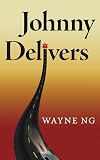
I've met this Johnny before, when "Letters from Johnny" introduced us to him as a child, but that isn't necessary for appreciating this very different novel. This is the teenage Johnny who's done considerable growing up. He is a responsible, contributing member of his family who has already learned to see his parents as fellow human beings. When his old friend Barry shows up and offers him an easy way to pay off family debts and save for college, Johnny has a tough choice to make.
The opening show more chapters offer a quick introduction to Chinese Canadian culture, which it doesn't take long to understand and appreciate. I'm fascinated with how the novel proceeds to tackle stereotypes head on, which the author does nothing to avoid if he finds them applicable to his depiction of reality: Johnny's family runs a Chinese take-out, they're all enormous fans of Bruce Lee, the community harbours gang activity, etc. But there are nuances here. The restaurant is one of the few paths Chinese Canadians had for upward mobility in the 1970s and created pressure for the succeeding generation; when a teacher suggests a career path that would remove Johnny from the family business, it sounds like an impossible dream. Bruce Lee did help the community buck one false image among westerners, only to apply another like an exchange of sticky labels. The gangs pose far more of a threat to the community itself than to outsiders. This is like a tour through the origins of these stereotypes that peels away the layers to expose the reality underlying them. When Johnny says "The bullshit fortune cookie stuff that comes out of our mouths blows me away sometimes", it represents how delicately the author walks this line.
This is also a novel thickly invested with the 1970s era, its Toronto setting, and the underlying racism that permeates almost every element of Johnny's life. It's obvious in the passing comments he has to let slide to maintain relationships or to please customers, and in the challenges he has with dating, but in more subtle ways as well. He also has to face the struggle between the role he's assumed as a supporting pillar for his family or pursuing his own ambitions. It's a lot to explore and unpack in a short novel, but it's all here. show less
The opening show more chapters offer a quick introduction to Chinese Canadian culture, which it doesn't take long to understand and appreciate. I'm fascinated with how the novel proceeds to tackle stereotypes head on, which the author does nothing to avoid if he finds them applicable to his depiction of reality: Johnny's family runs a Chinese take-out, they're all enormous fans of Bruce Lee, the community harbours gang activity, etc. But there are nuances here. The restaurant is one of the few paths Chinese Canadians had for upward mobility in the 1970s and created pressure for the succeeding generation; when a teacher suggests a career path that would remove Johnny from the family business, it sounds like an impossible dream. Bruce Lee did help the community buck one false image among westerners, only to apply another like an exchange of sticky labels. The gangs pose far more of a threat to the community itself than to outsiders. This is like a tour through the origins of these stereotypes that peels away the layers to expose the reality underlying them. When Johnny says "The bullshit fortune cookie stuff that comes out of our mouths blows me away sometimes", it represents how delicately the author walks this line.
This is also a novel thickly invested with the 1970s era, its Toronto setting, and the underlying racism that permeates almost every element of Johnny's life. It's obvious in the passing comments he has to let slide to maintain relationships or to please customers, and in the challenges he has with dating, but in more subtle ways as well. He also has to face the struggle between the role he's assumed as a supporting pillar for his family or pursuing his own ambitions. It's a lot to explore and unpack in a short novel, but it's all here. show less
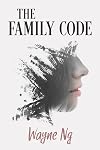
Hannah is a single-mother without a career, raised in an abusive household. This is not a dystopian story - she lives in the world that we know - but for her every day is about survival. Trust nobody, suspect every kindness, count only on yourself. Learn what you can take advantage of, how best to do it, and how to dodge the consequences when you're caught. Never count on hope. Never give in to fear. Never be a sucker.
Where is the line between Hannah as a victim of circumstance versus a show more victim of her own decisions? The scale lands heavily on the former, but the struggle to make the right decisions is real. She lives in a mental fog, constantly struggling to convince herself and her son that she knows what she's doing and has a plan, but privately knows she is making it up as she goes along. What choice does she have? Nobody's advice sounds easy or answers her emotional needs. The only people Hannah does venture to trust are those who wear their faults where she can see them. There is no "single mom's aid society", only Ontario's Children's Aid Society that makes her feel like she is constantly at war and forced into playing the villain's role.
Fairy tale endings don't happen in reality, but most problems have solutions. Hannah's challenge is whether to keep trying to conquer or surrender, while having no clear view of the consequences. Wayne Ng offers no escapism here, only real insights into real problems, faced by someone who looks a lot like the angry stranger you might see at the mall or downtown, the one who is too brisk with her kid and short-tempered with everybody else. I've walked three hundred pages in her shoes and now I see her in a different light. show less
Where is the line between Hannah as a victim of circumstance versus a show more victim of her own decisions? The scale lands heavily on the former, but the struggle to make the right decisions is real. She lives in a mental fog, constantly struggling to convince herself and her son that she knows what she's doing and has a plan, but privately knows she is making it up as she goes along. What choice does she have? Nobody's advice sounds easy or answers her emotional needs. The only people Hannah does venture to trust are those who wear their faults where she can see them. There is no "single mom's aid society", only Ontario's Children's Aid Society that makes her feel like she is constantly at war and forced into playing the villain's role.
Fairy tale endings don't happen in reality, but most problems have solutions. Hannah's challenge is whether to keep trying to conquer or surrender, while having no clear view of the consequences. Wayne Ng offers no escapism here, only real insights into real problems, faced by someone who looks a lot like the angry stranger you might see at the mall or downtown, the one who is too brisk with her kid and short-tempered with everybody else. I've walked three hundred pages in her shoes and now I see her in a different light. show less
Family tensions dominate the action in Wayne’s Ng’s pulsating novel, Johnny Delivers. Set in 1970’s Toronto, this is the story of teenager Johnny Wong, whose family runs The Red Pagoda, a struggling Chinese restaurant in Toronto’s Chinatown district. The Wongs—Johnny, his parents and his smart but irresponsible half-sister Jane—occupy a small apartment above the restaurant. It’s not easy to keep secrets in such cramped quarters, but that doesn’t stop everyone in the Wong show more family from trying. Johnny is a typical teenager, lusting after Angie—one of very few female students at Central Technical High School; and idolizing sports and entertainment figures—specifically former Maple Leaf Dave Keon and recently deceased martial-arts hero Bruce Lee. But Johnny is also hyper-sensitive to the moods of the people around him, and where his mother is concerned, he senses something is seriously wrong. Johnny’s parents often argue, and his mother spends much of her free time away from the restaurant at various social spots playing mahjong—behaviour that feeds Johnny’s fear that the family might splinter apart (as it did once before). His father is resentful of his wife’s absences, and as the eldest child Johnny bears the brunt of his Baba’s ire. In the novel’s opening scenes, Johnny is sent out to find his Mama and tracks her down at the Wong Association, a social club run by Johnny’s “Auntie”—a woman intimate with the family’s history but who, despite sharing the same last name, is not in fact a close blood relation. When Johnny learns that his mother has run up a $5,000 gambling debt owed to his Auntie, and put up the restaurant as collateral, and that the debt is being called in, he goes into full panic mode. Keeping knowledge of his mother’s debt from the rest of the family, Johnny informs his Auntie that he will pay it off himself. But how? That is the burning question. Then by chance he re-connects with a friend from his past, Barry, who is trying to unload a stash of marijuana. Together they devise a scheme to sell the weed through the restaurant’s food delivery service, and in a short time have attracted a devoted and loyal clientele. Initially the deliveries go according to plan, and the money starts rolling in. But nothing is forever, and with success comes unwanted scrutiny. When Barry disappears and Johnny finds out where the stash of weed originally came from—and then one of Johnny’s teachers discovers what he’s been up to—Johnny sees that he’s in way over his head. The solution, he realizes, resides with his family, which is where he should have gone for help in the first place. A taut page turner, Johnny Delivers is also a moving coming-of-age story crowded with indelible characters, the chief of whom is Johnny, a young man the reader roots for and will not quickly forget, who finds trouble through trying to save people from themselves. In Johnny Wong, Ng plumbs the depths of the anxiety ridden, insecure teenage male psyche to great comic and dramatic effect, exposing his protagonist’s deeply held passions, biggest fears and most embarrassing fantasies, and doing it in a manner that inspires huge empathy. Ng’s novel succeeds as entertainment, but also addresses the rampant discrimination of an earlier era, the vast impediments faced by people from minority races striving for acceptance in a white man’s world. But the book is memorable for Johnny, who narrates his own story with grit and verve. Johnny Delivers is a wild ride filled with memorable moments both poignant and hilarious. In this, his third novel, Wayne Ng delivers big time. show less
For her entire life, Hannah Belenko has been trying to escape the toxic legacy of her childhood. Raised in suburban Ontario by a controlling brute of a father who ruled the household with an iron fist, a mother who learned the hard way that survival depends on keeping her mouth shut, and an older brother who’s following in his father’s footsteps, Hannah has been indoctrinated into a “family code” of silence. When we meet Hannah in 2018, she’s 20-something, living in Ontario with show more her 6-year-old son Axel, and facing questions from authorities about her lifestyle. Hannah’s troubles are not new. She already lost her daughter Faye to the foster system and her parenting is being monitored by Ontario’s child advocacy service. After a violent confrontation with her abusive boyfriend, she flees to Halifax, where she hopes to re-connect with Bashir, Axel and Faye’s biological father, and squeeze him for the child-support he owes her. Hannah’s goal has always been a better life for her children, but everything she does backfires. There’s never enough money and she can only find relief from the constant struggle to get by with booze and drugs. In the novel’s initial chapters, the reader can see that it is Hannah’s angry, selfish, and impulsive behaviour that presents the most serious impediment to achieving the better life she’s seeking. Abrasive and combative, perpetually in survival mode, she blames others for her problems. She is distrustful of authority and suspicious of anyone who offers a helping hand. The Family Code, Wayne Ng’s gripping second novel, chronicles a pivotal year and a half in Hannah’s life as she struggles to cast off the lingering effects of a traumatic childhood and for the first time find the courage to confront her demons. Hannah and Axel narrate in alternating chapters, often providing conflicting accounts of the same events. Hannah Belenko is not an easy character to like. She is quick to anger and often takes her frustrations out on her son. She is dishonest with herself and others and can’t resist the temptation of a quick buck. But as the harrowing story of her childhood is gradually revealed, we begin to understand how she became the way she is. After a series of missteps, ill-fated detours and poor choices, she finally realizes that she won’t save herself and Axel until she stops running from the past that haunts her, and by the end of the book she’s more than won our sympathy. Wayne Ng’s novel is not an easy read, filled as it is with graphic depictions of violence, cruelty, and the casual mayhem of physical and psychological abuse. But it is here, in its unvarnished honesty, where its power resides. show less
Lists
Awards


Statistics
- Works
- 4
- Members
- 19
- Popularity
- #609,293
- Rating
- 4.0
- Reviews
- 6
- ISBNs
- 10
- Languages
- 1