
Original Radio Broadcasts
Author of Dragnet [1951 TV series]
About the Author
Series
Works by Original Radio Broadcasts
Legends of Radio: The Ultimate Sherlock Holmes Collection (20-Hour Collections) (20-Hour Collections) (2003) 5 copies
TV from Yesteryear, Detectives 2 copies
The Shadow Vol. 2 2 copies
The Greatest Shows of the 20th Century Selected by Walter Cronkite (Legends of Radio) (2003) 2 copies
Burns and Allen 18 episodes 1 copy
Unshackled 1 copy
The Best of Old Time Radio: W.C. Fields and Charlie McCarthy Go at It in Classic Debate Style (1985) 1 copy
Suspense: Good Night 1 copy
Fibber McGee & Molly 1 copy
THE CINNAMON BEAR Old Time Radio (OTR) Complete series (1937) Mp3 DVD 26 episodes (1937) 1 copy, 1 review
Richard Diamond Private Detective (Old time Radio) central park murder collection (2009) 1 copy, 1 review
The Genius of Orson Welles 1 copy
Associated Works
Tagged
Common Knowledge
- Canonical name
- Original Radio Broadcasts
- Gender
- n/a
Members
Reviews
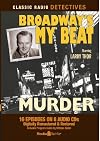
I checked out Broadway's My Beat from my local library because I like radio drama and mysteries. Do I care that my parents hadn't even met when these episodes were originally aired? No. I grew up on and still read old books, so the attitudes displayed here didn't cause me any culture shock.
The selected cases of Detective Danny Clover are:
The Earl Lawson Murder Case 06-09-51:
An upper crust man is murdered. Was the man released to die at home responsible? Good thing the setting switches from show more spring to summer, given that Peggy Drake was running down the street in her negligee. Shocking! Is she really a target for murder?
The Frank Dunn Murder Case 06-16-51:
The fancy hotel's manager hopes the little matter of the corpse of nightclub bartender Frank Dunn lying with a bullet hole in one of their beds will be handled discreetly.
The switchboard operator is able to trace the call to the victim's room. That call cost only a dime.
(Loved the way the background music suggested sexy sleaze for the rich man's beautiful young wife, Louise.)
The Ruth Larson Murder Case 06-23-51:
The old ads and notices are included with the dramas. This one starts with a bulletin about the Korean War. Ruth Larson, this episode's victim, was brutally murdered. She was only 14. Clover hasn't even been able to figure out a motive, when a man's wife of 14 years is murdered in the same brutal fashion. Clover hasn't even finished talking to the doctor or smoking his cigarette before a third murder is discovered. At least she had a Social Security card to help identify her. (Had to chuckle when the third victim's landlady makes a sarcastic reference to movie star Humphrey Bogart.)
The Pablo Molari Murder Case 06-30-51: Young Pablo's body was found by a tenement building. No one there admits to knowing him. He was a member of the Hudson Club. Is that why he was killed? Fans of the old 'Steve Allen Show' might be interested to learn that he was announced as the new host of 'Songs For Sale' during this episode.
The Anna Compton Murder Case 09-15-51:
Detective Danny Clover gets to interview Edward Bishop's nosy roommate, Mr. Blackbird. Bishop's lady friend has been found dead in his car. After that, Clover interviews the victim's husband and Bishop's employer. Then Bishop's body turns up. Who killed them?
The Lily Nelson Murder Case 10-06-51:
Why would a beautiful theatrical actress slit her wrists when she's still a star? Her regular cab driver was in love with her. He wasn't the only one. Her producer claims he wasn't one of them. Her psychiatrist said she wouldn't have committed suicide. Danny Knight, Lily's latest director, is listening to a recording of her voice when Clover comes to interview him. A young woman who says she was Lily's friend has her own story. From what we learn about the victim, I don't buy the killer's story at all.
The Larry Moore Murder Case 01-12-52:
Johnny Welsh, the husband of a victim, is acquitted of his wife's murder. He vows to find the killer before Detective Clover does. Welsh beat up Larry Moore, trying to make him confess. Larry doesn't want to press charges. The twit was drunk during the murder and he gets drunk again after beating up Larry. Now Larry is a murder victim. Younger listeners should be aware that this was written when 'gay' meant happiness and joy. Who put Ida Gray, the witness whose testimony got Welsh acquitted, in the hospital?
This episode has a public service announcement about donating to the March of Dimes because polio cases are on the rise and that organization is trying to stop the scourge. The announcer also mentions two other classic radio shows: 'Our Miss Brooks' and (ugh) 'Amos and Andy' .
The Raymond Grant Murder Case 02-16-52:
Miss Daly, university graduate history student, came home and found the milkman's body in the hall. According to Grant's foreman, Raymond would show him notes from female customers. Clover goes to interview Mrs. Grant at their Stanton Island home. She didn't like him much. She doesn't remember what kind of favors accounted for the extra money he brought home.
Carol Daly meets with an accident(?) on her way to give the police more information. Clover's attempt to interview Miss Howard isn't easy because she's drunk as a skunk. (The killer's last dialogue was chilling.)
The Gordon Merrick Murder Case 03-15-52:
It's violent death on the 44th floor -- the penthouse! He's a show backer. Carol Royce's portrait in a silver frame was what he was holding. He was shot in the back. The actress claims she didn't go to the champagne supper to which Merrick called and invited her. She gives Clover Vic Kane's name. He can't find his gun. When it is found, it was used in another murder -- the murder of Sophie Henry, a woman not unknown to the Bowery precinct. She was no lady.
Jack Scar (Jacky) is a P.I. hired by Carol Royce to prove her beloved Vic is innocent. To be honest, I thought the killer was easy to figure out, but there was a twist I missed.
Burt Lancaster, star of Crimson Pirate, pitches for the Lux Radio Theater show. https://www.otrcat.com/p/lux-radiohttp://www.imdb.com/title/tt0044517/
The John Mooney Murder Case 03-22-52:
Mr. Myron Gray made the mistake of buying a thousand dollar bill for $250. Now he's booked on suspicion of murder. Les Cheney, the man who was suspected of the bank robbery from which that bill came, is out on parole. His wife Ruth claims the cops had planted the narcotics that got him sent up for five years.
Clover goes to Benny the Stool Pigeon with the police sketch that was made from Gray's description.
The man who sold the hot money needs to be found. Joan Carson may have found him while she was, she says, looking for her old friend, Sylvia.
Clover drops baseball star Joe DiMaggio's name and that he wasn't playing anymore during his description of Spring. Sergeant Tartaglia is complaining that he's been a sergeant for 12 years and hasn't been promoted. The announcer promotes 'Amos and Andy,' saying it's been on the air for 23 years and is still funny. The African-American characters were played by black actors once the show moved to TV, but here they were still being played by white men.
The John Elgin Murder Case 04-05-52:
A bookie tells Clover about a murder he saw a week ago. Clover tells him John Elgin committed suicide. Still, he goes to interview the widow, Martha. Elgin gave another woman a copy of War and Peace. That was a mistake.
The bookie gets shot. Was he lying to Clover?
Gino Tartaglia's daughter Amelia, his youngest, has her 11th birthday that day. The red Pegasus sign he mentions is for Mobile Gasoline and Oil. (I always liked them.)
The Lois Conrad Murder Case 04-12-52:
A student was stabbed to death at her secretarial school, run by a couple. Her father tells Clover the name of her young man, Frankie Wilson. The picture he paints of Lois is quite different from the one Mr. Conrad painted. I feel sorry for the killer's family.
The announcer makes a pitch for Arthur Godfrey's daily show during the break.
The Alice Mayo Murder Case 05-24-52:
The police get an anonymous call at 9:10 p.m. on a lovely May evening. The caller claimed a man was murdered, but Fred Mayo's wife is the one who is dead. Alice said the name Ernie over and over when she was shot. They were from Baltimore. They came to New York City about three months and a week ago when his employer transferred him. Alice Mayo came from a fancier part of the city than Fred.
It takes awhile to track down Ernie. Marvel that the music machine at the friendship club costs only 10 cents a tune. Did he murder Alice Mayo?
Another public service announcement tells us that 1 billion, 200 million -- almost half of humanity -- is illiterate. Only 2 cents a year to UNESCO (United Nations Educational, Scientific, and Cultural Organization) helps combat that.
The Helen Selby Murder Case 01-31-53:
A moving man found Helen Selby's body. He found her because of instructions he received. She was a 23-year-old clerk typist from California. She was going to move in with her mother's sister's widower, a lonely man after his wife and son were killed in an accident. He has a big house.
The announcer invites us to listen to Jack Benny's Sunday night program tomorrow.
The Peggy Warner Murder Case 02-07-53:
Peggy Warner was poisoned before she was found frozen almost to death in an alley behind Tate's Bar & Grill. Turns out she worked there. Detective Clover goes to Charles Blake's house to interview him because he got his name and address from Tate. Martha Blake said Charles brought Peggy Warner to be their maid. Her son, Tom, calls while Clover is with Mrs. Blake. Tom and Charles go to the police station to be interviewed. Tom lies to and winks at Clover. Did any of the Blakes poison Peggy?
One of her former employees says Peggy was an 'August girl' and explains. Shame on that one manager who got her fired for a bad reason! Wow, Peggy got fired a lot.
The announcer, Bill Anders, states that checks made out to CARE can help the victims of a hurricane in Holland. He also pitches for the Tarzan radio show.
The Margaret Royce Murder Case 05-02-53:
Margaret's sister talks to the police about the missing woman and some missing jewelry. A young man named Donald also talks about Margaret. Another man finds her body in an alley.
Bill Anders pitches a historical drama show hosted by Lionel Barrymore. I enjoyed his after-the-show contrast between the cost of burning a city for the movie 'Gone With the Wind' and the $27 (and the listeners' imagination) to do the same thing on radio.
Hmmm Mrs. Tartaglia read aloud from Kipling's Jungle Book to Gino -- until the wee hours, apparently. Another regular supporting character, Sgt. Muggavan, gets to complain to Clover that the lieutenant never listens to him.
By the way, Alexander Mair "Sandy" Courage, Jr., who composed the theme music for this show, also composed the theme for the original 'Star Trek' series.
Detective Clover doesn't seem to have much of a life outside of work. He walks a lot. His sergeants, Tartaglia and Muggavan, are family men. Gino talks about Mrs. Tartaglia and their children, which helps make the characters seem more real.
Clover is given to talking about Broadway, the weather, and himself in the third person. I like some of his descriptions. The episodes take place in the same months as they were aired. We do get city background noises and other sound effects. The mysteries themselves aren't bad. Some of them are easy to guess, others have a twist I didn't see coming.
Because it's Broadway, it's not surprising that several of the murder victims have something to do with the theater. I asked my sister what she would expect a police procedural radio show from the 1950s to be like. 'Racist and misogynistic,' was her prompt reply. Well, except for a Hispanic man, the episodes selected here feature vanilla white victims and white killers, but my sister was right about the misogyny. Most of the wives are shrews and most of the female victims were adulteresses or unmarried women who had sex anyway -- a big disgrace for the period. Some of the remaining victims needed to be nicer persons. (That part is also true for some of the male victims.)
All in all, this isn't bad listening for mystery fans. As Detective (Lieutenant) Clover keeps telling us, it's the gaudiest, most violent, lonesomest mile in the world -- Broadway, his beat. show less
The selected cases of Detective Danny Clover are:
The Earl Lawson Murder Case 06-09-51:
An upper crust man is murdered. Was the man released to die at home responsible? Good thing the setting switches from show more spring to summer, given that Peggy Drake was running down the street in her negligee. Shocking! Is she really a target for murder?
The Frank Dunn Murder Case 06-16-51:
The fancy hotel's manager hopes the little matter of the corpse of nightclub bartender Frank Dunn lying with a bullet hole in one of their beds will be handled discreetly.
The switchboard operator is able to trace the call to the victim's room. That call cost only a dime.
(Loved the way the background music suggested sexy sleaze for the rich man's beautiful young wife, Louise.)
The Ruth Larson Murder Case 06-23-51:
The old ads and notices are included with the dramas. This one starts with a bulletin about the Korean War. Ruth Larson, this episode's victim, was brutally murdered. She was only 14. Clover hasn't even been able to figure out a motive, when a man's wife of 14 years is murdered in the same brutal fashion. Clover hasn't even finished talking to the doctor or smoking his cigarette before a third murder is discovered. At least she had a Social Security card to help identify her. (Had to chuckle when the third victim's landlady makes a sarcastic reference to movie star Humphrey Bogart.)
The Pablo Molari Murder Case 06-30-51: Young Pablo's body was found by a tenement building. No one there admits to knowing him. He was a member of the Hudson Club. Is that why he was killed? Fans of the old 'Steve Allen Show' might be interested to learn that he was announced as the new host of 'Songs For Sale' during this episode.
The Anna Compton Murder Case 09-15-51:
Detective Danny Clover gets to interview Edward Bishop's nosy roommate, Mr. Blackbird. Bishop's lady friend has been found dead in his car. After that, Clover interviews the victim's husband and Bishop's employer. Then Bishop's body turns up. Who killed them?
The Lily Nelson Murder Case 10-06-51:
Why would a beautiful theatrical actress slit her wrists when she's still a star? Her regular cab driver was in love with her. He wasn't the only one. Her producer claims he wasn't one of them. Her psychiatrist said she wouldn't have committed suicide. Danny Knight, Lily's latest director, is listening to a recording of her voice when Clover comes to interview him. A young woman who says she was Lily's friend has her own story. From what we learn about the victim, I don't buy the killer's story at all.
The Larry Moore Murder Case 01-12-52:
Johnny Welsh, the husband of a victim, is acquitted of his wife's murder. He vows to find the killer before Detective Clover does. Welsh beat up Larry Moore, trying to make him confess. Larry doesn't want to press charges. The twit was drunk during the murder and he gets drunk again after beating up Larry. Now Larry is a murder victim. Younger listeners should be aware that this was written when 'gay' meant happiness and joy. Who put Ida Gray, the witness whose testimony got Welsh acquitted, in the hospital?
This episode has a public service announcement about donating to the March of Dimes because polio cases are on the rise and that organization is trying to stop the scourge. The announcer also mentions two other classic radio shows: 'Our Miss Brooks' and (ugh) 'Amos and Andy' .
The Raymond Grant Murder Case 02-16-52:
Miss Daly, university graduate history student, came home and found the milkman's body in the hall. According to Grant's foreman, Raymond would show him notes from female customers. Clover goes to interview Mrs. Grant at their Stanton Island home. She didn't like him much. She doesn't remember what kind of favors accounted for the extra money he brought home.
Carol Daly meets with an accident(?) on her way to give the police more information. Clover's attempt to interview Miss Howard isn't easy because she's drunk as a skunk. (The killer's last dialogue was chilling.)
The Gordon Merrick Murder Case 03-15-52:
It's violent death on the 44th floor -- the penthouse! He's a show backer. Carol Royce's portrait in a silver frame was what he was holding. He was shot in the back. The actress claims she didn't go to the champagne supper to which Merrick called and invited her. She gives Clover Vic Kane's name. He can't find his gun. When it is found, it was used in another murder -- the murder of Sophie Henry, a woman not unknown to the Bowery precinct. She was no lady.
Jack Scar (Jacky) is a P.I. hired by Carol Royce to prove her beloved Vic is innocent. To be honest, I thought the killer was easy to figure out, but there was a twist I missed.
Burt Lancaster, star of Crimson Pirate, pitches for the Lux Radio Theater show. https://www.otrcat.com/p/lux-radiohttp://www.imdb.com/title/tt0044517/
The John Mooney Murder Case 03-22-52:
Mr. Myron Gray made the mistake of buying a thousand dollar bill for $250. Now he's booked on suspicion of murder. Les Cheney, the man who was suspected of the bank robbery from which that bill came, is out on parole. His wife Ruth claims the cops had planted the narcotics that got him sent up for five years.
Clover goes to Benny the Stool Pigeon with the police sketch that was made from Gray's description.
The man who sold the hot money needs to be found. Joan Carson may have found him while she was, she says, looking for her old friend, Sylvia.
Clover drops baseball star Joe DiMaggio's name and that he wasn't playing anymore during his description of Spring. Sergeant Tartaglia is complaining that he's been a sergeant for 12 years and hasn't been promoted. The announcer promotes 'Amos and Andy,' saying it's been on the air for 23 years and is still funny. The African-American characters were played by black actors once the show moved to TV, but here they were still being played by white men.
The John Elgin Murder Case 04-05-52:
A bookie tells Clover about a murder he saw a week ago. Clover tells him John Elgin committed suicide. Still, he goes to interview the widow, Martha. Elgin gave another woman a copy of War and Peace. That was a mistake.
The bookie gets shot. Was he lying to Clover?
Gino Tartaglia's daughter Amelia, his youngest, has her 11th birthday that day. The red Pegasus sign he mentions is for Mobile Gasoline and Oil. (I always liked them.)
The Lois Conrad Murder Case 04-12-52:
A student was stabbed to death at her secretarial school, run by a couple. Her father tells Clover the name of her young man, Frankie Wilson. The picture he paints of Lois is quite different from the one Mr. Conrad painted. I feel sorry for the killer's family.
The announcer makes a pitch for Arthur Godfrey's daily show during the break.
The Alice Mayo Murder Case 05-24-52:
The police get an anonymous call at 9:10 p.m. on a lovely May evening. The caller claimed a man was murdered, but Fred Mayo's wife is the one who is dead. Alice said the name Ernie over and over when she was shot. They were from Baltimore. They came to New York City about three months and a week ago when his employer transferred him. Alice Mayo came from a fancier part of the city than Fred.
It takes awhile to track down Ernie. Marvel that the music machine at the friendship club costs only 10 cents a tune. Did he murder Alice Mayo?
Another public service announcement tells us that 1 billion, 200 million -- almost half of humanity -- is illiterate. Only 2 cents a year to UNESCO (United Nations Educational, Scientific, and Cultural Organization) helps combat that.
The Helen Selby Murder Case 01-31-53:
A moving man found Helen Selby's body. He found her because of instructions he received. She was a 23-year-old clerk typist from California. She was going to move in with her mother's sister's widower, a lonely man after his wife and son were killed in an accident. He has a big house.
The announcer invites us to listen to Jack Benny's Sunday night program tomorrow.
The Peggy Warner Murder Case 02-07-53:
Peggy Warner was poisoned before she was found frozen almost to death in an alley behind Tate's Bar & Grill. Turns out she worked there. Detective Clover goes to Charles Blake's house to interview him because he got his name and address from Tate. Martha Blake said Charles brought Peggy Warner to be their maid. Her son, Tom, calls while Clover is with Mrs. Blake. Tom and Charles go to the police station to be interviewed. Tom lies to and winks at Clover. Did any of the Blakes poison Peggy?
One of her former employees says Peggy was an 'August girl' and explains. Shame on that one manager who got her fired for a bad reason! Wow, Peggy got fired a lot.
The announcer, Bill Anders, states that checks made out to CARE can help the victims of a hurricane in Holland. He also pitches for the Tarzan radio show.
The Margaret Royce Murder Case 05-02-53:
Margaret's sister talks to the police about the missing woman and some missing jewelry. A young man named Donald also talks about Margaret. Another man finds her body in an alley.
Bill Anders pitches a historical drama show hosted by Lionel Barrymore. I enjoyed his after-the-show contrast between the cost of burning a city for the movie 'Gone With the Wind' and the $27 (and the listeners' imagination) to do the same thing on radio.
Hmmm Mrs. Tartaglia read aloud from Kipling's Jungle Book to Gino -- until the wee hours, apparently. Another regular supporting character, Sgt. Muggavan, gets to complain to Clover that the lieutenant never listens to him.
By the way, Alexander Mair "Sandy" Courage, Jr., who composed the theme music for this show, also composed the theme for the original 'Star Trek' series.
Detective Clover doesn't seem to have much of a life outside of work. He walks a lot. His sergeants, Tartaglia and Muggavan, are family men. Gino talks about Mrs. Tartaglia and their children, which helps make the characters seem more real.
Clover is given to talking about Broadway, the weather, and himself in the third person. I like some of his descriptions. The episodes take place in the same months as they were aired. We do get city background noises and other sound effects. The mysteries themselves aren't bad. Some of them are easy to guess, others have a twist I didn't see coming.
Because it's Broadway, it's not surprising that several of the murder victims have something to do with the theater. I asked my sister what she would expect a police procedural radio show from the 1950s to be like. 'Racist and misogynistic,' was her prompt reply. Well, except for a Hispanic man, the episodes selected here feature vanilla white victims and white killers, but my sister was right about the misogyny. Most of the wives are shrews and most of the female victims were adulteresses or unmarried women who had sex anyway -- a big disgrace for the period. Some of the remaining victims needed to be nicer persons. (That part is also true for some of the male victims.)
All in all, this isn't bad listening for mystery fans. As Detective (Lieutenant) Clover keeps telling us, it's the gaudiest, most violent, lonesomest mile in the world -- Broadway, his beat. show less
This radio show from 1937 is a delightful and well done production. Written for children, it chronicles the adventures that Jim and Judy experience with the Cinnamon Bear. They attempt to rescue the star that goes on their Christmas tree and was taken by the Crazy Quilt Dragon. They meet a variety of unusual beings in their travels, and each of episodes ends on a cliff hanger. This series is a fine example of how excellent radio programs were in the early days. The music is well done, the show more sound effects are expressive, and the performances are exceptional. The stories are the perfect mix of humor and scariness that make for a wonderful experience for children. show less
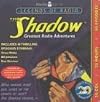
Radio buffs all certainly agree that The Shadow was among the greatest radio shows of all-time. It is often stated that The Shadow began as a magazine, but that is not quite the case. The character of The Shadow originated as the announcer for Street & Smith's Detective Story, a radio show designed to help sale the magazine of the same name. When listeners began calling in requesting "The Shadow Detective Magazine," something had to be done.
This is one of the best collections around of The show more Shadow, and while by no means definitive, a ton of terrific shows are here to enjoy. Since the individual shows have already been listed, I will only touch on those shows I believe are the most enjoyable, from each of the three men here who portrayed the greatest single figure in the history of radio.
ORSON WELLES---Welles was only 22 when he starred in The Shadow. He managed to strike a deal with the sponsor, Blue Coal, which allowed him to do the show "cold" without rehearsal. It served to give his performance as The Shadow an edge. But it also prompted writers to begin writing episodes where the Shadow did not appear at the very beginning -- in case Welles turned up late to the set. Usually, Welles would show up a few moments before airtime, perform a few magic tricks for the cast, then bada-bing-bada boom, he would grab the script and run with it.
What Welles could not do, however, was the signature and sinister laugh of The Shadow. Frank Readick (the voice of The Shadow on Street & Smith's Detective Story) continued to both open and close the program during Welles's tim as the fabled crime fighter.
Favorite show featuring Orson Welles as The Shadow in this collection: SOCIETY OF THE LIVING DEAD
BILL JOHNSTONE began portraying The Shadow on September 25, 1938. He had trouble with the laugh also, but unlike Welles, finally managed to perfect it. He is perhaps my favorite Shadow.
Favorite show featuring Johnstone as The Shadow: THE CHESS CLUB MURDERS
BRET MORRISON became The Shadow in 1943, was briefly replaced by John Archer a year later, then returned as Lamont Cranston late in 1945.
My favorite show featuring Bret Morrison as The Shadow in this collection: A tie between PREVIEW OF TERROR and THE PHANTOM OF THE LIGHTHOUSE.
This great collection comes with a stunningly researched booklet by Anthony Tollin, who uses a number of sources to give a far-reaching look at the history of radio's greatest man of mystery, both in print, on radio, and in film. There are marvelous program notes on each episode included in the booklet, supplemented by photos of many of the key players. Worth tracking down if you're a fan. For those still in love with this theatre of the imagination, this Shadow collection is a must. show less
This is one of the best collections around of The show more Shadow, and while by no means definitive, a ton of terrific shows are here to enjoy. Since the individual shows have already been listed, I will only touch on those shows I believe are the most enjoyable, from each of the three men here who portrayed the greatest single figure in the history of radio.
ORSON WELLES---Welles was only 22 when he starred in The Shadow. He managed to strike a deal with the sponsor, Blue Coal, which allowed him to do the show "cold" without rehearsal. It served to give his performance as The Shadow an edge. But it also prompted writers to begin writing episodes where the Shadow did not appear at the very beginning -- in case Welles turned up late to the set. Usually, Welles would show up a few moments before airtime, perform a few magic tricks for the cast, then bada-bing-bada boom, he would grab the script and run with it.
What Welles could not do, however, was the signature and sinister laugh of The Shadow. Frank Readick (the voice of The Shadow on Street & Smith's Detective Story) continued to both open and close the program during Welles's tim as the fabled crime fighter.
Favorite show featuring Orson Welles as The Shadow in this collection: SOCIETY OF THE LIVING DEAD
BILL JOHNSTONE began portraying The Shadow on September 25, 1938. He had trouble with the laugh also, but unlike Welles, finally managed to perfect it. He is perhaps my favorite Shadow.
Favorite show featuring Johnstone as The Shadow: THE CHESS CLUB MURDERS
BRET MORRISON became The Shadow in 1943, was briefly replaced by John Archer a year later, then returned as Lamont Cranston late in 1945.
My favorite show featuring Bret Morrison as The Shadow in this collection: A tie between PREVIEW OF TERROR and THE PHANTOM OF THE LIGHTHOUSE.
This great collection comes with a stunningly researched booklet by Anthony Tollin, who uses a number of sources to give a far-reaching look at the history of radio's greatest man of mystery, both in print, on radio, and in film. There are marvelous program notes on each episode included in the booklet, supplemented by photos of many of the key players. Worth tracking down if you're a fan. For those still in love with this theatre of the imagination, this Shadow collection is a must. show less
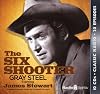
The Six Shooter, starring Jimmy Stewart, came late to the Golden Age of radio, but is one of the best Western-themed shows ever aired. Created by Frank Burt, it aired in the early 1950s. James Stewart starred as Britt Ponset, an unassuming cowboy who never sought trouble, but left a trail of still-remembered legends as he wandered from Texas across the Western Plains.
So good was Britt at handling trouble, and a gun, he became known as the Six Shooter. Stewart was terrific as the regular show more fellow that townsfolk along the trail came to depend on when there was trouble. He had many friends, and his easygoing manner often put him in humorous situations.
Humor was one of the strengths of this show, separating it from others of its ilk. Stewart’s performances were pitch-perfect, as he brought the same charm and likability from films to the different medium of radio. There is plenty here for western fans to enjoy, because you get 20 half-hour episodes on 10 CDs.
Gray Steel is the second collection of The Six Shooter put out by Radio Spirits that I've purchased, the first one coming out in 2004, on cassette. This one is on CD and here are the shows in this collection, which runs from July of 1953 to the end of June in 1954:
Audition Show
Jenny
The Coward
The Stampede
Silver Annie
Red Lawson's Revenge
Escape From Smoke Falls
Gabriel Starbuck
Sheriff Billy
A Pressing Engagement
More Than Kin
Britt Ponset's Christmas Carol
Cora Plummer Quincy
A Friend In Need
Hiram's Goldstrike
The Silver Buckle
Revenge at Harness Creek
Anna Norquest
The Shooting of Wyatt King
Myra Parker
There is plenty of danger along the trail as Ponset becomes known for his honesty, and his gun. Those who enjoy old radio won't be disappointed by this one. It’s like listening to a bunch of old Western short stories on tape, but re-enacted like the BBC does for Paul Temple. Join the tall angular Britt Ponset for a ride through small towns along the dusty trail. show less
So good was Britt at handling trouble, and a gun, he became known as the Six Shooter. Stewart was terrific as the regular show more fellow that townsfolk along the trail came to depend on when there was trouble. He had many friends, and his easygoing manner often put him in humorous situations.
Humor was one of the strengths of this show, separating it from others of its ilk. Stewart’s performances were pitch-perfect, as he brought the same charm and likability from films to the different medium of radio. There is plenty here for western fans to enjoy, because you get 20 half-hour episodes on 10 CDs.
Gray Steel is the second collection of The Six Shooter put out by Radio Spirits that I've purchased, the first one coming out in 2004, on cassette. This one is on CD and here are the shows in this collection, which runs from July of 1953 to the end of June in 1954:
Audition Show
Jenny
The Coward
The Stampede
Silver Annie
Red Lawson's Revenge
Escape From Smoke Falls
Gabriel Starbuck
Sheriff Billy
A Pressing Engagement
More Than Kin
Britt Ponset's Christmas Carol
Cora Plummer Quincy
A Friend In Need
Hiram's Goldstrike
The Silver Buckle
Revenge at Harness Creek
Anna Norquest
The Shooting of Wyatt King
Myra Parker
There is plenty of danger along the trail as Ponset becomes known for his honesty, and his gun. Those who enjoy old radio won't be disappointed by this one. It’s like listening to a bunch of old Western short stories on tape, but re-enacted like the BBC does for Paul Temple. Join the tall angular Britt Ponset for a ride through small towns along the dusty trail. show less
Awards

You May Also Like


Associated Authors
Statistics
- Works
- 189
- Also by
- 1
- Members
- 440
- Popularity
- #55,640
- Rating
- 3.8
- Reviews
- 12
- ISBNs
- 218
- Languages
- 1