
Mark Olsen
Author of Hadassah: One Night With the King
Series
Works by Mark Olsen
The Golden Buddha Changing Masks: Essays on the Spiritual Dimensions of Acting (1989) 10 copies, 1 review
Tagged
Common Knowledge
There is no Common Knowledge data for this author yet. You can help.
Members
Reviews
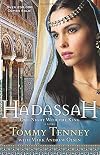
Perhaps a young Jewish woman, a peasant in Susa, should have been the most unlikely possibility, the most unlikely candidate to be the next Queen of Persia. Nevertheless, her ascension to the throne turns out to be a timely rise to meet impending danger in Hadassah: One Night With the King by authors Tommy Tenney and Mark Andrew Olsen.
The first time I read this book over a decade ago, it became one of my all-time favorites. The flawed heroine's journey in this novel that's part thriller, show more part fictional memoir based on the biblical book of Esther was a needed balm for me during a dark season in my life.
Reading the novel for the second time years later, I again have found it to be a rich, nuanced, violent, poignant, deftly written story. It has so much of what makes historical/period reads engrossing to me. And Tenney's intent stands out in the spiritually driven metaphors that speak to close relationship with a King.
Even so, the metaphors will never make a hero out of the cruel, vulnerable, weary, changeable man of excess and war, Xerxes. And despite what Hadassah/Esther comes to feel for the king, this novel isn't a romance.
While I in no way need this to be a romance or a fairy tale, one of its key ironies didn't strike me earlier in my life, but it strikes me now. The irony of the story's genocide. An Amalekite is out to exterminate Jewish (Hebrew) men, women, and children—a mission stemming from a time when Israelites (Hebrews) were out to exterminate Amalekite men, women, and children.
Yet, only one of these extermination missions is really painted in a negative light here. Of course, I know why, but I'm not okay with it. I'm not okay with genocide.
It may be additionally ironic that I still consider this work of Biblical Fiction to be one of my all-time favorites. While it's partly due to the deep, beautiful writing and to my previous experience with the novel, it's also partly because reading this book has again shown me something so important about myself. show less
The first time I read this book over a decade ago, it became one of my all-time favorites. The flawed heroine's journey in this novel that's part thriller, show more part fictional memoir based on the biblical book of Esther was a needed balm for me during a dark season in my life.
Reading the novel for the second time years later, I again have found it to be a rich, nuanced, violent, poignant, deftly written story. It has so much of what makes historical/period reads engrossing to me. And Tenney's intent stands out in the spiritually driven metaphors that speak to close relationship with a King.
Even so, the metaphors will never make a hero out of the cruel, vulnerable, weary, changeable man of excess and war, Xerxes. And despite what Hadassah/Esther comes to feel for the king, this novel isn't a romance.
While I in no way need this to be a romance or a fairy tale, one of its key ironies didn't strike me earlier in my life, but it strikes me now. The irony of the story's genocide. An Amalekite is out to exterminate Jewish (Hebrew) men, women, and children—a mission stemming from a time when Israelites (Hebrews) were out to exterminate Amalekite men, women, and children.
Yet, only one of these extermination missions is really painted in a negative light here. Of course, I know why, but I'm not okay with it. I'm not okay with genocide.
It may be additionally ironic that I still consider this work of Biblical Fiction to be one of my all-time favorites. While it's partly due to the deep, beautiful writing and to my previous experience with the novel, it's also partly because reading this book has again shown me something so important about myself. show less
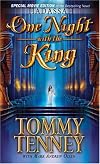
The story of Esther, the Jewish queen of Persia who saved her people from being slaughtered. There were parts of this book I liked and parts I didn’t. It’s a great story, and one I already knew and cared for. It was atmospheric, it was gripping, and despite most of the book being about living in the concubine’s quarters of the palace waiting for things to happen, it never felt boring. But I didn’t like the historically inaccurate swastikas as the emblem of those who wanted to kill show more the Jewish people. Didn’t like the way it skipped from first person to third person even though the whole thing was supposed to be a letter written by Esther. I realise she was not present for the events described in third person and that’s why they did it, but maybe you shouldn’t include scenes that the person telling the story has no way of knowing anything about. If you don’t want to leave them out, don’t structure the book as a personal letter. And finally, I didn’t like the message Esther kept hammering of “It’s all about him. Think about his pleasure, his desires, not your own. In fact, make your desire to fulfill his desires and your greatest pleasure to bring him pleasure.” I mean, if your goal is to seduce a king, as Esther’s was, that’s a legit strategy. But the book seemed to be presenting it as general relationship advice even for women in the modern world (the distant descendent of Esther’s who was reading the letter certainly took it that way), and I am not comfortable with that. show less

Years ago, I was given the young reader’s edition of this book, and fell in love with the story. Since becoming an adult, I’ve been curious about what the adult version was like—and when I finally got my hands on the book, I eagerly dove into the story.
Unfortunately, the adult version isn’t as good as the young reader’s edition, in my opinion. While there’s still the same good storyline, I felt like the first-person narrative let the book down. At times, there are pauses where show more the narrator stops to explain something, which jerked me out of the story; other times, the narrator tells about events she had no way of knowing about, and that felt unrealistic. This book also had quite a bit of telling, not showing, in it, which made the story drag in places. If it had been written in third-person perspective, I think it would have been a much tighter story; as it was, I struggled to get into the book (even though I couldn’t wait to start it!), and didn’t feel gripped by the story until I got close to the climax.
I was surprised by the amount of violence in the story; I didn’t expect that, so I found it a little disheartening. This book also pushed some boundaries for me when it came to descriptions of the marriage bed (I’d rate it about the same level as many of Francine Rivers’ books, if you’re familiar with those—in other words, more mentions than necessary, in my opinion).
Was this a good book? Yes, but I doubt I’ll ever read it again. Even though the original is often better, I prefer the young reader’s version, so if I ever want a refresher on the book, I’ll be picking that one up. The story as a whole is good; it’s a portrait of an incredible woman who faced her life with courage and fortitude, even when everything she held dear was on the line. But for this reader, the violence and mentions of intimate topics were more frequent than I prefer, so the book as a whole was a letdown. Still, I recommend it if you don’t mind the things I’ve mentioned above, and do enjoy solid Biblical fiction or thrillers—this book is both of those! show less
Unfortunately, the adult version isn’t as good as the young reader’s edition, in my opinion. While there’s still the same good storyline, I felt like the first-person narrative let the book down. At times, there are pauses where show more the narrator stops to explain something, which jerked me out of the story; other times, the narrator tells about events she had no way of knowing about, and that felt unrealistic. This book also had quite a bit of telling, not showing, in it, which made the story drag in places. If it had been written in third-person perspective, I think it would have been a much tighter story; as it was, I struggled to get into the book (even though I couldn’t wait to start it!), and didn’t feel gripped by the story until I got close to the climax.
I was surprised by the amount of violence in the story; I didn’t expect that, so I found it a little disheartening. This book also pushed some boundaries for me when it came to descriptions of the marriage bed (I’d rate it about the same level as many of Francine Rivers’ books, if you’re familiar with those—in other words, more mentions than necessary, in my opinion).
Was this a good book? Yes, but I doubt I’ll ever read it again. Even though the original is often better, I prefer the young reader’s version, so if I ever want a refresher on the book, I’ll be picking that one up. The story as a whole is good; it’s a portrait of an incredible woman who faced her life with courage and fortitude, even when everything she held dear was on the line. But for this reader, the violence and mentions of intimate topics were more frequent than I prefer, so the book as a whole was a letdown. Still, I recommend it if you don’t mind the things I’ve mentioned above, and do enjoy solid Biblical fiction or thrillers—this book is both of those! show less
While this story is framed as a Jewish one-- and it is based on the Book of Esther-- it's definitely written in a Christian format (for one, there's a lot of Christian-ish discussion of God as Father etc). There's a frame story involving Esther writing to a younger bride-candidate with her advice about her story and how to win the love of her bridegroom. Evangelical marriage-theory is entwined in the plot as well. Still, not entirely boring and not entirely a romance, so extra points for that.
Statistics
- Works
- 6
- Members
- 860
- Popularity
- #29,750
- Rating
- 3.8
- Reviews
- 18
- ISBNs
- 24
- Languages
- 2